Artwork
Hercules Tamed by Love
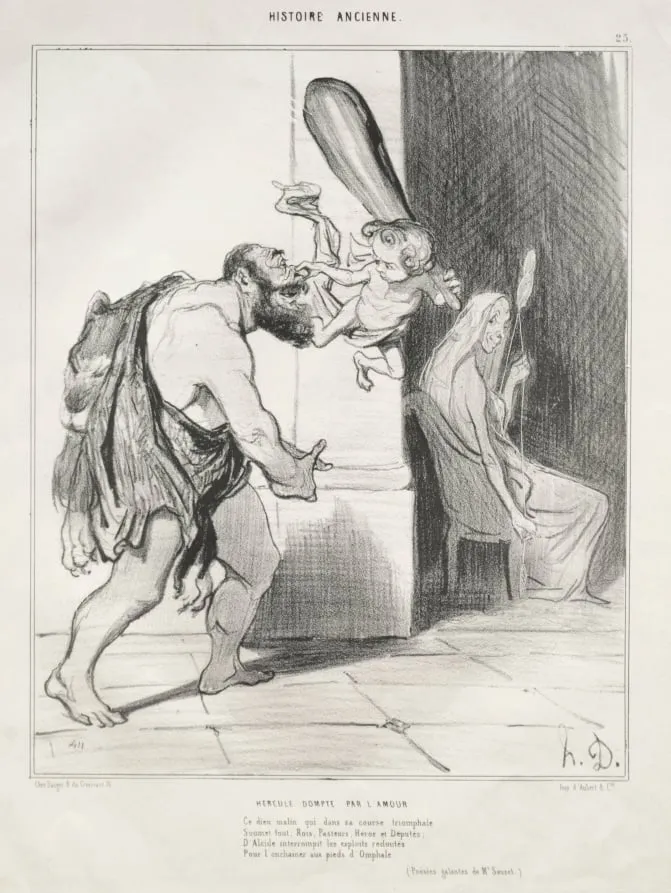
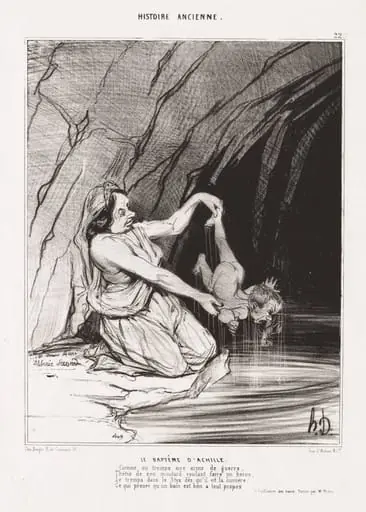
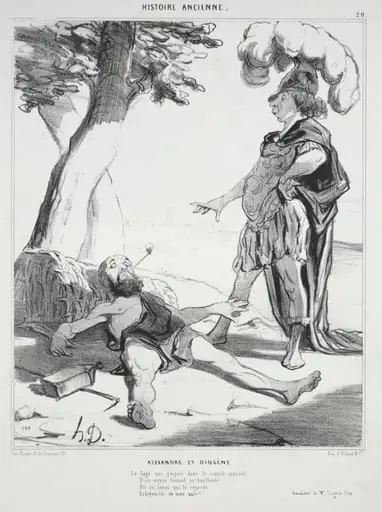
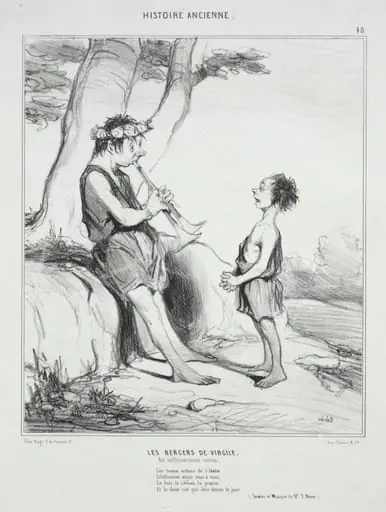
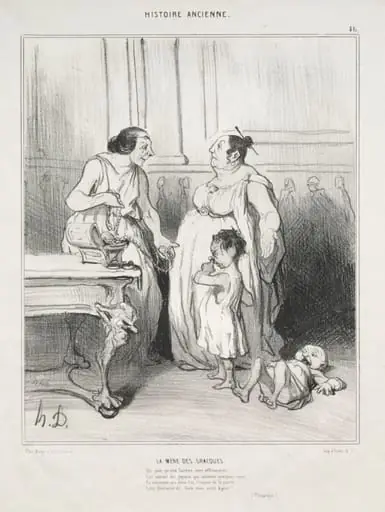
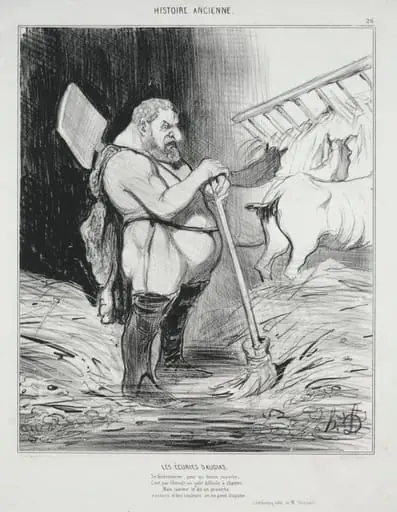
Hercules Tamed by Love is a print by the Romanticist artist Honoré Daumier. It dates from 1842 and is held in the collection of the Cleveland Museum of Art. This lithograph, published in Le Charivari on September 18, 1842, is the twenty-fifth plate in a series titled Ancient History.
About this work
Overview
It depicts the mythological hero Hercules in an unexpected moment of submission, subverting his traditional portrayal as a figure of brute strength.
This lithograph, published in Le Charivari on September 18, 1842, is the twenty-fifth plate in a series titled Ancient History. It depicts the mythological hero Hercules in an unexpected moment of submission, subverting his traditional portrayal as a figure of brute strength. The image uses irony to explore emotional vulnerability, aligning with the satirical tone of the publication and its broader commentary on contemporary social norms.
Subject & Meaning
Hercules, typically celebrated for physical prowess, is shown here ensnared by symbols of affection and domesticity—flowers, ribbons, and a gentle female figure. His posture, slumped and passive, contrasts sharply with his classical depictions. The scene reframes love not as a reward but as a force capable of disarming even the mightiest, suggesting a critique of idealized masculinity and the quiet dominance of emotional influence.
Technique & Style
Executed as a lithograph, the image employs fine linework and tonal contrasts to define form and mood. The composition is tightly framed, directing attention to Hercules’s surrender and the delicate details surrounding him. The style blends classical allusion with caricature, using exaggerated gestures and symbolic objects to convey satire without overt caricature, maintaining a refined aesthetic despite its humorous intent.
History & Provenance
The print was produced during a period of political and cultural upheaval in France, when Le Charivari frequently used mythological themes to veil social criticism. It was part of a serialized publication aimed at a broad urban readership. Its origin in a periodical rather than a fine art context reflects its role as popular commentary, though its artistic quality ensured preservation in institutional collections over time.
Context
In the 1840s, French satire often reimagined classical myths to comment on modern life. Hercules, a symbol of masculine virtue, became a vehicle for questioning societal expectations of strength and control. This print aligns with a broader trend of using antiquity to explore contemporary anxieties about gender, emotion, and power, particularly as middle-class values began to reshape public ideals.
Legacy
Though not widely known outside specialized collections, the print contributes to a lineage of visual satire that reinterprets myth to challenge norms. Its inclusion in institutions like the Cleveland Museum of Art underscores its value as a cultural artifact, offering insight into how 19th-century audiences engaged with classical narratives through the lens of irony and social critique.
Artist & collection
Artist
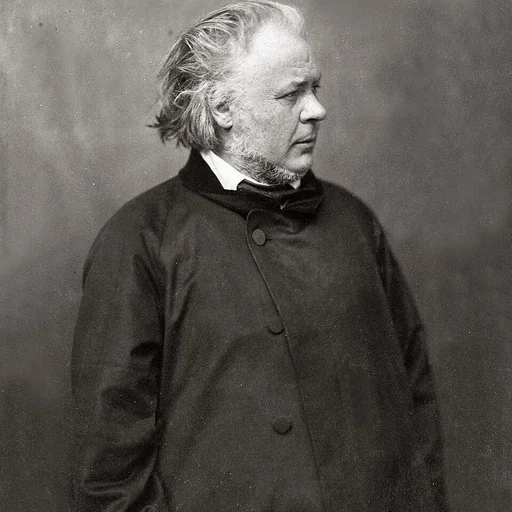
Honoré-Victorin Daumier was a French painter, sculptor, and printmaker, whose many works offer commentary on the social and political life in France, from the Revolution of 1830 to the fall of the Second French Empire in 1870.