Artwork
An Indian Custom
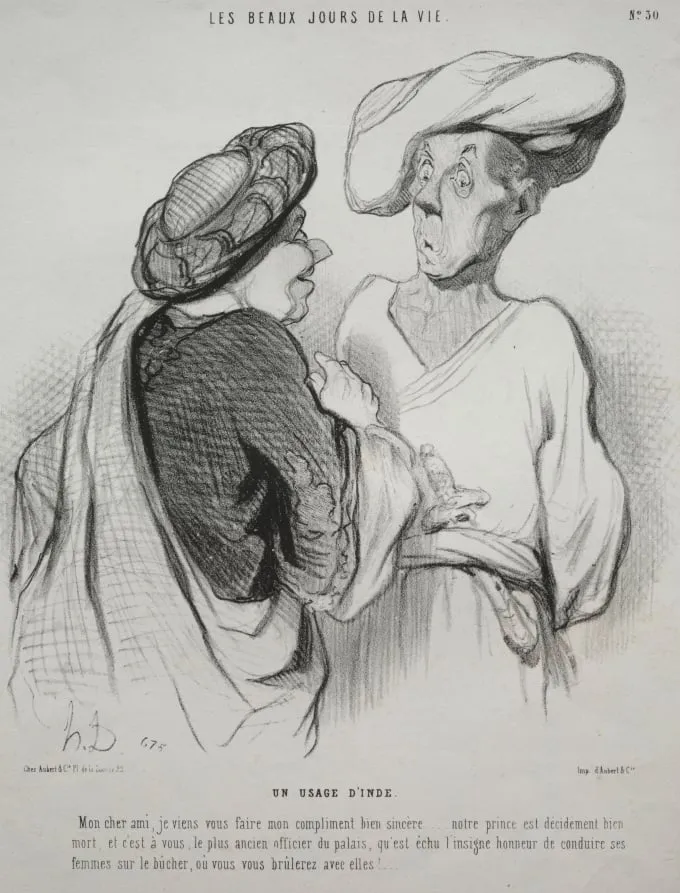
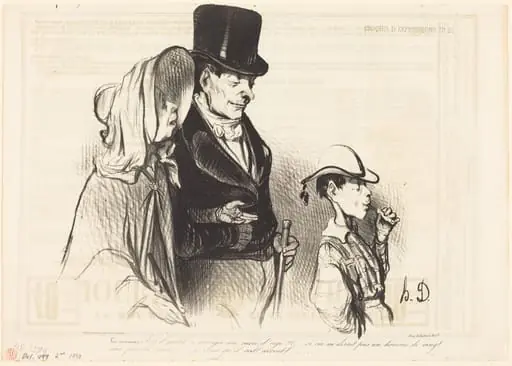
An Indian Custom is a print by the Romanticist artist Honoré Daumier. It dates from 1844 and is held in the collection of the Cleveland Museum of Art. Published in Le Charivari on November 9, 1844, this print is the thirtieth plate in the series The Best Days in Life.
About this work
Look up more about france, 19th century to see how art reflected social tensions.
A man in traditional Indian clothing sits cross-legged, writing with a pen. Around him, French officials in hats and coats watch, arms crossed, faces stern. The room feels tense, like a test is happening.
This image is not really about India. It was drawn for a French humor magazine in 1844. The scene mocks how French bureaucrats treated people from colonies. The title tricks you—it’s really about control and power in everyday moments. Honoré Daumier often used satire to show unfairness.
Look up more about france, 19th century to see how art reflected social tensions.
(Word count: 107)
Overview
Published in Le Charivari on November 9, 1844, this print is the thirtieth plate in the series The Best Days in Life. Created by Honoré Daumier, it appears as a satirical lithograph targeting colonial administration practices. Though labeled 'An Indian Custom,' the scene is not a documentary depiction but a fictionalized critique staged in a French bureaucratic setting, using colonial imagery to expose domestic power dynamics.
Subject & Meaning
The image portrays a man in South Asian attire writing under the watchful eyes of French officials, their posture rigid and expressions unyielding. The setting evokes an interrogation or examination, not a cultural ritual. The title’s reference to 'custom' is ironic, framing colonial subjects as exotic anomalies. Daumier uses this scenario to critique the paternalism and surveillance embedded in imperial governance, revealing how authority manifests in mundane interactions.
Technique & Style
Executed in lithography, the print employs sharp contrasts and simplified forms to heighten emotional tension. Daumier’s loose, expressive lines define the figures without fine detail, focusing attention on body language and spatial hierarchy. The Indian figure is rendered with minimal ornamentation, while the officials are distinguished by stiff silhouettes and hats—visual cues that emphasize their institutional power over the solitary, vulnerable writer.
History & Provenance
The print originated in Le Charivari, a Parisian satirical journal known for its political commentary. Daumier contributed regularly between the 1830s and 1860s, often facing censorship for his critiques of the July Monarchy. This plate was produced during a period of heightened colonial expansion and domestic unrest. Its publication in 1844 coincided with growing public debate over France’s imperial policies and the treatment of colonized peoples.
Context
In 1840s France, colonial subjects were frequently depicted in popular media as exotic or inferior, reinforcing justifications for control. Daumier inverted this trope by placing the colonized figure at the center of a scene that mirrors French bureaucratic rituals. The work reflects broader anxieties about authority, identity, and legitimacy in a society grappling with the contradictions of liberty and empire.
Legacy
Daumier’s satirical approach influenced later generations of political illustrators and cartoonists. This print remains a key example of how visual satire could challenge imperial narratives without direct confrontation. Its enduring relevance lies in its subtle exposure of systemic power—how control is enacted not through grand gestures, but through the quiet, everyday rituals of surveillance and judgment.
Artist & collection

Artist
Honoré-Victorin Daumier was a French painter, sculptor, and printmaker, whose many works offer commentary on the social and political life in France, from the Revolution of 1830 to the fall of the Second French Empire in 1870.









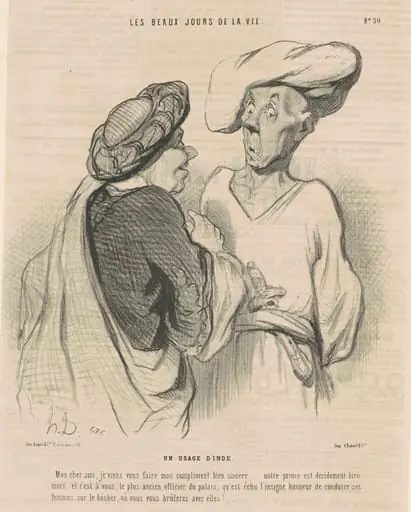 Un usage d'Inde
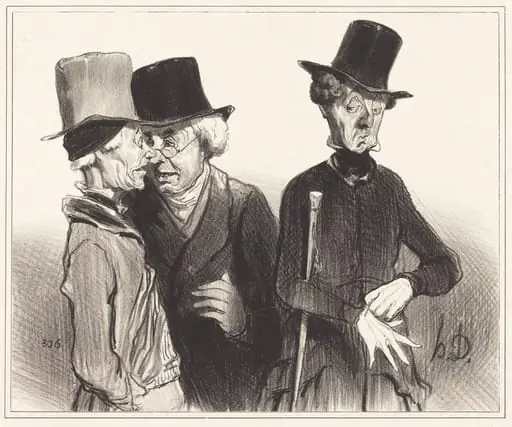 Voila! t'es devenu rentier, moi médecin, lui...
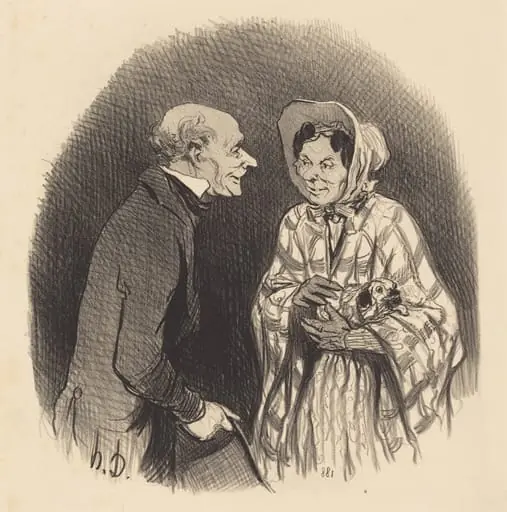 Une Nouvelle connaissance
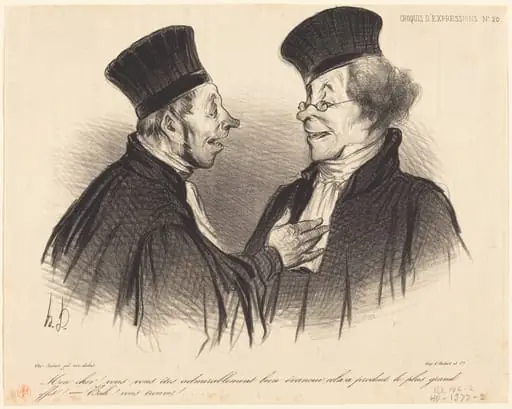 Mon cher! vous vous êtes admirablement... évanoui...
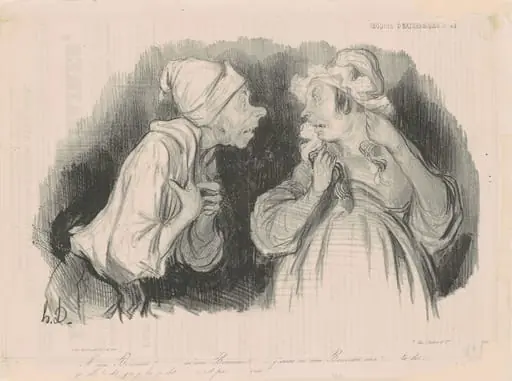 M'ame Bonneau... J'aime m'ame Bonneau moi!...
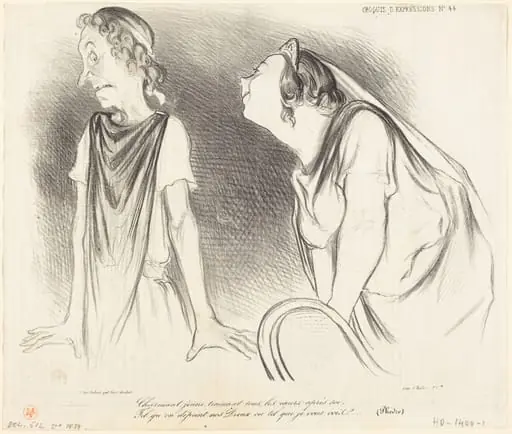 Charmant... trainant tous les coeurs après soi...
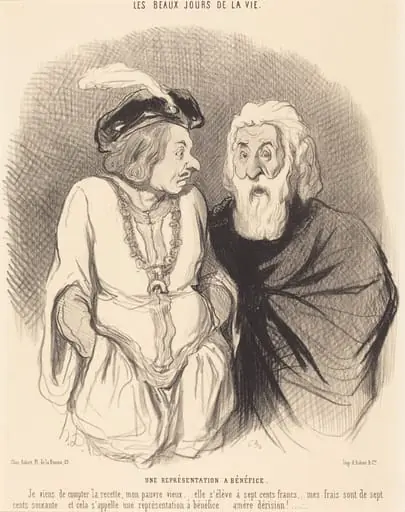 Une Représentation a bénéfice
 La Maman - Est-il gentil a manger son sucre d'orge!...