Artwork
Mr. Keratr.
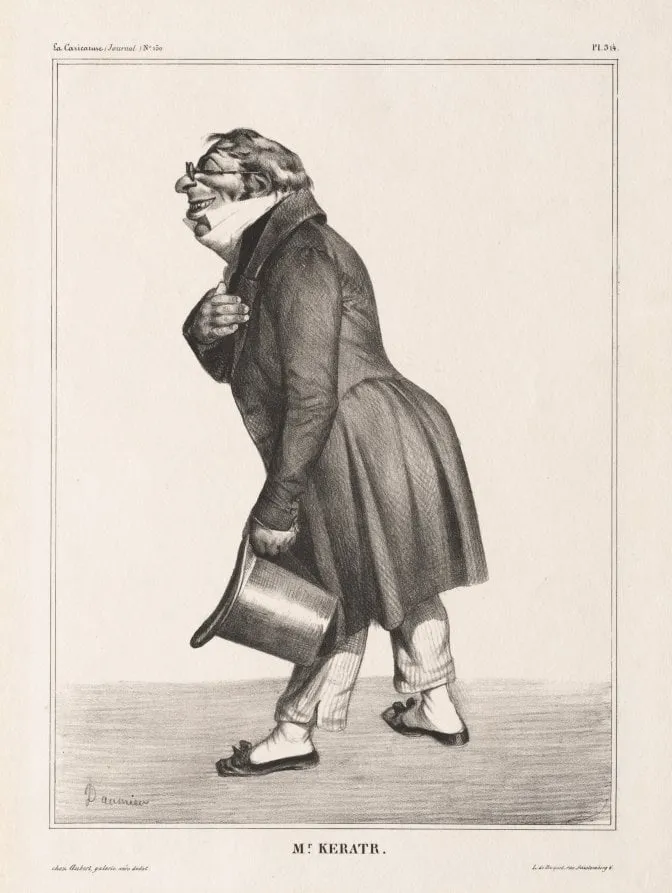
Mr. Keratr. is a print by the Romanticist artist Honoré Daumier. It dates from 1833 and is held in the collection of the Cleveland Museum of Art. This print, titled Mr.
About this work
This painting shows a man with a big hat.
He looks serious and a bit grumpy.
The details in his face are interesting, they tell us about the artist's style.
The artist used simple lines to draw this man.
This makes the picture look old and simple.
You can learn more about this style by looking at the work of artist: Honoré Daumier (French, 1808–1879).
Overview
This print, titled Mr. Keratr, appeared as plate 314 in the 1843 issue of La Caricature, a French satirical journal. It is one of many lithographs produced during a period when visual commentary on public figures was gaining prominence. The work is signed in the tradition of political caricaturists of the era, though the subject’s identity remains unconfirmed.
Subject & Meaning
His posture and facial features suggest a figure of authority or social pretension, likely intended as a satirical representation.
The figure depicted is a middle-aged man, rendered with a stern expression and an oversized hat that dominates the composition. His posture and facial features suggest a figure of authority or social pretension, likely intended as a satirical representation. The absence of context or narrative elements invites interpretation as a generalized critique of bourgeois demeanor rather than a portrait of a specific individual.
Technique & Style
Executed in lithography, the image relies on bold, economical linework and minimal tonal variation. The artist uses sharp contours and sparse shading to define form, emphasizing expression over detail. This restrained approach reflects the rapid, editorial nature of periodical illustration, where clarity and immediacy outweigh refinement. The style aligns with the graphic language of mid-19th-century French caricature.
History & Provenance
The print was originally published in La Caricature, a journal known for its sharp political satire under the editorship of Charles Philipon. It was part of a regular series of plates issued weekly between 1830 and 1843. The work’s survival in institutional collections suggests it was preserved as part of a broader archive of journalistic illustration, rather than as a standalone artwork.
Context
During the 1830s and 1840s, French law permitted satirical press under certain conditions, allowing artists to lampoon politicians and social types. Lithography enabled mass reproduction, making such images widely accessible. Mr. Keratr fits within this tradition, using visual shorthand to convey social critique without overt text, relying on recognizable archetypes familiar to contemporary readers.
Legacy
Though not attributed to a single named artist, the print bears stylistic hallmarks associated with Honoré Daumier and his circle. Its preservation in museum collections underscores its value as an example of early mass-media visual satire. It contributes to the historical record of how public figures were visually negotiated in print culture before the rise of photography.
Artist & collection
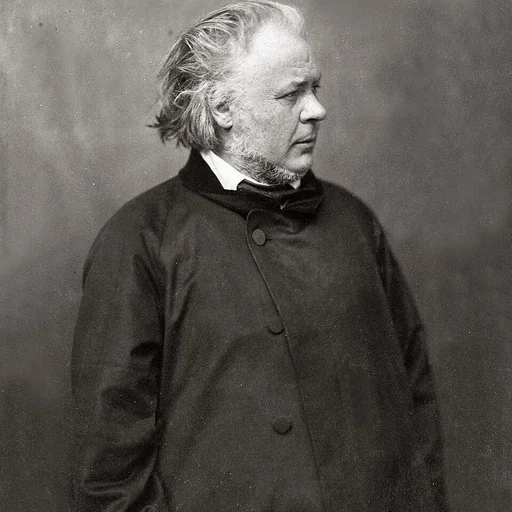
Artist
Honoré-Victorin Daumier was a French painter, sculptor, and printmaker, whose many works offer commentary on the social and political life in France, from the Revolution of 1830 to the fall of the Second French Empire in 1870.









 Comte de Kératry
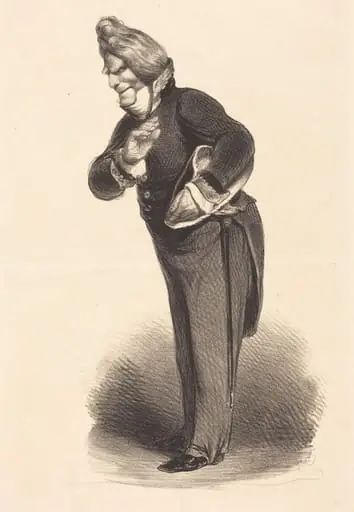 Amiral Verhuel
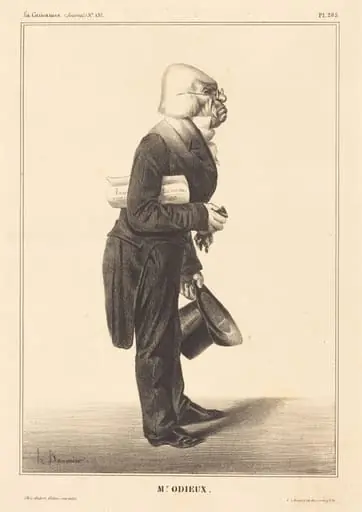 Antoine Odier
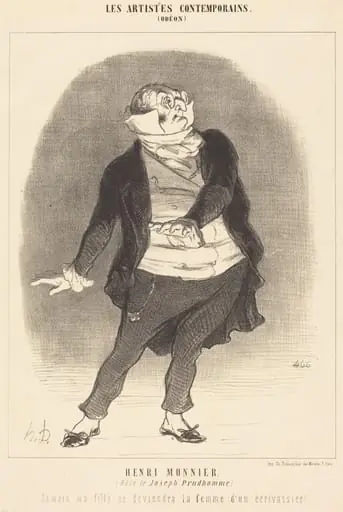 Henri Monnier (Rôle de Joseph Prudhomme)
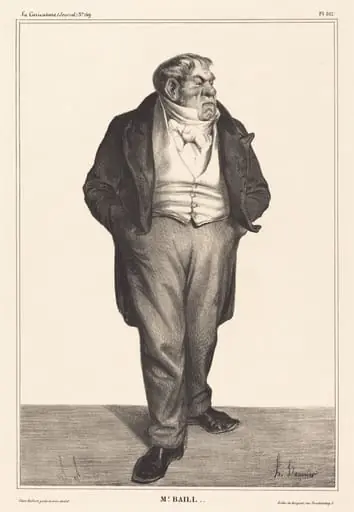 Baillot
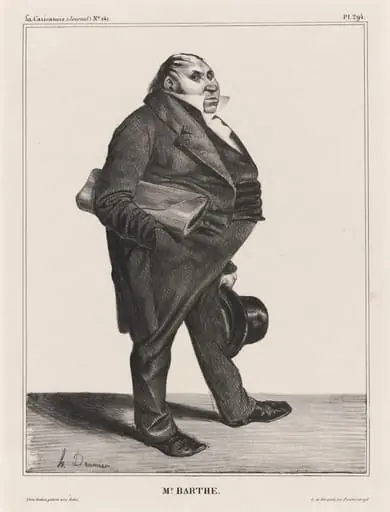 Félix Barthe
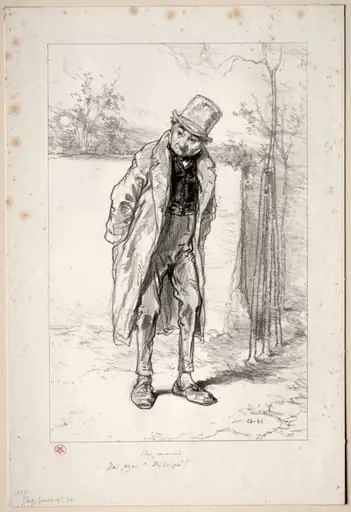 Physionomies Parisiennes: Au Marais. Ici, Azor! ici!
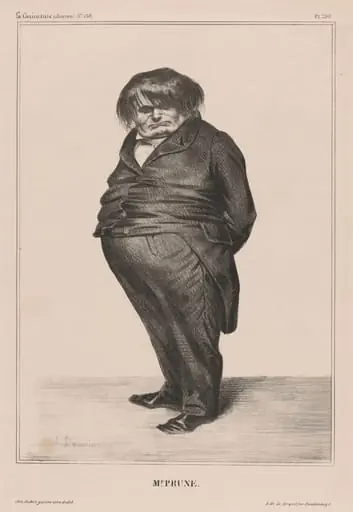 Docteur Prunelle
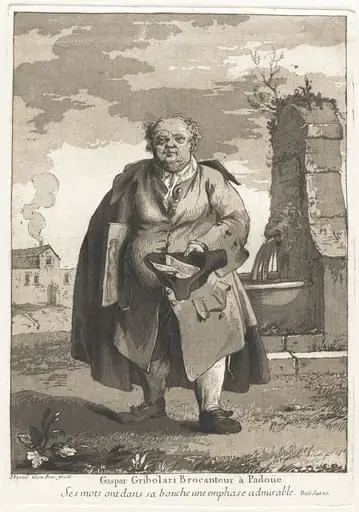 Gaspar Gribolari brocanteur à Padoue (Gaspar Gribolari, Secondhand Dealer in Padua)
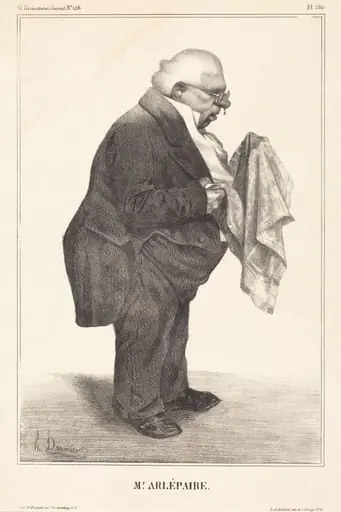 Harlé père
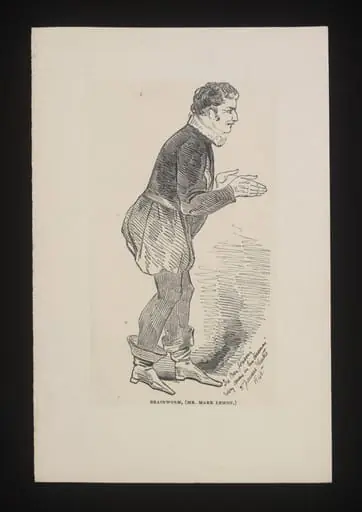 Brainworm, (Mr. Mark Lemon)
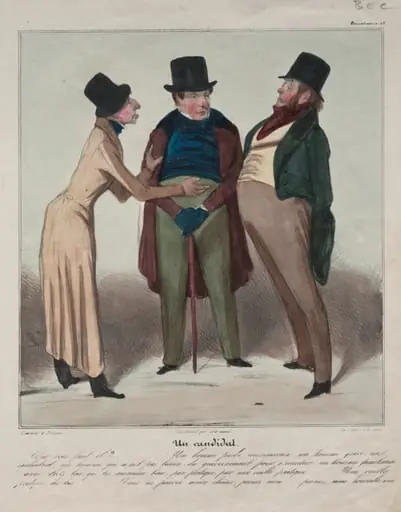 A Candidate