Artwork
Comte de Kératry
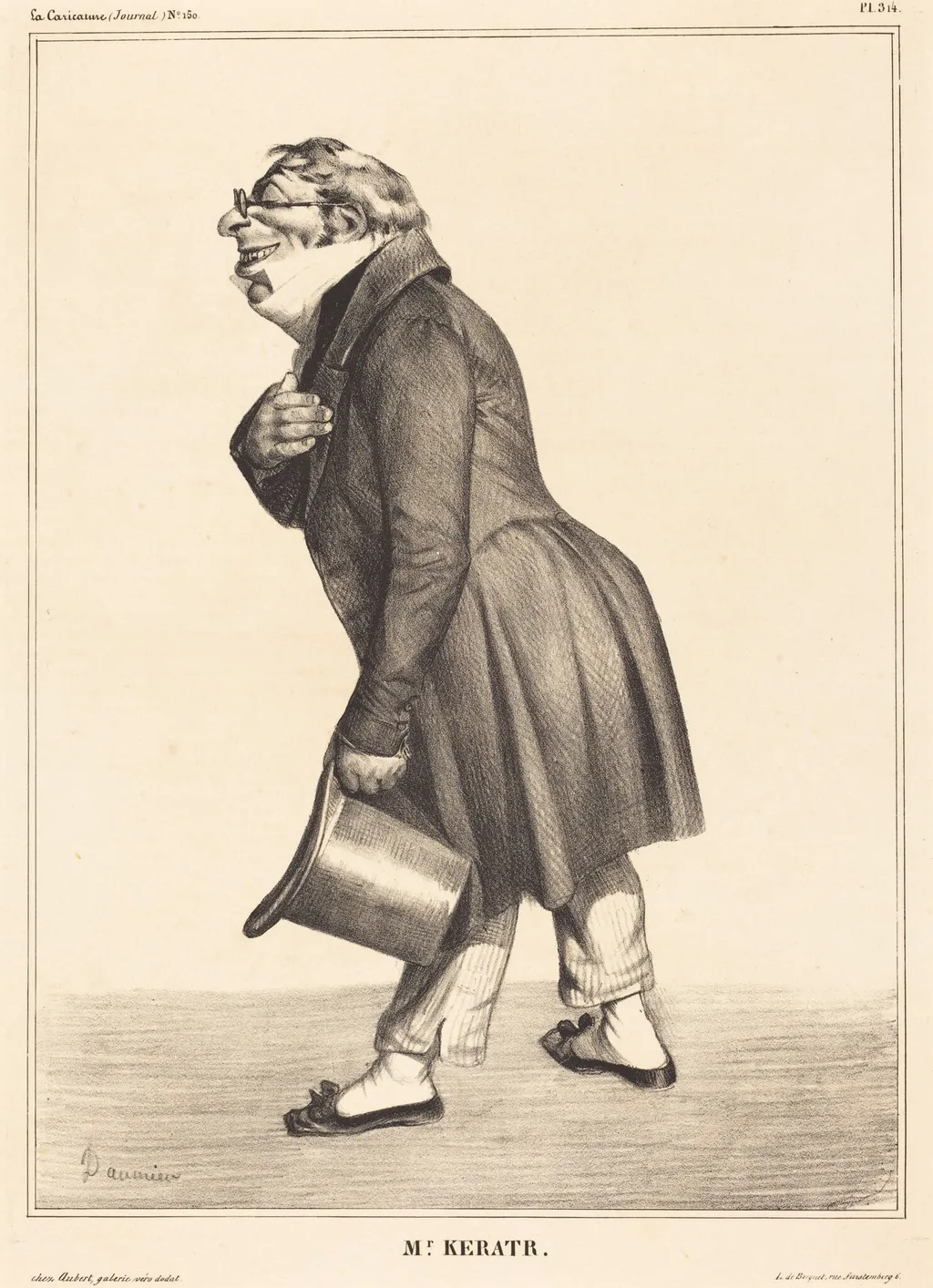
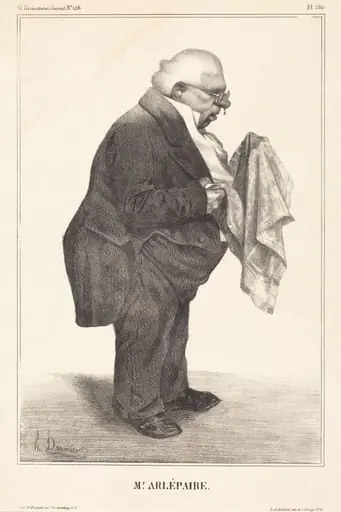
Comte de Kératry is an ink print by the Romanticist artist Honoré Daumier. It dates from 1833 and is held in the collection of the National Gallery of Art.
About this work
Overview
It depicts Comte de Kératry, a nobleman known for his conservative views, rendered with exaggerated features and loose, energetic lines.
Honoré Daumier created this 1833 lithograph as part of a series of political caricatures published in French journals. It depicts Comte de Kératry, a nobleman known for his conservative views, rendered with exaggerated features and loose, energetic lines. The work exemplifies Daumier’s role as a visual critic of post-revolutionary French society, using print media to reach a broad audience with sharp social commentary.
Subject & Meaning
The figure portrayed is a member of the aristocracy, dressed in outdated, overly ornate attire that signals his detachment from contemporary life. His wide grin and awkward posture suggest foolishness rather than dignity, undermining the traditional authority of his title. Daumier uses visual irony to question the relevance of inherited privilege in a changing political landscape, aligning with republican ideals of the time.
Technique & Style
Executed in lithography, the image relies on bold, gestural lines and high-contrast tonal areas to convey movement and character. The sketch-like quality, with uneven hatching and minimal detail, mimics the immediacy of newspaper illustration. Daumier’s loose handling emphasizes expression over realism, prioritizing satirical impact over formal precision, a hallmark of his graphic work during this period.
History & Provenance
Produced during Daumier’s most active years as a political cartoonist, the print was likely published in *La Caricature* or *Le Charivari*, both known for their oppositional stance toward the July Monarchy. The work survived as part of broader collections of his prints, later acquired by institutions preserving 19th-century French graphic satire. Its attribution and date are consistent with Daumier’s known output from the early 1830s.
Context
In the aftermath of the 1830 July Revolution, France experienced heightened tensions between monarchist elites and rising republican sentiment. Daumier’s caricatures responded to this climate, targeting figures like Kératry who symbolized resistance to reform. Lithography allowed rapid, widespread distribution, making such images vital tools for public discourse in an era before photography or mass broadcasting.
Legacy
This print contributes to Daumier’s enduring reputation as a pioneer of political illustration. His ability to distill complex social critiques into single, incisive images influenced generations of cartoonists and satirical artists. Though created for ephemeral publication, works like this one are now studied as key documents of 19th-century French visual culture and democratic dissent.
Artist & collection

Artist
Honoré-Victorin Daumier was a French painter, sculptor, and printmaker, whose many works offer commentary on the social and political life in France, from the Revolution of 1830 to the fall of the Second French Empire in 1870.









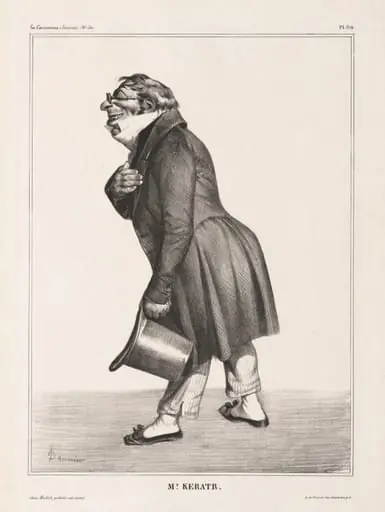 Mr. Keratr.
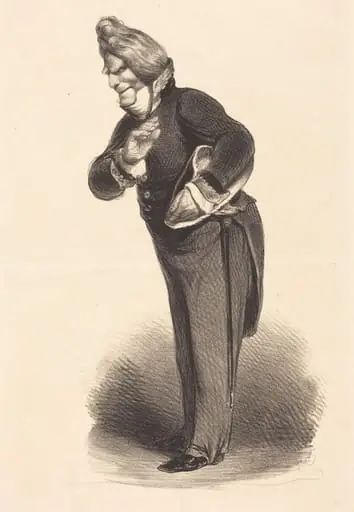 Amiral Verhuel
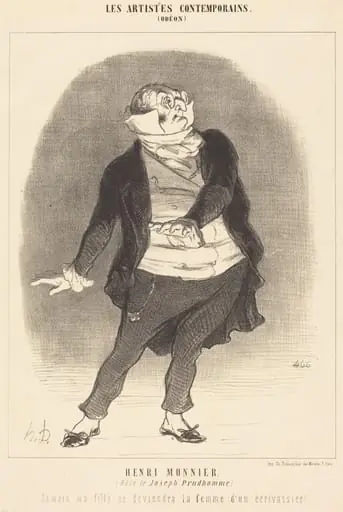 Henri Monnier (Rôle de Joseph Prudhomme)
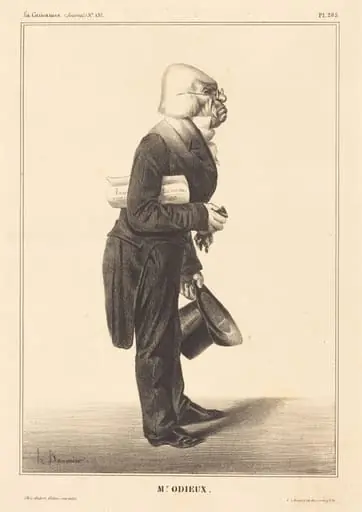 Antoine Odier
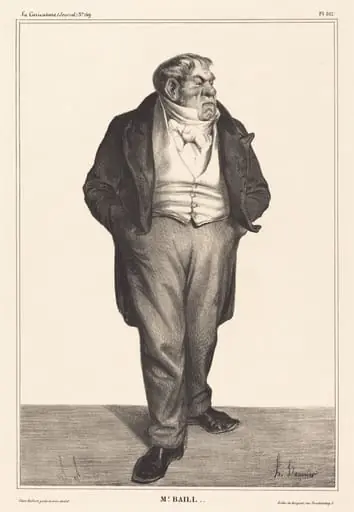 Baillot
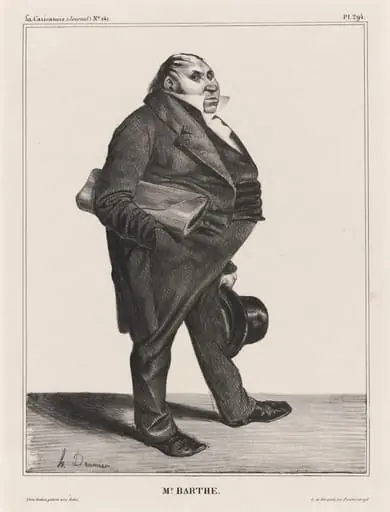 Félix Barthe
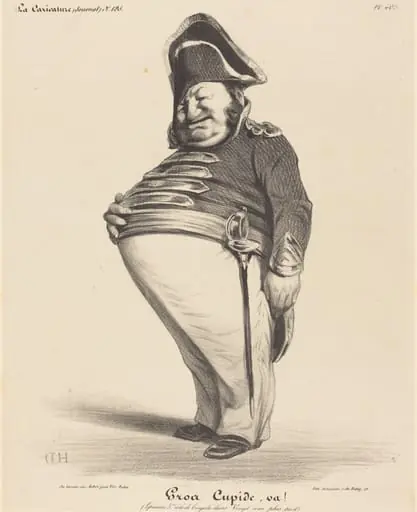 Gros Cupide, va!
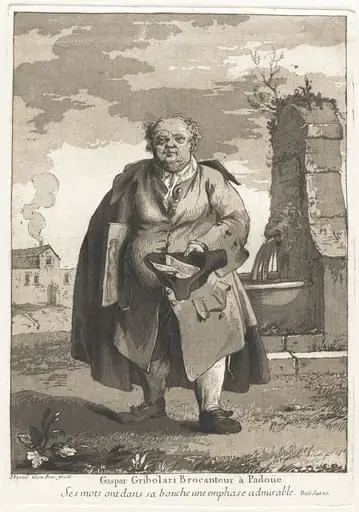 Gaspar Gribolari brocanteur à Padoue (Gaspar Gribolari, Secondhand Dealer in Padua)
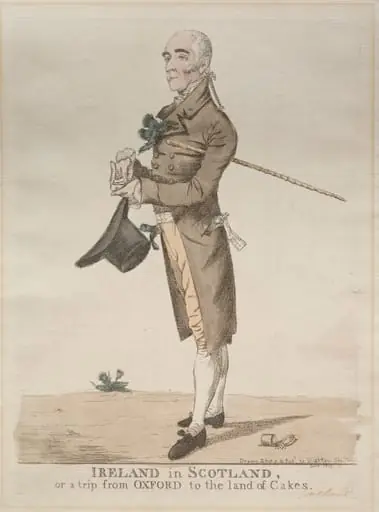 Ireland in Scotland, or a Trip from Oxford to the Land of Cakes
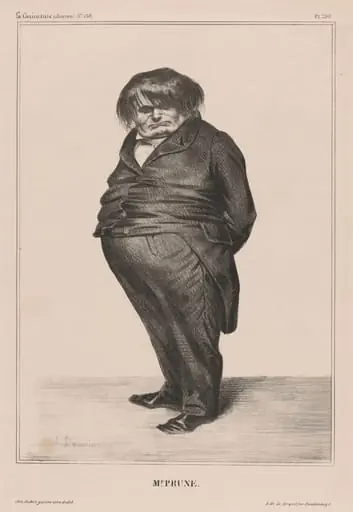 Docteur Prunelle
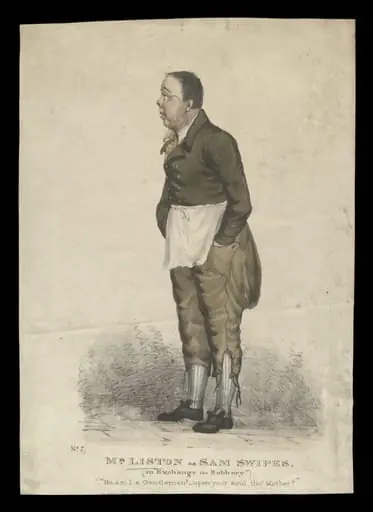 H Beard Print Collection
 Harlé père