Artwork
Painting Enthusiasts at Auction House Bouillon
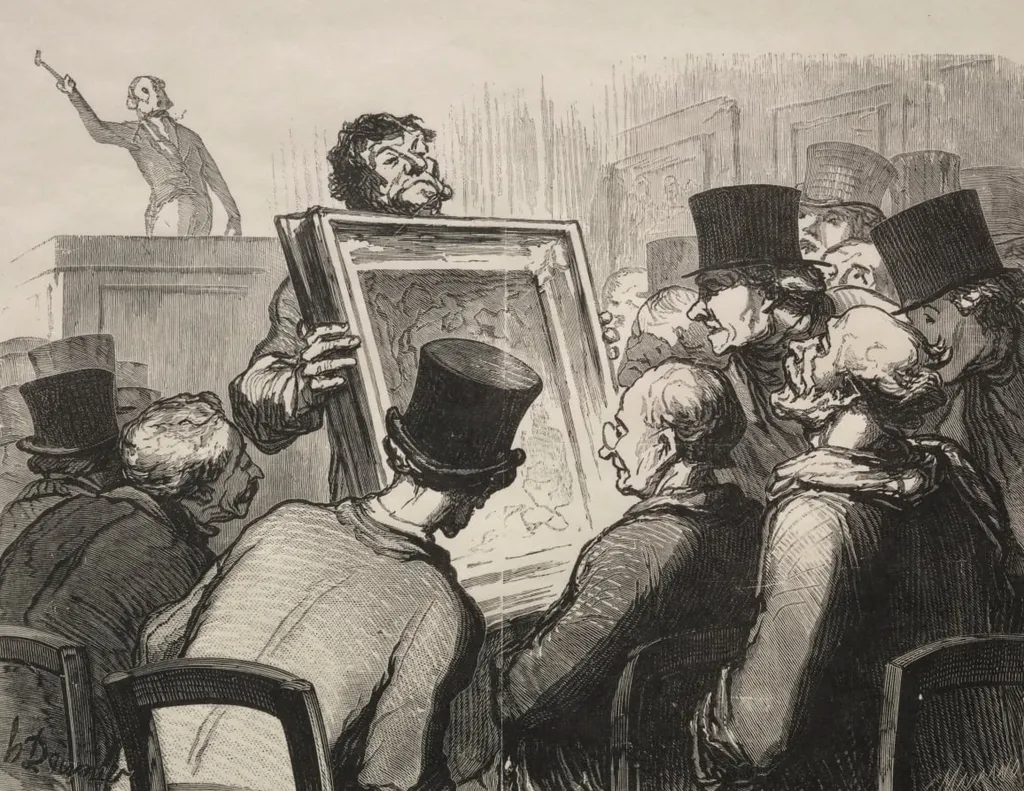
Painting Enthusiasts at Auction House Bouillon is a print by the Impressionist artist Honoré Daumier. It dates from 1862 and is held in the collection of the Cleveland Museum of Art.
About this work
Overview
Created in 1862 by Honoré Daumier, this lithograph captures a moment inside an auction house where a group of men gathers around a painting.
Created in 1862 by Honoré Daumier, this lithograph captures a moment inside an auction house where a group of men gathers around a painting. The scene is rendered in rapid, expressive lines typical of Daumier’s journalistic style. It was produced as a print for publication, reflecting his interest in documenting social behavior rather than idealizing it. The work is now part of the Cleveland Museum of Art’s collection.
Subject & Meaning
The scene depicts a crowd of middle-class men absorbed in examining a painting whose subject is obscured. One figure stands on a table, gesturing emphatically, while others lean in with intense focus. The blurred image suggests the futility or absurdity of their earnest appraisal, hinting at the performative nature of art connoisseurship. Daumier critiques the pretensions of amateur collectors without overt satire.
Technique & Style
Daumier employed swift, angular ink lines to construct the figures and space, avoiding detailed modeling or tonal gradation. The lack of finish and emphasis on gesture align with the lithographic medium’s capacity for immediacy. This approach prioritizes movement and expression over realism, reflecting his background as a caricaturist and his commitment to capturing fleeting social moments with economy and energy.
History & Provenance
The print was made during Daumier’s prolific period producing illustrations for French periodicals. It was likely published in a newspaper or journal around 1862, targeting an urban readership familiar with auction culture. The Cleveland Museum of Art acquired it later, integrating it into its holdings of 19th-century French graphic art, where it remains a key example of Daumier’s observational prints.
Context
In mid-19th-century Paris, public auctions became social events where the rising bourgeoisie competed for cultural capital. Daumier, observing these scenes, turned his attention to the rituals of art acquisition. His work aligns with Realist concerns—depicting ordinary life without embellishment—but adds a layer of social commentary through visual irony and compositional tension.
Legacy
Daumier’s lithographs influenced later artists interested in urban life and social critique, including the Impressionists and early modern illustrators. His ability to distill complex social dynamics into a single, dynamic image set a precedent for visual journalism. This work endures as a quiet but incisive record of how art, and the desire to possess it, shaped public behavior in industrializing France.
Artist & collection

Artist
Honoré-Victorin Daumier was a French painter, sculptor, and printmaker, whose many works offer commentary on the social and political life in France, from the Revolution of 1830 to the fall of the Second French Empire in 1870.









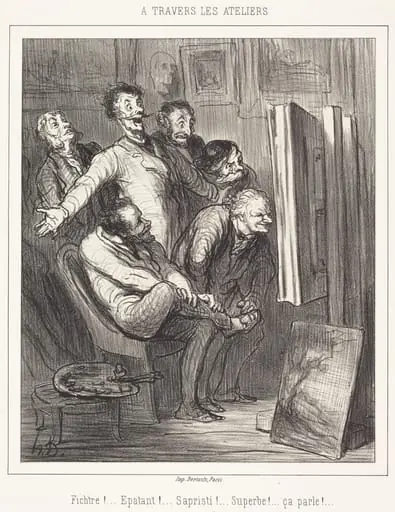 A travers les ateliers
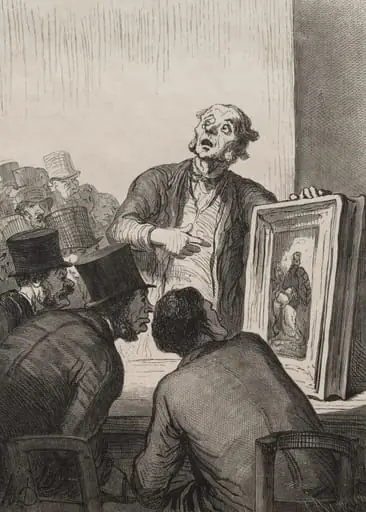 The Auction House: The Expert
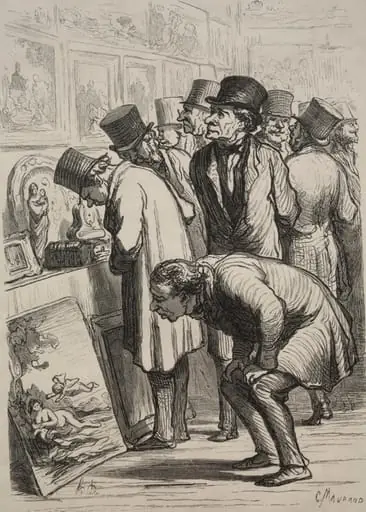 Gallery at Hotel Drouot: The Day of the Sale
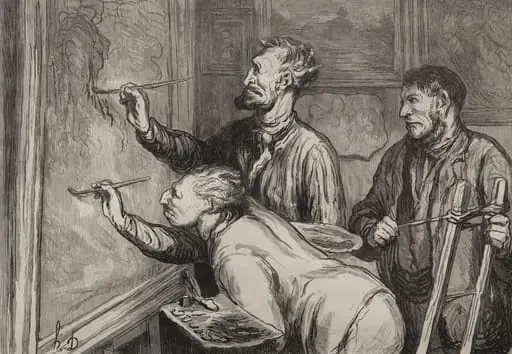 The Paintings Exhibition of 1868: Giving it the last touch
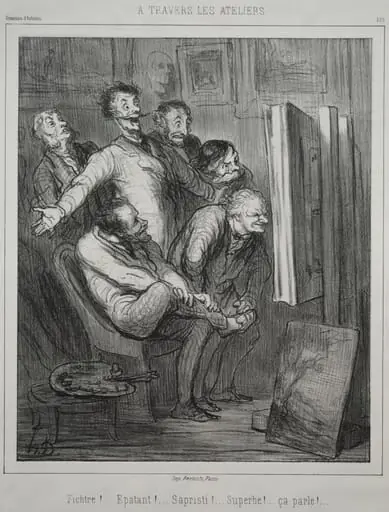 Around the Studios
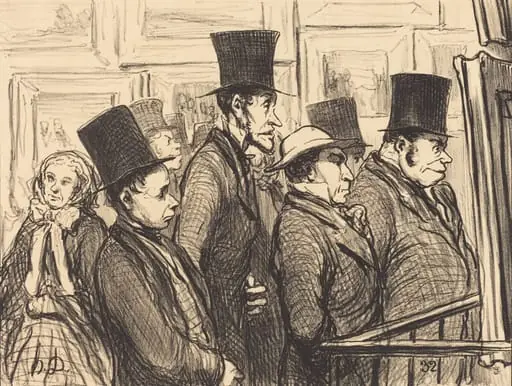 Cristi... v'la-t-y un boeuf qui est bien fait!...
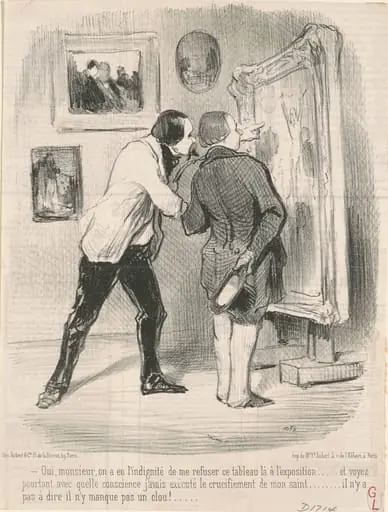 Oui ... on a eu l'indignité de me refuser ce tableau ...
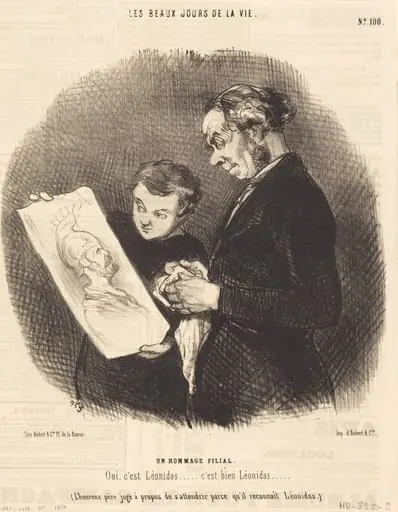 Un Hommage filial
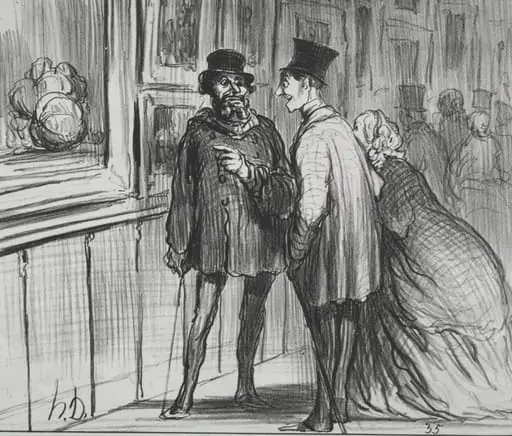 The Painter Who Had a Painting Refused.
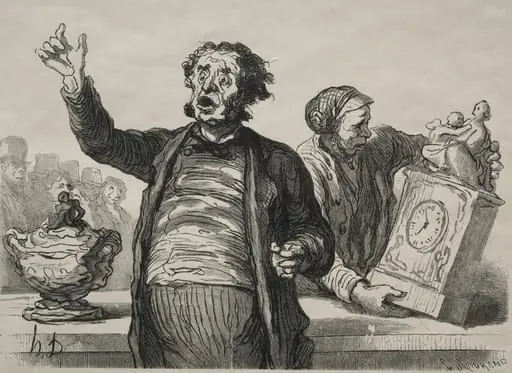 The Auction House: The Town Crier