Artwork
Cristi... v'la-t-y un boeuf qui est bien fait!...
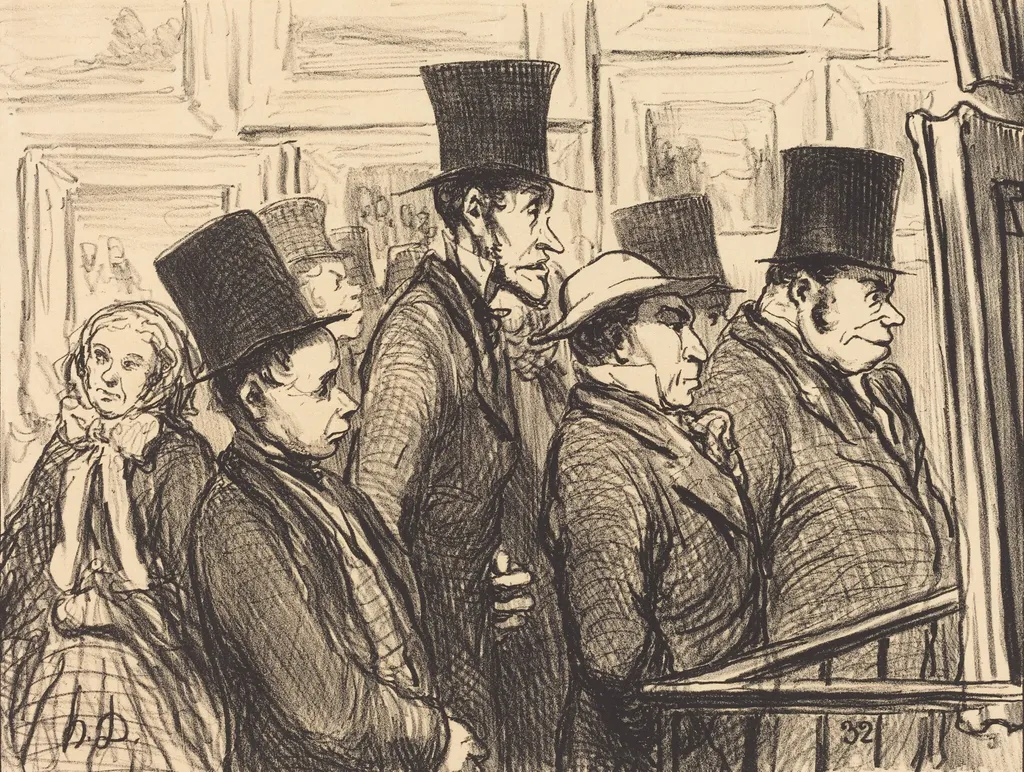
Cristi... v'la-t-y un boeuf qui est bien fait!... is an ink print by the Impressionist artist Honoré Daumier. It dates from 1859 and is held in the collection of the National Gallery of Art.
About this work
Overview
The medium allowed for rapid reproduction and wide circulation, aligning with Daumier’s commitment to reaching a broad public.
Created in 1859, this lithograph by Honoré Daumier captures a moment of ordinary urban life in Paris, rendered on thin paper with the immediacy characteristic of his printmaking. As part of his decades-long output for satirical journals, the work reflects his focus on the rhythms of daily existence rather than overt political allegory, though social observation remains central. The medium allowed for rapid reproduction and wide circulation, aligning with Daumier’s commitment to reaching a broad public.
Subject & Meaning
The scene centers on a butcher displaying a large cut of beef outside his shop, gesturing with pride as passersby glance or pause. The title, a colloquial French exclamation, suggests a blend of pride and absurdity, subtly mocking the self-importance of tradespeople and the performative nature of commerce. Behind him, a crowd of figures moves through the street, their varied postures hinting at class distinctions and the quiet theater of urban life. Daumier frames the mundane as both familiar and slightly ridiculous.
Technique & Style
Daumier employed lithography to achieve fluid, expressive lines and tonal contrasts, exploiting the medium’s capacity for quick, gestural marks. His use of bold contours and minimal shading defines forms with economy, while the thin paper enhances the print’s fragility and immediacy. Though color is not present in the original, the interplay of ink density and negative space creates a sense of movement and atmosphere. The composition avoids idealization, favoring dynamic, unpolished figures that feel spontaneously observed.
History & Provenance
The print was likely published in one of Daumier’s regular outlets, such as *Le Charivari*, where his weekly caricatures reached a wide readership. It was produced during a period of political tension under Napoleon III, when censorship limited direct satire but allowed veiled social commentary. The work survives in several institutional collections, testament to its status as a representative example of 19th-century French graphic art, though its exact early ownership history remains undocumented.
Context
In mid-19th-century Paris, lithographic prints were a primary medium for visual journalism, bridging literacy and visual culture. Daumier’s work emerged alongside urban expansion and the rise of the middle class, capturing the energy of streets now filled with shopkeepers, laborers, and commuters. His images offered a counter-narrative to academic art, privileging the unheroic and the transient. This print reflects a broader cultural shift toward documenting everyday life with empathy and irony.
Legacy
Daumier’s approach to lithography influenced later generations of illustrators and social realists, particularly in their use of line and focus on common subjects. His ability to distill complex social dynamics into single, resonant images set a precedent for modern graphic storytelling. Though less celebrated than his political cartoons, works like this one endure for their quiet humanity and technical precision, offering a window into the pulse of Parisian life beyond official histories.
Artist & collection
Artist
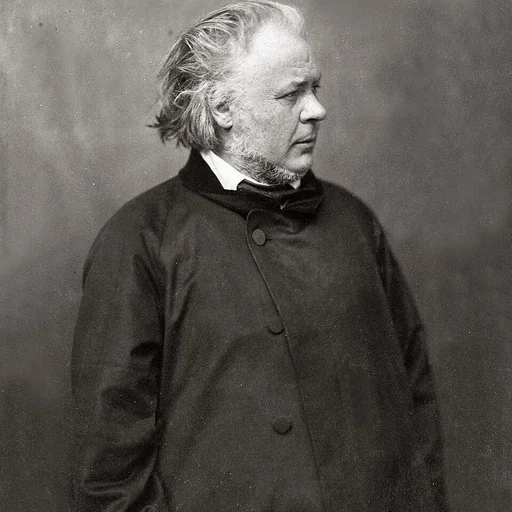
Honoré-Victorin Daumier was a French painter, sculptor, and printmaker, whose many works offer commentary on the social and political life in France, from the Revolution of 1830 to the fall of the Second French Empire in 1870.









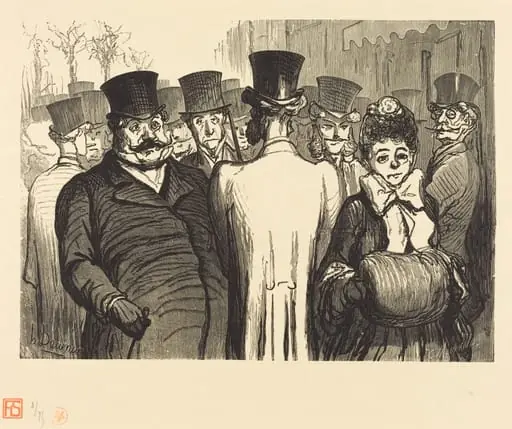 Le Boulevard des Italiens
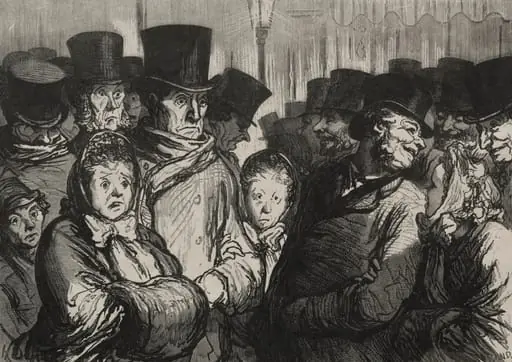 A Street at Midnight: Coming out of a drama. Coming out of a variety show
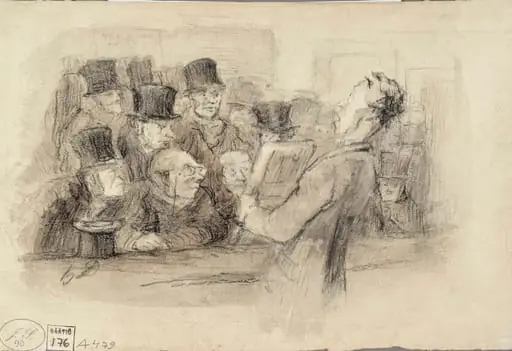 Tauluhuutokauppa
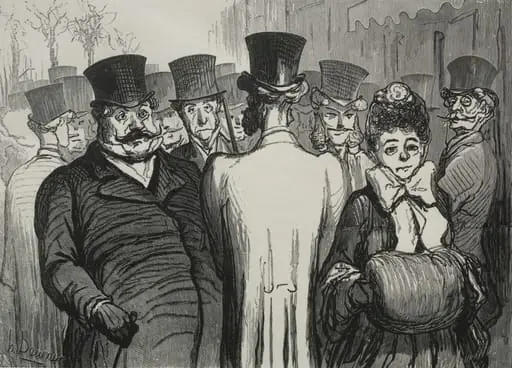 The Boulevard des Italiens
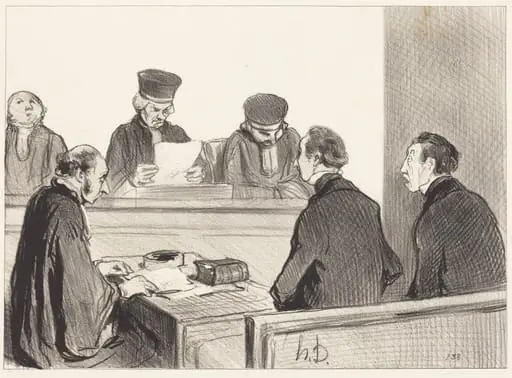 La Cour, vidant le délibéré...
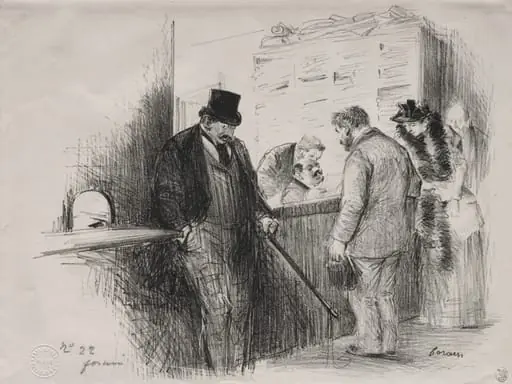 Chez l'Huissier
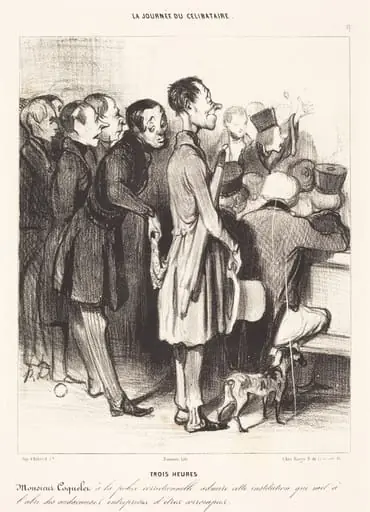 Trois heures
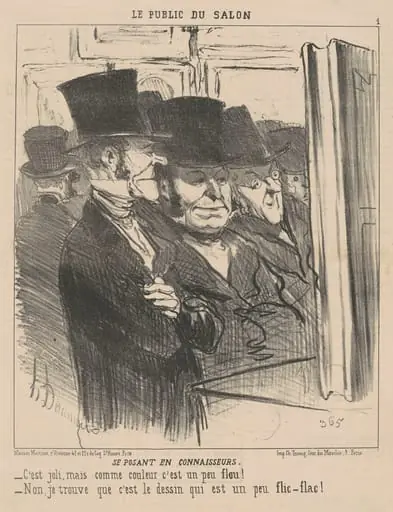 Se posant en connaisseurs
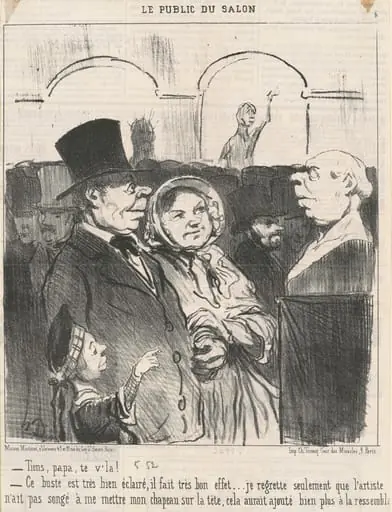 Tiens, papa, te v'la! ...
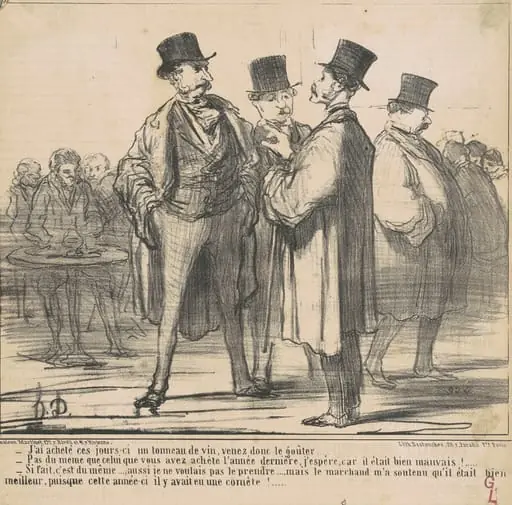 J'ai acheté ... un tonneau de vin ...
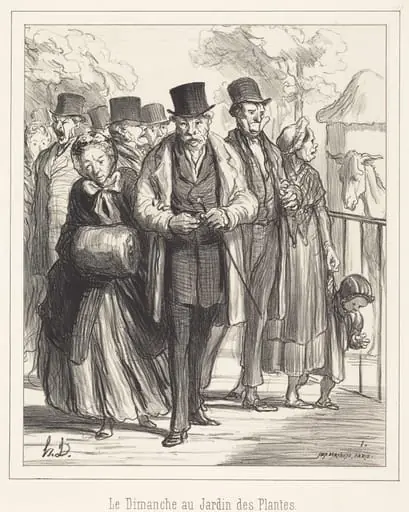 Le Dimanche au Jardin des Plantes
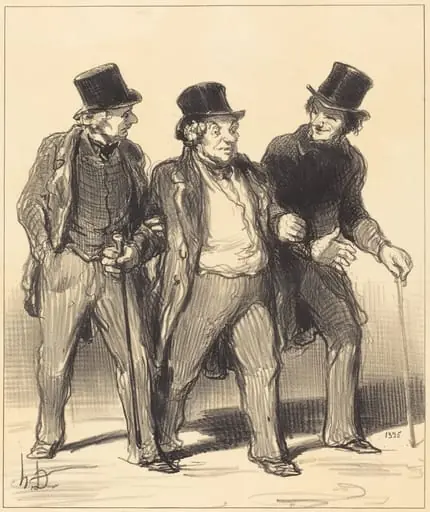 Il me semble que j'aperçois... un... chien... pas muselé!...