Artwork
Physiology of Drinking: The Four Ages
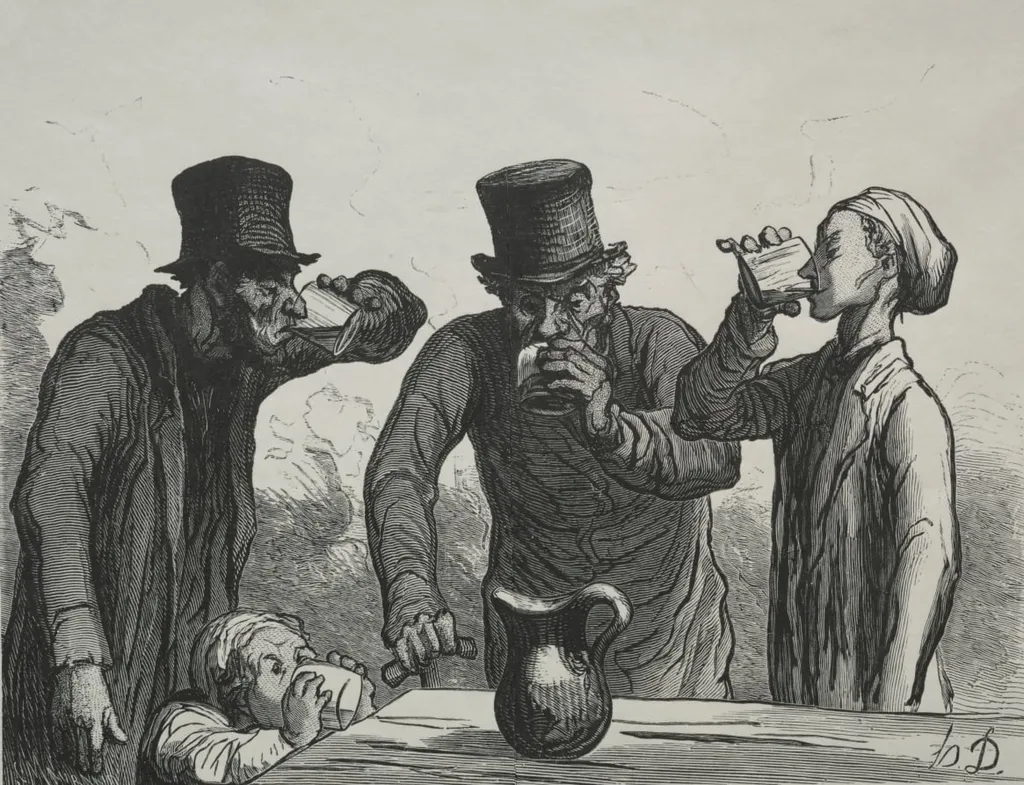
Physiology of Drinking: The Four Ages is a print by the Impressionist artist Honoré Daumier. It dates from 1862 and is held in the collection of the Cleveland Museum of Art.
About this work
The men are shown in various states of intoxication, which is interesting because it comments on the social issues of the time.
You see four men drinking at different stages of life in this painting.
The men are shown in various states of intoxication, which is interesting because it comments on the social issues of the time. This commentary was a common theme in Daumier's work, often using satire to critique society.
Check out the work of artist: Honoré Daumier (French, 1808–1879) to learn more about his style and themes.
Overview
Created in 1862, Honoré Daumier’s print 'Physiology of Drinking: The Four Ages' depicts four male figures at distinct life stages, each shown in varying degrees of intoxication. Executed as a lithograph, the work belongs to a series examining human behavior through social observation. It is part of the collection at The Cleveland Museum of Art, where it continues to reflect Daumier’s interest in the mundane and the morally ambiguous.
Subject & Meaning
The four figures represent youth, maturity, middle age, and old age, each reacting to alcohol in ways that mirror societal perceptions of drinking at different life phases. Rather than glorifying consumption, Daumier presents it as a gradual erosion of dignity and control. The scene functions as a quiet satire, highlighting the universal yet isolating nature of habit, and subtly critiques the normalization of excess in 19th-century French urban life.
Technique & Style
Daumier employed lithography to achieve bold, expressive lines and strong contrasts of light and shadow. His figures are rendered with minimal detail but maximum emotional weight, using exaggerated postures and simplified features to convey psychological states. The flat, unadorned background focuses attention entirely on the figures, reinforcing the work’s documentary tone and aligning with his journalistic approach to visual storytelling.
History & Provenance
The print was produced during a period when Daumier was deeply engaged in publishing satirical illustrations for French periodicals. It likely appeared in a weekly journal before entering private collections and eventually the Cleveland Museum of Art’s holdings. Its preservation reflects early institutional recognition of Daumier’s prints as significant social documents, not merely ephemeral commentary.
Context
In mid-19th century France, alcohol consumption was widespread, particularly among the working class, and public drunkenness was a frequent subject of moral debate. Daumier’s work responds to this climate, drawing from his observations of Parisian cafés and taverns. His images avoided overt political messaging but offered sharp, empathetic critiques of everyday vices, aligning with broader realist currents in art and literature.
Legacy
Daumier’s series on drinking contributed to a broader tradition of social observation in printmaking. His unflinching portrayal of human frailty influenced later artists interested in the psychological dimensions of ordinary life. While not widely exhibited in his lifetime as fine art, these prints are now studied for their nuanced commentary on class, habit, and the passage of time.
Artist & collection

Artist
Honoré-Victorin Daumier was a French painter, sculptor, and printmaker, whose many works offer commentary on the social and political life in France, from the Revolution of 1830 to the fall of the Second French Empire in 1870.









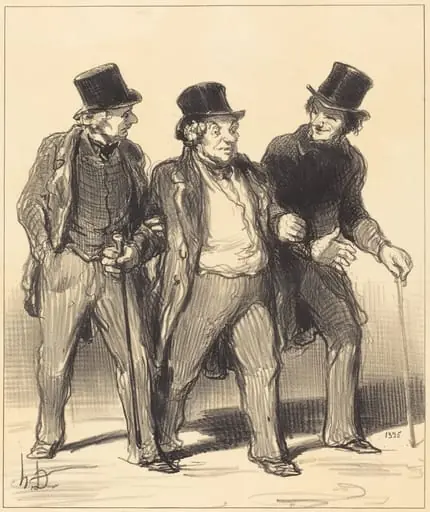 Il me semble que j'aperçois... un... chien... pas muselé!...
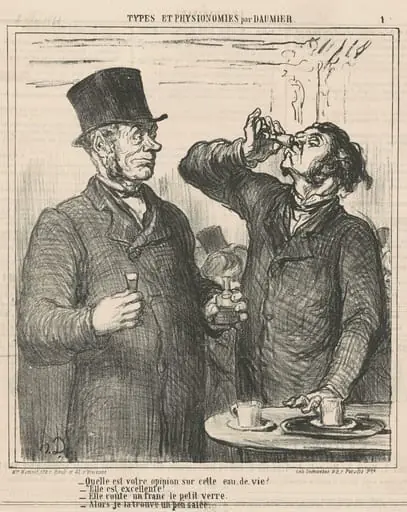 Quelle est votre opinion sur ...
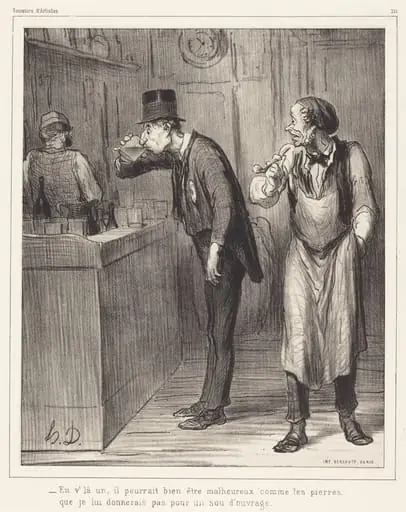 En v'la un, il pourrait bien être malheureux...
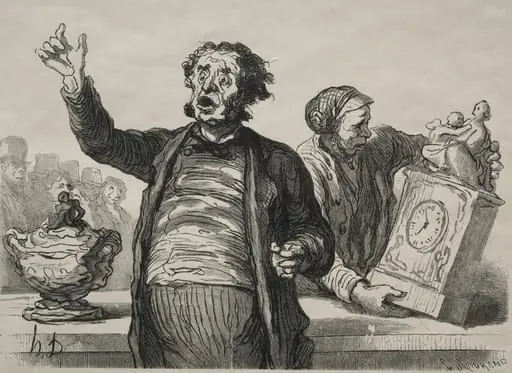 The Auction House: The Town Crier
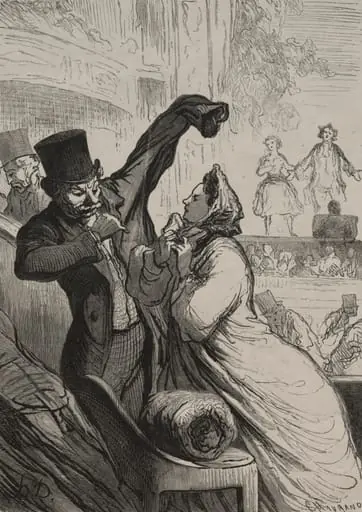 The Theatre: The Last Scene
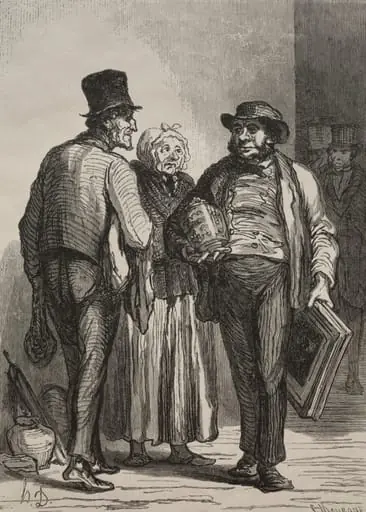 The Auction House: The Dealers
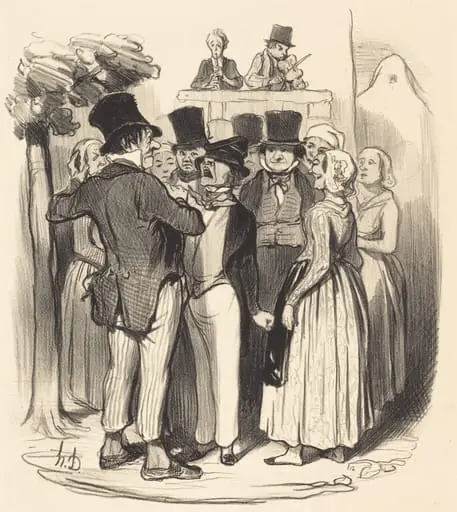 Ah! Gringalet d'Paris... tu viendras faire danser...
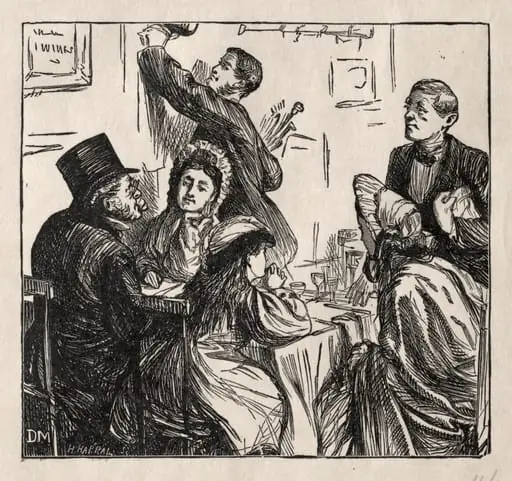 Refreshment - At the Great Exhibition
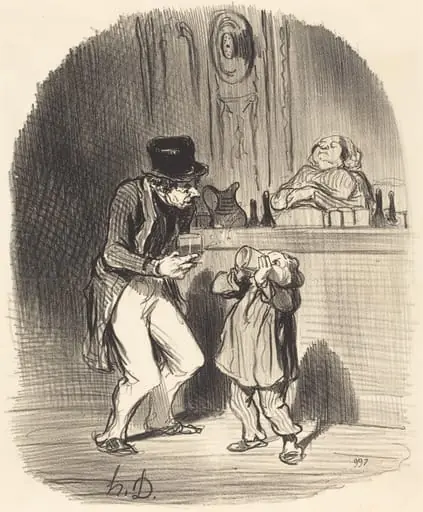 Un Père qui fait sucer à son fils...
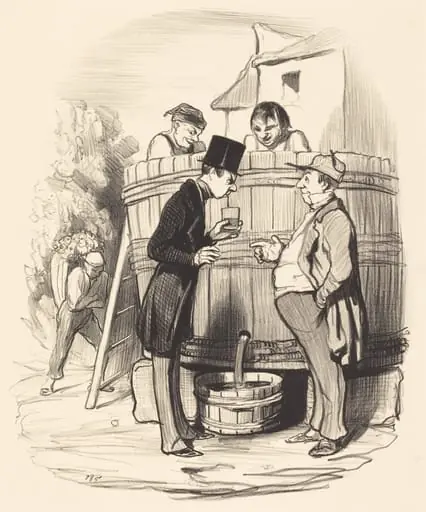 Comment trouvez-vous ce petit vin-la...
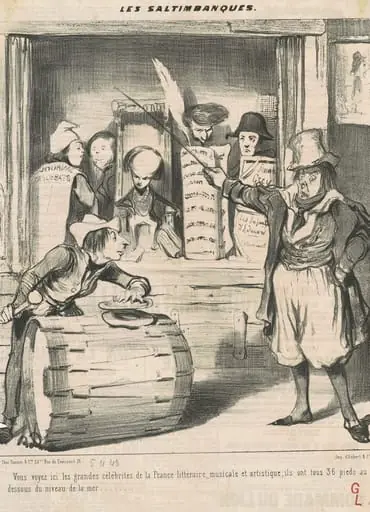 Vous yoyez ici les grandes célébrités...
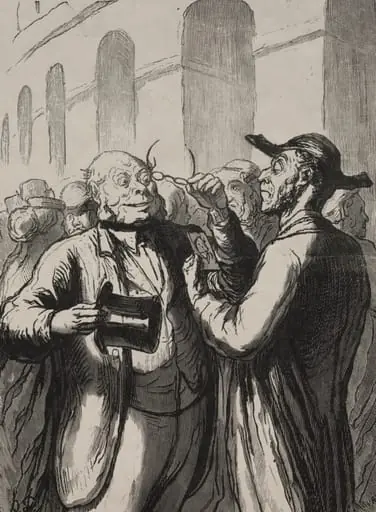 At the Universal Exhibition: Security check at the entrance: the bald need to lift their hats, and the short-sighted need to remove their glasses.