Artwork
The Theatre: The Last Scene
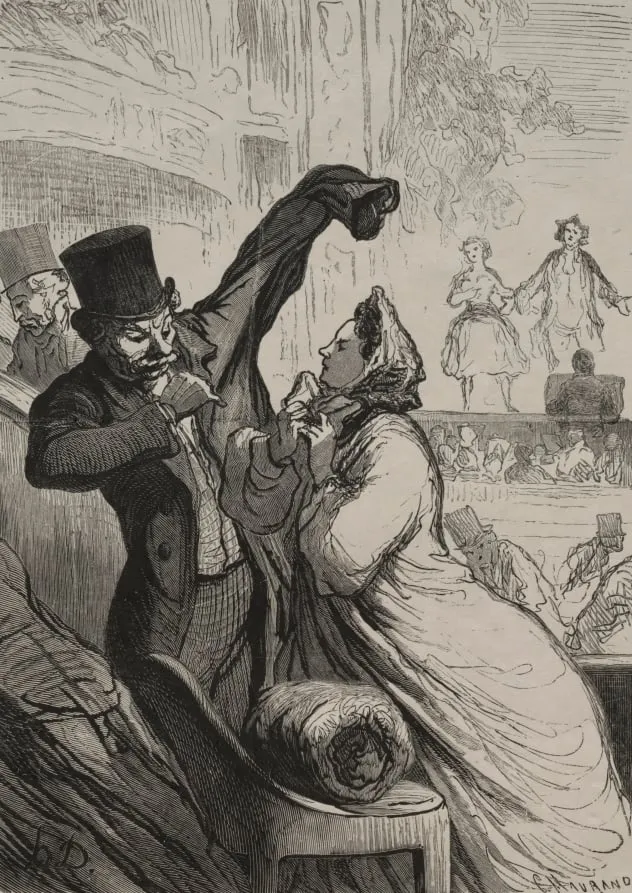
The Theatre: The Last Scene is a print by the Impressionist artist Honoré Daumier. It dates from 1862 and is held in the collection of the Cleveland Museum of Art.
About this work
Overview
The surrounding audience, dressed in period formalwear, fills the stage, their presence underscoring the transition from public spectacle to private exhaustion.
Created in 1862 by Honoré Daumier, The Theatre: The Last Scene is a lithograph capturing a quiet moment after a performance. It depicts a man in a tall hat cutting a woman’s dress while she slumps forward in fatigue. The surrounding audience, dressed in period formalwear, fills the stage, their presence underscoring the transition from public spectacle to private exhaustion. The work belongs to the collection of The Cleveland Museum of Art.
Subject & Meaning
The scene portrays the unseen labor behind theatrical performance. The woman, slumped and drained, represents the performer’s physical toll, while the man’s act of cutting her dress suggests the abrupt end of artifice and the return to mundane reality. The crowded audience, still in their finery, contrasts with her exhaustion, highlighting the divide between spectacle and the human cost sustaining it.
Technique & Style
Daumier employed rapid, expressive lithographic lines to convey motion and emotion without fine detail. The sketchy, energetic strokes emphasize the immediacy of the moment, rejecting idealized forms in favor of raw observation. Shadows and overlapping figures create depth without traditional perspective, reinforcing the work’s documentary quality and alignment with Realist principles.
History & Provenance
The print was produced during Daumier’s prolific period of social commentary, likely intended for publication in a periodical. It entered The Cleveland Museum of Art’s collection in the 20th century, part of a broader acquisition of 19th-century French graphic works. Its preservation reflects its significance as an example of Daumier’s critical eye and technical mastery in printmaking.
Context
In 1860s France, theater was both popular entertainment and a mirror of social hierarchies. Daumier, long engaged with urban life and class dynamics, used the stage as a microcosm to reveal hidden tensions. This print aligns with his broader body of work that exposed the gap between public performance and private struggle, particularly among working-class individuals.
Legacy
The Theatre: The Last Scene remains a quiet but potent example of Realist printmaking. It influenced later artists interested in the psychology of labor and the unseen rituals behind public life. Its unembellished portrayal of exhaustion and routine helped redefine the potential of lithography as a medium for social observation beyond satire.
Artist & collection
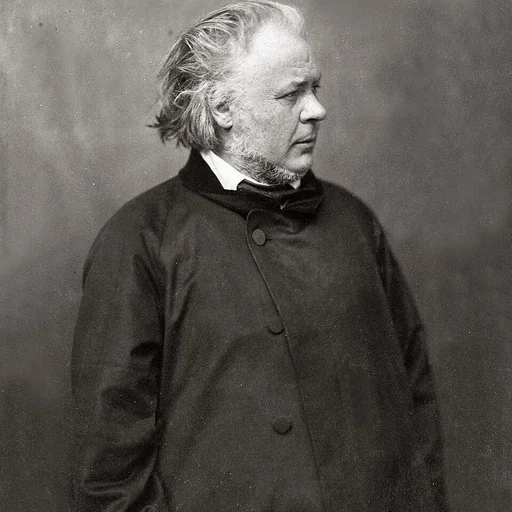
Artist
Honoré-Victorin Daumier was a French painter, sculptor, and printmaker, whose many works offer commentary on the social and political life in France, from the Revolution of 1830 to the fall of the Second French Empire in 1870.









 Refreshment - At the Great Exhibition
 The Auction House: The Dealers
 Musical Works of Ernest Doré: Souvenir of Alsace, Alsatian Dance - Title Page
 Ah! Gringalet d'Paris... tu viendras faire danser...
 Parlons, Madame...ces nudités sont révoltantes...
 On the Train: A Pleasant Companion
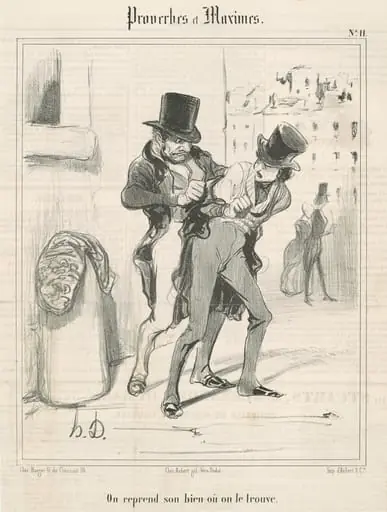 On reprend son bien ou on le trouve
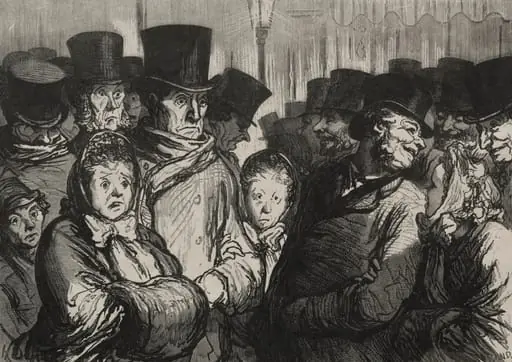 A Street at Midnight: Coming out of a drama. Coming out of a variety show
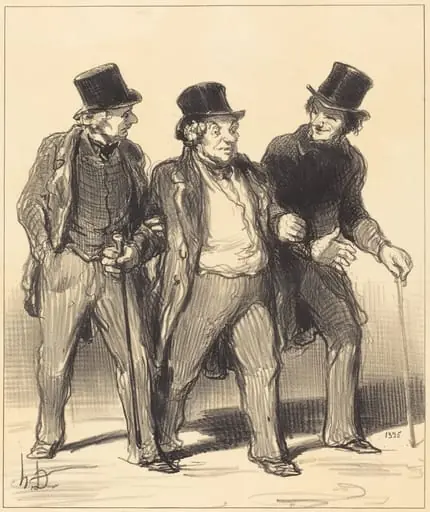 Il me semble que j'aperçois... un... chien... pas muselé!...
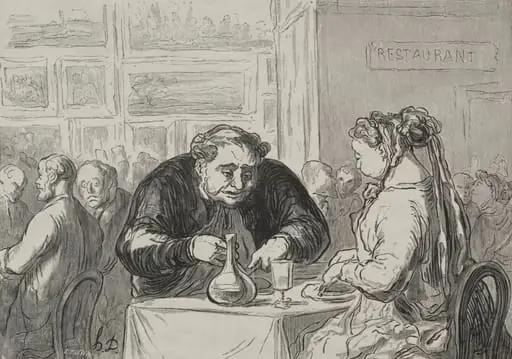 The Restaurant of the Great Art Exhibition: Love for the arts and the cutlet.
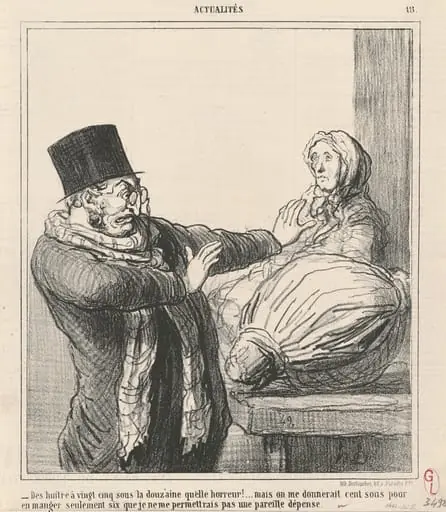 Des huitres a vingt-cinq sous la douzaine ... !
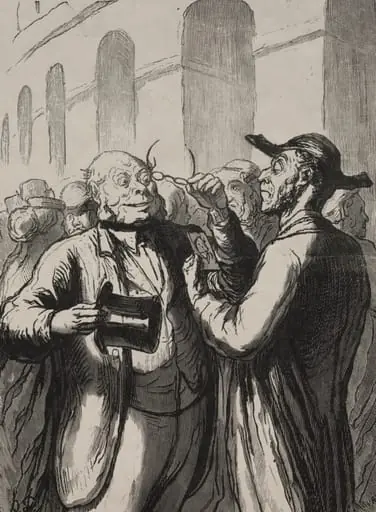 At the Universal Exhibition: Security check at the entrance: the bald need to lift their hats, and the short-sighted need to remove their glasses.