Artwork
Rue Transnonain, April 15, 1834
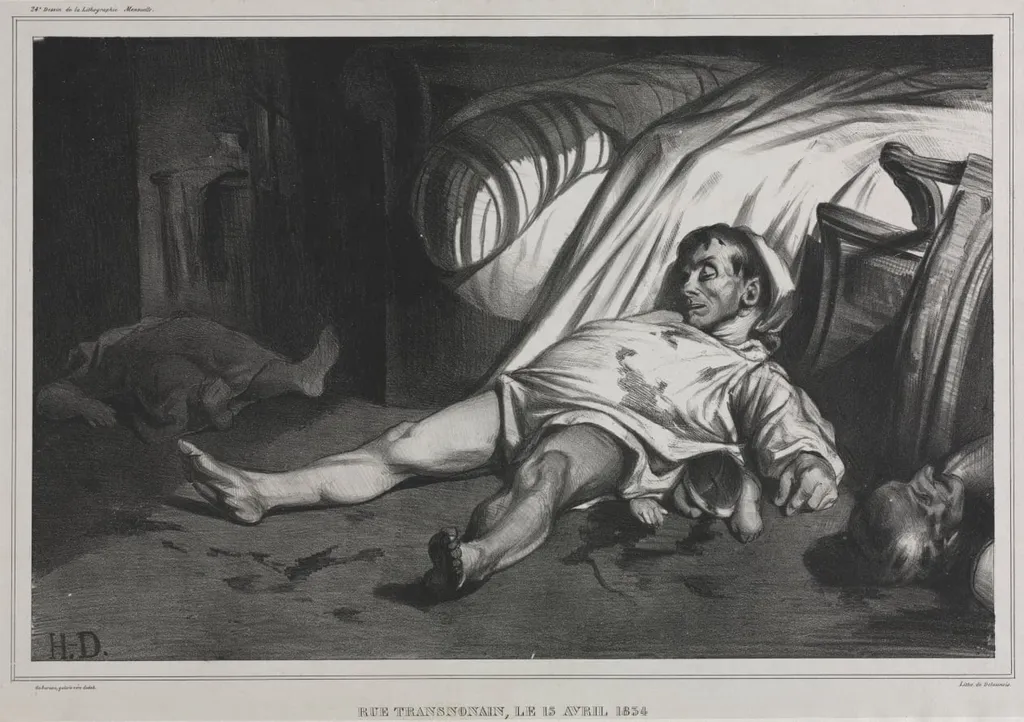
Rue Transnonain, April 15, 1834 is a print by the Romanticist artist Honoré Daumier. It dates from 1834 and is held in the collection of the Cleveland Museum of Art.
About this work
Overview
The print was produced in response to state violence against civilians during a workers’ uprising, and it appeared in a short-lived radical journal.
Created in 1834, Rue Transnonain, April 15, 1834 is a lithograph by Honoré Daumier depicting the aftermath of a military massacre in Paris. The print was produced in response to state violence against civilians during a workers’ uprising, and it appeared in a short-lived radical journal. Daumier’s stark composition avoids spectacle, focusing instead on the quiet horror of ordinary lives extinguished in their homes.
Subject & Meaning
The scene shows the bodies of civilians—man, child, and elderly man—lying in a dim, cluttered room, killed without warning or distinction. No weapons, no soldiers, no resistance are visible; only the aftermath of indiscriminate retaliation. Daumier presents the victims not as rebels but as innocent residents, underscoring the brutality of state power and the vulnerability of the urban poor.
Technique & Style
Daumier used lithography to achieve sharp contrasts between deep shadows and stark white spaces, heightening the emotional weight of the scene. His lines are economical yet precise, rendering textures like fabric and skin with minimal detail. The composition is tightly framed, isolating the tragedy within a single room, reinforcing the intimacy and claustrophobia of the violence.
History & Provenance
The print was published in L'Association Mensuelle, a journal edited by Charles Philipon, which briefly operated under relaxed censorship laws. Its distribution was swiftly suppressed after release, and existing copies were confiscated. Few original impressions survive, making it a rare document of political dissent during Louis-Philippe’s reign.
Context
The massacre occurred after a workers’ revolt in Lyon spread to Paris, prompting government forces to retaliate against suspected sympathizers. Official reports claimed only one death; Daumier’s image contradicted this, revealing the scale of civilian casualties. The government sought to silence dissent, but the print circulated clandestinely, becoming a symbol of resistance.
Legacy
Rue Transnonain established Daumier as a fearless chronicler of social injustice. Though not widely seen at the time, the print later influenced generations of political artists and photojournalists. Its unflinching realism set a precedent for depicting state violence without rhetoric, prioritizing human dignity over propaganda.
Artist & collection
Artist
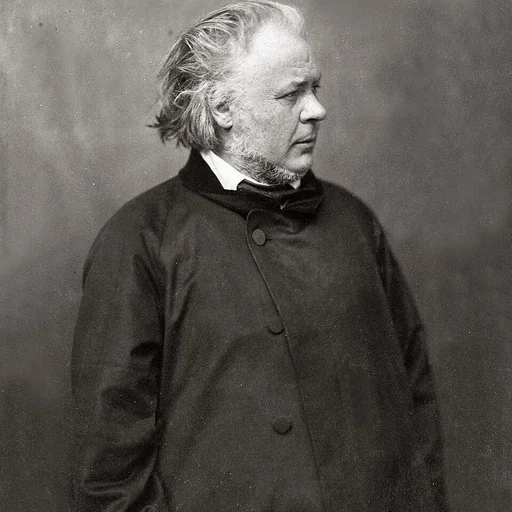
Honoré-Victorin Daumier was a French painter, sculptor, and printmaker, whose many works offer commentary on the social and political life in France, from the Revolution of 1830 to the fall of the Second French Empire in 1870.









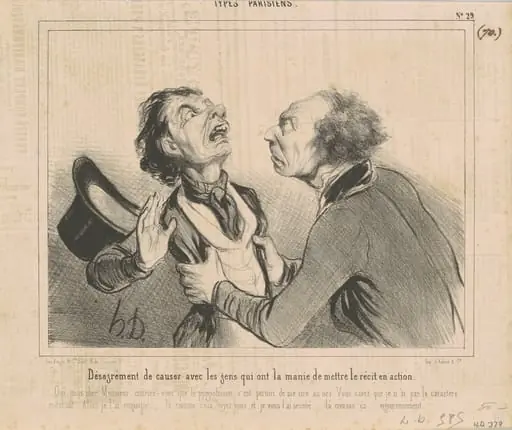 Désagrément de causer avec les gens...
 Rue Transnonain, le 15 avril 1834
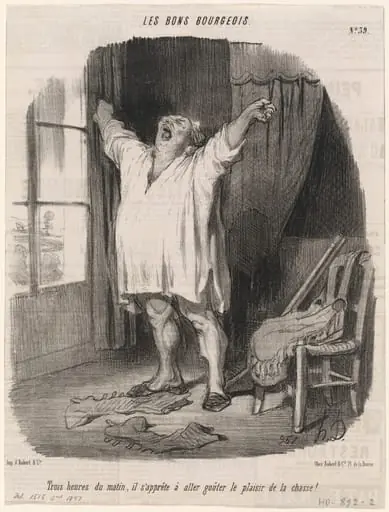 Trois heures du matin...
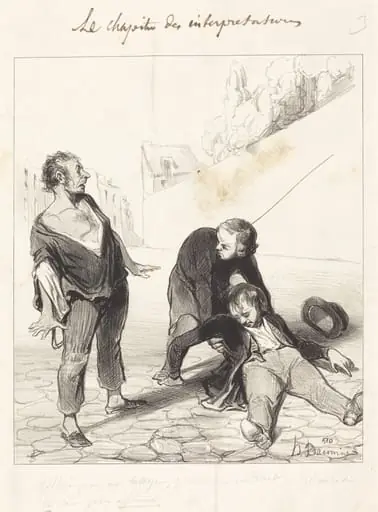 Fallait pas me tutoyer, j'suis dans...
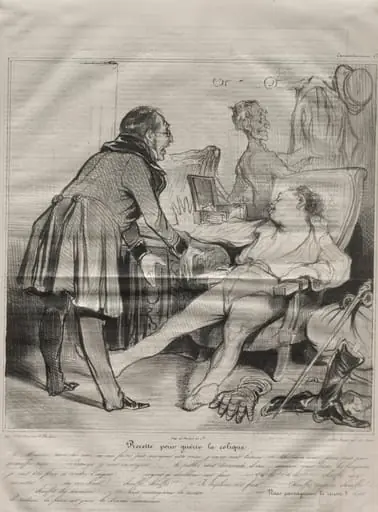 Recipe to Cure Colic
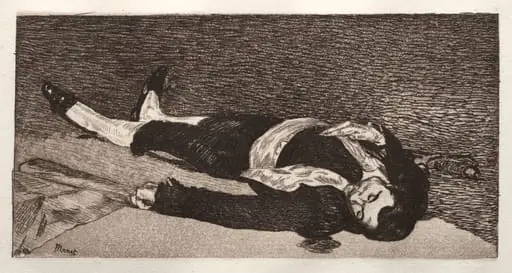 Torero mort
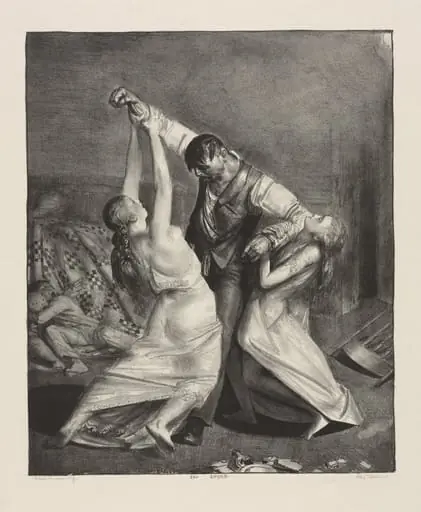 The Drunk
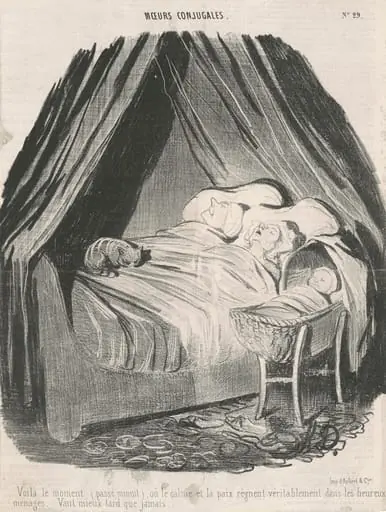 Voilà le moment (passé minuit) o∙ le calme et la paix règnent véritablement dans les heureux ménages. Vaut mieux tard que jamais.
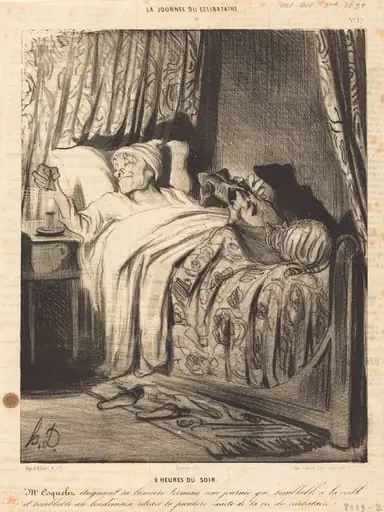 9 heures du soir
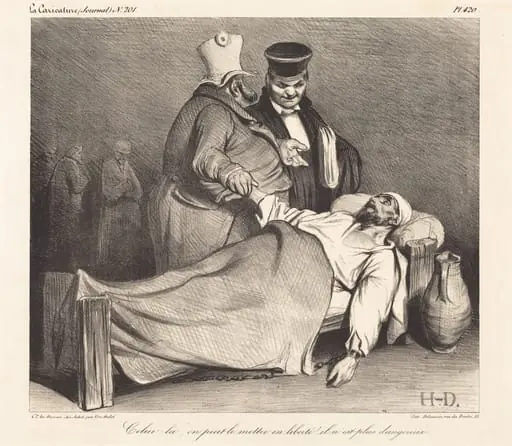 Celui-la, on peut le mettre en liberté! (This one we can set free! He is no longer dangerous!)
 The Hot Bath
 Toujours l'influence du congres de la paix ...