Artwork
Fallait pas me tutoyer, j'suis dans...
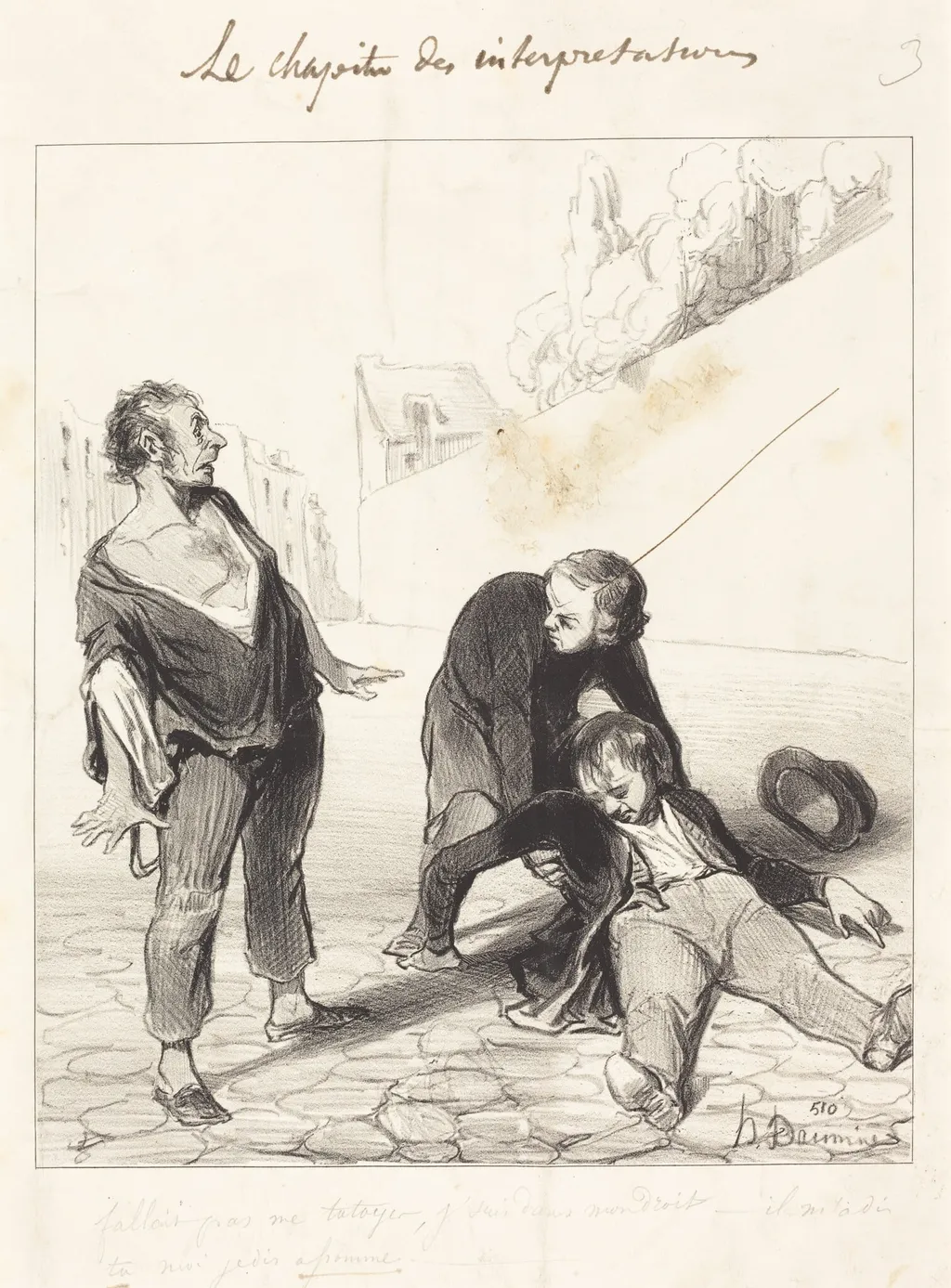
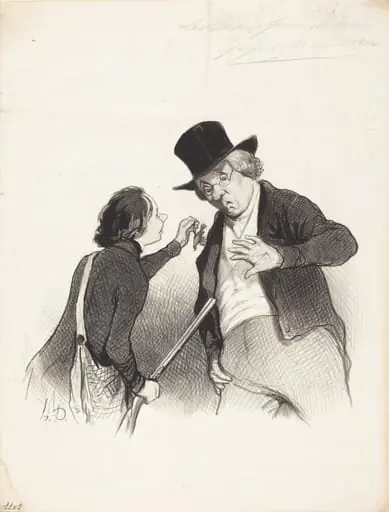
Fallait pas me tutoyer, j'suis dans... is an ink print by the Romanticist artist Honoré Daumier. It dates from 1843 and is held in the collection of the National Gallery of Art.
About this work
Overview
The image’s informal title suggests a rupture in social etiquette, signaling a broader commentary on the erosion of deference in post-revolutionary society.
This 1843 lithograph by Honoré Daumier captures a moment of social tension in urban France, rendered through the medium of print rather than paint. It belongs to a series of satirical works published in periodicals like *Le Charivari*, where Daumier turned everyday encounters into critiques of class and power. The image’s informal title suggests a rupture in social etiquette, signaling a broader commentary on the erosion of deference in post-revolutionary society.
Subject & Meaning
The scene depicts three men on a street: one standing, two engaged in a physical altercation on the ground. The standing figure, possibly a bourgeois observer, seems to react to the lower-class struggle below. The title, a colloquial protest against familiarity, implies a clash between social ranks—where informal address becomes a transgression. Daumier uses this minor incident to expose the fragility of social boundaries and the tension between emerging democratic ideals and entrenched hierarchies.
Technique & Style
Daumier employed lithography to achieve rapid, expressive lines and strong tonal contrasts. His use of chiaroscuro enhances the drama of the moment, isolating figures against a shadowed street. Facial expressions are exaggerated yet precise, conveying emotion without caricature’s absurdity. The clothing and postures are rendered with observational accuracy, grounding the scene in everyday reality while amplifying its social resonance through composition and gesture.
History & Provenance
Created during the July Monarchy, the print was likely published in *Le Charivari*, where Daumier’s work regularly provoked authorities. Lithographs like this were widely distributed, reaching a broad public beyond elite art circles. Though the original print’s early ownership is undocumented, its survival in museum collections reflects its recognition as a key example of 19th-century political printmaking, preserved for its historical and artistic significance.
Context
In the 1840s, France’s press was a battleground for political expression. Daumier’s prints emerged amid censorship and repression, yet he found ways to critique power through allegory and social observation. The lithograph reflects a society in flux—where the old aristocracy’s privileges were challenged by a rising middle class and working population. His work resonated with republican sentiments, using humor to undermine authority without direct confrontation.
Legacy
Daumier’s prints influenced later generations of social realists and satirists, from the German Expressionists to 20th-century editorial cartoonists. His ability to distill complex social dynamics into single, potent images set a precedent for visual journalism. Though produced for ephemeral publications, these works endured as documents of public life, offering insight into the tensions of modernizing France through the lens of ordinary encounters.
Artist & collection
Artist
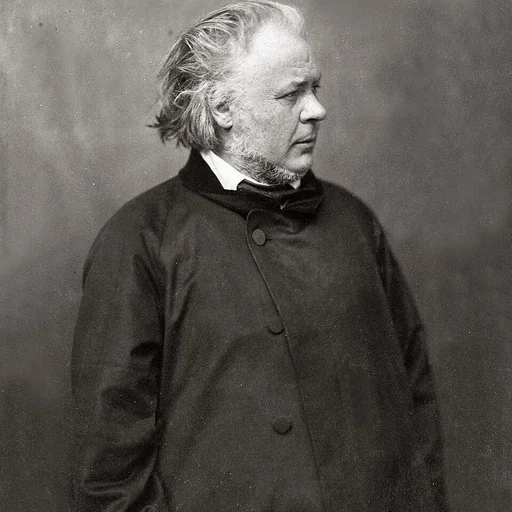
Honoré-Victorin Daumier was a French painter, sculptor, and printmaker, whose many works offer commentary on the social and political life in France, from the Revolution of 1830 to the fall of the Second French Empire in 1870.

 Un Début a la chasse
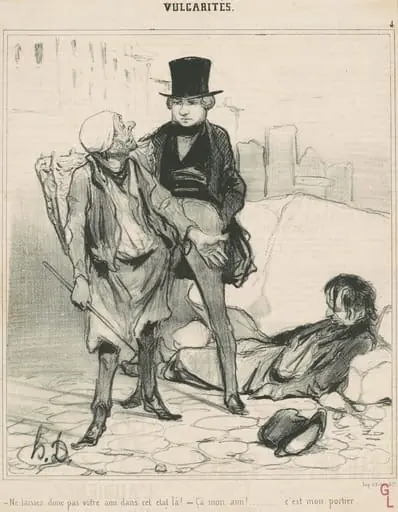 Ne laissez donc pas votre ami dans cet état la!
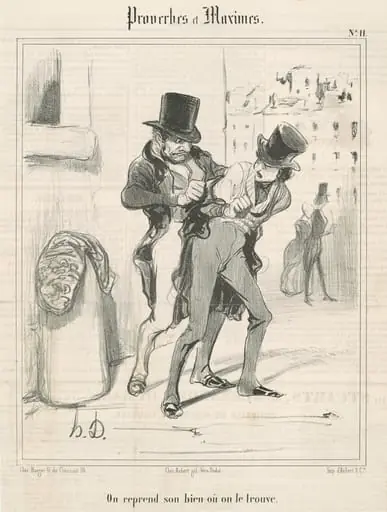 On reprend son bien ou on le trouve
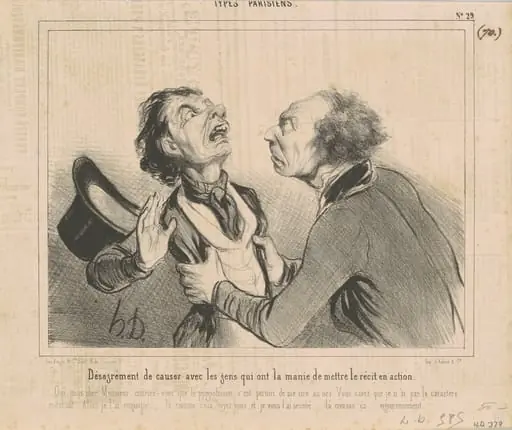 Désagrément de causer avec les gens...
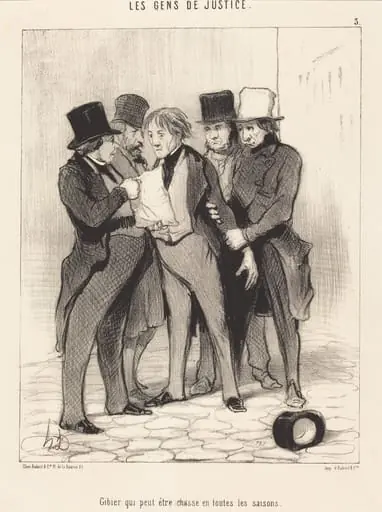 Gibier qui peut être chassé en toutes les saisons
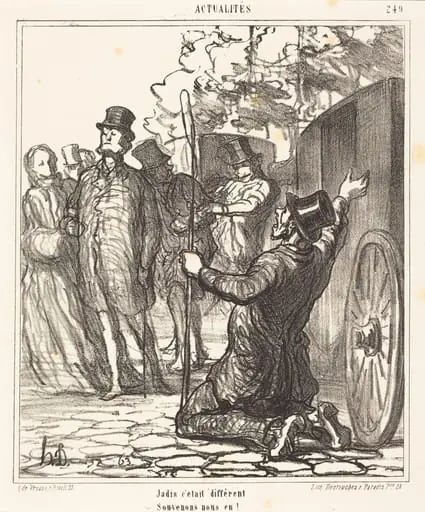 Jadis c'était différent
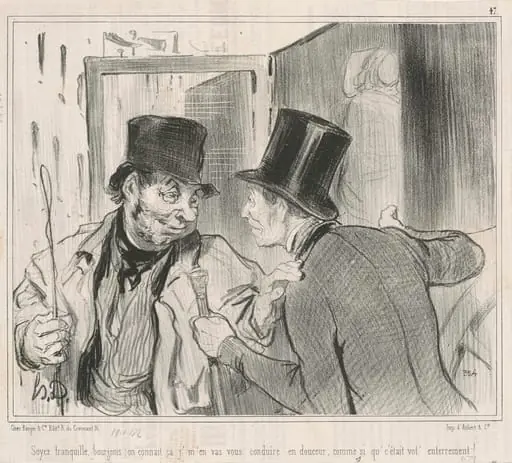 Soyez tranquille bourgeois, on connait
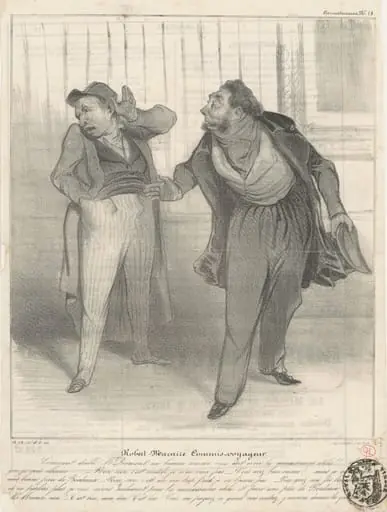 Robert Macaire commis-voyageur
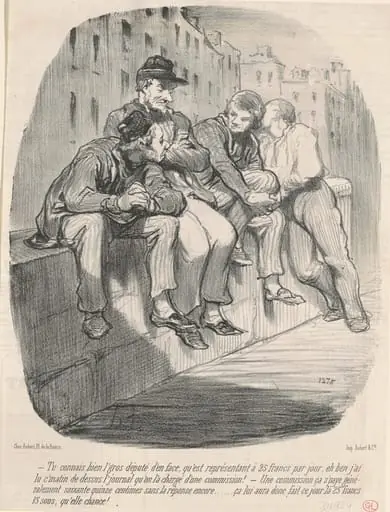 Tu connais bien l'gros député d'en face ...
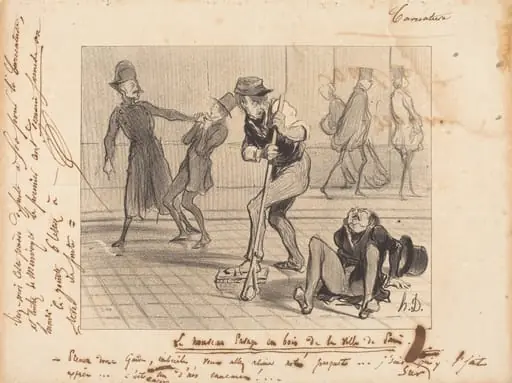 Le Nouveau pavage en bois... de Paris