Artwork
Mary Magdalene
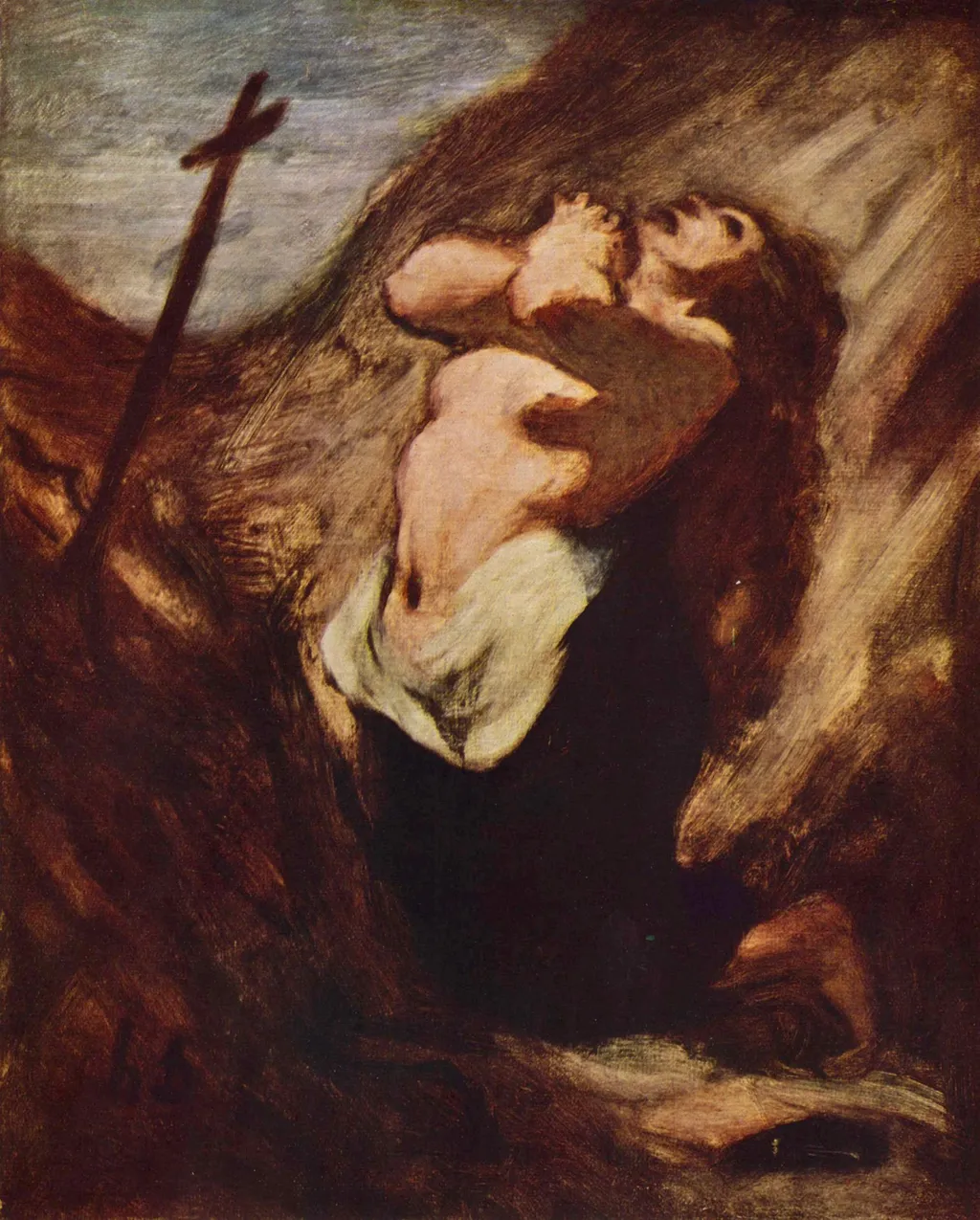
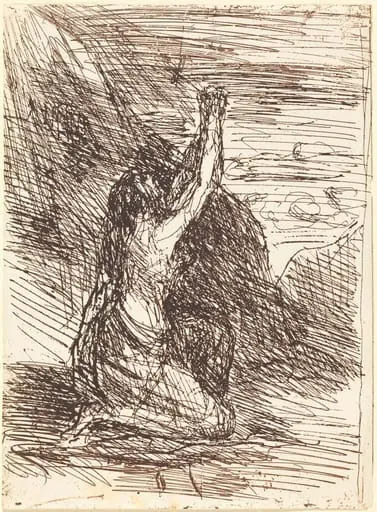
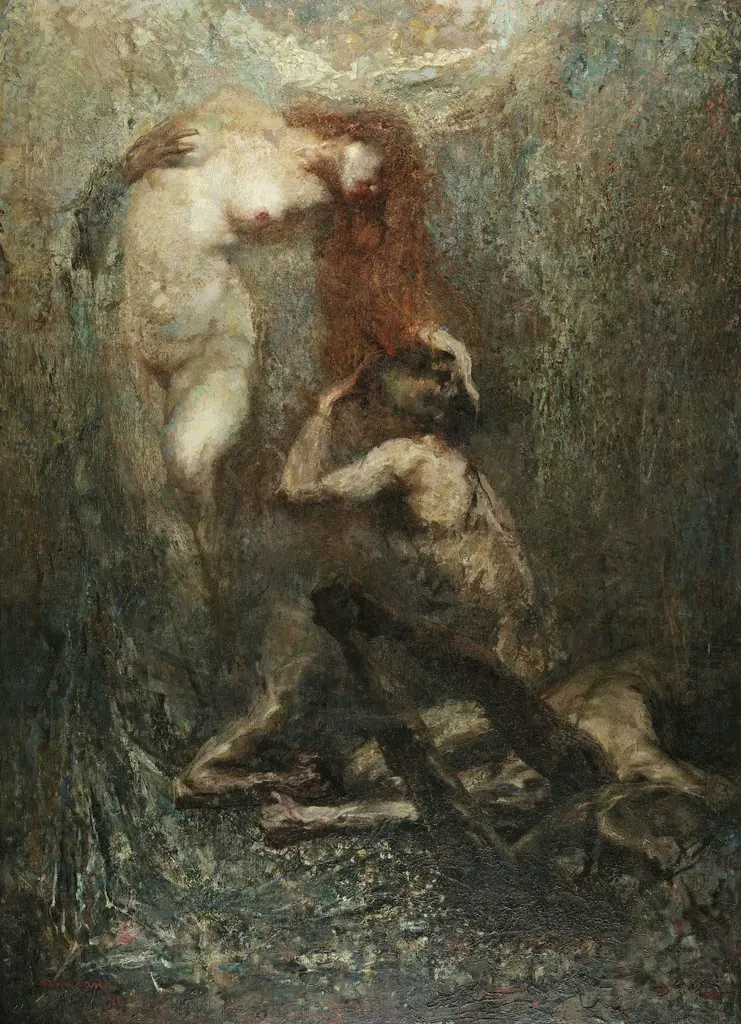
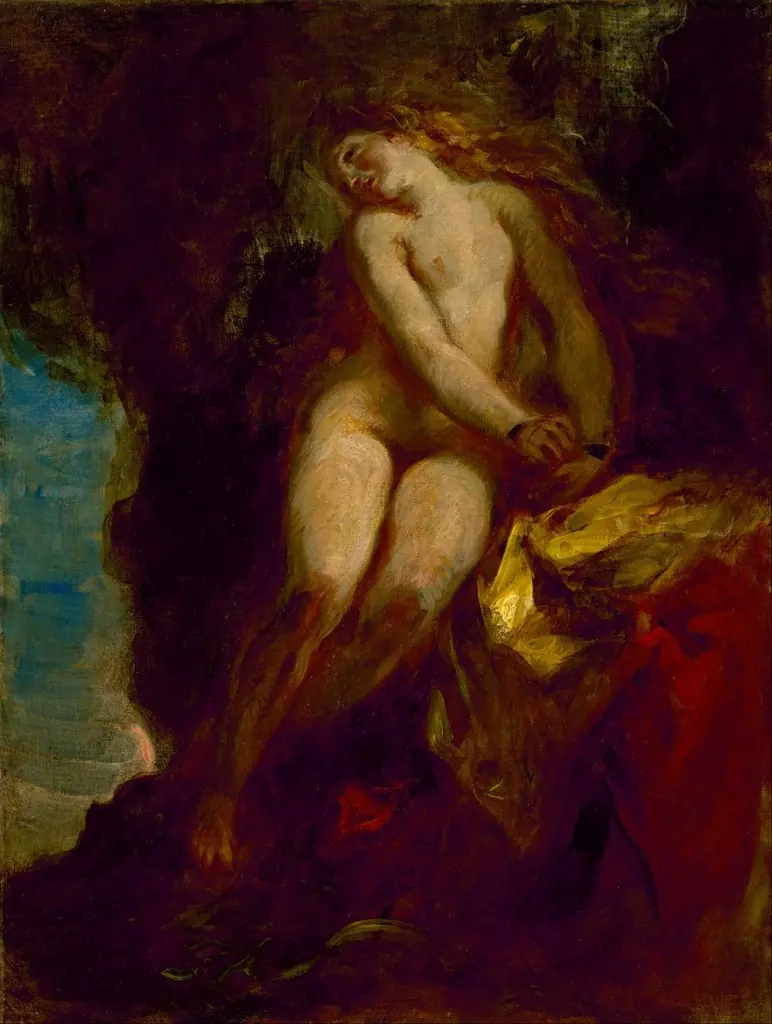
Mary Magdalene is an oil painting by the Realist artist Honoré Daumier. It dates from 1849 and is held in the collection of the National Museum of Western Art.
About this work
Overview
Painted in 1849 by Honoré Daumier, this oil on canvas work portrays Mary Magdalene in a moment of intense spiritual distress.
Painted in 1849 by Honoré Daumier, this oil on canvas work portrays Mary Magdalene in a moment of intense spiritual distress. Executed in a somber palette dominated by browns and blacks, the painting diverges from traditional depictions by emphasizing emotional rawness over idealized piety. It resides in the National Museum of Western Art, Tokyo, as part of a collection focused on 19th-century European art.
Subject & Meaning
The figure of Mary Magdalene is shown collapsed on rocky ground, her body contorted and head thrown back, suggesting a crisis of faith or divine revelation. Daumier avoids conventional symbols of penitence, instead conveying inner turmoil through physical posture and facial expression. The absence of narrative context invites interpretation as a psychological portrait of spiritual ecstasy intertwined with suffering.
Technique & Style
Daumier employed thick, gestural brushwork to model the figure and landscape, creating a sense of urgency and emotional weight. Dark, uneven tones envelop the scene, while the pale robe of the figure emerges through subtle contrasts. The use of chiaroscuro heightens the drama, isolating the body in a shaft of implied light against a suffocating, shadowed environment.
History & Provenance
Completed in 1849, the painting emerged during Daumier’s period of intense religious and social introspection. It was likely painted for personal exploration rather than public commission. The work entered the National Museum of Western Art’s collection through the Ueno Collection, acquired in the 1950s from a private Japanese collector with ties to European art.
Context
Daumier created this work amid France’s political upheavals and a broader cultural shift toward psychological realism in religious imagery. While contemporaries like Delacroix emphasized grandeur, Daumier turned inward, reflecting Romanticism’s interest in individual emotion. His approach aligned with emerging trends that prioritized inner experience over doctrinal illustration.
Legacy
Though not widely exhibited in Daumier’s lifetime, the painting has since become a key example of his capacity to merge social observation with spiritual intensity. It influenced later artists exploring emotional states through expressive form, particularly in early 20th-century German Expressionism, where inner turmoil was rendered with similar physicality and tonal contrast.
Own this work as a print
Artist & collection
Artist
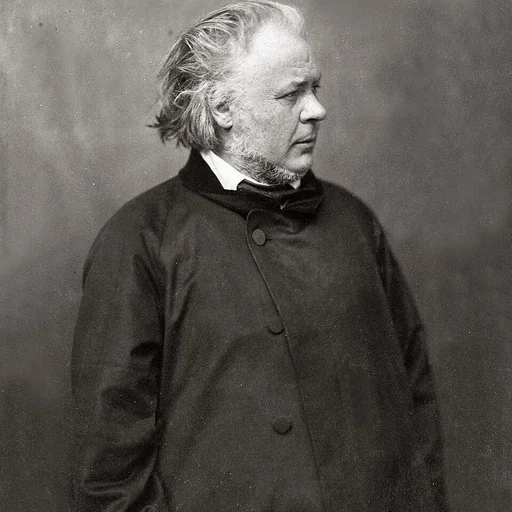
Honoré-Victorin Daumier was a French painter, sculptor, and printmaker, whose many works offer commentary on the social and political life in France, from the Revolution of 1830 to the fall of the Second French Empire in 1870.