Artwork
Noli me tangere
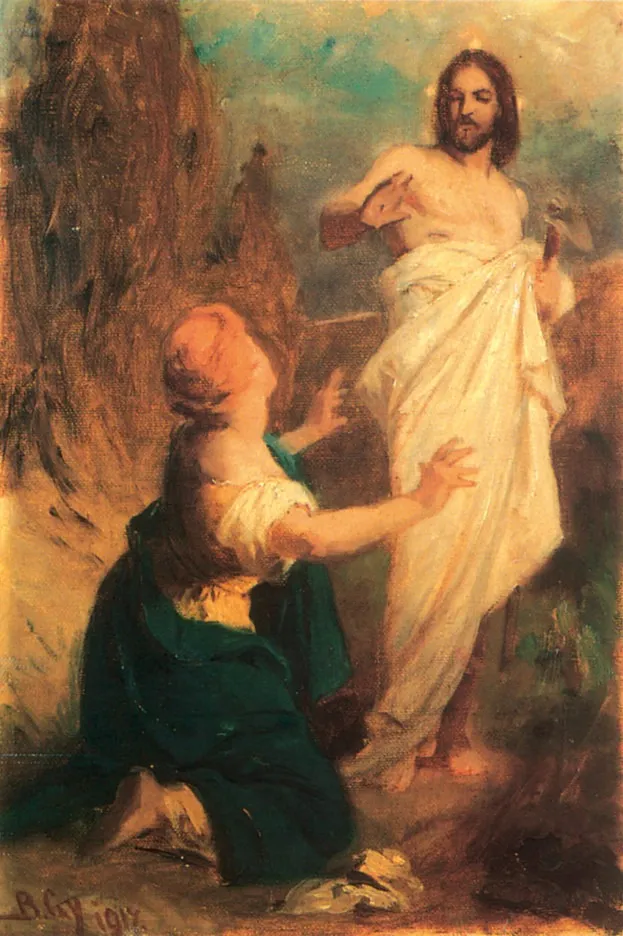
Noli me tangere is an oil painting by the Art Nouveau artist Gyula Benczúr. It dates from 1917 and is held in the collection of the Hungarian National Gallery.
About this work
Overview
Though associated with academic traditions, this work reflects the softer, more atmospheric tendencies of late Art Nouveau.
Gyula Benczúr painted *Noli me tangere* in 1917 using oil on canvas. Though associated with academic traditions, this work reflects the softer, more atmospheric tendencies of late Art Nouveau. It illustrates a moment from the Gospel of John, in which the risen Christ appears to Mary Magdalene outside his tomb. The painting is part of the Hungarian National Gallery’s permanent collection, representing Benczúr’s later career as a respected figure in Hungarian cultural life.
Subject & Meaning
The scene captures Christ’s first appearance to Mary Magdalene after his resurrection, as described in the New Testament. She kneels before him, arms outstretched in recognition or longing, while he raises his hand in gentle refusal—'Do not touch me.' The composition emphasizes emotional restraint and spiritual transition, avoiding dramatic gestures in favor of quiet intimacy. The moment conveys both human grief and divine mystery, rendered with solemnity rather than spectacle.
Technique & Style
Benczúr employed muted earth tones—soft greens, browns, and whites—to create a hazy, contemplative atmosphere. The figures are rendered with careful detail, particularly in the folds of fabric and facial expressions, while the background dissolves into blurred foliage, suggesting a dreamlike setting. Brushwork is smooth and controlled, aligning with academic training, yet the overall tone leans toward the lyrical sensibility of Art Nouveau, emphasizing mood over narrative clarity.
History & Provenance
Completed in 1917, near the end of Benczúr’s career, the painting was acquired by the Hungarian National Gallery shortly after its creation. It remained within institutional hands, reflecting its status as a significant work by a nationally revered artist. Benczúr, who taught at the Academy of Fine Arts in Budapest, was deeply embedded in Hungary’s cultural institutions, and this painting was likely seen as a fitting contribution to the national artistic canon.
Context
Painted during the final years of World War I, *Noli me tangere* emerged in a time of national upheaval and spiritual searching. While European art was moving toward modernism, Benczúr maintained a figurative, emotionally resonant approach rooted in religious and historical themes. His choice to revisit a traditional biblical subject during such a turbulent period suggests a desire to anchor identity in enduring symbols of hope and renewal.
Legacy
Though Benczúr is better known for large-scale historical paintings and portraits, *Noli me tangere* stands as a quiet testament to his ability to convey spiritual depth through restraint. It remains one of the few late works in his oeuvre that prioritizes introspection over grandeur. The painting continues to be studied for its synthesis of academic technique and Art Nouveau sensitivity, offering insight into Hungarian art’s transitional phase in the early 20th century.
Artist & collection
Artist
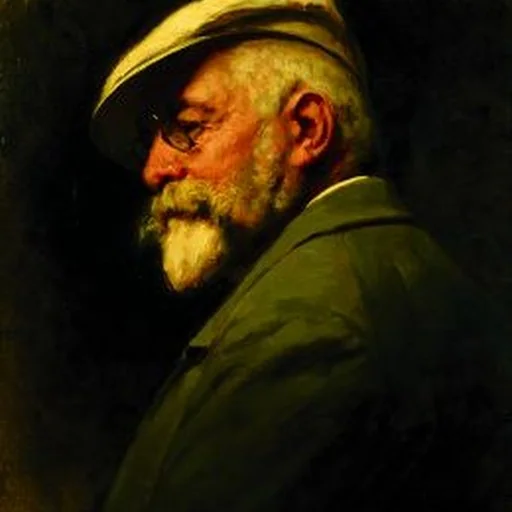
Gyula Benczúr (28 January 1844 – 16 July 1920) was a Hungarian painter and art teacher.

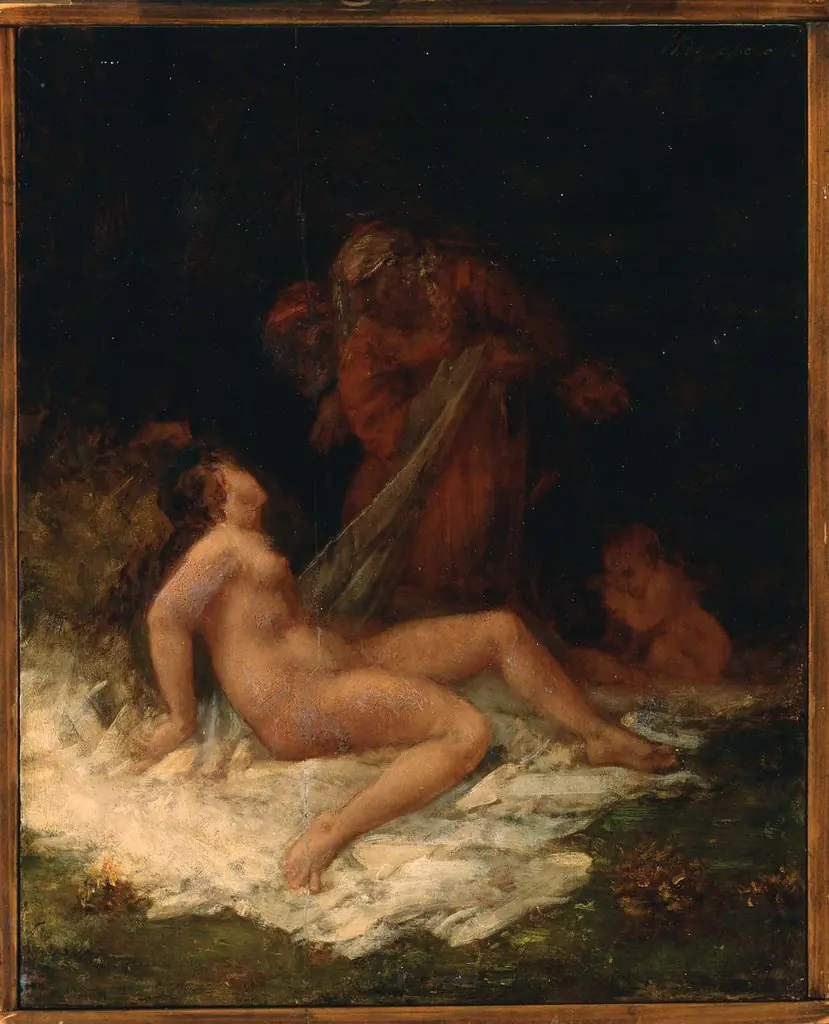 Susanna and the Elders
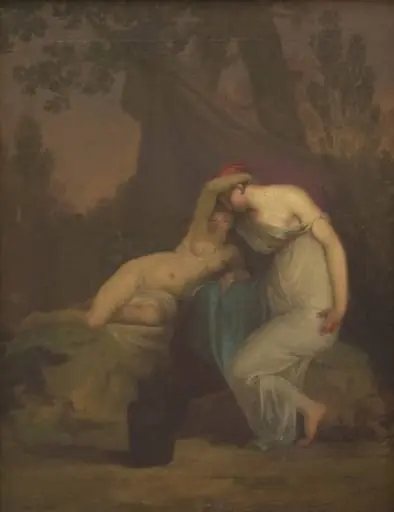 The Greek Poet Sappho and the Girl from Mytilene
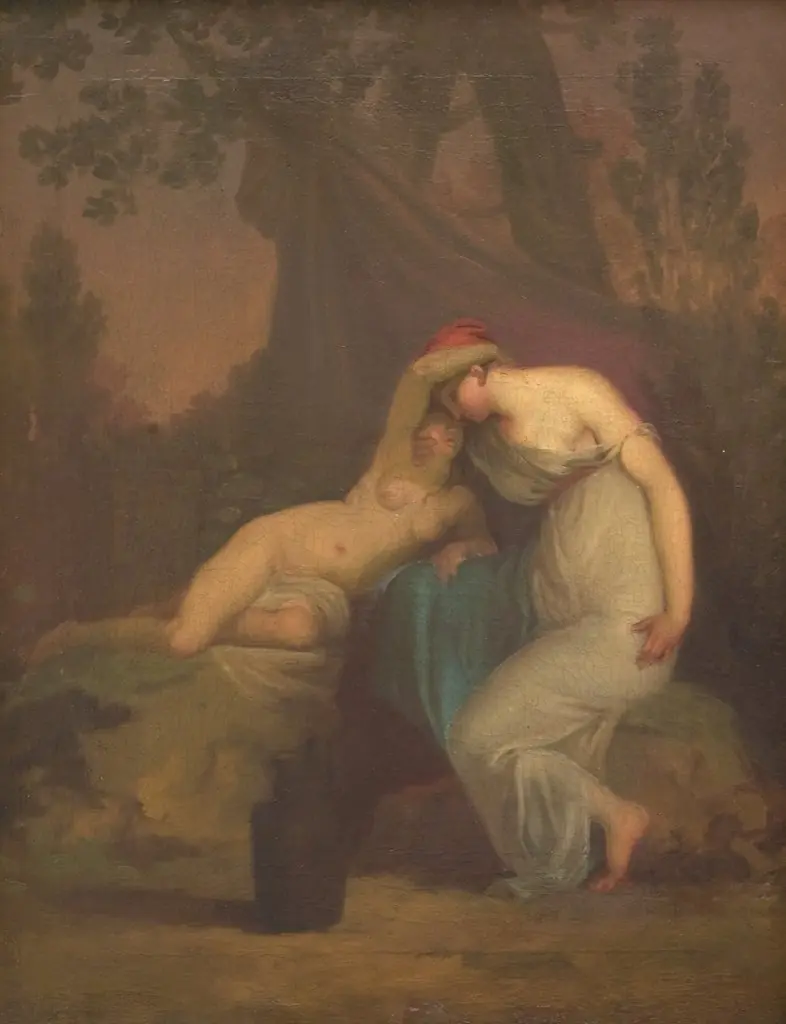 The Greek Poet Sappho and the Girl from Mytilene
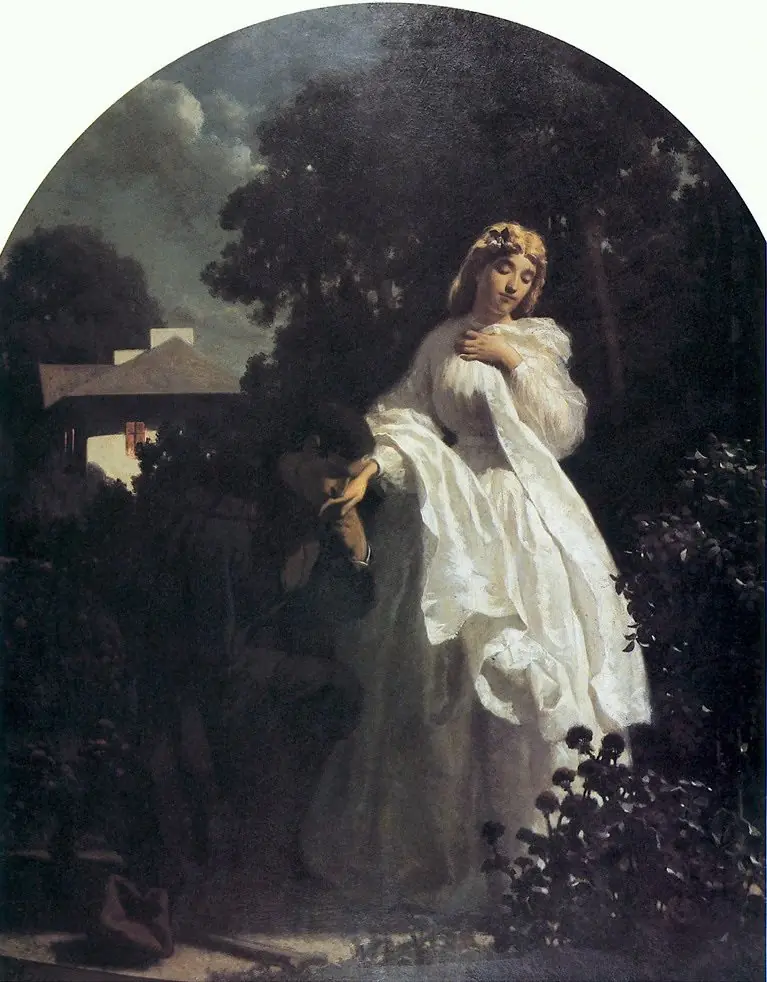 Greeting to the insurgent
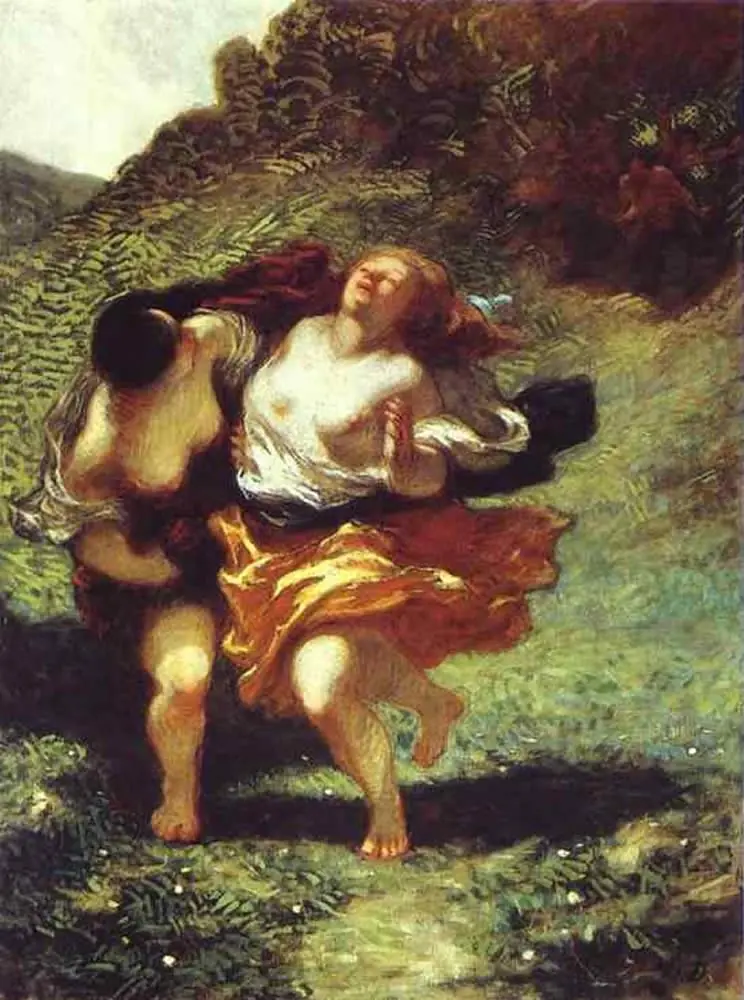 Femmes poursuivies par des satyres
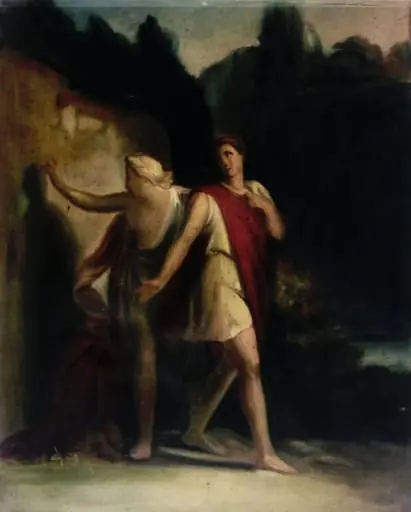 Istoria desenului
 Mary Magdalene
 Woman Reclining in a Landscape
 Kneeling Woman with Child
 Allegory of Life
 Woman in the garden
 Burns and his Highland Mary