Artwork
Le donneur d'eau benite à Notre Dame
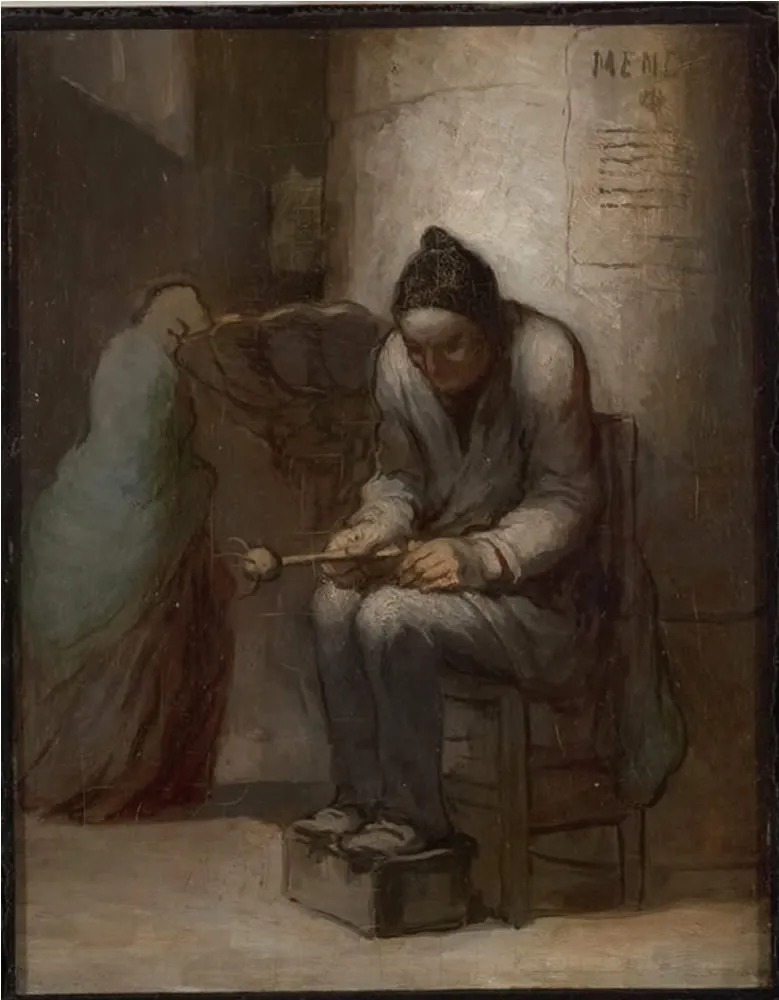
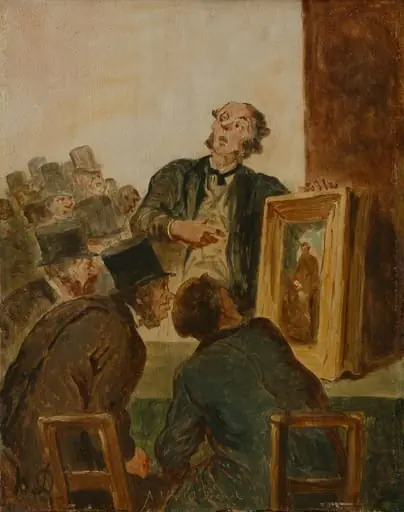
Le donneur d'eau benite à Notre Dame is an oil painting by the Realist artist Honoré Daumier. It dates from 1853 and is held in the collection of the Hammer Museum.
About this work
Overview
Created around 1853, this oil on canvas by French artist Honoré Daumier is part of the Hammer Museum’s collection. The work presents a solitary figure seated on a chair, rendered in a restrained palette that emphasizes the quiet mood of the scene.
Subject & Meaning
The central figure is a man in a white robe and black hat, his posture slightly hunched as he holds a slender object that may be a tool or staff. His face is indistinct, suggesting anonymity or introspection, while the sparse setting underscores a sense of isolation.
Technique & Style
Daumier employs chiaroscuro to model the figure, using contrasts of light and dark to give volume to the torso and hands. Muted tones dominate the background wall and nearby stool, creating depth without distracting from the focal point of the seated man.
History & Provenance
The painting, catalogued as Q133699368, entered the Hammer Museum’s holdings after a series of private sales. Its attribution to Daumier, a prolific 19th‑century commentator on everyday life, aligns with his broader oeuvre of genre scenes and social observation.
Artist & collection
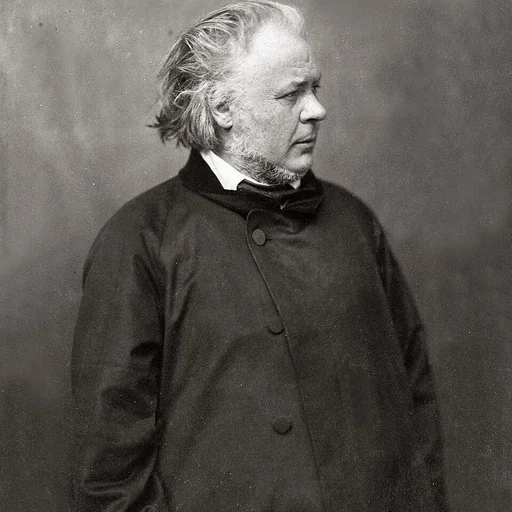
Artist
Honoré-Victorin Daumier was a French painter, sculptor, and printmaker, whose many works offer commentary on the social and political life in France, from the Revolution of 1830 to the fall of the Second French Empire in 1870.


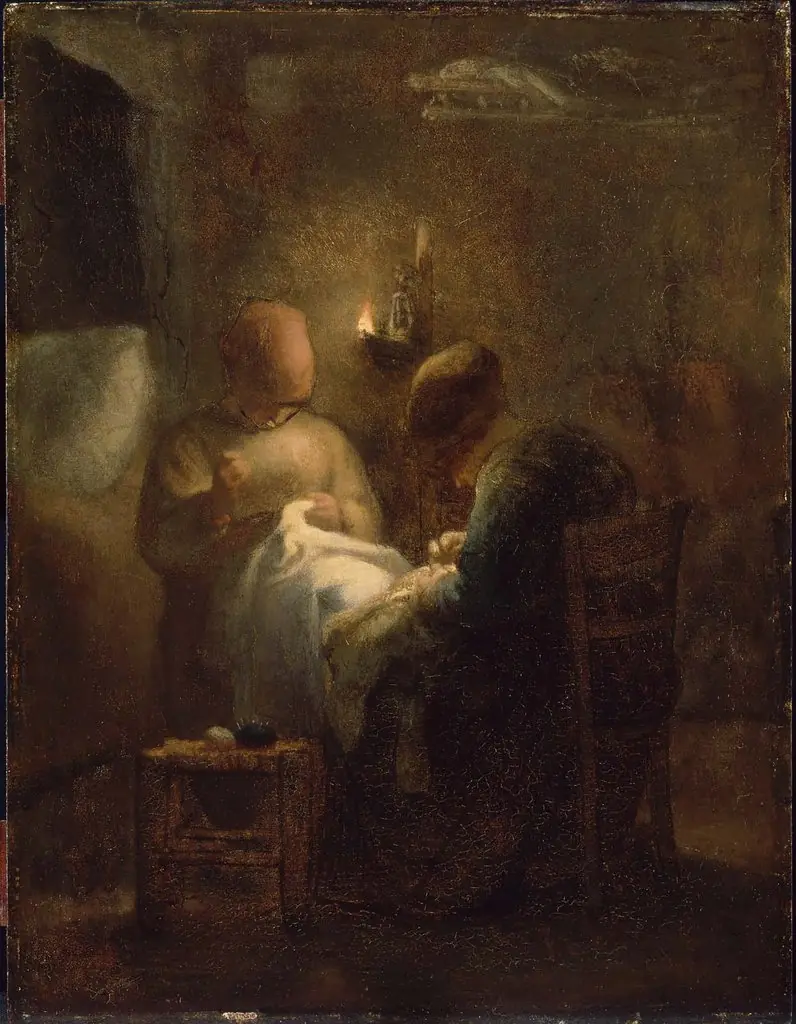 Women Sewing by Lamplight (La Veillée)
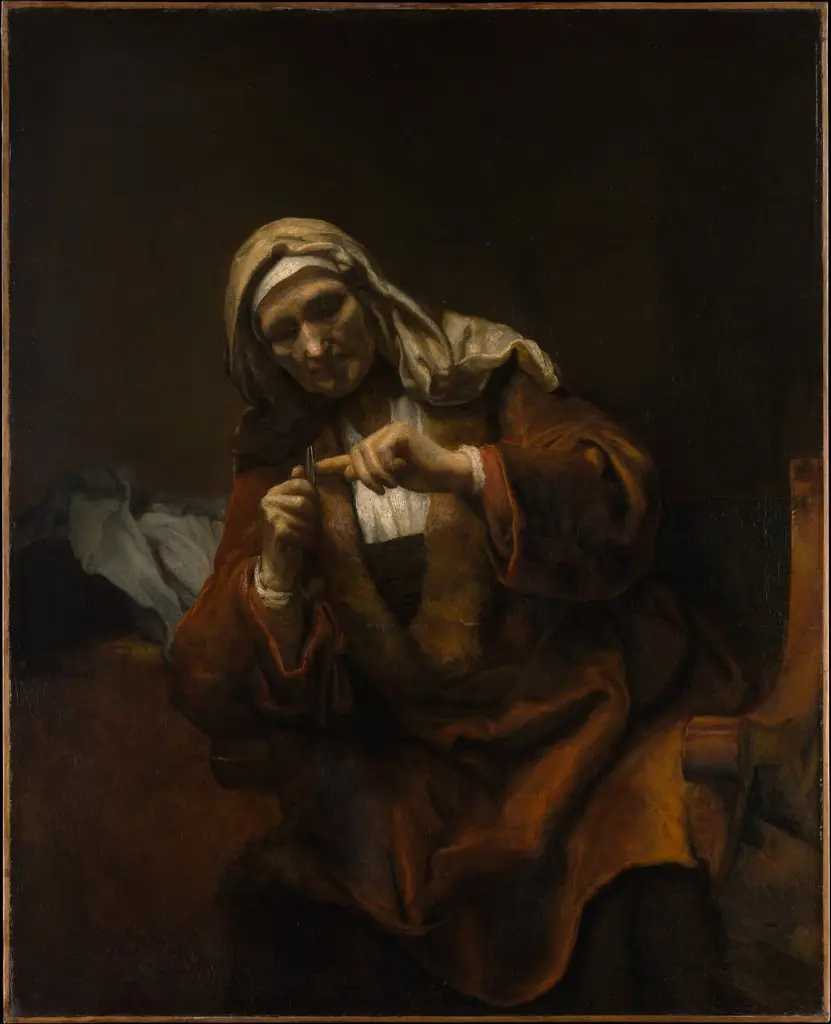 Old Woman Cutting Her Nails
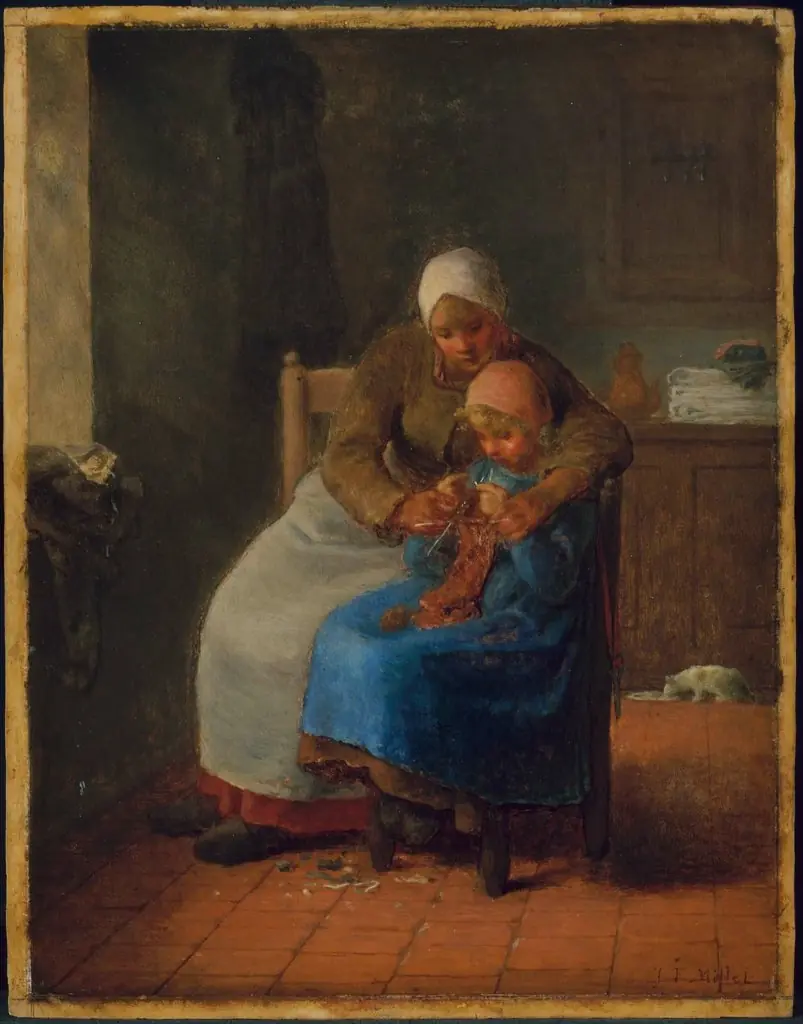 Knitting Lesson
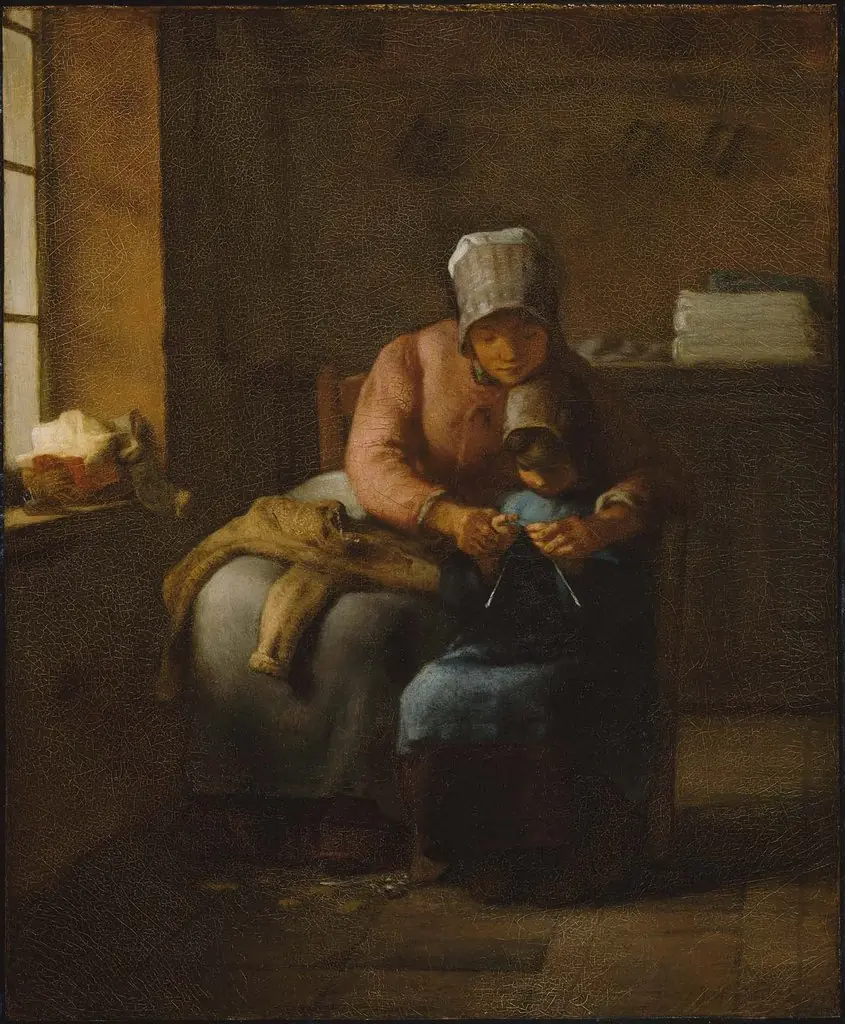 Knitting Lesson
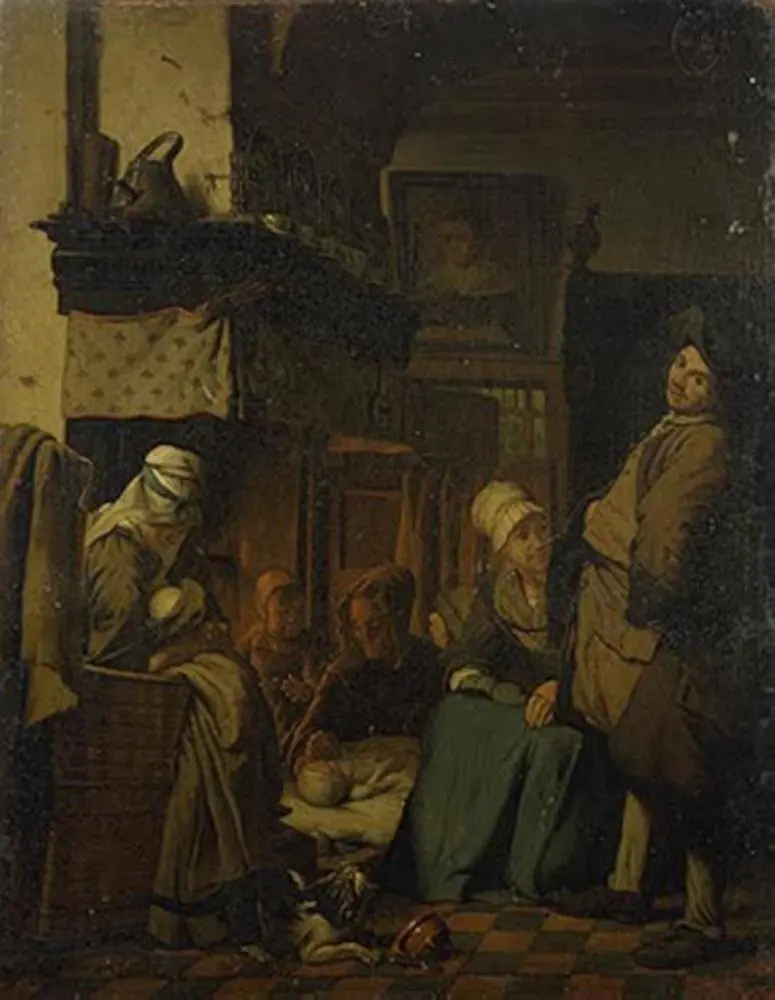 Genre Scene
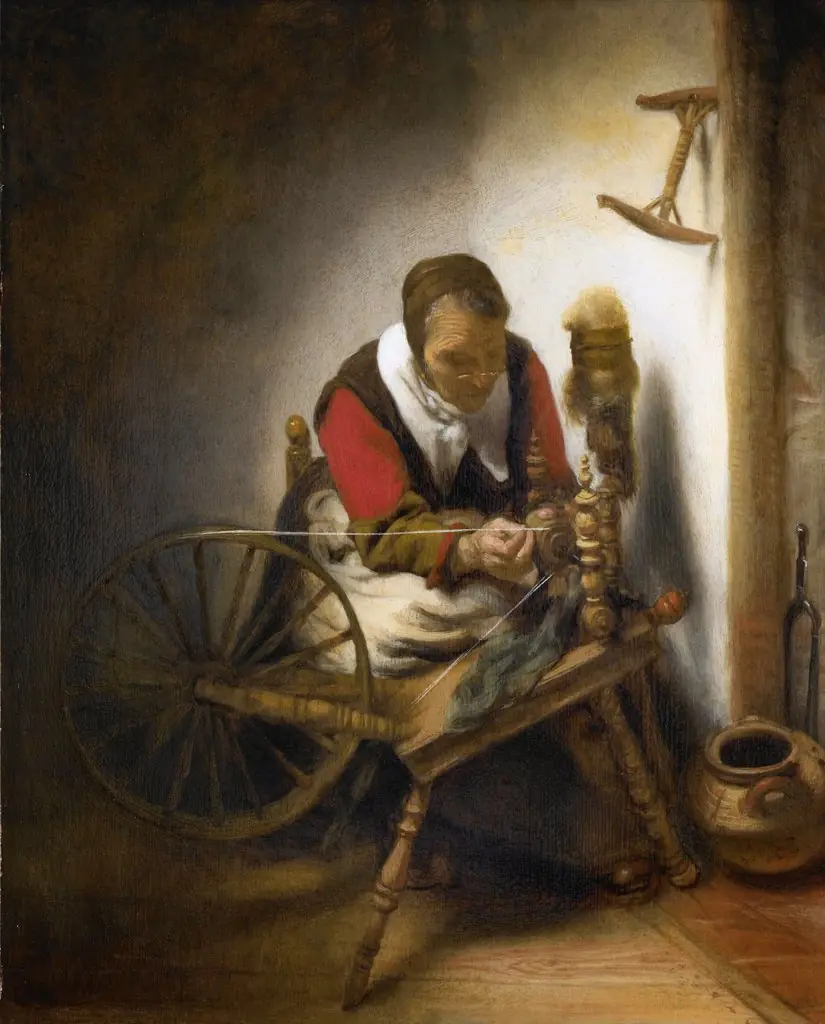 Woman spinning
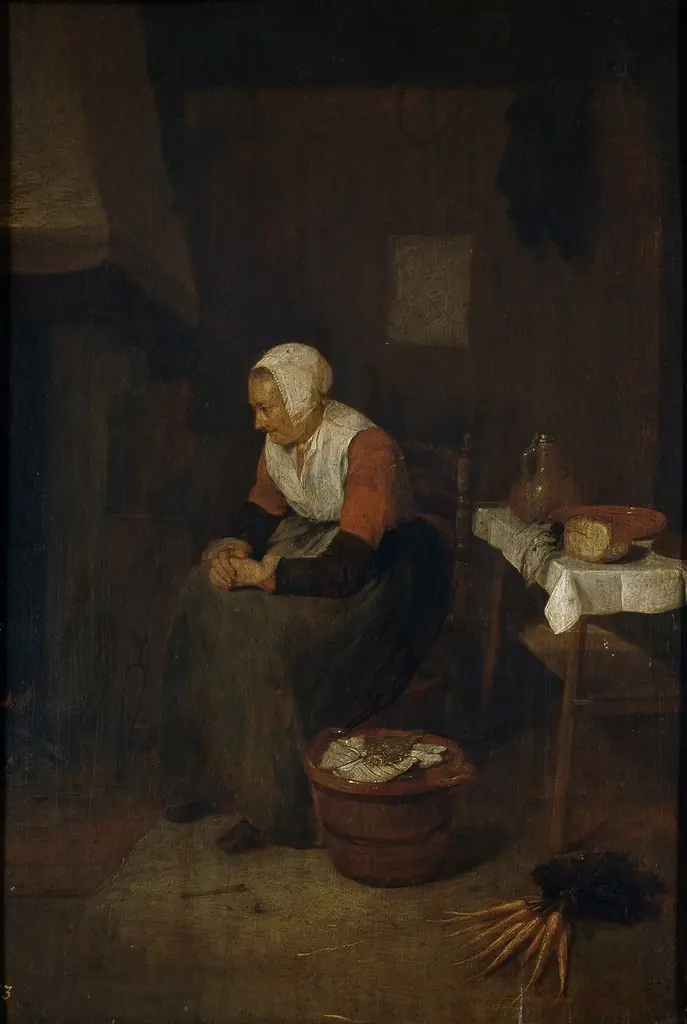 Old Woman by a Fireplace
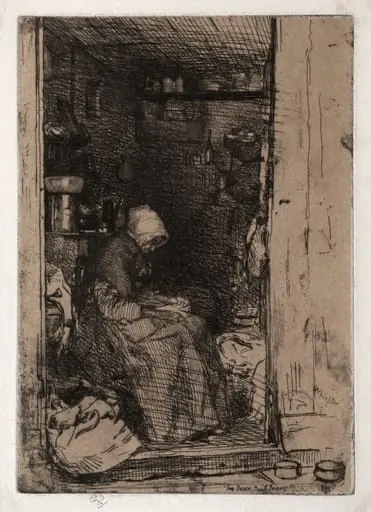 The Old Rag Woman, No. 10
![A North Indian[?] sewing with silk, by Alexandre Gabriel Decamps](https://artifactworldgallery.com/img/alexandre-gabriel-decamps--a-north-indian-sewing-with-silk--b19368bb32ed92ac-w320.webp) A North Indian[?] sewing with silk
A North Indian[?] sewing with silk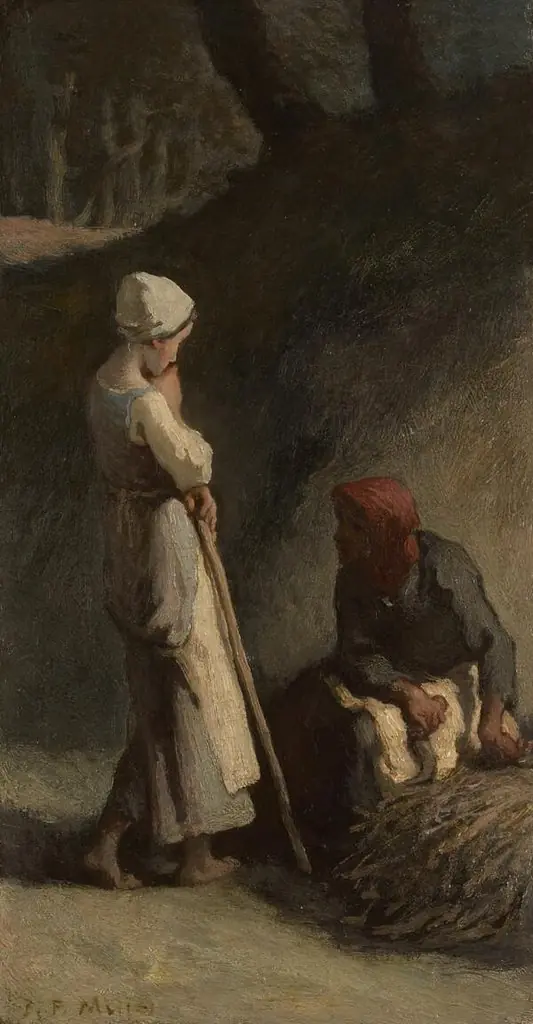 The Faggot Gatherers
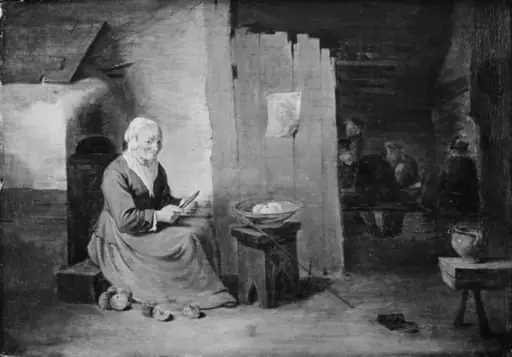 Interior of a Peasant's Cottage with an Old Woman Peeling Apples
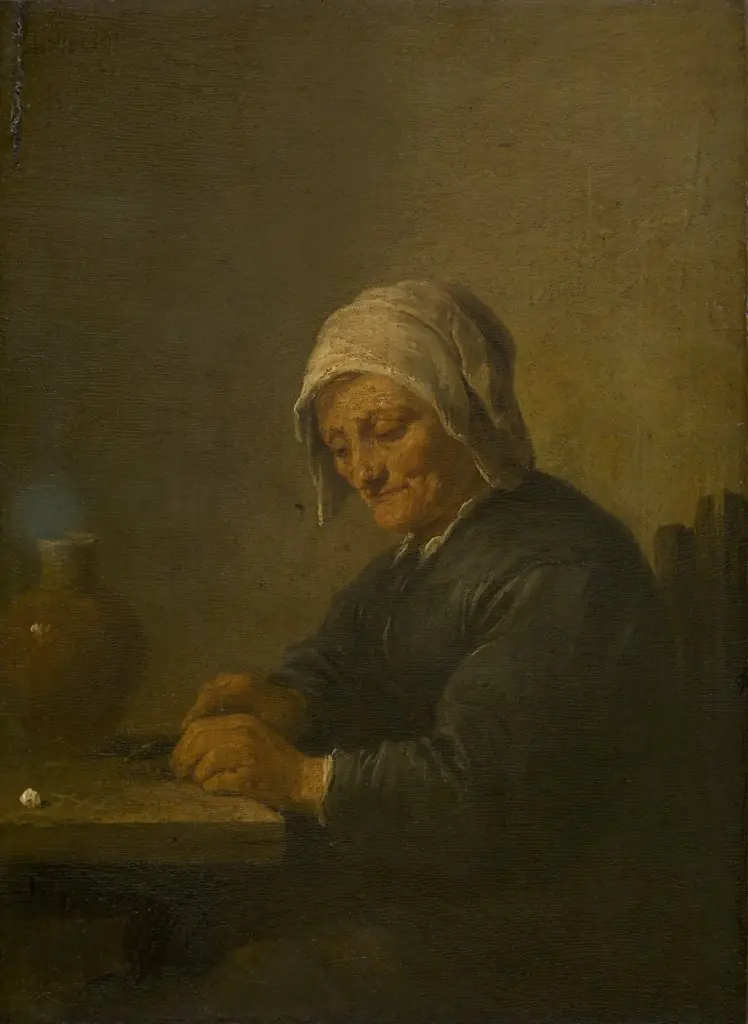 An Old Woman Cutting Tobacco