Artwork
The Rookery, Nantwich
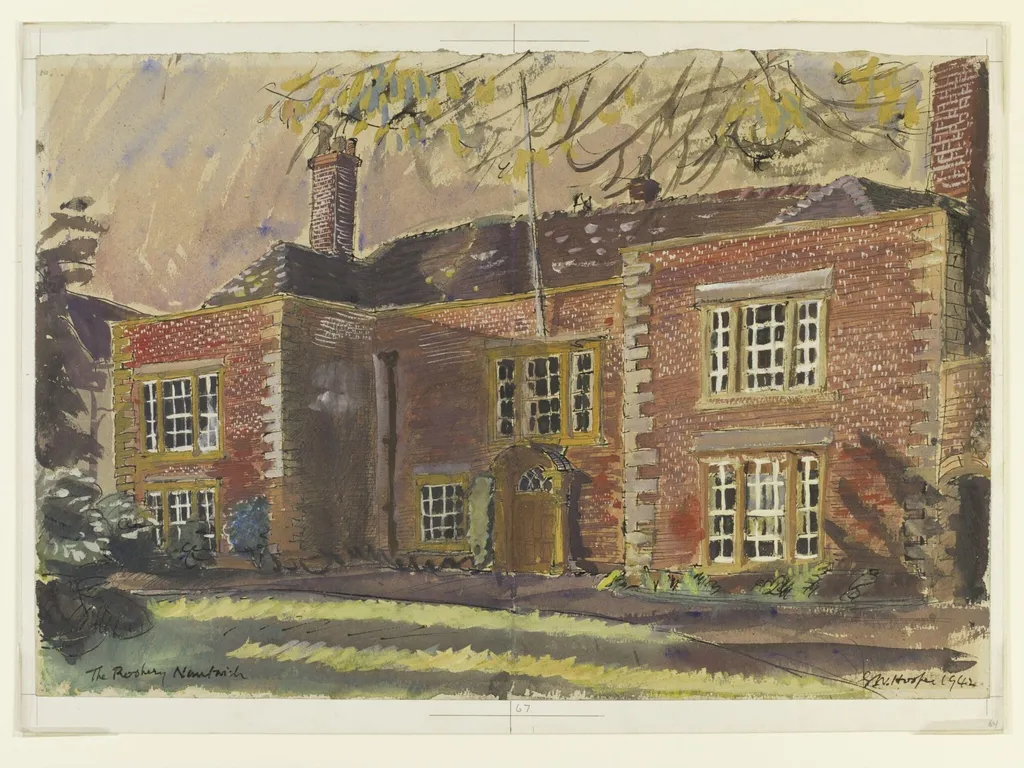
The Rookery, Nantwich is a watercolor work on paper by the Social Realist artist Hooper. It dates from 1942 and is held in the collection of the Victoria and Albert Museum.
About this work
The loose, quick brushstrokes make it feel like a quick sketch rather than a polished drawing.
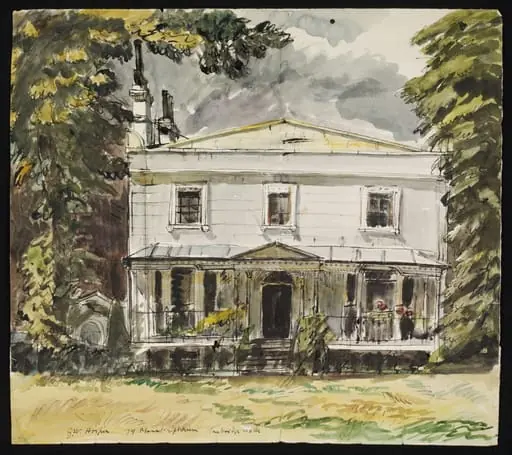
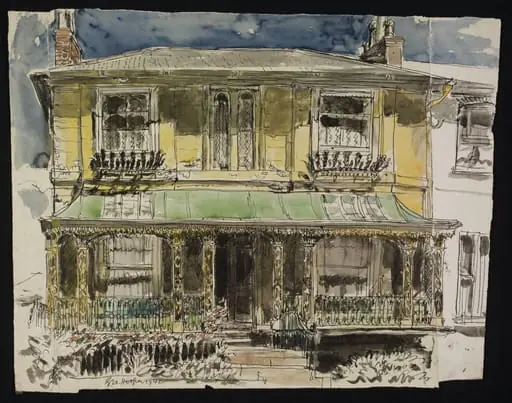
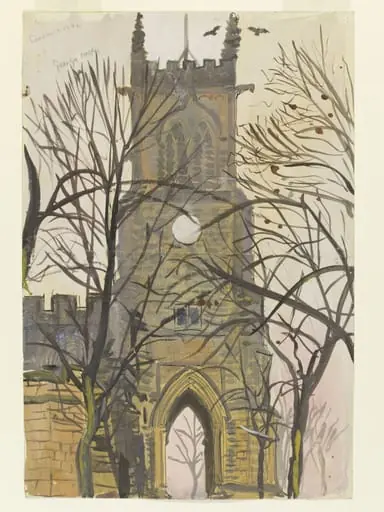
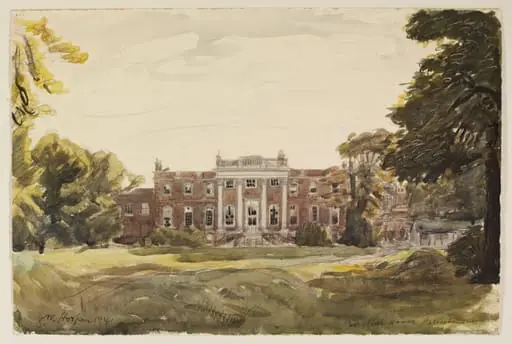
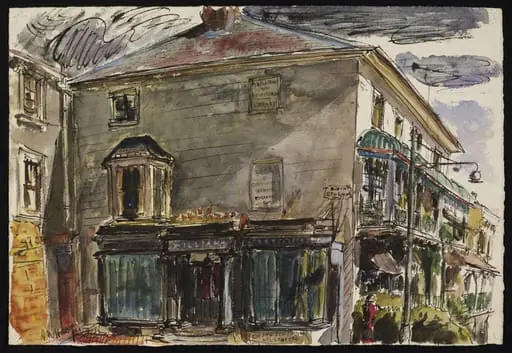
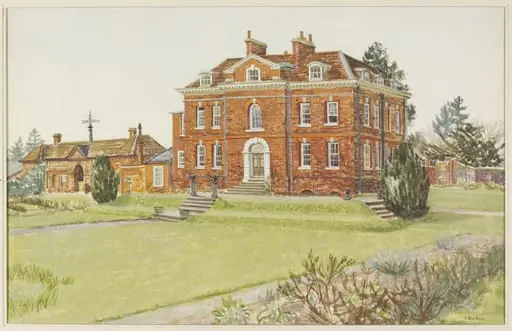
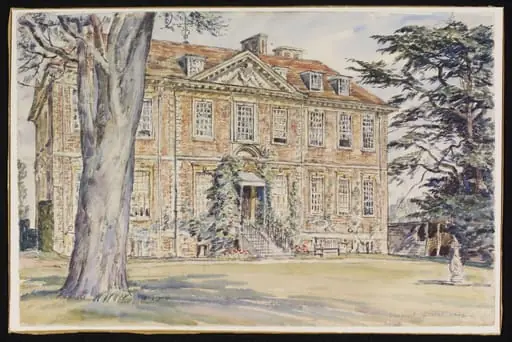
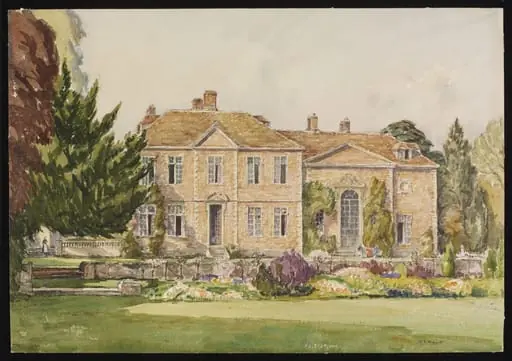
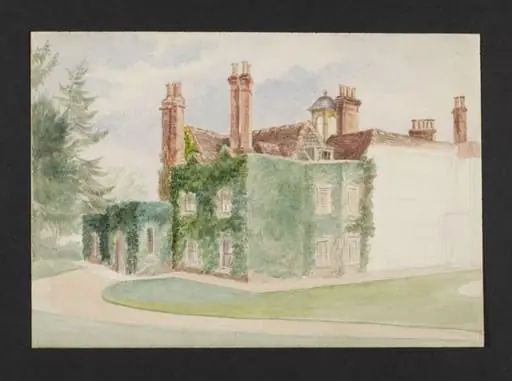
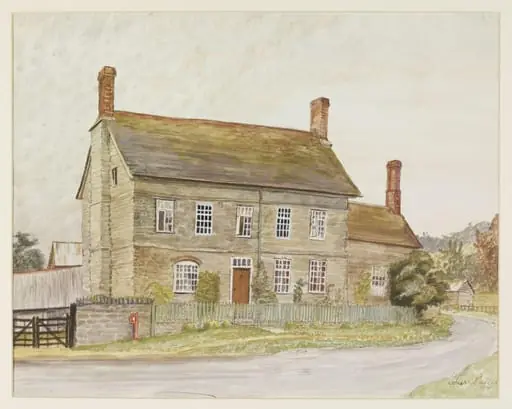
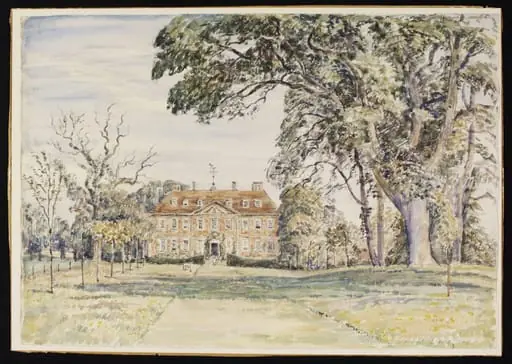
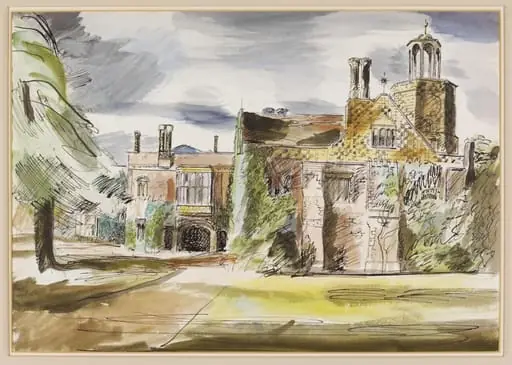
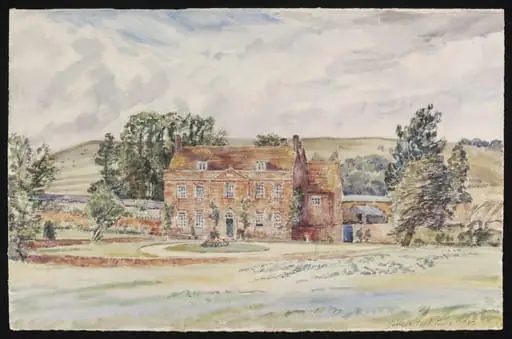
This sketch shows a brick house with a sloped roof and two chimneys. The walls are rough, with patches of white and dark brown. Windows have white frames, and the front door is arched with a small porch. Trees with bare branches lean over the house, and the ground looks muddy.
The artist signed it "Hooper" in 1942, and the title says *The Rookery, Nantwich*. The loose, quick brushstrokes make it feel like a quick sketch rather than a polished drawing.
Check out the Victoria and Albert Museum to see more works like this.
Overview
Created in 1942, this watercolour by Hooper captures the Rookery, an 18th-century brick house in Nantwich. It was made as part of the Recording Britain project, a government-backed effort to visually archive structures at risk during the Second World War. The work is one of over 1,500 pieces produced by nearly 100 artists, intended to preserve a sense of place amid national upheaval. The piece is held in the Victoria and Albert Museum’s collection.
Subject & Meaning
The Rookery, a modest domestic building with a sloped roof and twin chimneys, represents the quiet endurance of vernacular English architecture. Its weathered brickwork, arched doorway, and surrounding bare trees suggest a site untouched by modernization. The painting does not idealize the structure but records its quiet presence, reflecting the project’s goal to honor ordinary places that embodied local continuity during wartime uncertainty.
Technique & Style
Hooper employed loose, rapid watercolour brushwork to convey immediacy rather than finish. The pigment is applied thinly, allowing the paper to show through in areas of shadow and texture. Patches of white and dark brown suggest uneven brick surfaces, while muted greens and browns define the muddy ground and skeletal trees. The signature and title are plainly inscribed, reinforcing the work’s documentary intent over aesthetic refinement.
History & Provenance
Commissioned under the Recording Britain initiative, the painting was created during a period of widespread cultural preservation efforts. The project, directed by Sir Kenneth Clark, sought to document buildings vulnerable to bombing or urban change. Hooper’s watercolour entered the Victoria and Albert Museum’s collection as part of this official archive, where it remains accessible as a record of pre-war English rural architecture.
Context
The Recording Britain project emerged in response to the threat of wartime destruction and rapid modernization. Artists were sent across the country to record buildings, landscapes, and village scenes deemed culturally significant. The Rookery, though unremarkable in grandeur, was valued for its regional character and historical continuity. This work reflects a broader effort to safeguard visual memory when physical survival of such sites was uncertain.
Legacy
The painting endures as part of a significant wartime archive that reshaped how Britain viewed its architectural heritage. Though not widely exhibited, it contributes to a collective visual record that continues to inform historical and conservation studies. Its unpolished style and focused subject matter exemplify the project’s democratic ethos — valuing the ordinary as essential to national identity.
Artist & collection
Artist
This artist painted quiet streets and brick buildings in watercolor during the early 1940s.