Artwork
79, Mount Epraim, Tunbridge Wells
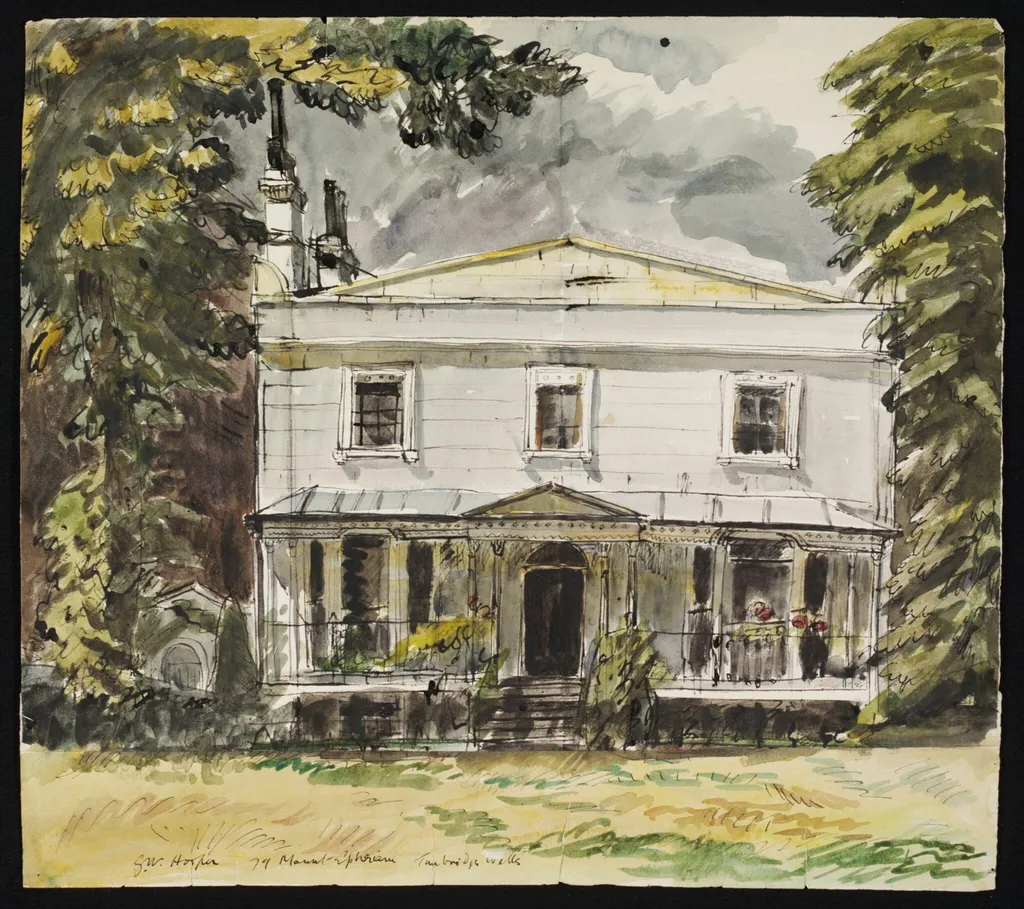
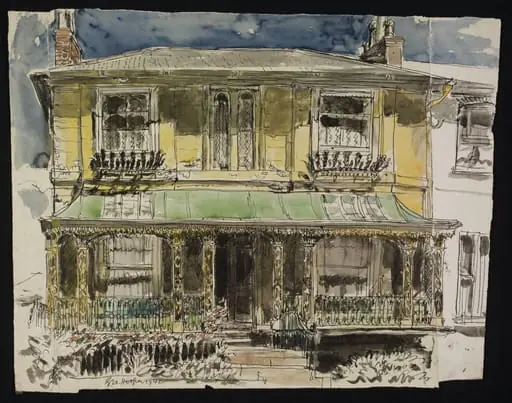
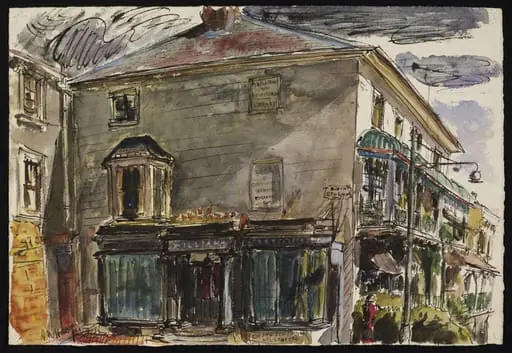
79, Mount Epraim, Tunbridge Wells is a watercolor work on paper by the Social Realist artist Hooper. It dates from 1942 and is held in the collection of the Victoria and Albert Museum.
About this work
Overview
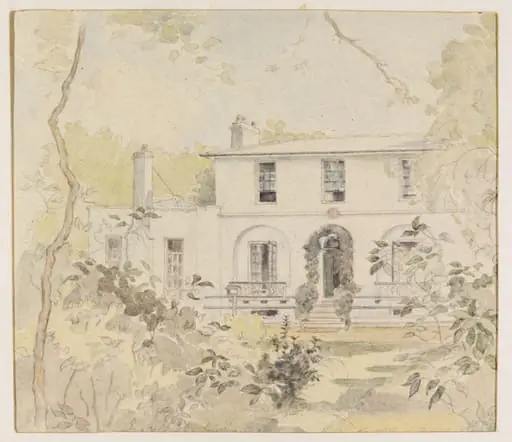
Executed in delicate washes, the painting records the architectural details of a detached house with a pedimented entrance, cornice, and a canopied balcony.
This 1942 watercolour by Hooper captures a Regency-era residence on Mount Ephraim in Tunbridge Wells. Executed in delicate washes, the painting records the architectural details of a detached house with a pedimented entrance, cornice, and a canopied balcony. The scene is framed by mature trees and a modest lawn, rendered with subtle tonal variations. It was produced as part of the 'Recording Britain' project, a wartime effort to preserve visual records of the nation’s built environment.
Subject & Meaning
The house, a representative example of early 19th-century domestic architecture, symbolizes a quiet continuity in a time of national uncertainty. Its formal symmetry and ornamental features reflect a fading aesthetic, one the project sought to document before potential loss from conflict or modernization. The surrounding trees and lawn suggest a cultivated, domesticated landscape, reinforcing the theme of preservation against impermanence.
Technique & Style
Hooper employed transparent watercolour to achieve a light, airy quality, allowing the paper’s white to suggest highlights on the house’s façade. Fine brushwork defines architectural elements like windows and the balcony’s canopy, while varied greens in the foliage convey depth without heavy detail. The composition is balanced and restrained, prioritizing clarity and observational accuracy over expressive flourish.
History & Provenance
Created in 1942, the work belongs to the 'Recording Britain' collection, commissioned by the Pilgrim Trust under the direction of Sir Kenneth Clark. The initiative enlisted artists to document vernacular architecture and rural scenes threatened by war or change. This piece entered the collection as part of a broader effort to safeguard Britain’s visual heritage, later held by the Victoria and Albert Museum.
Context
During the Second World War, fears of aerial bombardment and societal disruption prompted efforts to archive cultural landmarks. 'Recording Britain' responded to anxieties about the erosion of traditional landscapes and architecture. Hooper’s painting, like others in the series, served not as propaganda but as a quiet act of cultural stewardship, valuing the ordinary over the monumental.
Legacy
The 'Recording Britain' collection remains a vital historical archive, offering insight into the nation’s architectural character during a pivotal era. Hooper’s watercolour contributes to this record by capturing a specific place with precision and calm. Today, it stands as a testament to the role of art in preserving everyday environments during times of upheaval.
Artist & collection
Artist
This artist painted quiet streets and brick buildings in watercolor during the early 1940s.

![Marlborough House [garden front], Falmouth, by Cheek](https://artifactworldgallery.com/img/cheek--marlborough-house-garden-front-falmouth--3a2b89526c7641e3-w320.webp)