Artwork
Ornament
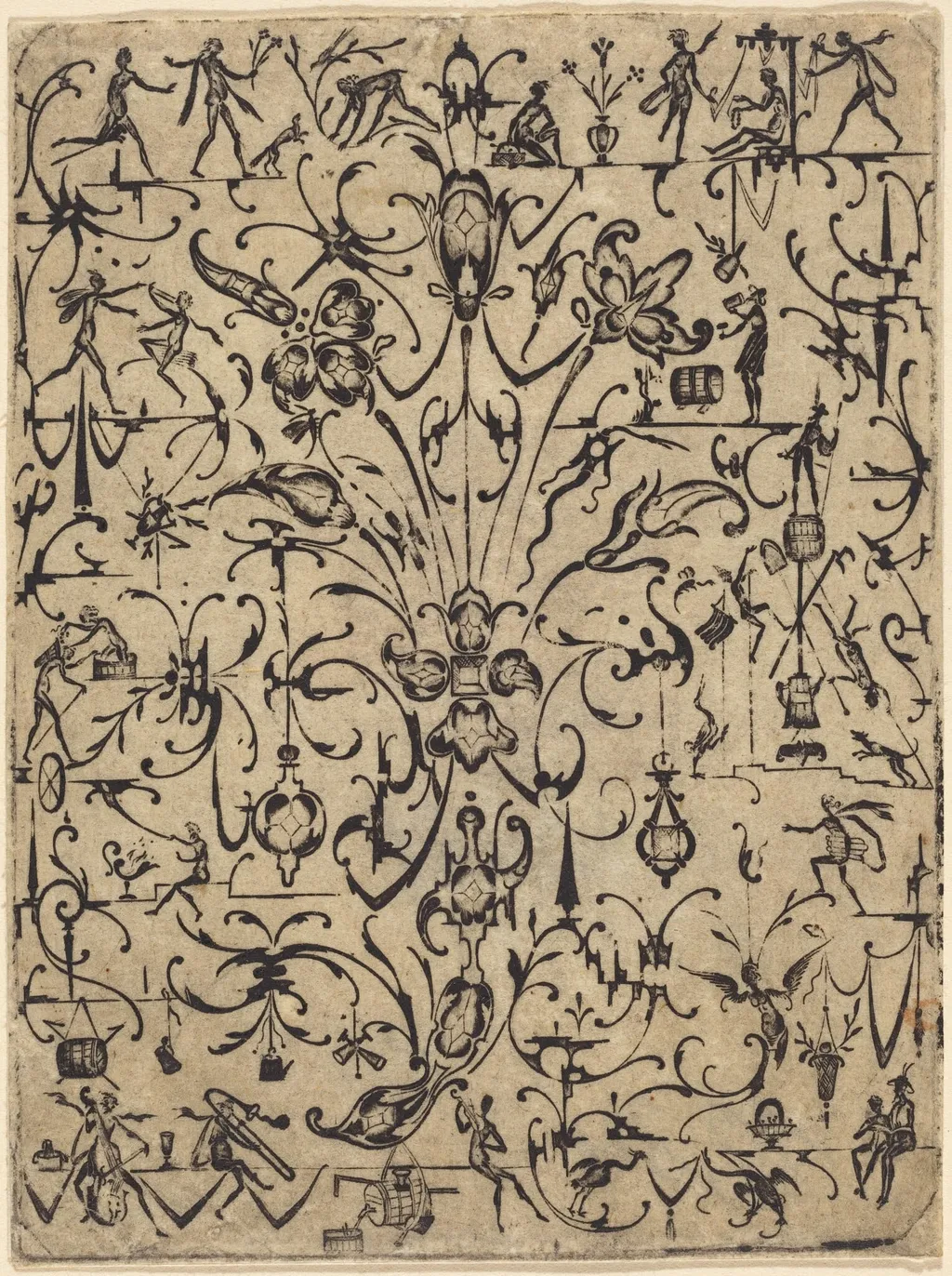
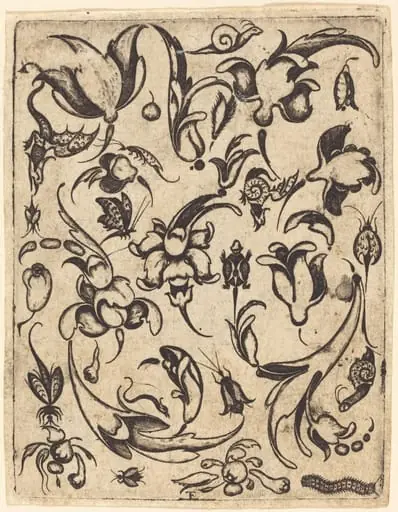
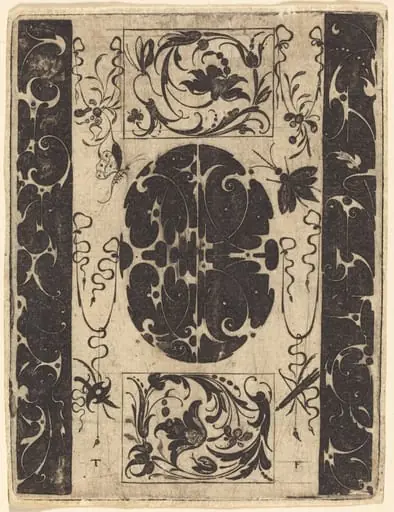
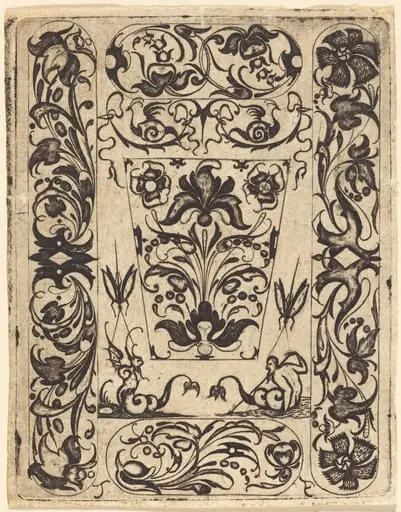
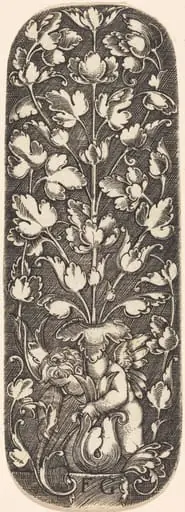
Ornament is an ink print by the Renaissance artist Master B.H.M.. It dates from 1540 and is held in the collection of the National Gallery of Art.
About this work
Overview
Its overall effect resembles a continuous decorative pattern, reminiscent of wallcoverings or textile designs of the period.
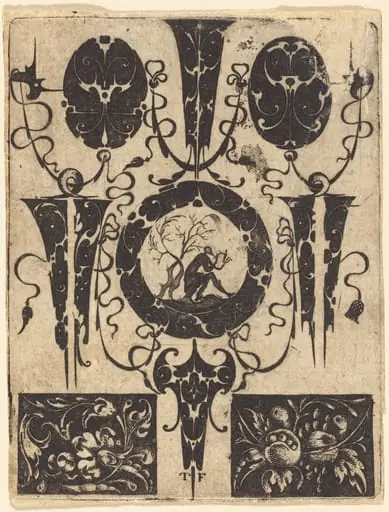
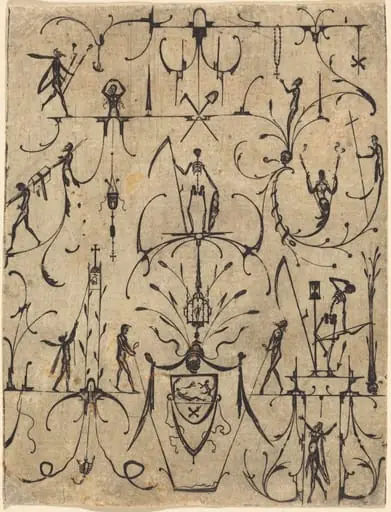
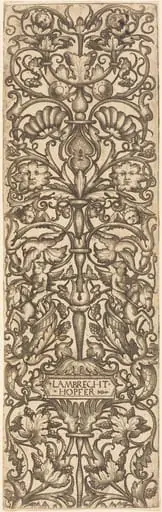
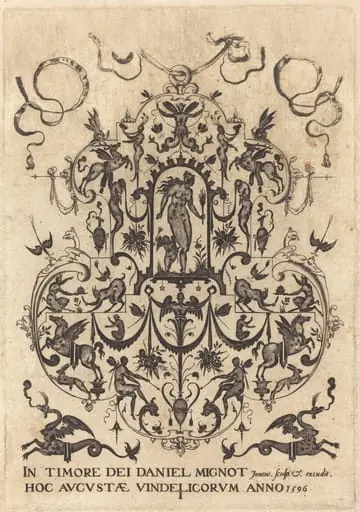
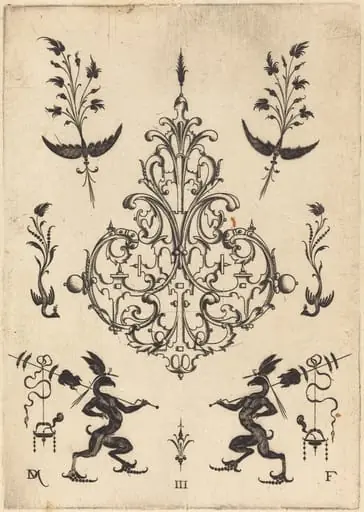
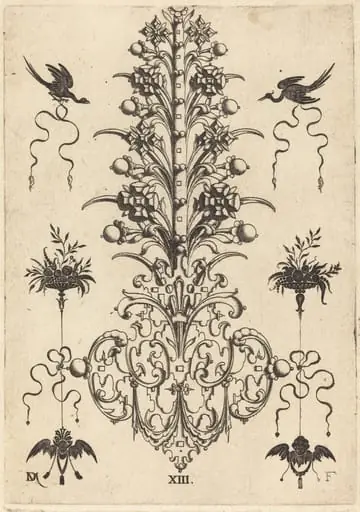
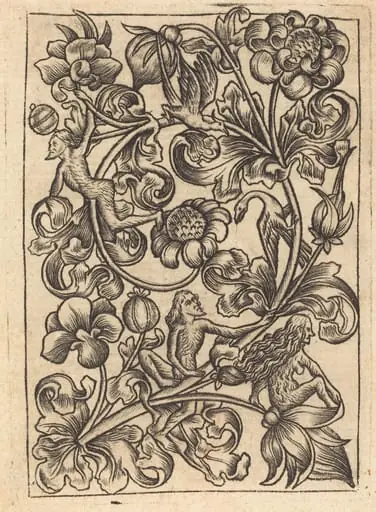
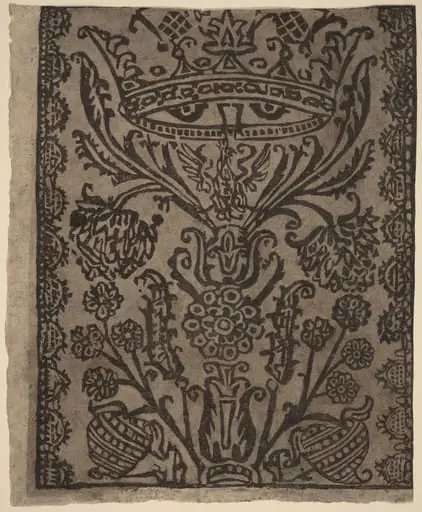
Ornament, an engraving dated to 1540, is attributed to the anonymous artist identified only by the initials B.H.M. The print presents a dense, monochrome composition filled with interlacing vines, stylized flora, and a multitude of diminutive figures engaged in various activities. Its overall effect resembles a continuous decorative pattern, reminiscent of wallcoverings or textile designs of the period.
Subject & Meaning
At the heart of the image lies a large, flower‑like motif from which smaller blossoms and leaves radiate. Encircling this central element are numerous tiny characters—musicians, dancers, and individuals bearing objects such as barrels and books—suggesting a celebration of everyday life and the arts. The repetitive arrangement emphasizes harmony and abundance rather than a singular narrative.
Technique & Style
The work was produced by incising fine lines into a metal plate with a burin, a process known as engraving. B.H.M. employed intricate cross‑hatching to model volume and create subtle tonal variations across the crowded scene. The linear precision and ornamental density reflect the Northern Renaissance’s fascination with elaborate decorative schemes.
History & Provenance
First recorded in the mid‑16th century, the print has survived in several copies held by European print collections. Its attribution to B.H.M. rests on a signature fragment discovered on the plate’s margin. The work’s circulation as a printable pattern suggests it may have served as a model for decorative arts or as a collector’s curiosity.
Artist & collection