Artwork
American Landscape
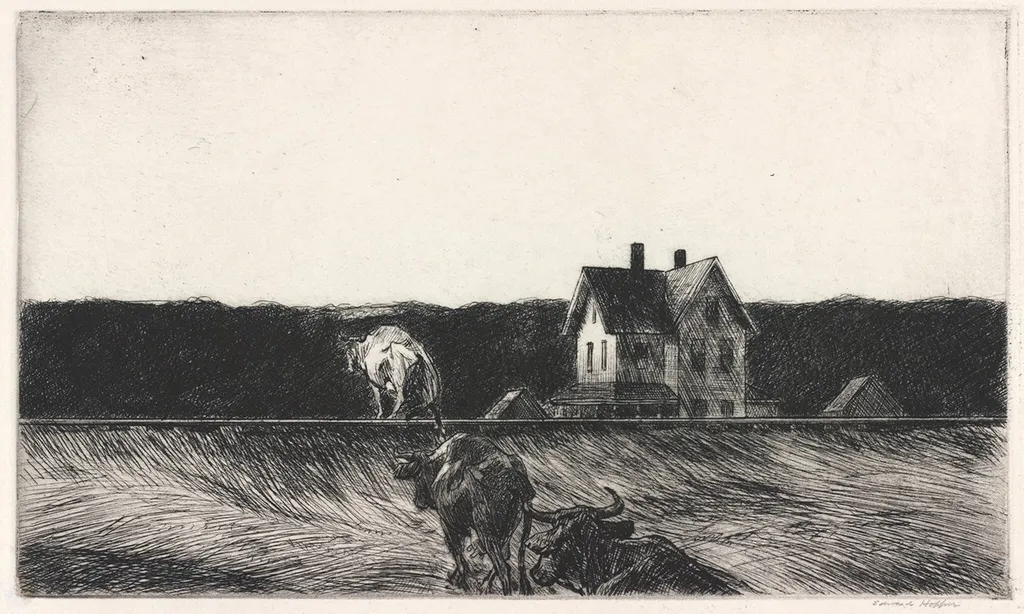
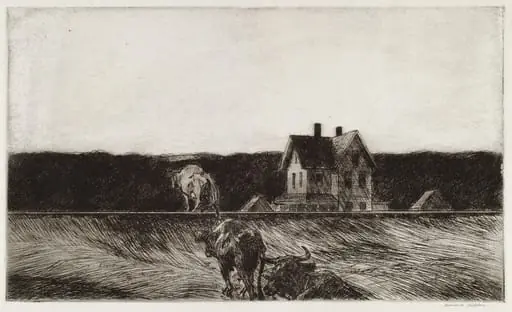
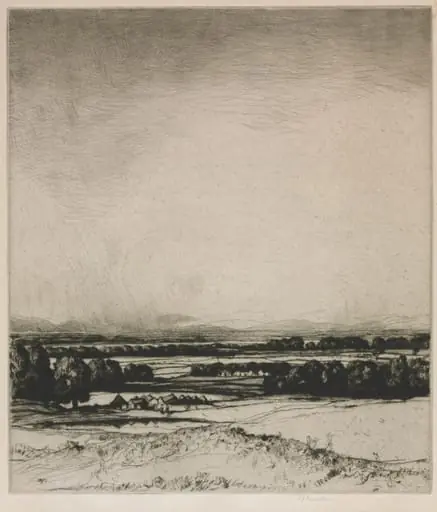
American Landscape is an ink print by Edward Hopper. It dates from 1920 and is held in the collection of the National Gallery of Art.
About this work
Overview
American Landscape is an etching created by Edward Hopper in 1920 on wove paper. It is a print that showcases Hopper's realist style.
Subject & Meaning
The etching depicts a serene rural scene: a white horse grazes on a hill, while a dark cow stands by a fence. A solitary white house is set in the surrounding landscape, evoking a sense of stillness and isolation.
Technique & Style
Hopper employed fine lines to capture the texture of the scene, such as the wavy appearance of the grass. The use of etching in black on wove paper contributes to the overall quiet atmosphere of the work.
History & Provenance
Edward Hopper, born in Nyack, New York in 1882, studied at the New York School of Art under William Merritt Chase and Robert Henri, influencing his realist approach to exploring American life and landscapes.
Context
This work is part of Hopper's broader examination of the interplay between urban and natural environments, as well as themes of solitude, through various mediums including etchings, paintings, and watercolors.
Artist & collection
Artist
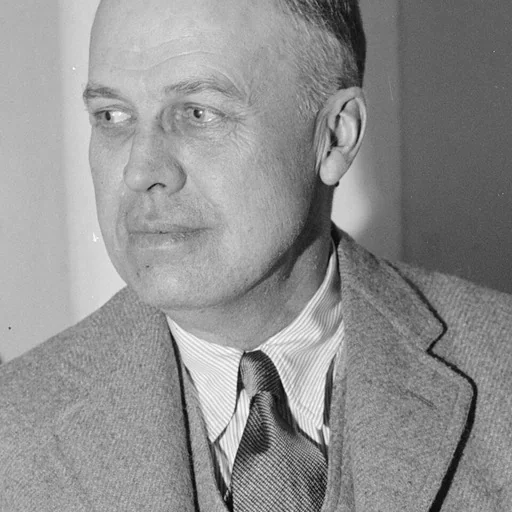
Edward Hopper (July 22, 1882 – May 15, 1967) was an American realist painter and printmaker.

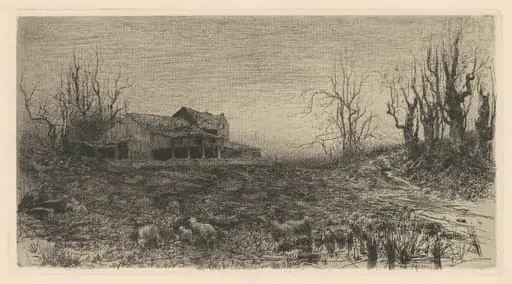 November
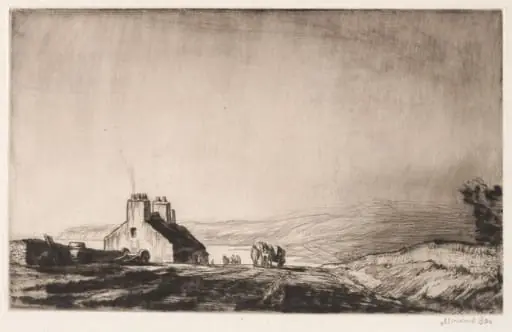 The Ballantrae Road, Ayrshire, Scotland
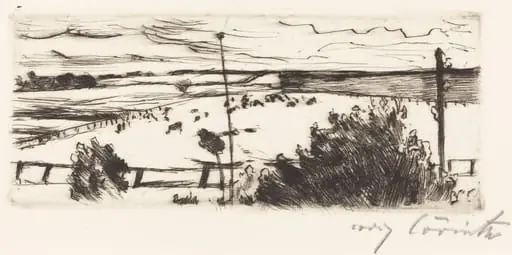 Küste (Seascape)
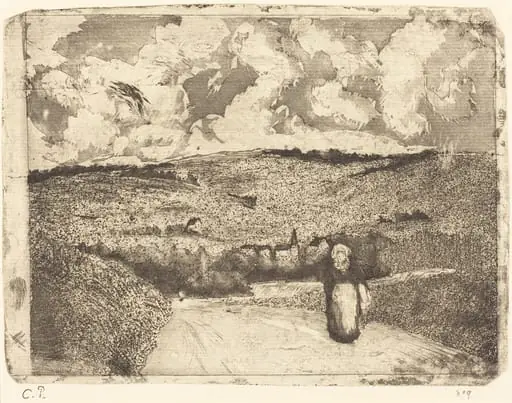 Woman on the Road (La femme sur la route)
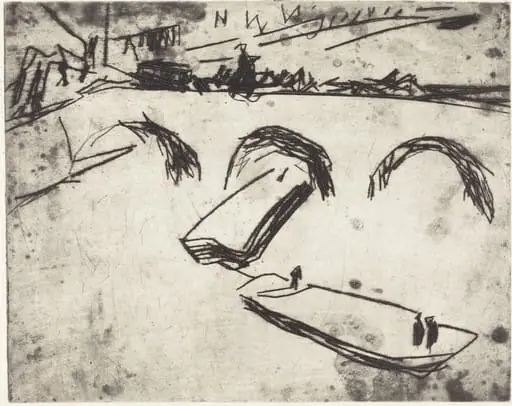 Bridge on Crown Prince Embankment (Brucke am Kronprinzenufer)
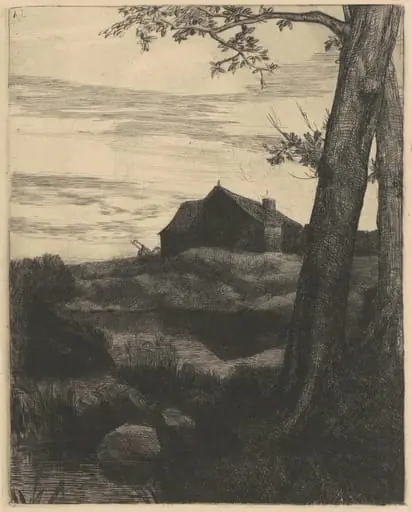 Farm with a Large Tree (La Ferme au Grand Arbre)
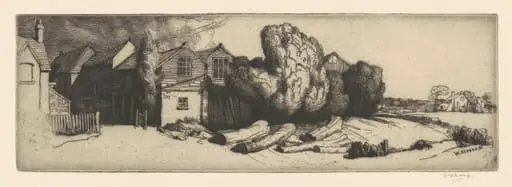 Chorley Farm
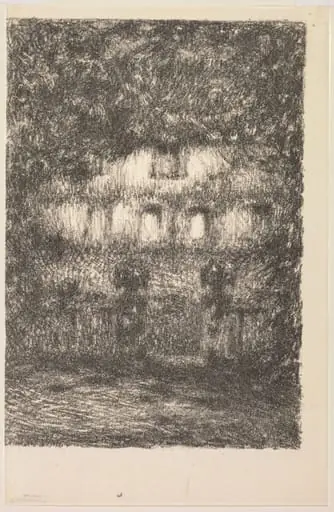 The House in Moonlight
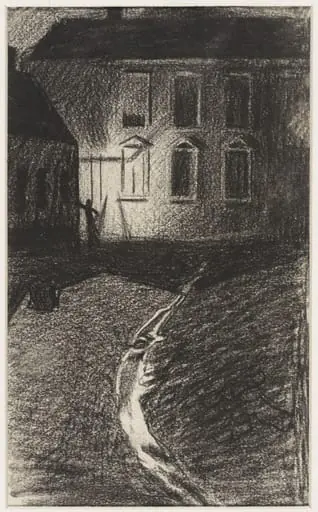 Untitled
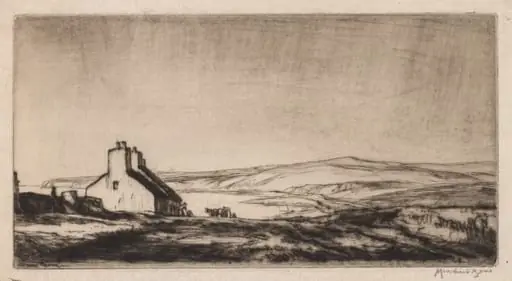 Third Study for 'The Ballantrae Road'
 Valley of the Tay