Artwork
American Landscape
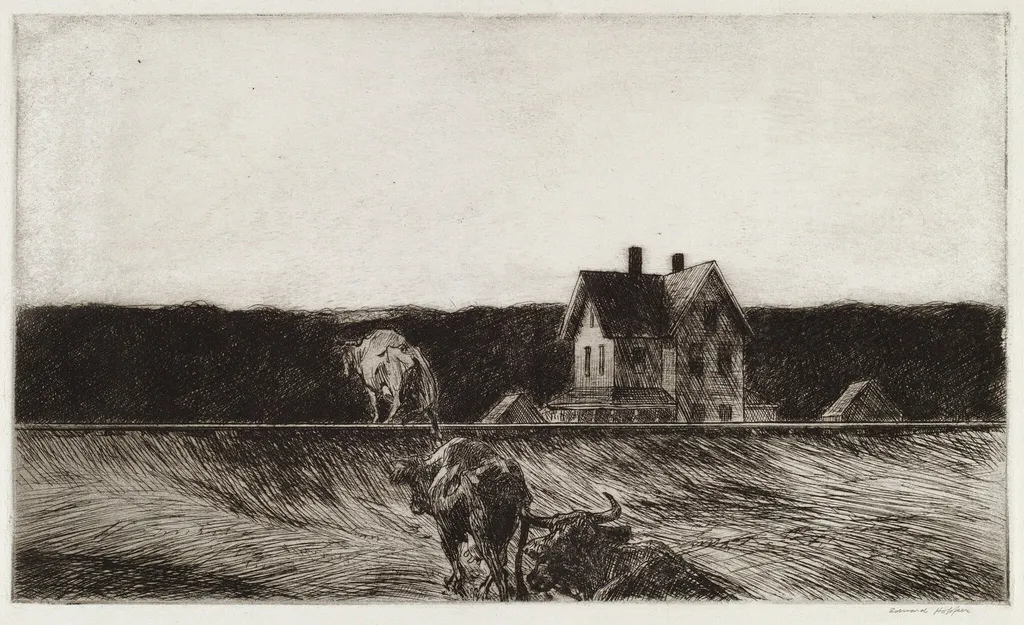
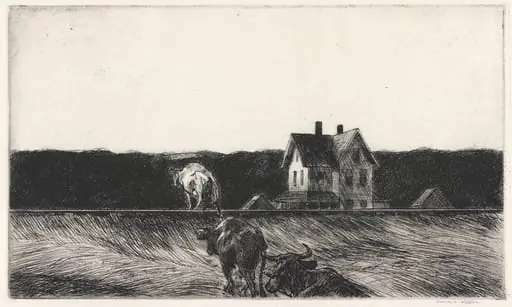
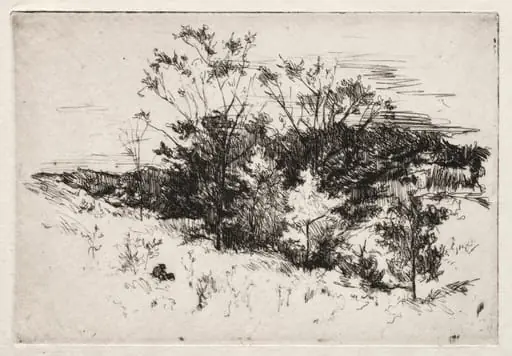
American Landscape is an ink print by Edward Hopper. It dates from 1920 and is held in the collection of the National Gallery of Art.
About this work
Overview
Edward Hopper produced *American Landscape* in 1920 as a black-and-white etching, part of his early exploration of printmaking.
Edward Hopper produced *American Landscape* in 1920 as a black-and-white etching, part of his early exploration of printmaking. The work reflects his interest in American rural scenes, rendered with precision and restraint. Unlike his later oil paintings, this piece relies on the tonal range of etching to convey mood and spatial depth, establishing a quiet visual rhythm that would become characteristic of his broader oeuvre.
Subject & Meaning
The scene centers on a solitary farmhouse with a steep roof and prominent chimney, set against rolling fields and a distant horizon. Three cows graze in the foreground, their presence adding scale and stillness. The composition avoids human figures, emphasizing isolation and the quiet endurance of rural life. The house, neither grand nor ruined, suggests an unremarkable yet enduring presence in the American countryside.
Technique & Style
Hopper employed etching to achieve sharp, controlled lines and deep shadows, using cross-hatching to model form and suggest texture in the landscape. The contrast between darkened areas of the house and the lighter, open fields creates a sense of spatial recession. His method is deliberate and unembellished, favoring clarity over ornamentation, aligning with his realist approach to depicting the American environment.
History & Provenance
Created during Hopper’s formative years as a printmaker, *American Landscape* was made shortly after his studies at the New York School of Art under Robert Henri and William Merritt Chase. It belongs to a series of early etchings he produced between 1915 and 1923, many of which were exhibited in group shows and later acquired by public institutions. The work remains in museum collections, reflecting its significance in his graphic output.
Context
In the early 20th century, American artists increasingly turned to everyday scenes as subjects, moving away from European traditions. Hopper’s etchings responded to this shift, capturing the subdued rhythms of rural life amid rapid urbanization. His focus on architecture and empty spaces aligned with broader cultural anxieties about change, loss, and the persistence of the past in the American landscape.
Legacy
Though less known than his paintings, Hopper’s etchings like *American Landscape* laid the groundwork for his mature style. They demonstrate his early mastery of light, composition, and emotional tone through minimal means. These prints influenced later generations of realist artists and remain important for understanding the development of American printmaking in the interwar period.
Artist & collection
Artist
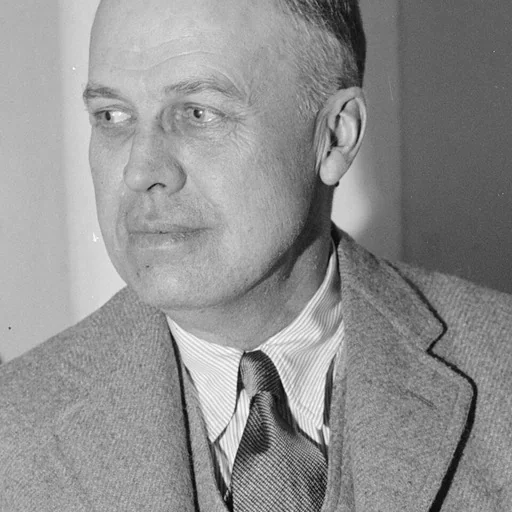
Edward Hopper (July 22, 1882 – May 15, 1967) was an American realist painter and printmaker.

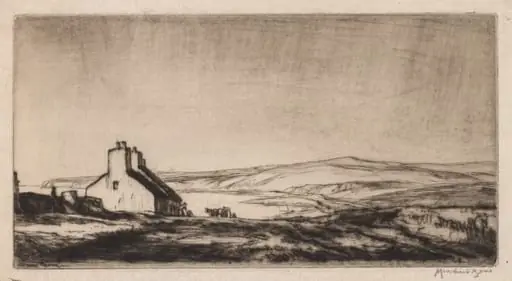 Third Study for 'The Ballantrae Road'
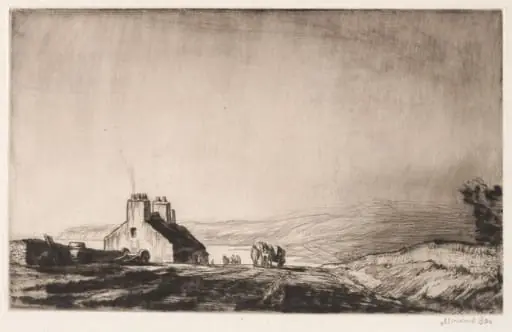 The Ballantrae Road, Ayrshire, Scotland
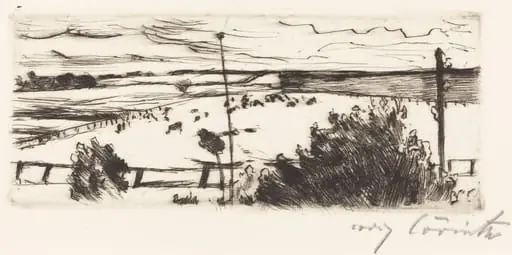 Küste (Seascape)
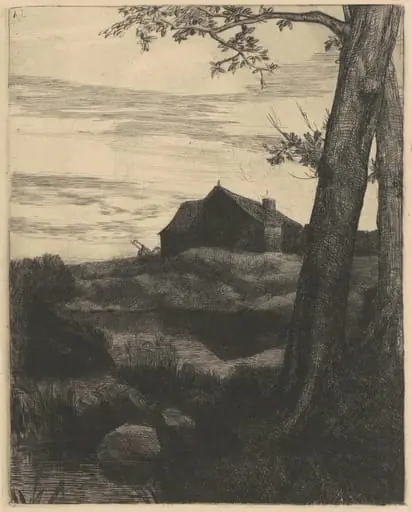 Farm with a Large Tree (La Ferme au Grand Arbre)
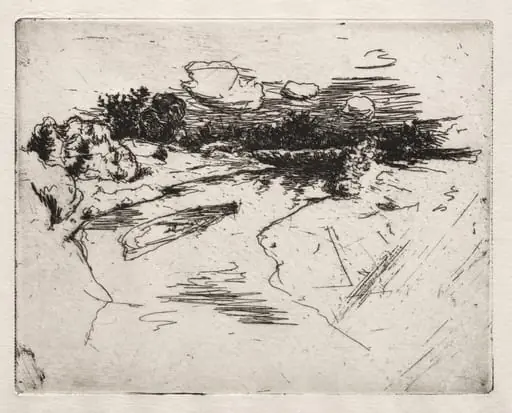 Miami River, near Cincinnati, Ohio
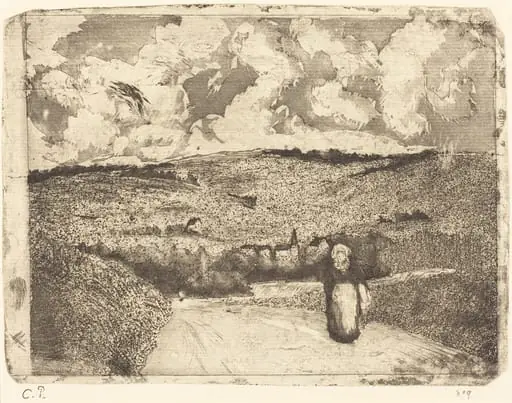 Woman on the Road (La femme sur la route)
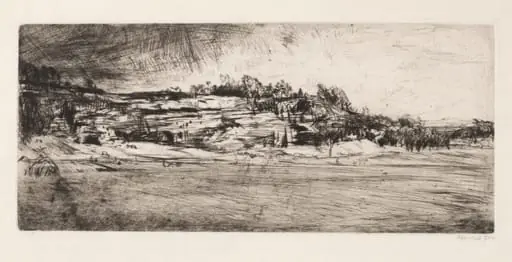 Spring at Cardross
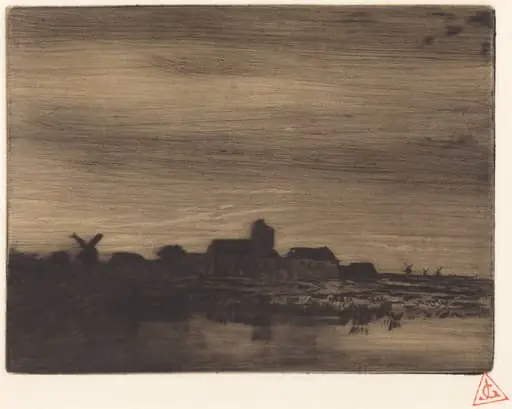 Waterside Village
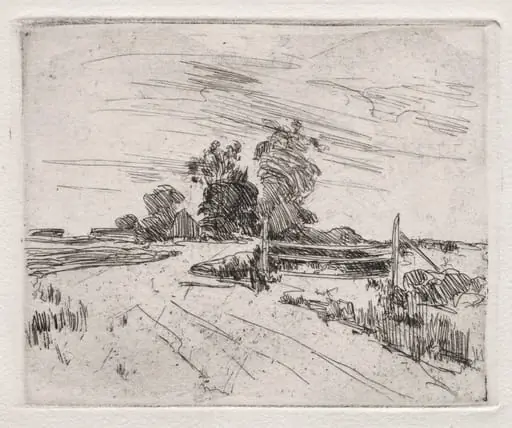 Branchville, Connecticut
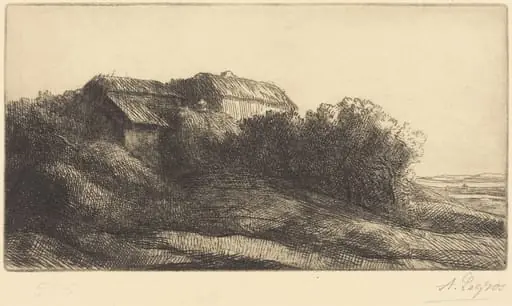 Cottage on a Hillside (Chaumiere sur le coteau)
 Autumn Landscape