Artwork
Portrait of a Woman, called Mrs. Close
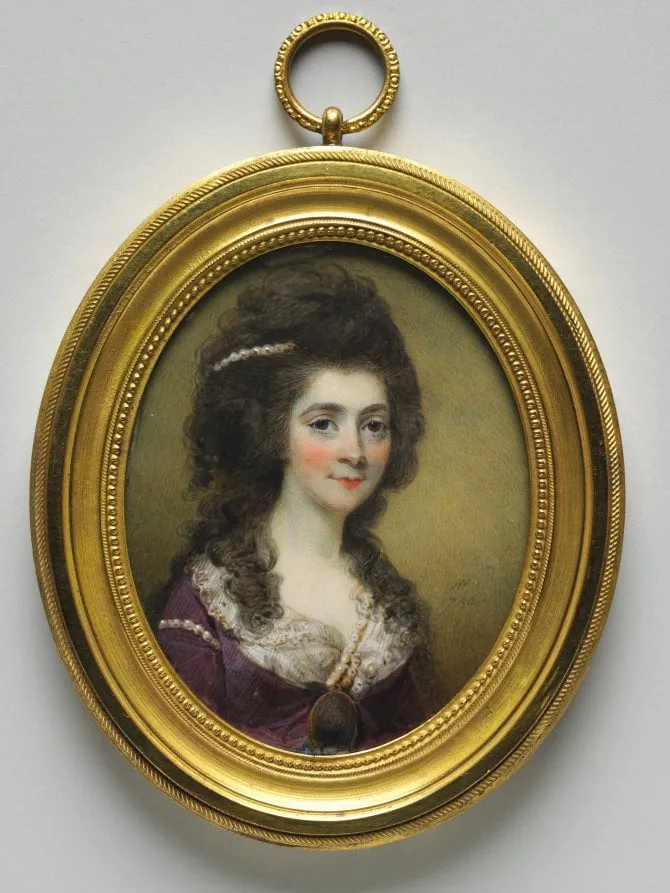
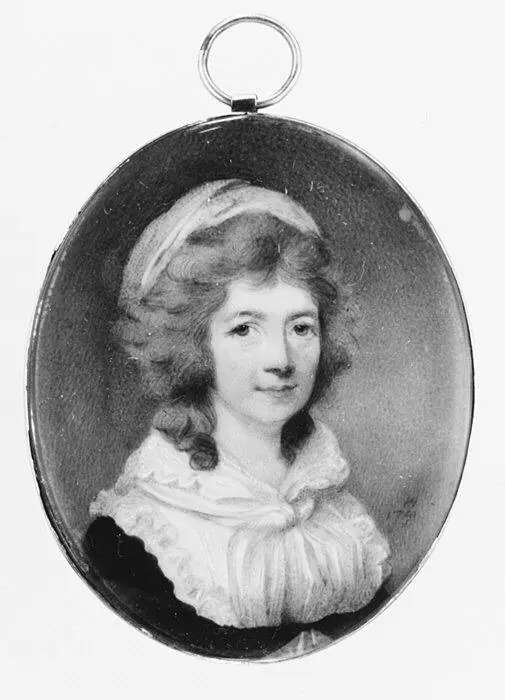
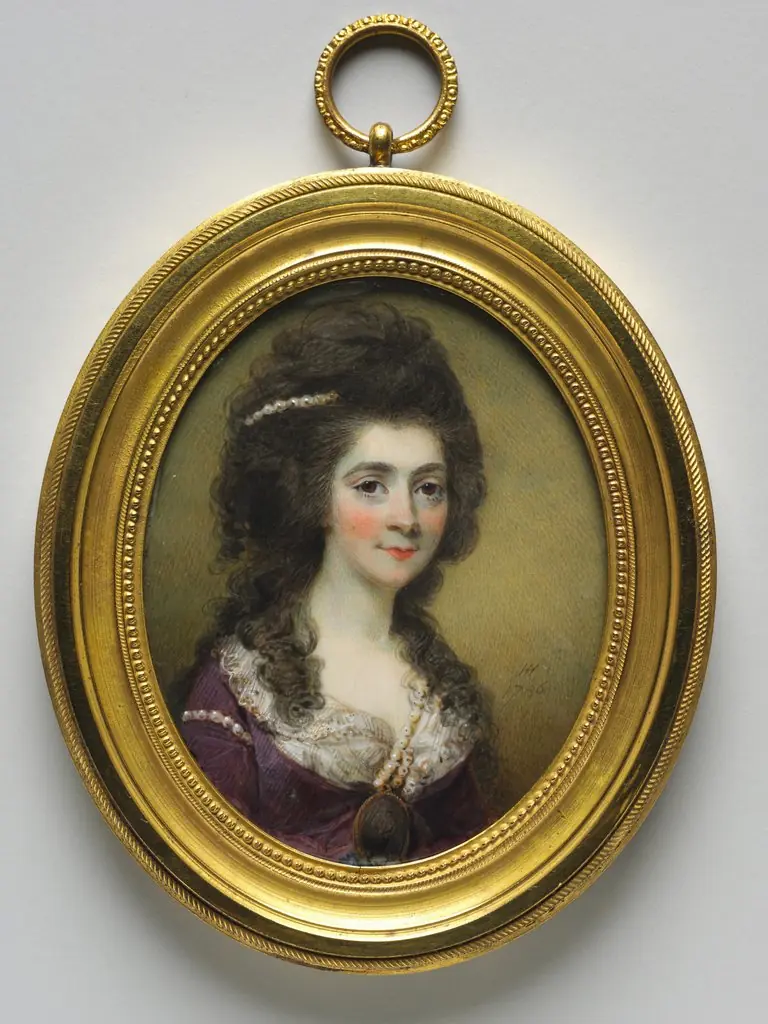
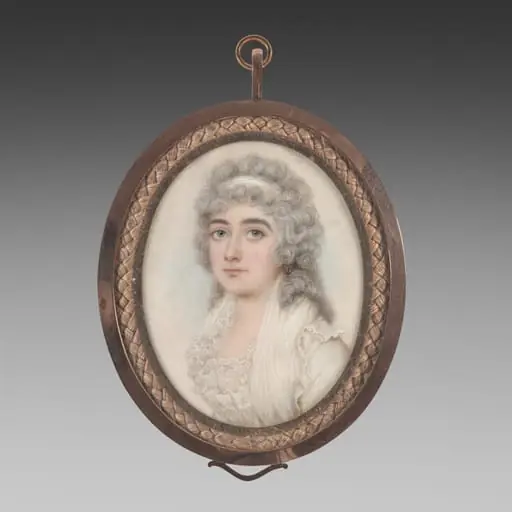
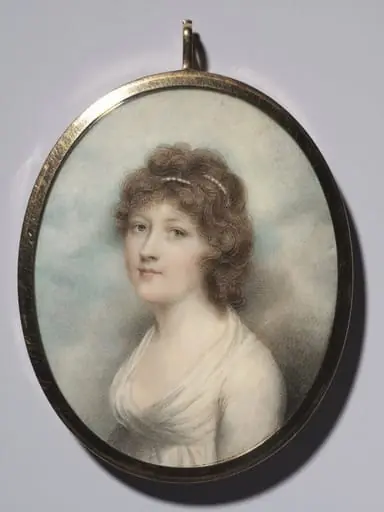
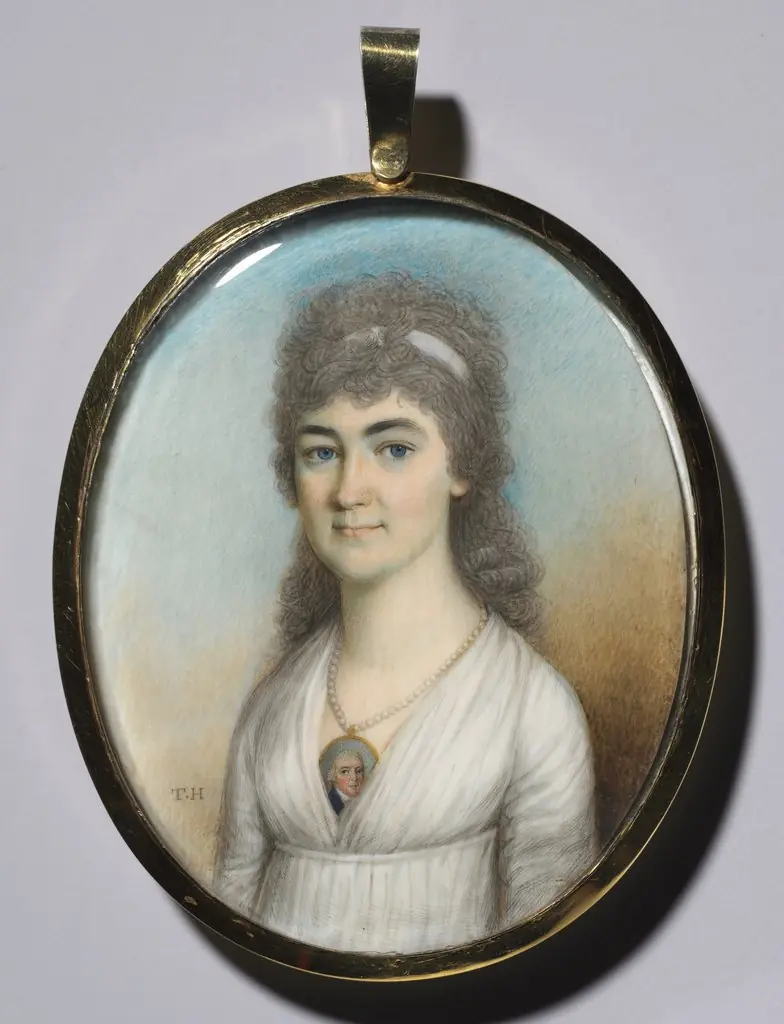
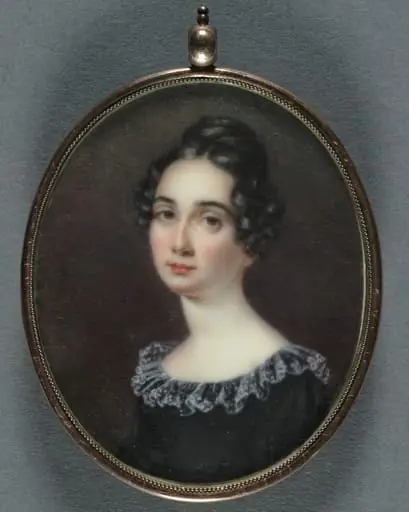
Portrait of a Woman, called Mrs. Close is an unspecified portrait miniature by the Rococo painting artist Horace Hone. It dates from 1786 and is held in the collection of the Cleveland Museum of Art. This miniature portrait, executed in watercolor on ivory, depicts a young woman in a white, plum‑toned dress with a lace fichu.
About this work
Horace Hone painted dozens of women like this—same pearls, same calm gaze—so the face feels familiar even if the name doesn’t.
A woman in a white dress looks straight at you, pearls woven through her brown curls and around her neck. The background is a soft olive green.
No one knows who she really was. The name “Mrs. Close” stuck by accident, written on a dealer’s tag years later. Horace Hone painted dozens of women like this—same pearls, same calm gaze—so the face feels familiar even if the name doesn’t.
To see more faces from the same time, look up England, 18th century.
Overview
This miniature portrait, executed in watercolor on ivory, depicts a young woman in a white, plum‑toned dress with a lace fichu. She gazes directly at the viewer, her brown curls threaded with pearls and a single pearl ornament set to the right. The background is a muted olive green, a common choice for intimate portrait miniatures of the period.
Subject & Meaning
The sitter has been identified as “Mrs. Close” since at least 1929, when the work entered the collection of Edward Greene. No contemporary inscription or documentation confirms this name; the attribution appears to stem from a later dealer’s label rather than from the artist’s own record.
Technique & Style
Horace Hone rendered the figure with delicate brushwork, emphasizing the sheen of pearls and the softness of the skin. The composition places the miniature turned toward the sitter’s chest, showing the back of the portrait, a convention that made the image readable only when the miniature was worn close to the body.
History & Provenance
The piece was sold by dealer Leo Schidlof to Edward Greene in 1929. Prior ownership is undocumented, and the work’s early history remains obscure. Its identification as “Mrs. Close” originates from the dealer’s tag rather than archival evidence.
Context
Miniature portraits of this size were commonly worn as personal mementos in the eighteenth and nineteenth centuries, often concealed beneath clothing. The practice of displaying the back of the portrait reinforced its private function, aligning with contemporary sentimental literature that celebrated such intimate keepsakes.
Artist & collection