Artwork
Portrait of a Woman
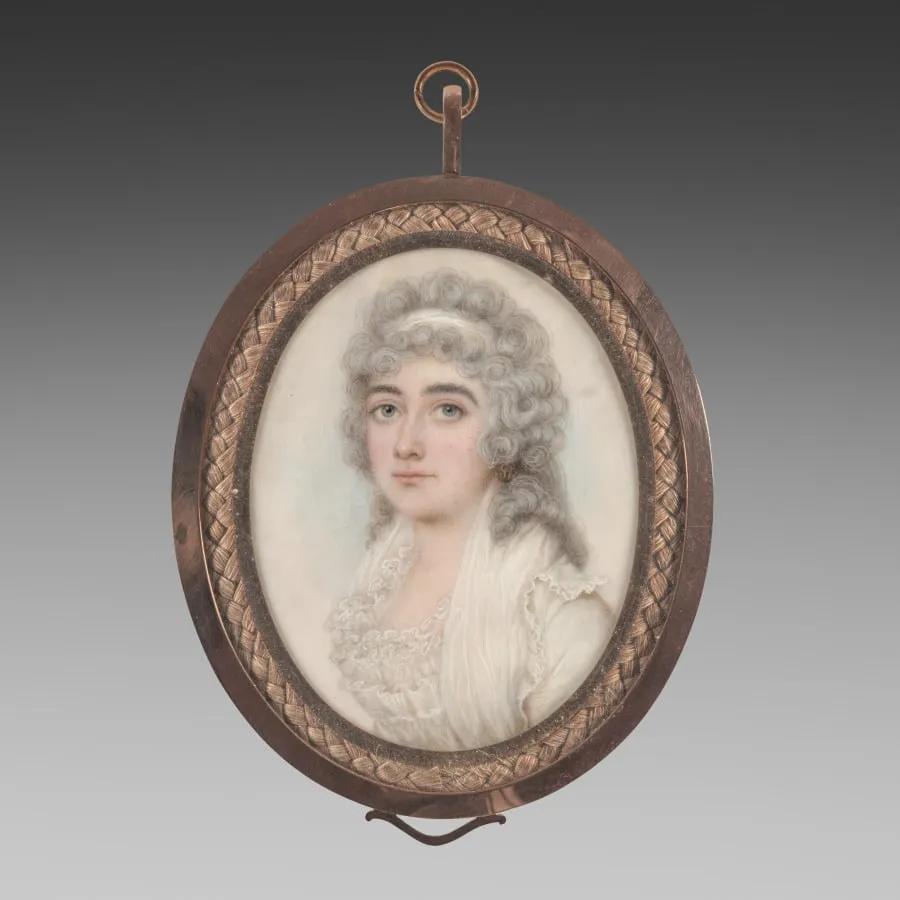
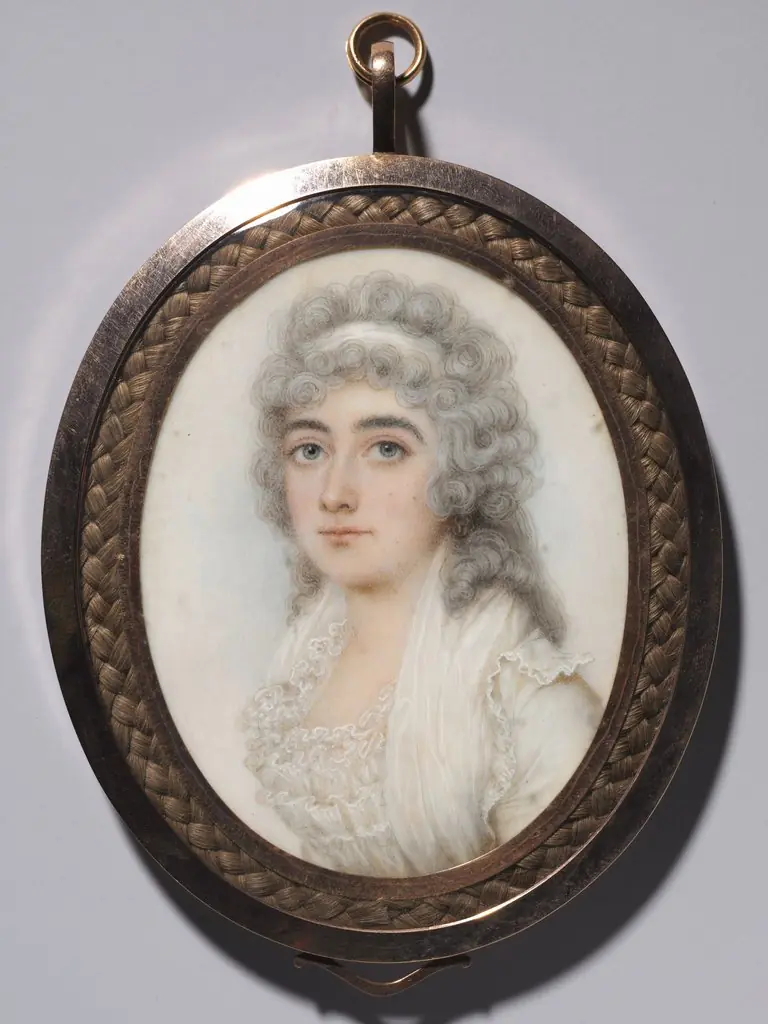
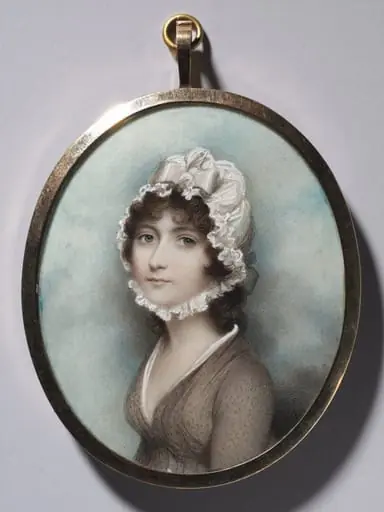
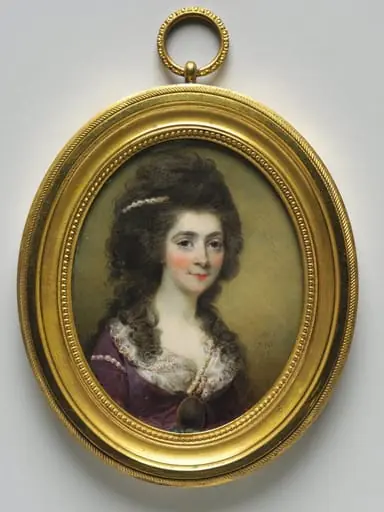
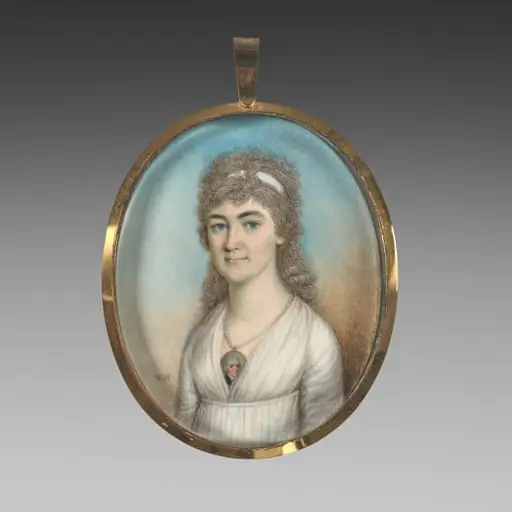
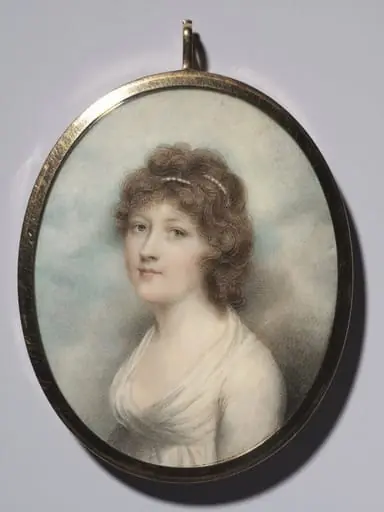
Portrait of a Woman is an unspecified portrait miniature by the British Romanticist artist Nathaniel Plimer. It dates from 1795 and is held in the collection of the Cleveland Museum of Art.
About this work
The artist painted it so small you’d have to hold it in your hand to see the details, like the faint blue shadow behind her head.
A woman in a white dress looks straight at you. Her hair is powdered and curly, tied with a wide white ribbon. She wears a gold earring and layers of ruffles at her neck.
This tiny portrait was meant to be kept close—maybe in a locket or pocket. The artist painted it so small you’d have to hold it in your hand to see the details, like the faint blue shadow behind her head.
If you like this, look up other works from England, 18th century.
Overview
This small portrait depicts a woman in a delicate, hand-painted miniature, likely intended for personal keeping—perhaps in a locket or pocket. Executed around 1795, it reflects the intimate scale and refined detail characteristic of British portrait miniatures of the period. The ivory ground and subtle blue wash behind her head suggest a soft, atmospheric setting, while the elaborate gold frame, adorned with braided hairwork, reinforces its private, sentimental function.
Subject & Meaning
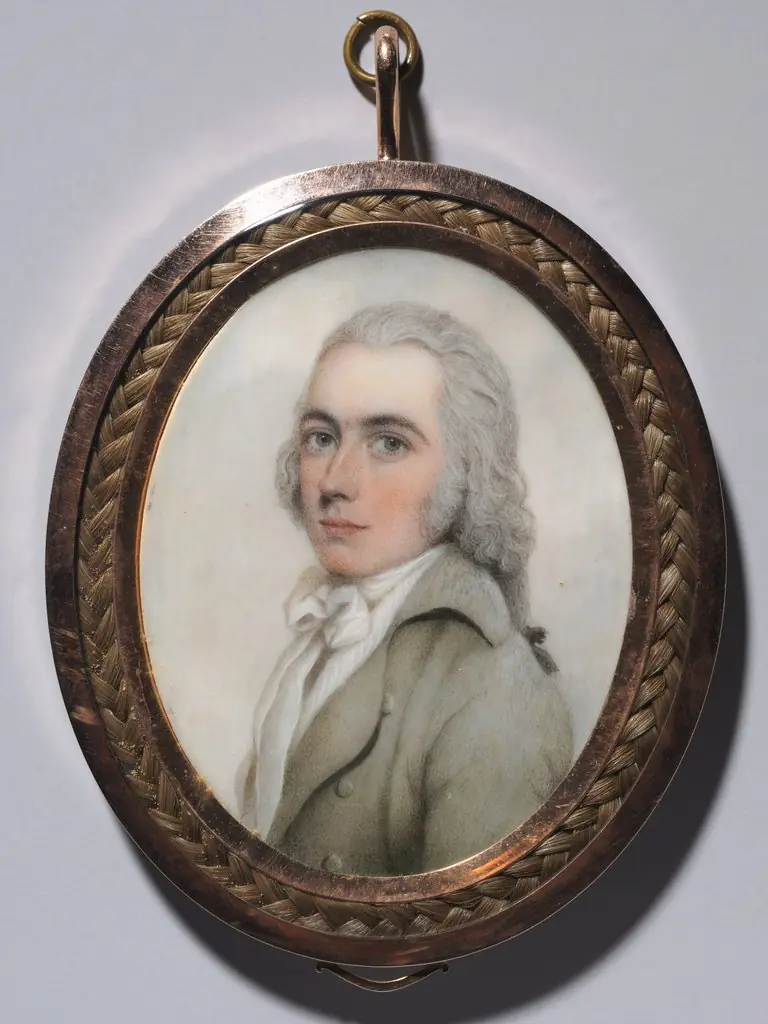
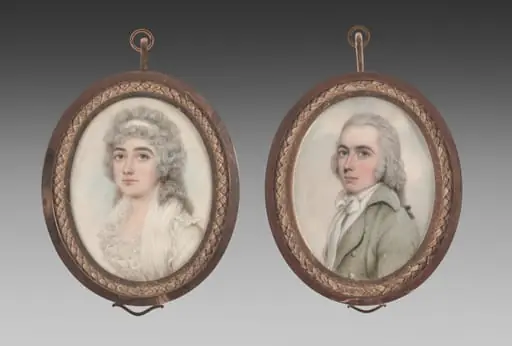
The woman’s powdered curls, white ribbon bandeau, and ruffled muslin gown align with late 18th-century English fashion, signaling modest elegance rather than aristocratic display. Her direct gaze and minimal adornment—only a single gold earring—convey quiet individuality. The pairing with a male miniature, framed identically and sharing the same hairwork, implies a marital or deeply personal bond, though their identities remain unknown. The inclusion of hair in the frame suggests a tactile connection to the sitter, common in mourning or love tokens.
Technique & Style
The artist employed watercolor on ivory, a standard medium for miniatures, achieving fine detail through meticulous brushwork. The ruffles of her gown and the texture of her hair are rendered with precision, while the pale background enhances the sitter’s presence without distraction. The frame’s intricate gold filigree and embedded brown hair, visible through blue glass, extend the portrait’s emotional resonance beyond the painted surface, merging craft with personal memory.
History & Provenance
The miniature is believed to be part of a matched pair, its companion portrait of a man sharing the same date, frame style, and hairwork. Both were likely commissioned together, possibly as a wedding or engagement token. Their survival in original frames, despite the common dispersal of such pairs through inheritance or sale, is unusual. The consistent hair color in both frames may indicate shared sitters or reused material, hinting at a deliberate, unified conception.
Context
In late 18th-century Britain, portrait miniatures served as portable mementos, often exchanged among family or lovers. The fashion depicted—white muslin gowns, powdered hair, and fichus—reflects the influence of Neoclassical ideals and the rise of informal, naturalistic dress among the middle and upper classes. Miniatures like this one were not public displays but private objects, carried or worn as intimate reminders of absent loved ones.
Legacy
This work exemplifies the convergence of personal sentiment and artisanal skill in Georgian-era portraiture. Its survival in original condition, with frame and hairwork intact, offers rare insight into how individuals encoded emotion into everyday objects. While the sitters’ names are lost, the miniature endures as a testament to the cultural practice of preserving memory through material tokens, a tradition that bridged art, craft, and private devotion.
Artist & collection