Artwork
Mănăstirea Horezu
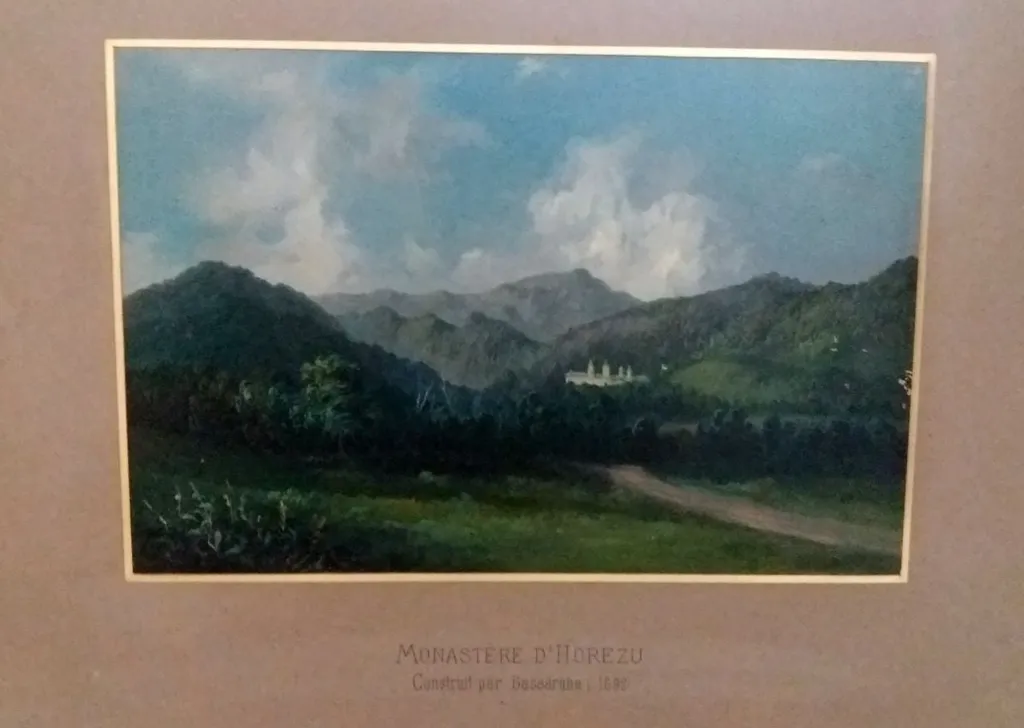
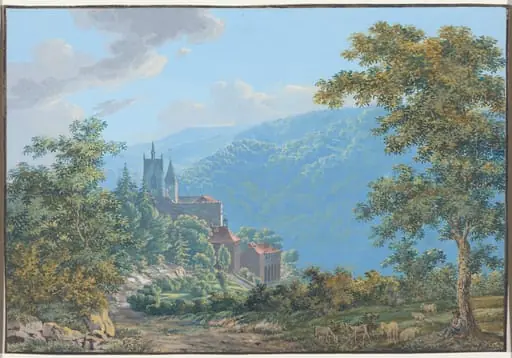
Mănăstirea Horezu is an unspecified painting by the Impressionist artist Henric Trenk. It dates from 1861 and is held in the collection of the Bucharest Municipality Museum.
About this work
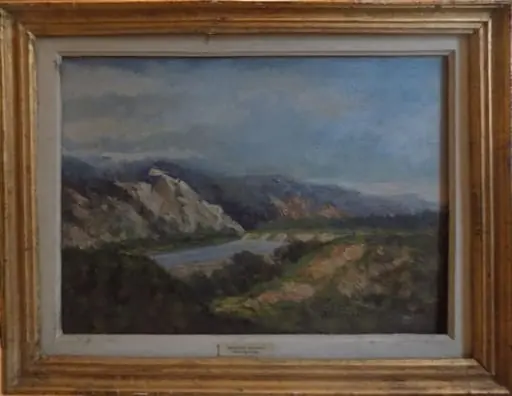
The sky is bright blue with soft, fluffy clouds, and the trees along the path are painted in gentle green and brown strokes.
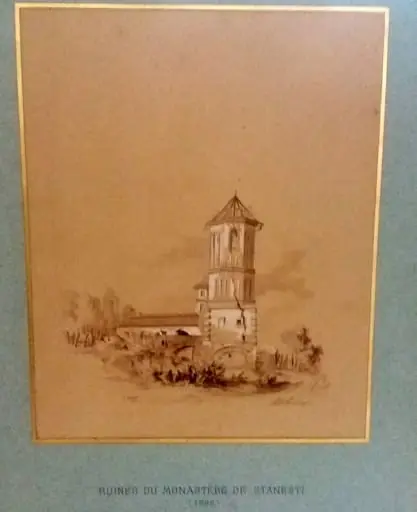
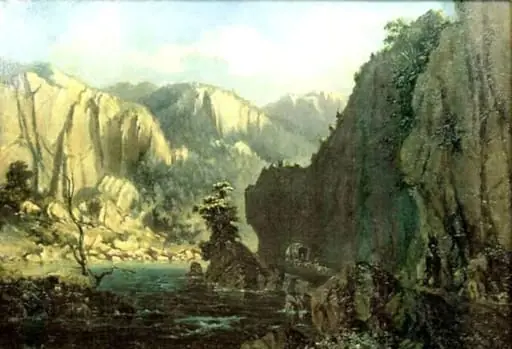
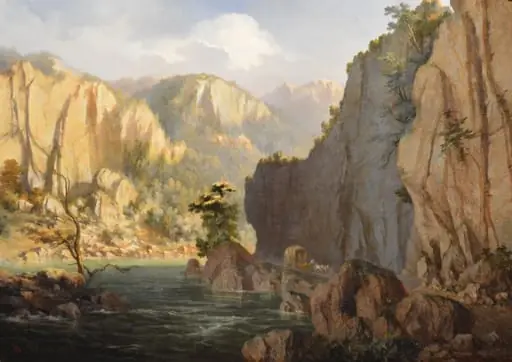
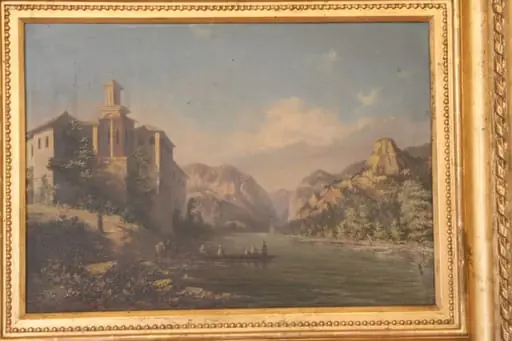
This painting shows a quiet valley with rolling green hills and a winding dirt path. In the distance, a small building with a white roof sits near the base of the mountains. The sky is bright blue with soft, fluffy clouds, and the trees along the path are painted in gentle green and brown strokes.
The label says this is *Mănăstirea Horezu*, built in 1698, which looks like the building in the scene. The artist used light colors to make the landscape feel peaceful and real.
Next, check out Henric Trenk, the artist who painted this.
Overview
Henric Trenk’s 1861 oil painting titled *Mănăstirea Horezu* is part of the collection of the Museum of Ethnography. The work depicts a tranquil rural landscape centred on the historic Horezu Monastery, an edifice erected in 1698, set against gently rolling hills and a clear sky.
Subject & Meaning
The composition presents a quiet valley where a narrow dirt track winds past verdant trees toward a modest structure with a white roof, identifiable as the Horezu Monastery. The serene atmosphere and soft lighting convey a sense of peaceful contemplation associated with the monastic setting.
Technique & Style
Trenk employs a light palette of greens, browns, and blues, applying broad, gentle brushstrokes that render foliage and terrain with a naturalistic softness. The sky is rendered in pale blue with fluffy clouds, while the architecture is outlined with restrained detail, emphasizing overall harmony over precise rendering.
History & Provenance
Created in 1861, the painting entered the Museum of Ethnography’s holdings at an unspecified date, where it remains on display as a visual record of Romanian religious architecture and 19th‑century landscape painting.
Context
The work reflects a period when Romanian artists, including Trenk, documented national monuments and rural scenery, contributing to a growing cultural awareness of heritage sites such as the Horezu Monastery, a UNESCO‑listed example of Brâncovenesc architecture.
Artist & collection
Artist
A 19th-century painter from Romania, Henric Trenk captured local life and mountain landscapes in oil.