Artwork
La adăpat
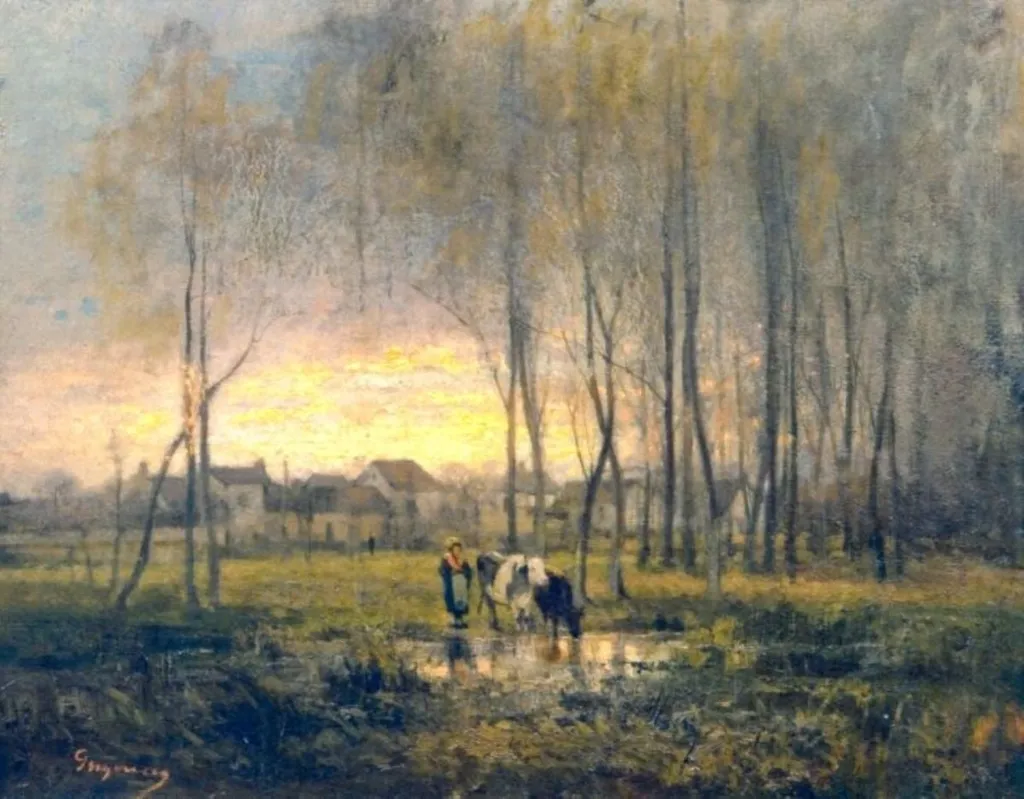
La adăpat is an unspecified painting by Nicolae Grigorescu. It is held in the collection of the National Museum of Art of Romania.
About this work
Overview
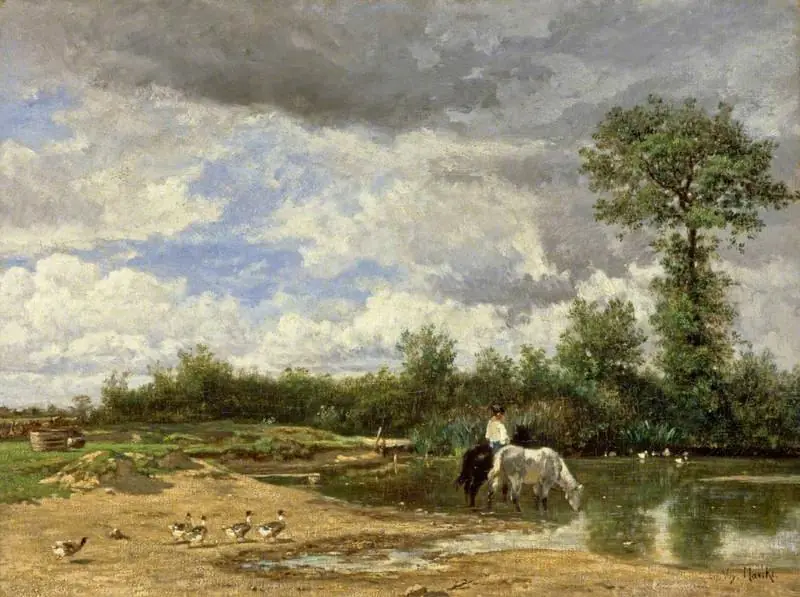
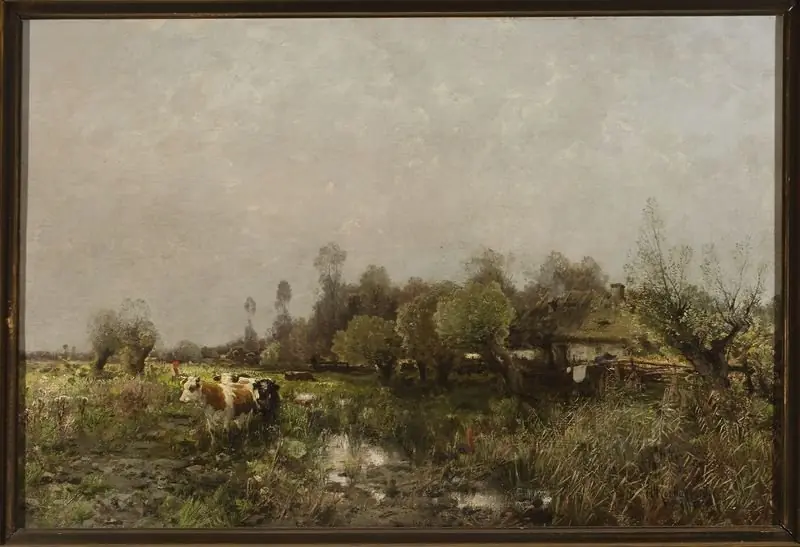
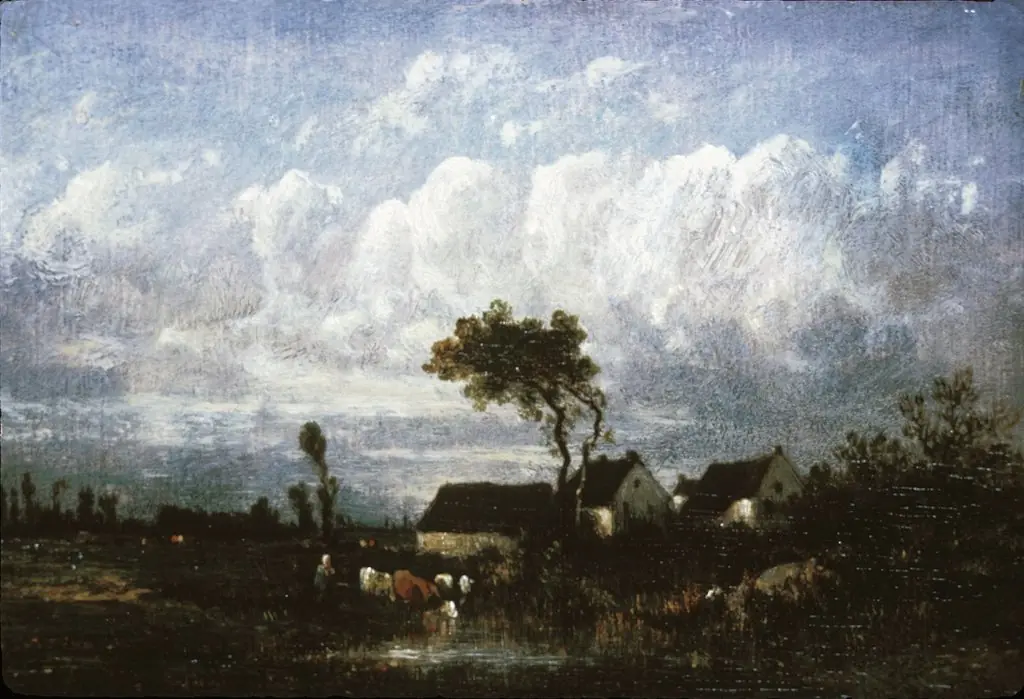
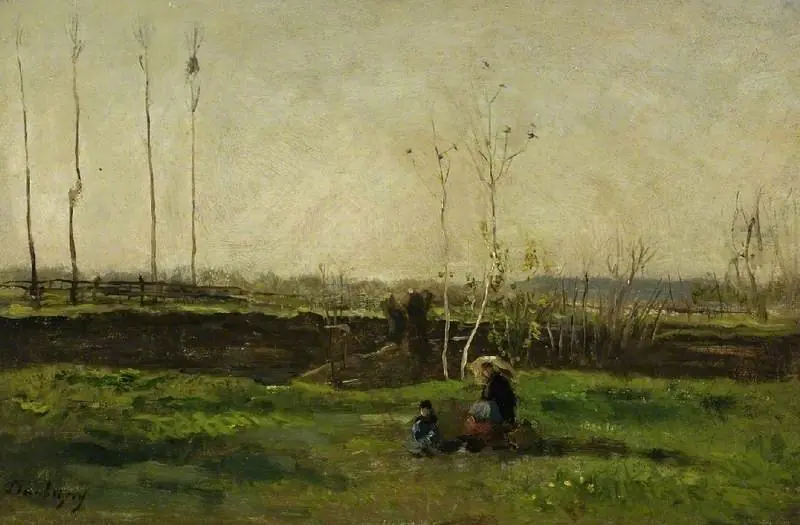
La adăpat is a quiet rural scene painted in oil, capturing a moment of daily life in the Romanian countryside. A woman in a long blue dress and yellow hat stands beside a white-and-black cow in a shallow pool, washing it with a bucket. Trees and open fields frame the composition, with distant buildings suggesting a modest agricultural setting. The tone is calm, emphasizing stillness over action.
Subject & Meaning
The painting portrays a routine act of animal care, elevating it through its stillness and intimacy. The woman and cow face each other in quiet communion, suggesting mutual trust. No dramatic narrative is present; instead, the work honors the dignity of labor and the rhythm of rural existence, rooted in observation rather than idealization.
Technique & Style
Grigorescu employs soft, naturalistic brushwork to render light and texture. The water reflects subtle shifts in hue, while the cow’s coat and the woman’s dress are rendered with gentle tonal variation. Atmospheric perspective is achieved through muted background tones, and the lighting suggests late afternoon, enhancing the scene’s serenity without overt chiaroscuro contrast.
History & Provenance
Painted in the late 19th century, La adăpat emerged from Grigorescu’s practice of sketching peasant life during travels in the Romanian countryside. It was likely completed in his studio from on-site studies. The work entered public collections in the early 20th century and remains part of Romania’s national artistic heritage, valued for its authentic depiction of rural culture.
Context
During Grigorescu’s time, Romanian artists increasingly turned from academic traditions to depict local life with sincerity. La adăpat aligns with this shift, reflecting a broader cultural movement to define national identity through everyday scenes. Unlike romanticized rural imagery, this work avoids sentimentality, focusing instead on quiet realism.
Legacy
The painting is recognized as an early example of Romanian Impressionism, influencing later generations to prioritize natural light and ordinary subjects. While not widely exhibited internationally, it holds a central place in Romanian art education and museum collections, symbolizing a commitment to truthful, unembellished representation of peasant life.
Artist & collection
Artist
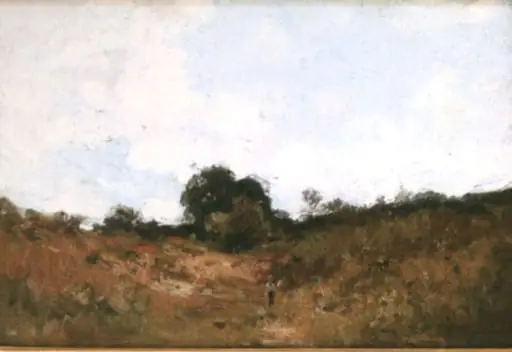
Romanian painter Nicolae Grigorescu made quiet, honest scenes of everyday life and country roads around 1900.