Artwork
Țărancă cu furca
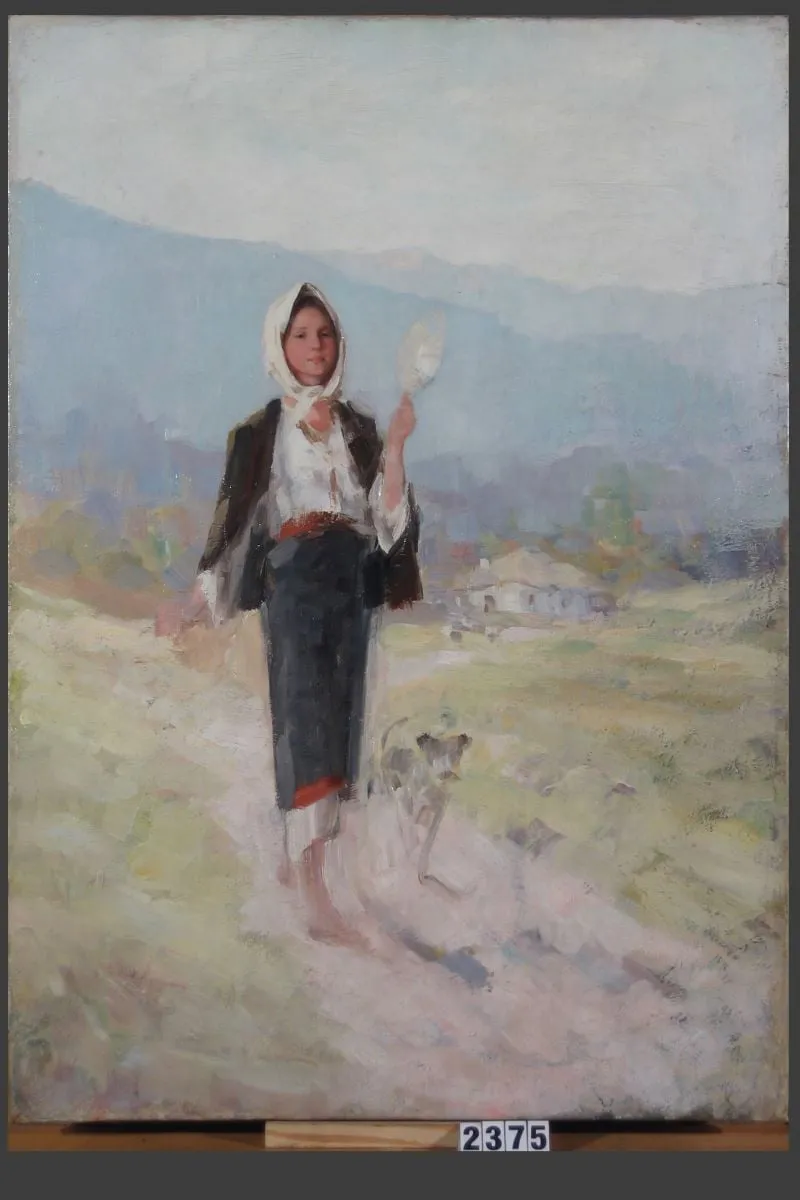
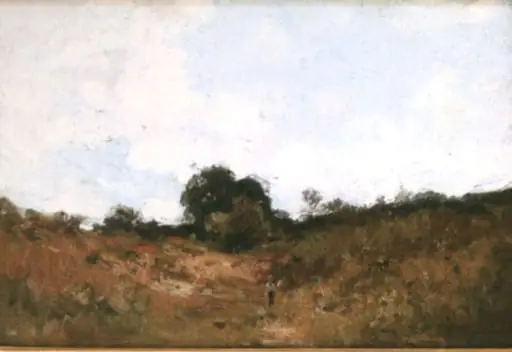
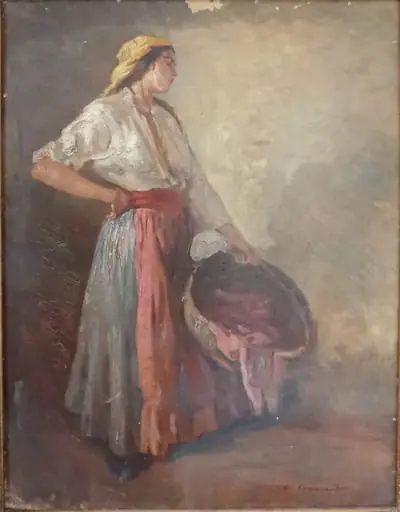
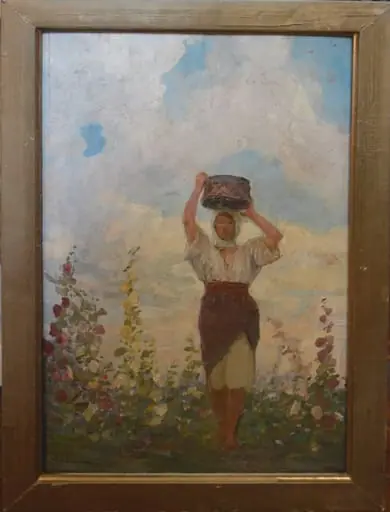
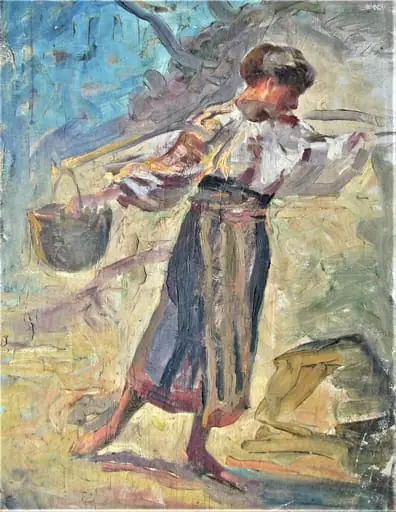
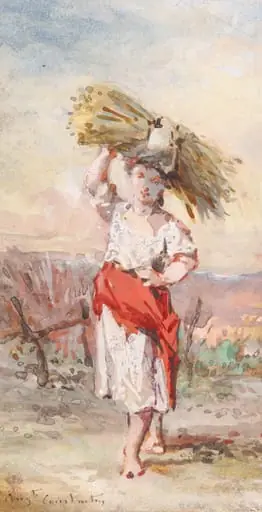
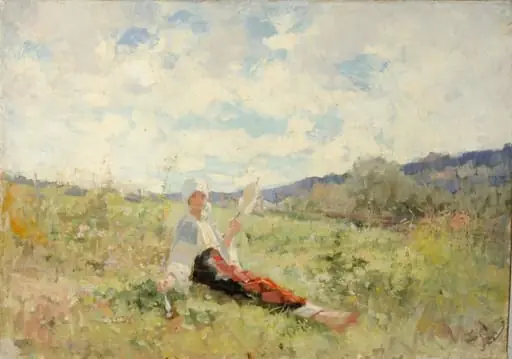
Țărancă cu furca is an unspecified painting by Nicolae Grigorescu. It is held in the collection of the Brukenthal National Museum. This painting depicts a rural woman standing outdoors, holding a pitchfork, with a small animal at her feet.
About this work
Overview
This painting depicts a rural woman standing outdoors, holding a pitchfork, with a small animal at her feet. The setting is a quiet countryside, rendered in soft, muted earth tones. The brushwork is loose and textured, with visible strokes that suggest movement and immediacy rather than polished finish. The composition centers on the figure, grounding the scene in quiet labor and solitude.
Subject & Meaning
Her posture and tool suggest daily agricultural work, while the presence of a sheep or goat implies her role in animal husbandry.
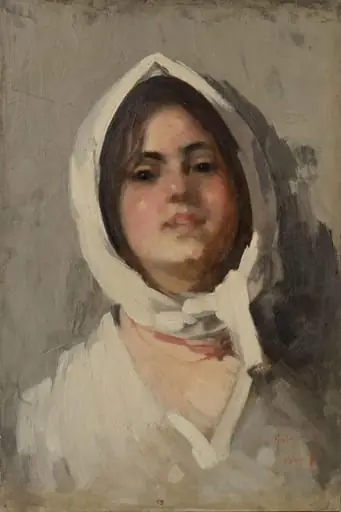
The woman, dressed in a dark dress, white headscarf, and red belt, embodies rural labor. Her posture and tool suggest daily agricultural work, while the presence of a sheep or goat implies her role in animal husbandry. The scene avoids idealization, presenting her as part of the land rather than apart from it. The quiet dignity of her routine is emphasized through simplicity and lack of narrative drama.
Technique & Style
The artist employs loose, visible brushstrokes and a form of impasto to build texture in the clothing and landscape. Paint is applied thickly in places, creating a tactile surface that enhances the sense of atmosphere. Colors are subdued—ochres, grays, and muted greens—reinforcing the earthbound tone. The unfinished quality of the brushwork invites the viewer to perceive the moment as transient, not staged.
History & Provenance
The painting’s origins are tied to late 19th-century Romanian rural realism, though its exact date and early ownership remain undocumented. It likely emerged from an artist engaged with peasant life, possibly influenced by regional folk traditions and emerging national artistic movements. No significant exhibition or collector history is recorded prior to its inclusion in public collections.
Context
In late 1800s Romania, artists increasingly turned to peasant subjects as symbols of national identity, moving away from aristocratic or urban themes. This work aligns with that shift, portraying daily life without romanticism. The landscape reflects the Moldavian or Wallachian countryside, where smallholdings and subsistence farming defined rural existence. The painting’s restraint contrasts with more dramatic European realist works of the same era.
Legacy
Though not widely reproduced or studied internationally, the painting contributes to a regional tradition of depicting rural labor with quiet authenticity. Its unembellished style influenced later Romanian artists seeking to capture the rhythms of peasant life without sentimentality. Today, it remains a modest but resonant example of how everyday figures were rendered with dignity in a time of national cultural redefinition.
Artist & collection
Artist
Romanian painter Nicolae Grigorescu made quiet, honest scenes of everyday life and country roads around 1900.