Artwork
În pădure
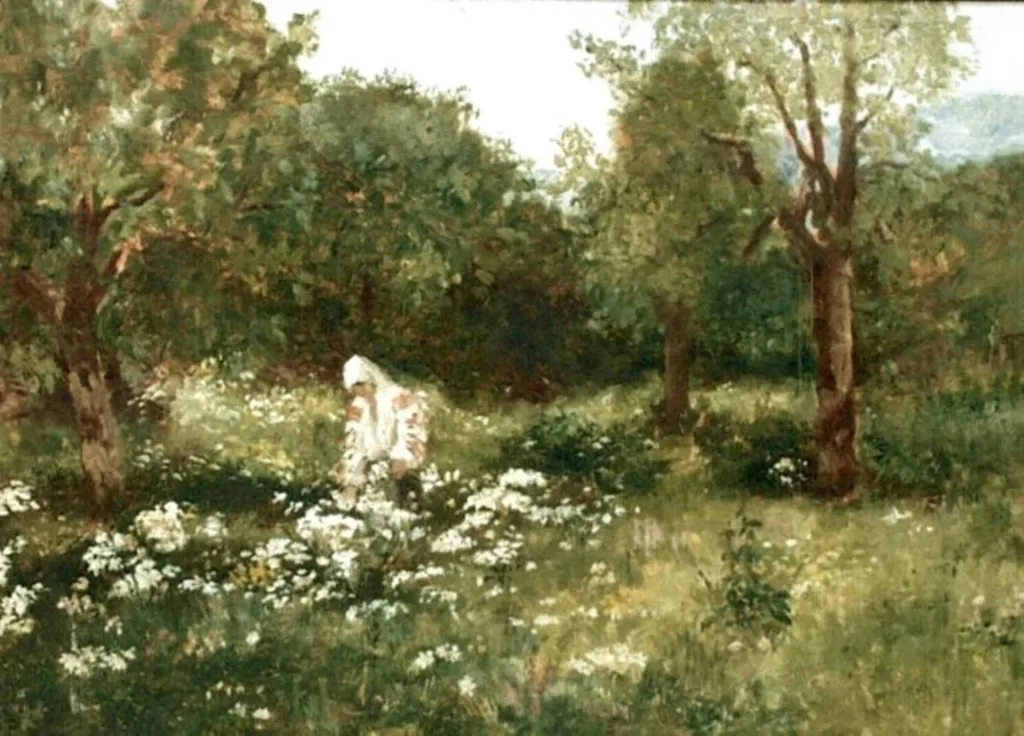
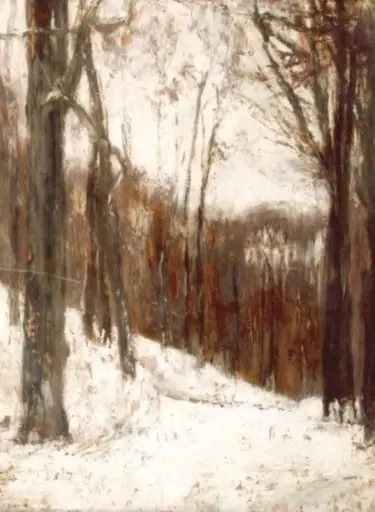
În pădure is an unspecified painting by Theodor Pallady. It dates from 1907 and is held in the collection of the National Museum of Art of Romania.
About this work
Overview
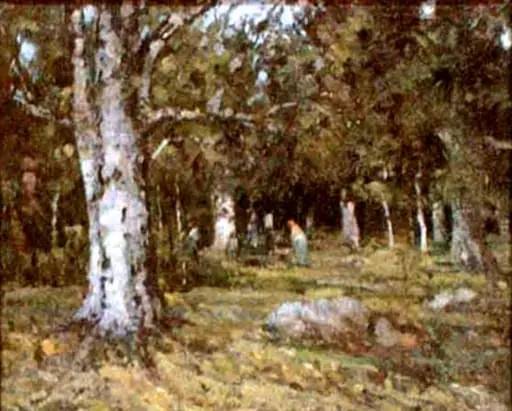
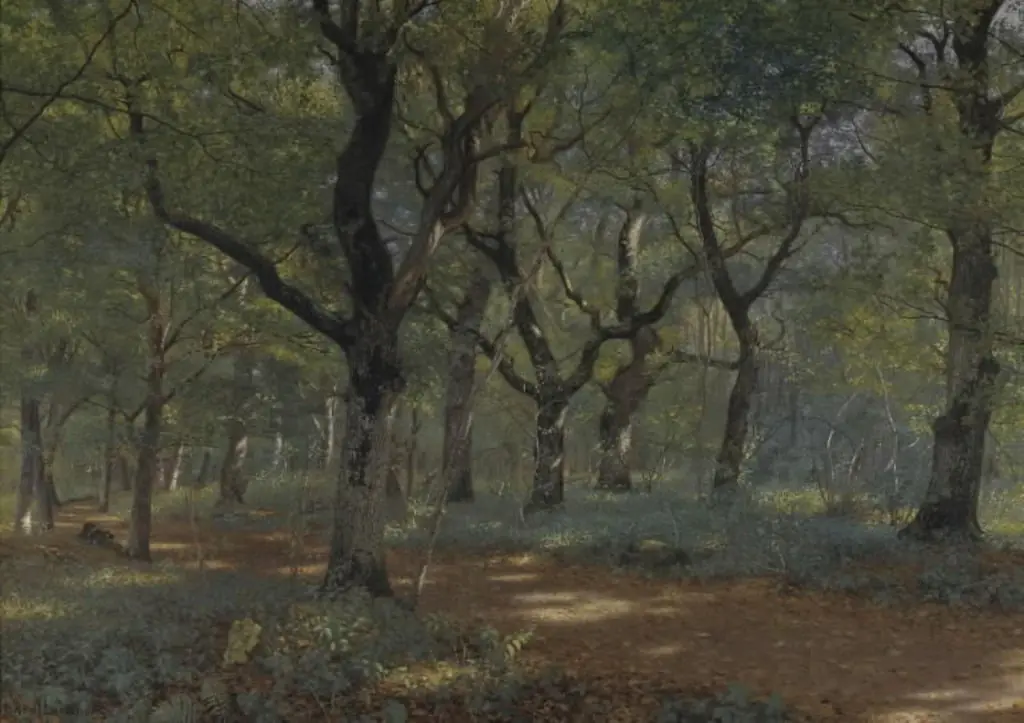
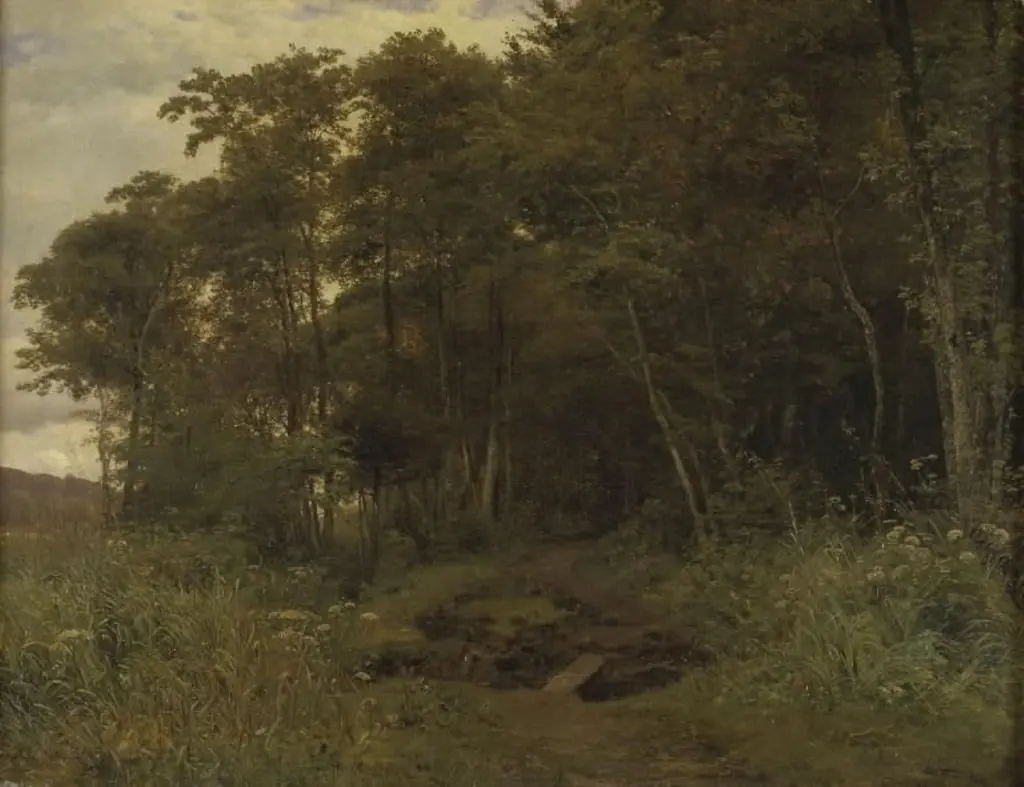
“În pădure,” executed in 1907 by Romanian painter Theodor Pallady, presents a solitary figure moving through a luminous forest clearing. The composition is rendered as an image, capturing a moment of quiet passage beneath a canopy of tall trees whose trunks dominate the vertical space, while scattered wildflowers punctuate the grassy floor.
Subject & Meaning
The central figure, dressed in a light‑toned coat and holding a small object, appears absorbed in the act of walking, suggesting contemplation or a personal journey. The serene atmosphere, emphasized by the soft, filtered light, invites reflection on the relationship between the individual and the natural environment.
Technique & Style
Pallady employs gentle, fluid brushstrokes to convey the texture of foliage and the subtle play of illumination. The palette favors muted greens and earth tones, allowing the bright highlights to suggest sunlight slipping through leaves. The overall handling reflects an impressionistic sensitivity to atmosphere and surface.
History & Provenance
Created early in Pallady’s career, the work aligns with his interest in landscape and everyday scenes. While specific ownership records are limited, the piece remains documented as part of Pallady’s 1907 output, illustrating his development toward a nuanced, observational approach to nature.
Context
At the turn of the twentieth century, Romanian artists were increasingly engaging with European modernist currents while retaining local subject matter. “În pădure” exemplifies this synthesis, merging a familiar woodland motif with a contemporary visual language that emphasizes light, color, and fleeting moments.
Artist & collection
Artist
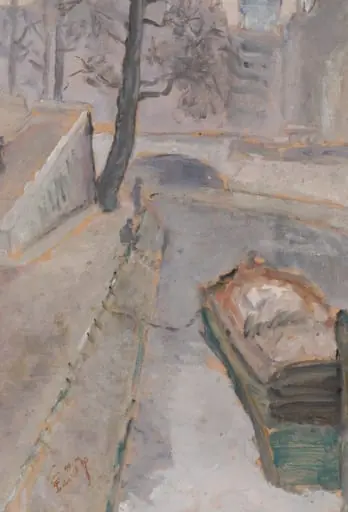
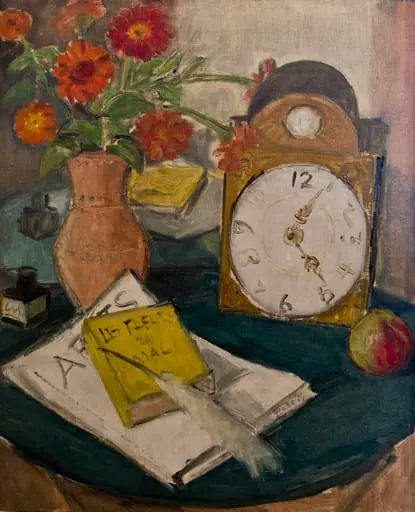
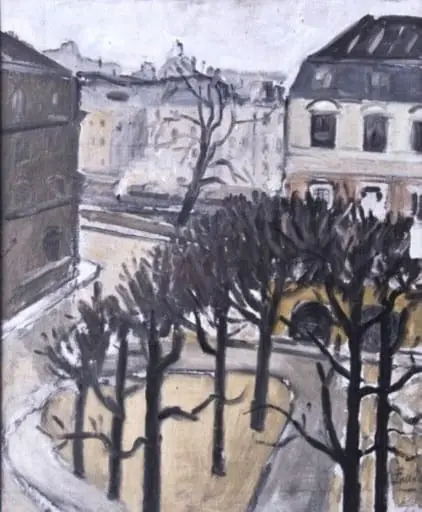
Theodor Pallady made still lifes and interiors in early 20th-century Bucharest. His Place Dauphine shows a quiet Parisian square, while Natură moartă (Ulcică cu flori și chibrituri) piles everyday objects on a table.…