Artwork
Nud în picioare
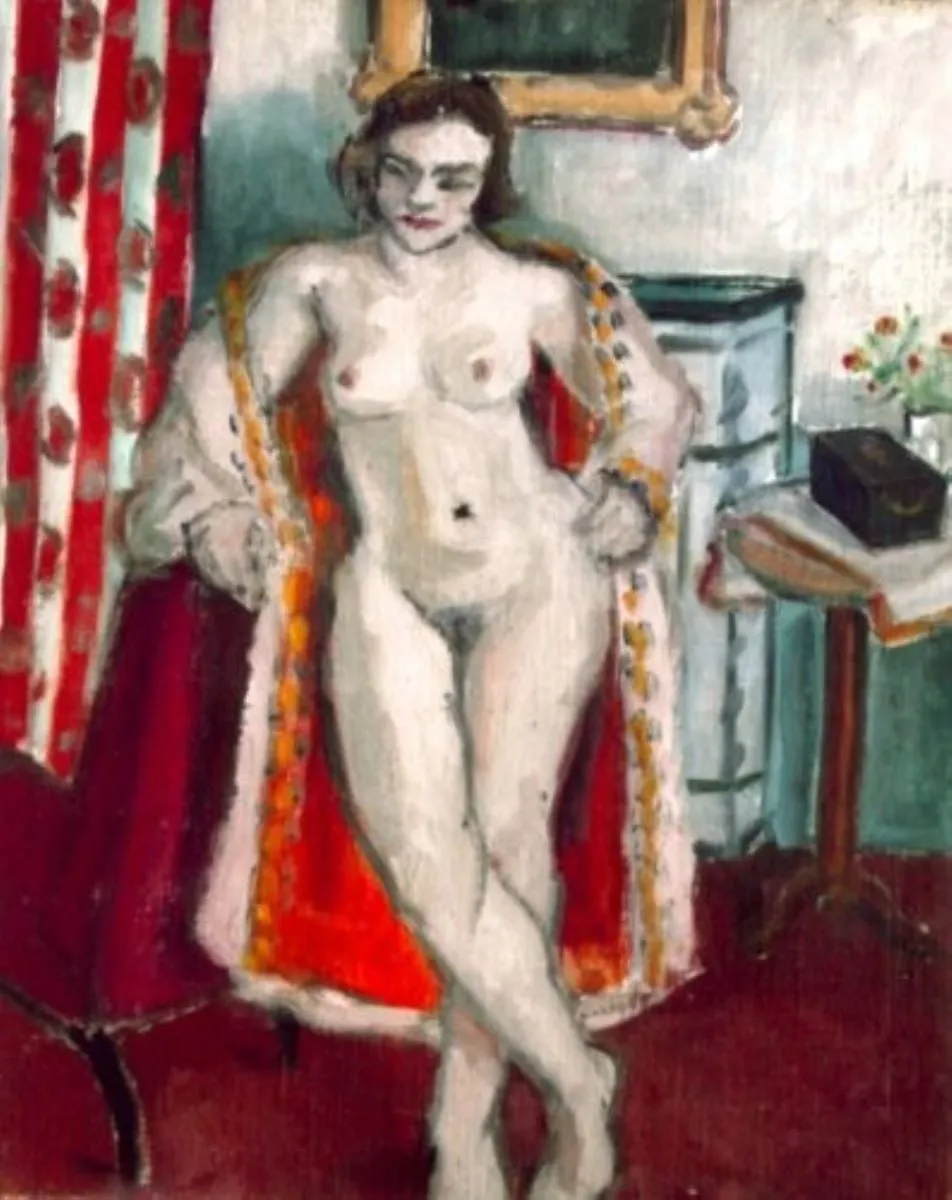
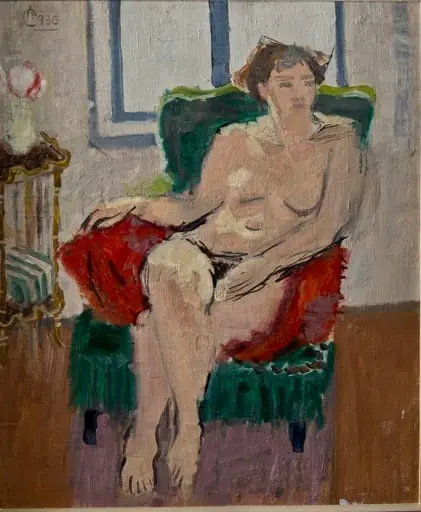
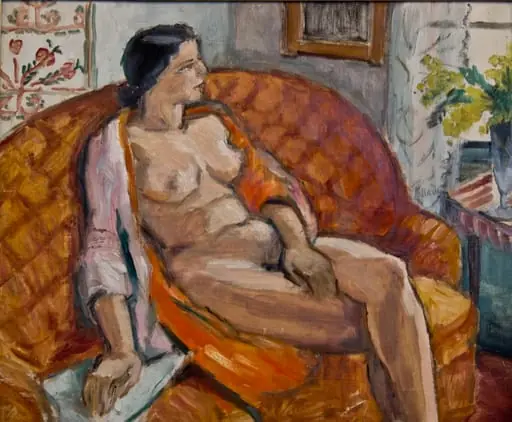
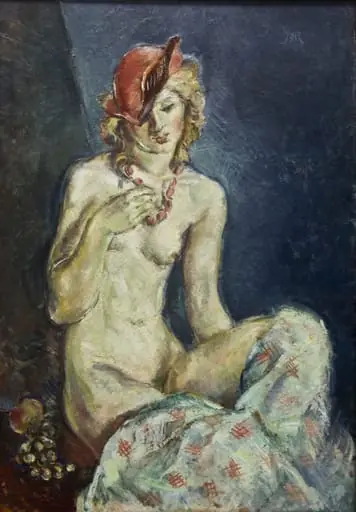
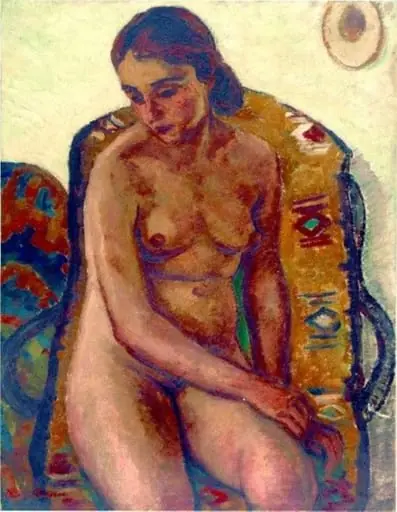
Nud în picioare is an unspecified painting by Theodor Pallady. It is held in the collection of the Bucharest Municipality Museum. This painting depicts a woman standing alone in an interior space, her posture calm and unposed.
About this work
Overview
The lighting is dramatic and uneven, casting deep shadows and highlighting certain surfaces, enhancing the tactile quality of the scene.
This painting depicts a woman standing alone in an interior space, her posture calm and unposed. She wears a loosely draped robe in warm red and orange tones, partially open to reveal her bare skin. The setting includes a red curtain, a mirror, a small table with a vase and a hat, all rendered with visible, heavy brushwork. The lighting is dramatic and uneven, casting deep shadows and highlighting certain surfaces, enhancing the tactile quality of the scene.
Subject & Meaning
The figure’s stillness and unadorned presence suggest introspection rather than performance. Her nudity, framed by domestic objects and a half-open robe, avoids overt sensuality, instead inviting contemplation of privacy and vulnerability. The mirror may imply self-reflection, while the hat and vase hint at absence or routine. The composition resists narrative, focusing on the quiet dignity of an ordinary moment.
Technique & Style
Thick, textured brushstrokes create a tactile surface, especially in the robe and background, using impasto to build form through paint rather than fine detail. Colors are applied boldly, with little blending, giving the scene a raw, immediate quality. Light falls unevenly, emphasizing volume and depth without soft transitions. The rough handling of paint contrasts with the stillness of the subject, adding emotional tension to the composition.
History & Provenance
The painting’s origin is not documented in public records, and its early ownership remains unclear. It has not been exhibited widely or included in major catalogues raisonnés. Its current location and acquisition history are not publicly available, limiting contextual understanding beyond its visual elements. The work appears to have remained outside the mainstream art historical discourse.
Context
The painting aligns with early 20th-century trends that favored intimate, non-idealized figures and expressive brushwork over academic precision. Its domestic setting and unidealized nudity echo contemporaneous works by artists exploring personal space and psychological presence. Yet it lacks clear ties to known movements or artists, suggesting a solitary or regional practice outside established circles.
Legacy
The work has not entered broader art historical narratives or influenced subsequent artists in documented ways. Its significance lies primarily in its quiet formal qualities — the interplay of texture, light, and stillness — rather than in any recognized contribution to art movements. It remains a private, unassuming study of presence and materiality.
Artist & collection
Artist
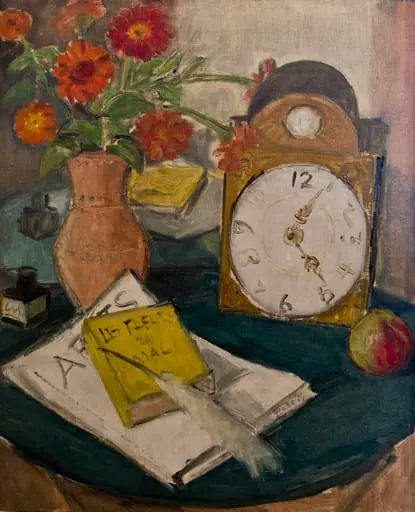
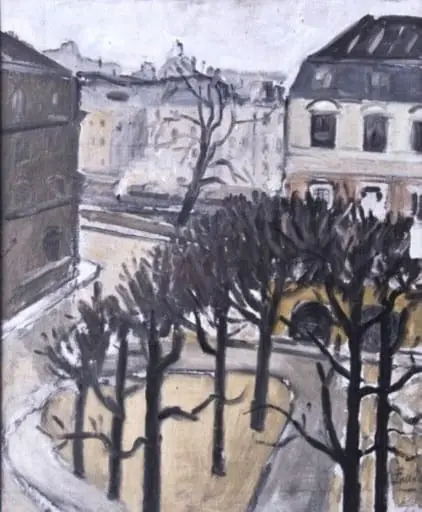
Theodor Pallady made still lifes and interiors in early 20th-century Bucharest. His Place Dauphine shows a quiet Parisian square, while Natură moartă (Ulcică cu flori și chibrituri) piles everyday objects on a table.…