Artwork
Interior de atelier
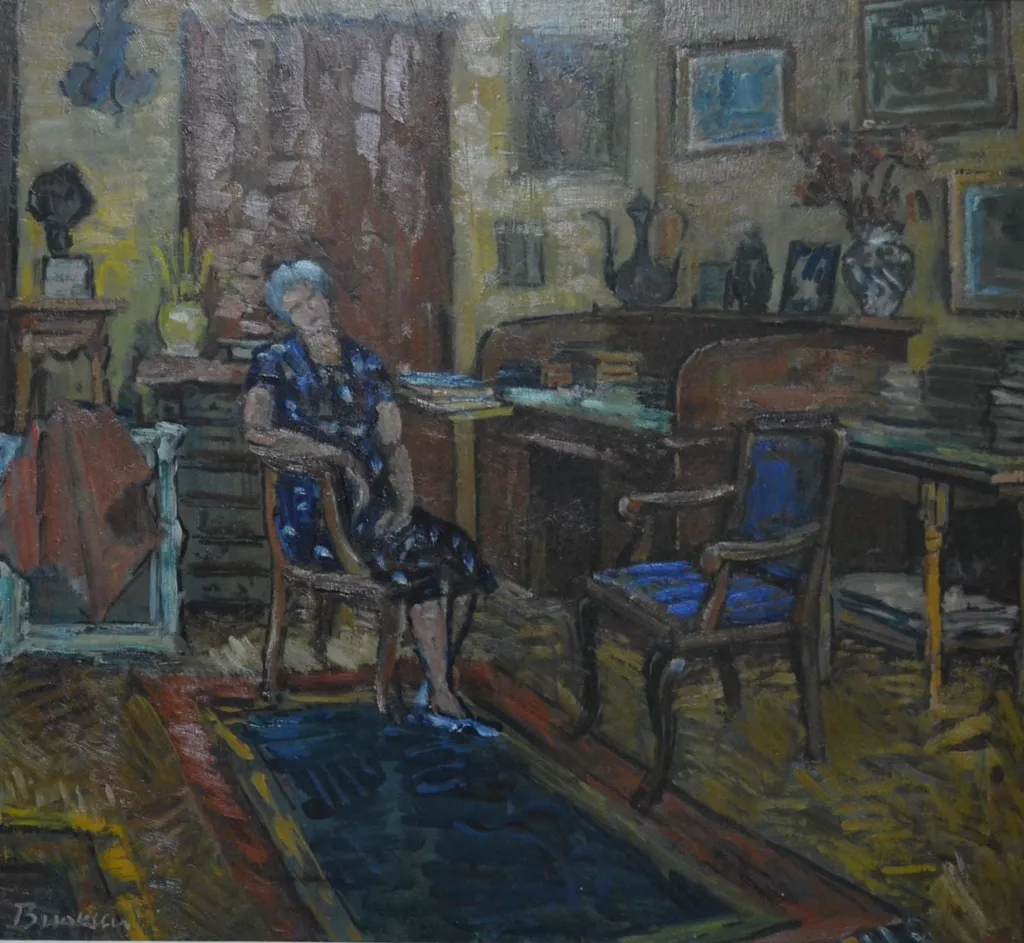
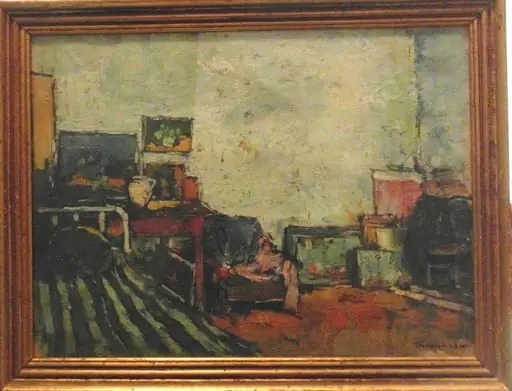
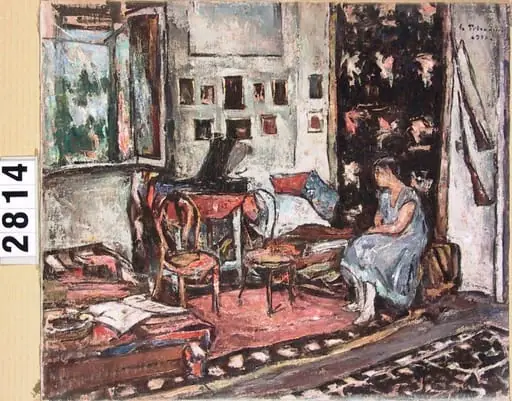
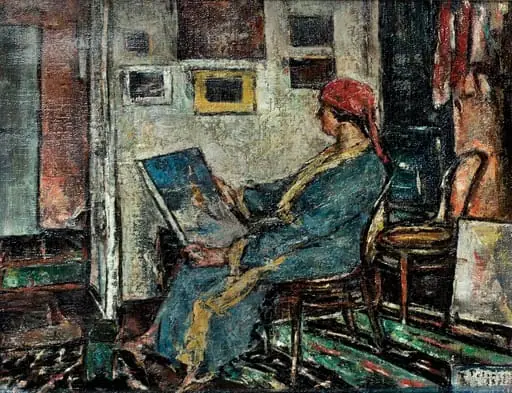
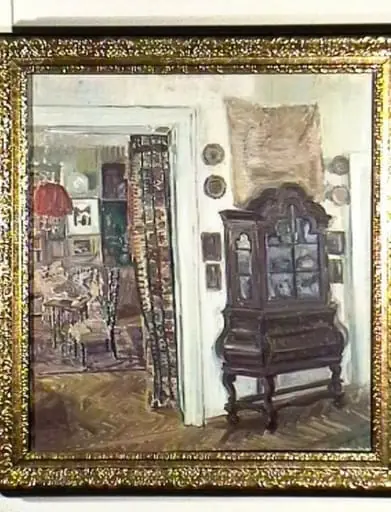
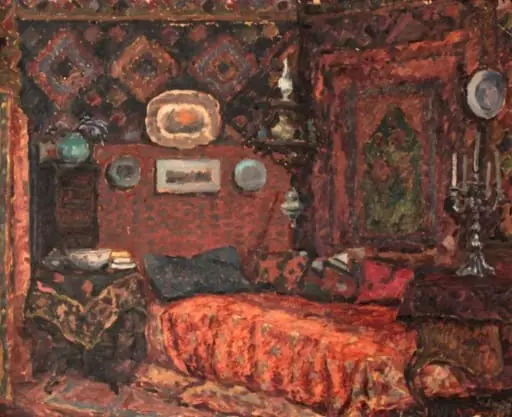
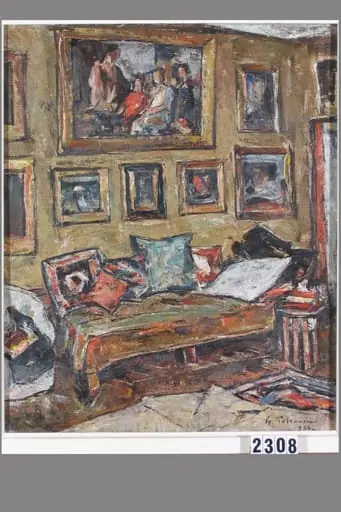
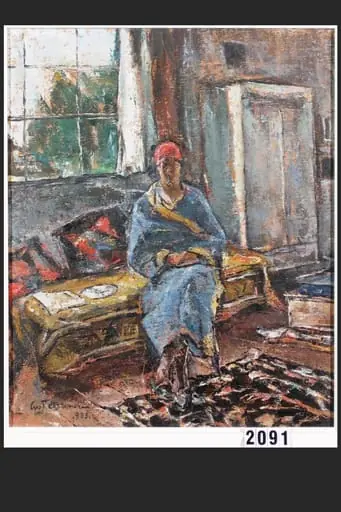
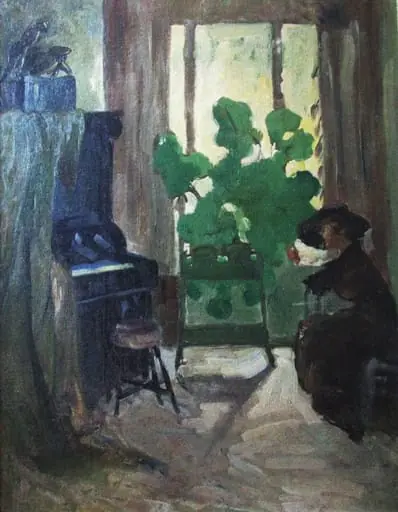
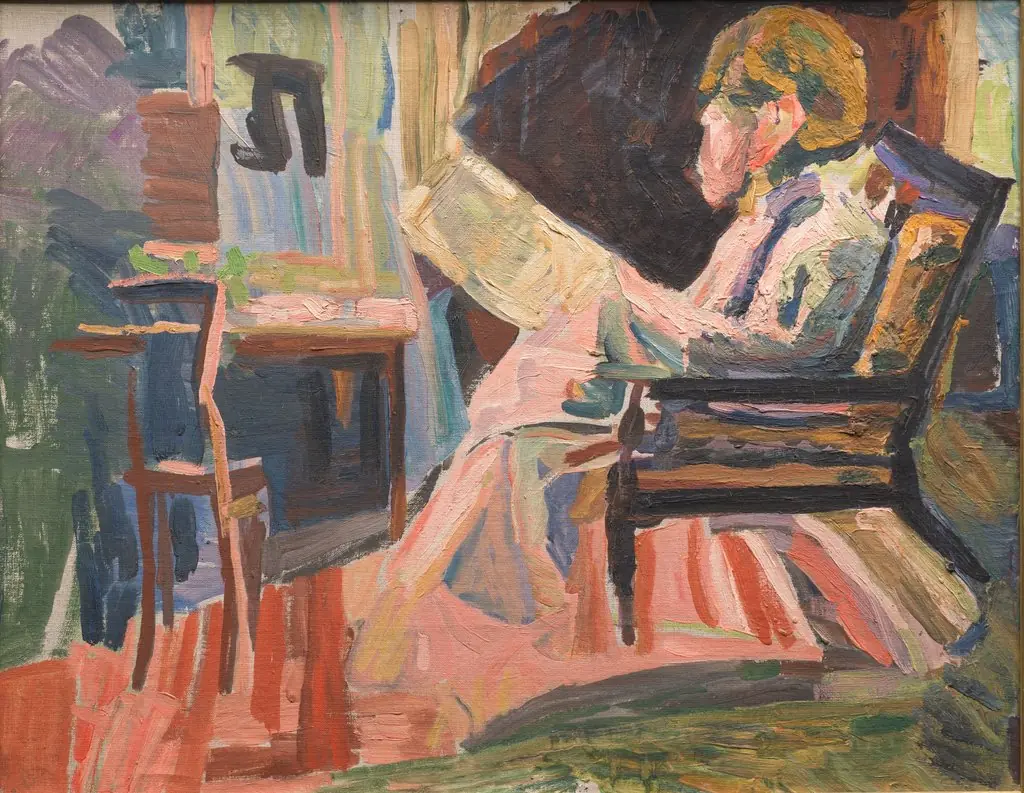
Interior de atelier is an unspecified painting by Marius Bunescu. It is held in the collection of the Art Museum of Constanta. This painting captures the interior of an artist’s studio, rendered with energetic, thick brushwork that emphasizes texture over polish.
About this work
Overview
The visible strokes and uneven surfaces suggest immediacy, as if the moment was observed and recorded in real time rather than composed with deliberation.
This painting captures the interior of an artist’s studio, rendered with energetic, thick brushwork that emphasizes texture over polish. The scene is intimate and unidealized, showing a seated figure surrounded by the tools and outputs of creative work. The visible strokes and uneven surfaces suggest immediacy, as if the moment was observed and recorded in real time rather than composed with deliberation.
Subject & Meaning
A woman in a dark blue dress and white headscarf sits quietly in a wooden chair, a small dog at her side. Before her, a table holds a sketch or painting, hinting at her role as both creator and subject. The walls, densely hung with other artworks, imply a space shaped by labor and accumulation. The composition avoids grandeur, instead honoring the quiet, habitual rhythm of artistic life.
Technique & Style
The artist employs impasto to build surface depth, applying paint generously so that strokes remain tactile and distinct. This method gives the walls, floor, and objects a rough, almost sculptural quality. The lack of smooth blending and the raw handling of edges contribute to a sense of spontaneity, as if the scene was painted quickly, responding directly to what was before the artist.
History & Provenance
The work’s origins are undocumented in public records, but its style aligns with late 19th-century studio scenes by artists who favored candid observation over idealization. It likely emerged from a circle that valued the authenticity of everyday creative spaces. No known exhibition history or collector lineage has been established, leaving its early reception unclear.
Context
During the period in which it was likely made, artists increasingly turned inward, depicting their own studios as sites of personal and professional identity. This work reflects a broader trend away from formal portraiture toward intimate, unvarnished glimpses of artistic practice—where the tools, clutter, and quiet presence of the maker became worthy subjects in their own right.
Legacy
Though not widely reproduced or studied, the painting contributes to a quieter lineage of studio imagery that prioritizes process over product. Its unpolished aesthetic anticipates later movements that valued authenticity and material presence, influencing artists who sought to capture the physicality of creation rather than its polished outcomes.
Artist & collection
Artist
A Romanian painter who captured the city’s quiet corners, Marius Bunescu’s brush brought old streets and half-collapsed theaters to life.