Artwork
Țigancă
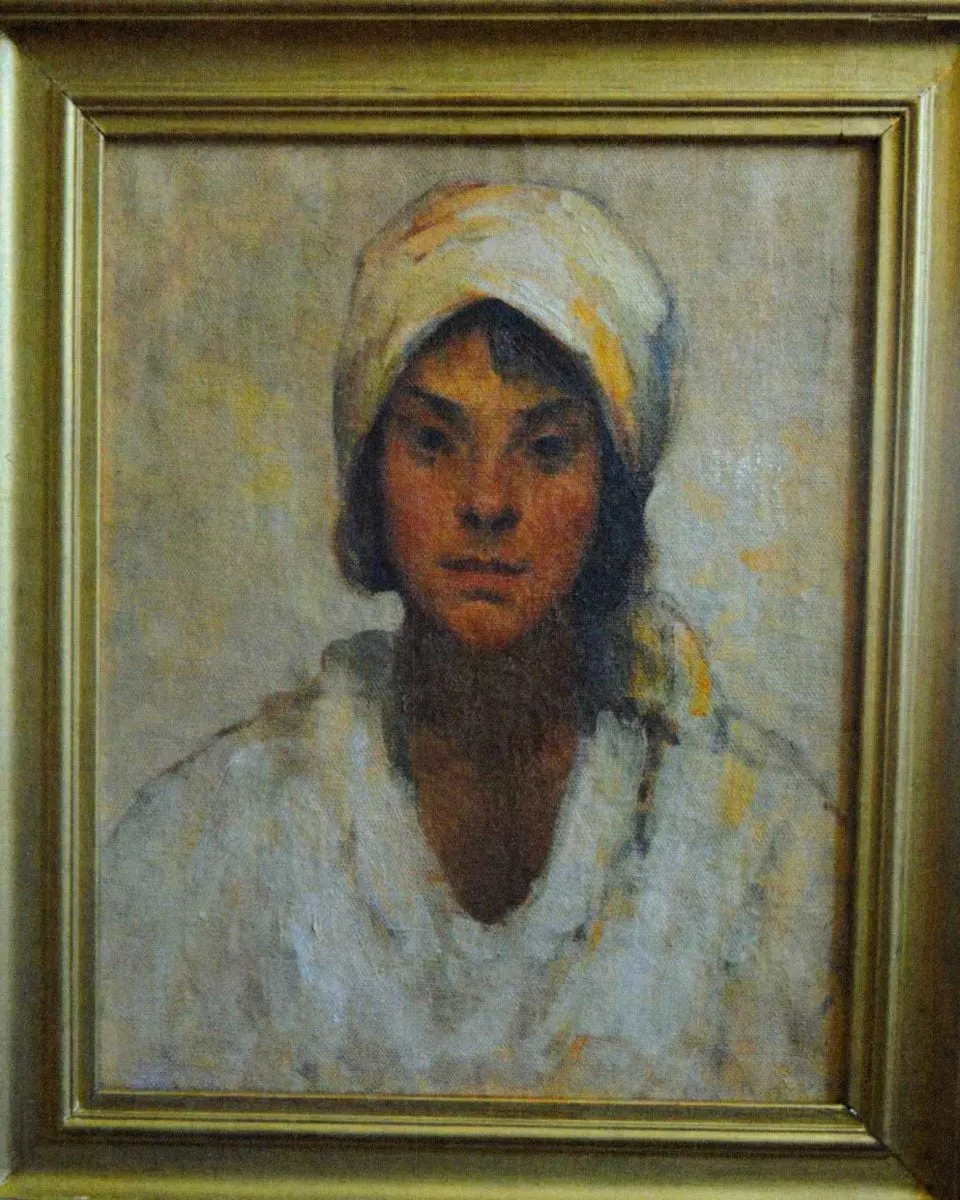
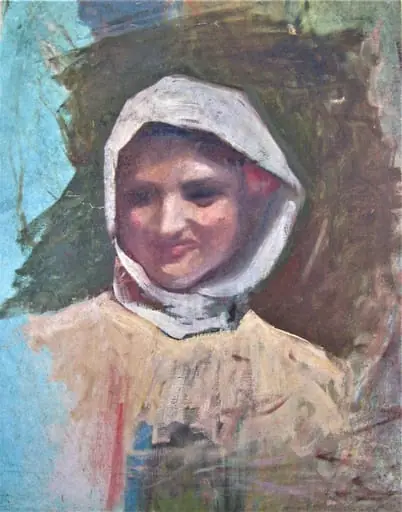
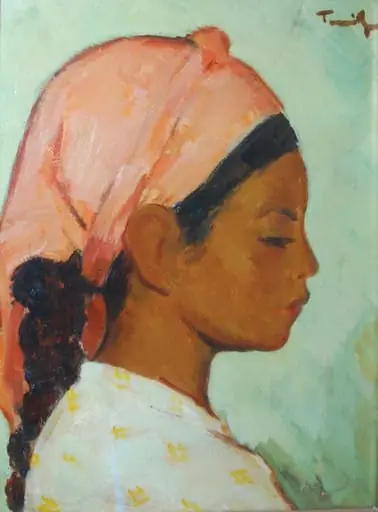
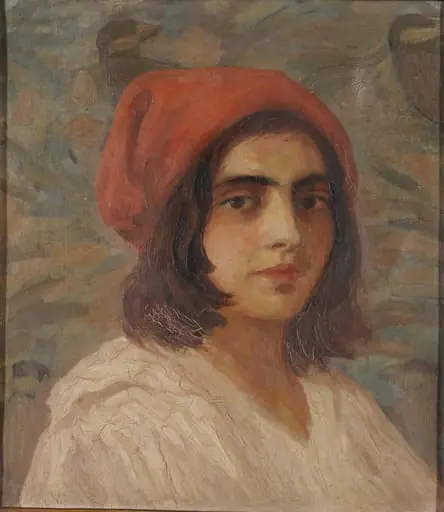
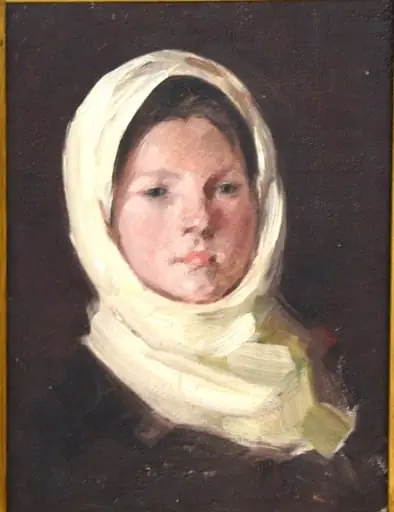
Țigancă is an unspecified painting by Hugo Kołłątaj. It is held in the collection of the Bucharest Municipality Museum. This portrait depicts a woman rendered in a restrained, almost sketchlike manner.
About this work
Overview
The composition centers on the subject’s face, which emerges from a pale wash with quiet authority.
This portrait depicts a woman rendered in a restrained, almost sketchlike manner. The brushwork is swift and unpolished, suggesting immediacy rather than meticulous finish. Soft, muted tones dominate, with minimal contrast between figure and background. The surface carries a subtle texture, reinforcing the sense of spontaneity. The composition centers on the subject’s face, which emerges from a pale wash with quiet authority.
Subject & Meaning
The woman, likely of Romani heritage, gazes directly at the viewer with a composed, unsmiling expression. Her simple headscarf and faintly rendered white collar suggest modest attire, while the lack of contextual details isolates her presence. The intensity of her gaze, heightened by the dark tones against the light ground, conveys a sense of inner stillness rather than narrative or emotion, inviting contemplation over interpretation.
Technique & Style
The artist employed loose, rapid brushstrokes that avoid fine detail, creating a sense of motion and impermanence. Color is applied thinly, allowing the canvas to show through in places, particularly around the collar and scarf. Chiaroscuro is used subtly: the face is shadowed and defined by a faint rim of light, enhancing volume without dramatic contrast. The unfinished quality is intentional, emphasizing process over polish.
History & Provenance
The work’s origin is undocumented in public records, and no exhibition or ownership history is widely cited. It is cataloged as an image without a known artist or date, suggesting it may be a lesser-known study or fragment. Its survival implies it was preserved not as a finished piece but as a personal or experimental work, possibly from a private collection.
Context
Painted during a period when portraiture often idealized or exoticized marginalized figures, this work avoids romanticism. Its simplicity aligns with emerging realist tendencies in late 19th-century Eastern European art, where artists turned to everyday subjects with unembellished observation. The lack of ornamentation or setting reflects a deliberate focus on the individual’s presence.
Legacy
Though not widely exhibited or reproduced, the painting contributes to a quieter tradition of empathetic portraiture that values emotional restraint over spectacle. Its unfinished state has influenced later artists seeking authenticity in gesture and texture. It remains a quiet example of how minimal means can convey dignity without embellishment.
Artist & collection
Artist
This Polish folk painter worked in the late eighteenth and early nineteenth centuries, creating religious scenes with bold colors and simple shapes.
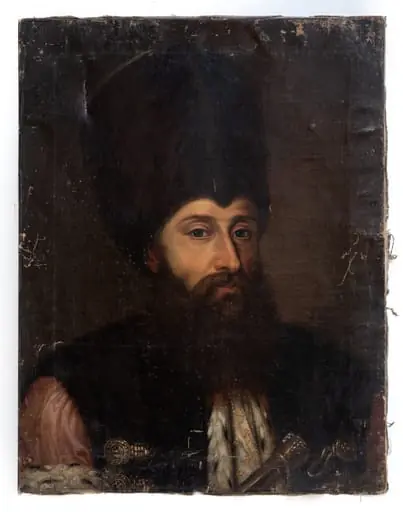 Alexandru Ipsilanti
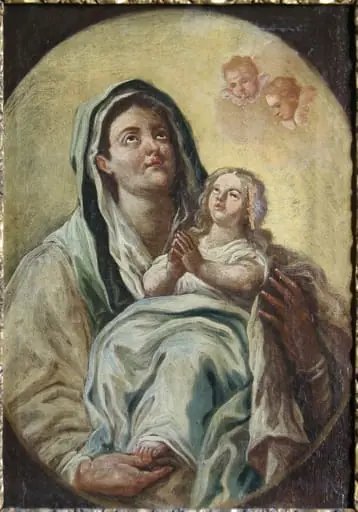 Fecioara Maria cu Pruncul Isus (în Reg. Inv.: Maria cu copilul Isus)
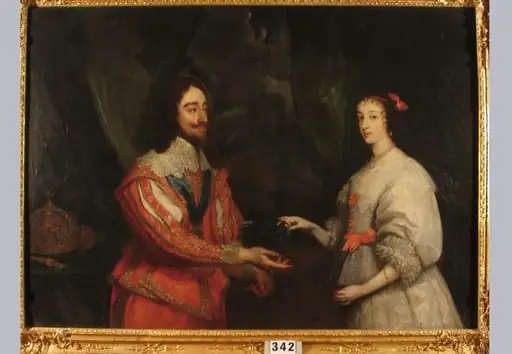 Regele Charles I Stuart al Angliei și soția sa Henrietta Maria de Franța (în Reg. Inv.: Carol I al Angliei și soția sa Henriette din Franța)
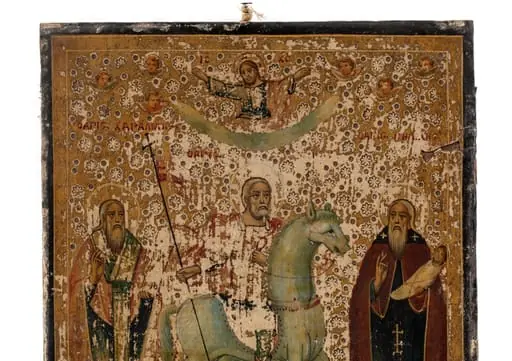 Sfântul Haralambie cu alți doi sfinți
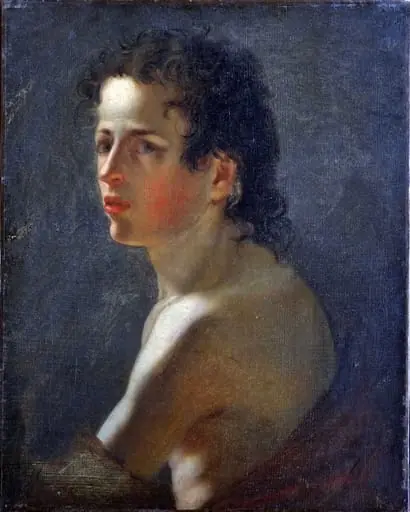 Portret de bărbat
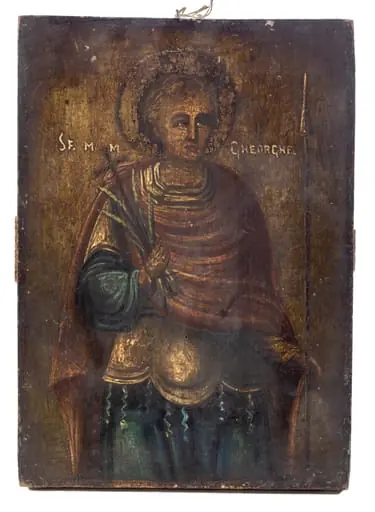 Sfântul Gheorghe
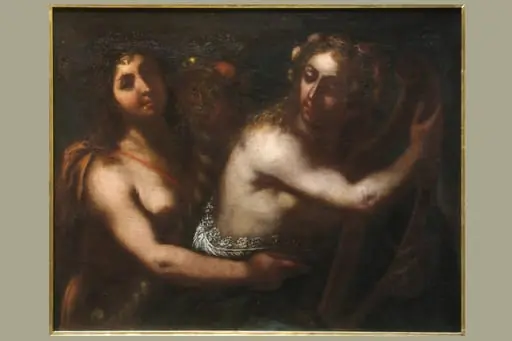 Vertumnus și Pomona (în Reg. Inv.: Vertumnus și Flora)
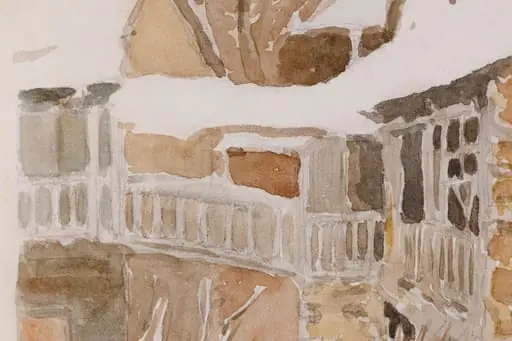 Iarnă
Iarnă