Artwork
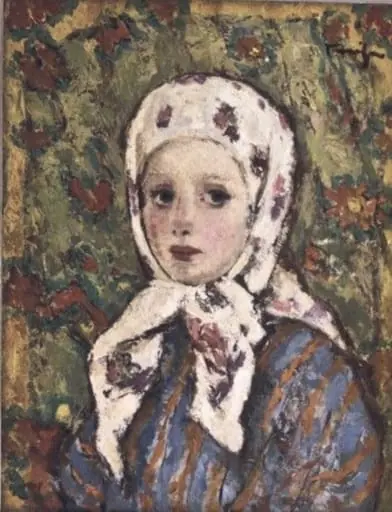
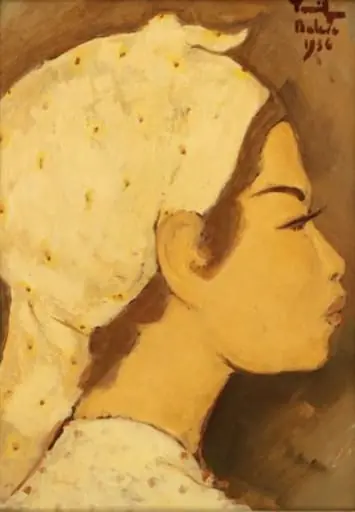
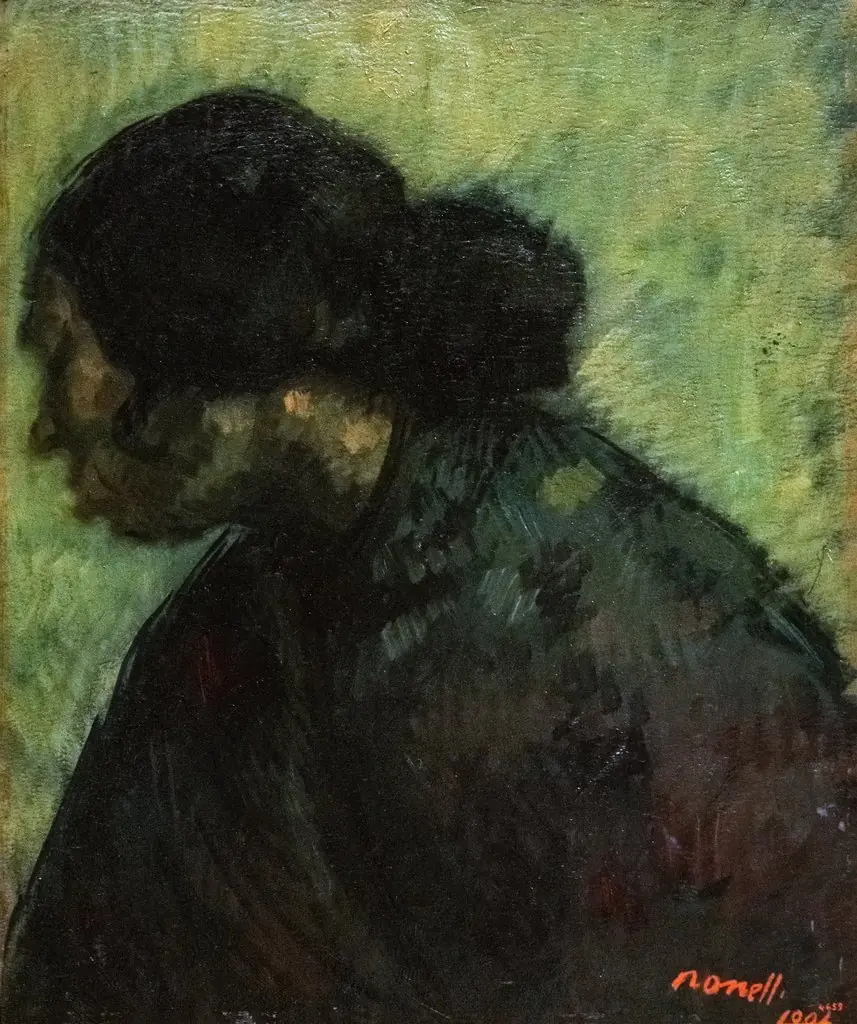
Profil de fată
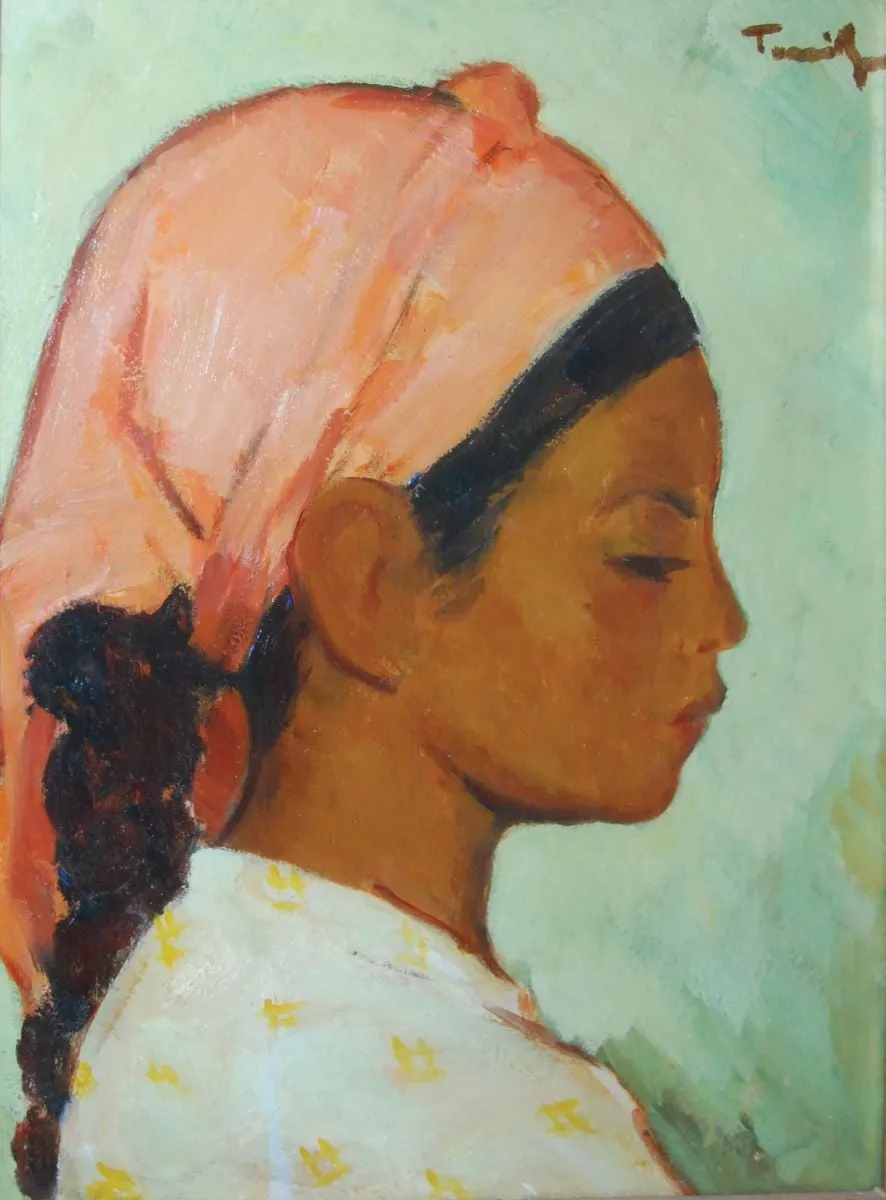
Profil de fată is a print by Nicolae Tonitza. It dates from 1923 and is held in the collection of the Art museum of Craiova.
About this work
Overview
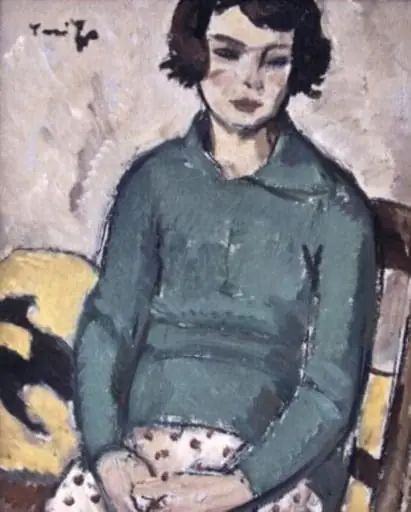
Painted around 1923 by Romanian artist Nicolae Tonitza, Profil de fată is a portrait rendered in oil on canvas. It depicts a young woman in a quiet, introspective pose, viewed in profile with her head gently lowered. The work is part of the collection at the Museum of Ethnography in Bucharest, where it is displayed as an example of early 20th-century Romanian portraiture.
Subject & Meaning
The subject is a young woman, her identity unrecorded, portrayed with quiet dignity. Her downward gaze and still posture suggest contemplation rather than engagement. The absence of narrative context invites focus on her presence alone, emphasizing inner calm. The simplicity of the composition reflects a shift toward psychological depth over external detail in Tonitza’s work during this period.
Technique & Style
Subtle chiaroscuro defines the contours of the face and neck, creating volume without harsh contrast.
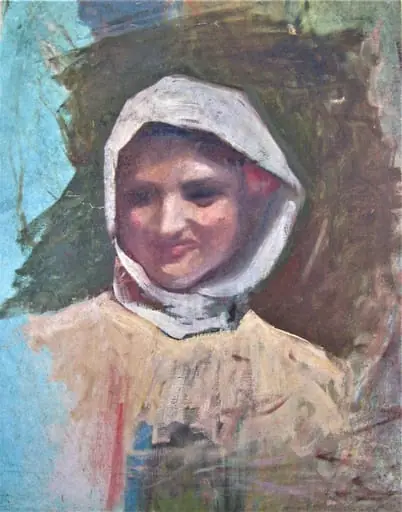
Tonitza employs loose, expressive brushwork with warm, muted tones to model the figure. Subtle chiaroscuro defines the contours of the face and neck, creating volume without harsh contrast. The pink headwrap and faint yellow embroidery on the shirt introduce restrained color accents against a soft green background, enhancing the intimacy of the scene through tonal harmony rather than vivid contrast.
History & Provenance
The painting was completed circa 1923 during Tonitza’s mature phase, when he increasingly turned to intimate portraits of rural and working-class individuals. It entered the Museum of Ethnography’s collection in the mid-20th century, likely through state acquisition or donation. Its preservation there reflects its value as a cultural artifact representing Romanian visual identity in the interwar years.
Context
Created in the aftermath of World War I, the work aligns with a broader Romanian artistic movement seeking to define national identity through depictions of everyday life. Tonitza, influenced by Post-Impressionism and local folk traditions, avoided grand historical themes in favor of quiet, personal moments—this portrait exemplifies that preference, grounding the individual within a broader cultural sensibility.
Legacy
Profil de fată remains a representative example of Tonitza’s humanist approach to portraiture. While not widely reproduced, it is frequently cited in scholarly discussions of Romanian modernism for its emotional restraint and technical subtlety. The painting contributes to an understanding of how Romanian artists redefined portraiture by prioritizing psychological presence over idealized form.
Artist & collection

Artist
Nicolae Tonitza was a Romanian painter, engraver, lithographer, journalist and art critic. Drawing inspiration from Post-Impressionism and Expressionism, he had a major role in introducing modernist guidelines to local art.