Artwork
Toamnă în pădure
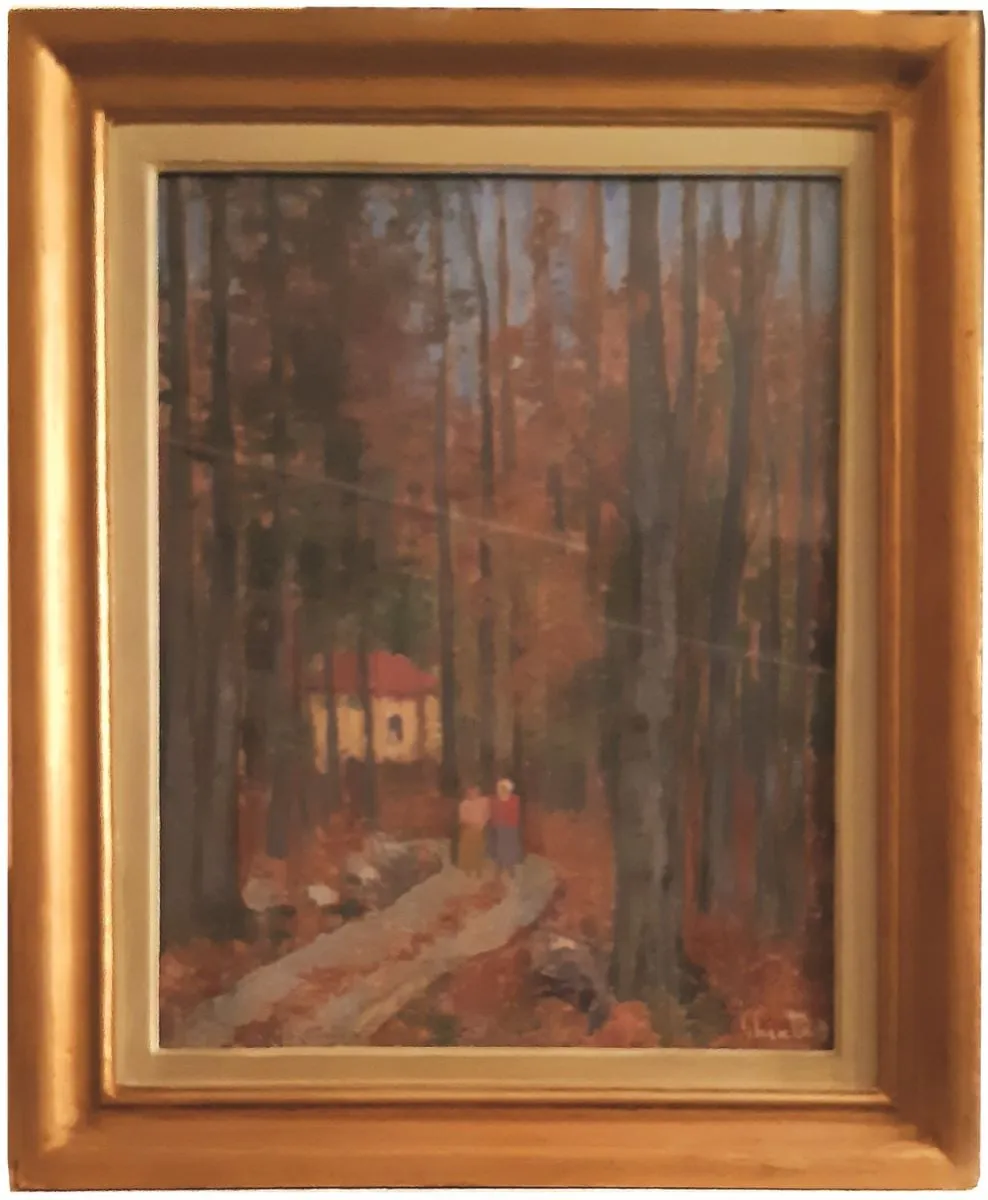
Toamnă în pădure is an unspecified painting by Dumitru Ghiață. It dates from 1949 and is held in the collection of the Cotroceni National Museum.
About this work
Overview
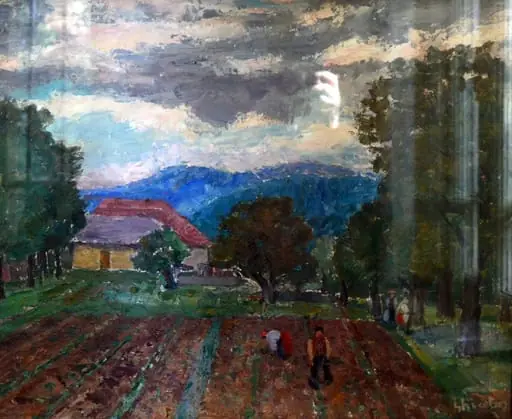
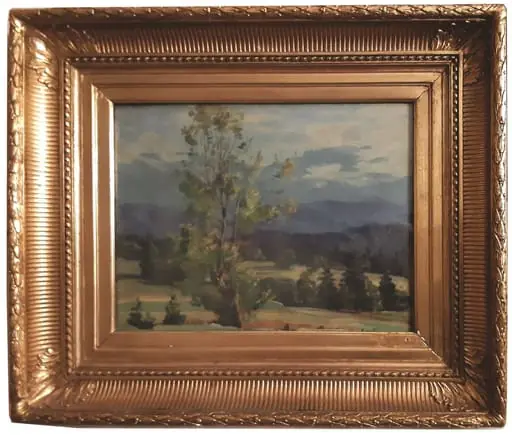
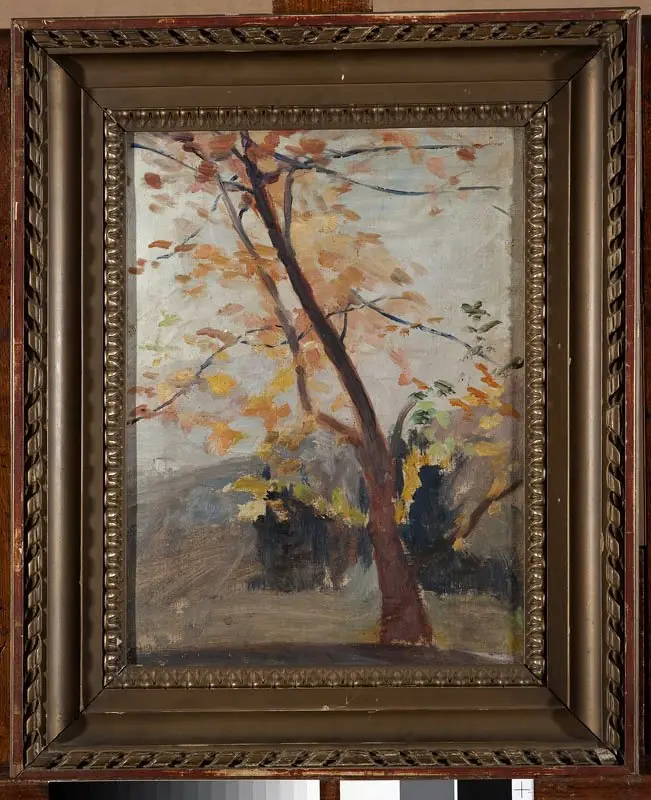
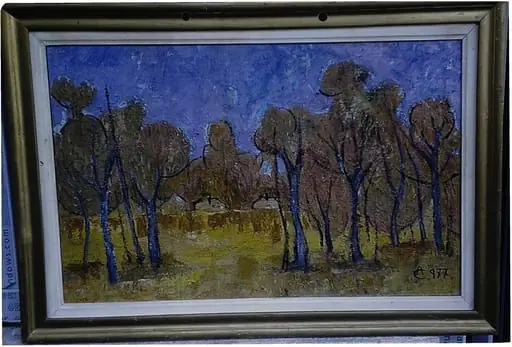
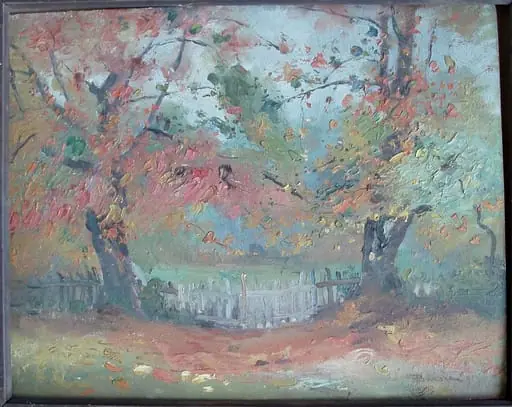
Dumitru Ghiață’s *Toamnă în pădure*, dated around 1949, is a landscape painting that captures a quiet moment in a Romanian forest during autumn.
Dumitru Ghiață’s *Toamnă în pădure*, dated around 1949, is a landscape painting that captures a quiet moment in a Romanian forest during autumn. Executed in a restrained palette of earth tones and muted blues, the work reflects the artist’s commitment to depicting rural environments with clarity and emotional restraint. It is held in the collection of the Museum of Ethnography, where it contributes to a broader documentation of Romanian rural life.
Subject & Meaning
The painting shows two figures moving along a forest path, their small scale emphasizing the vastness of the natural setting. The autumnal trees, rich in orange and brown hues, dominate the composition, suggesting a season of transition. A distant house with a red roof introduces a human presence without disrupting the solitude of the woods. The scene evokes contemplation rather than narrative, aligning with Ghiață’s interest in the quiet rhythms of rural existence.
Technique & Style
Ghiață employed bold, textured brushwork to convey the density of foliage and the tactile quality of the forest floor. His color choices—warm ochres, deep browns, and soft sky blues—are deliberately subdued, avoiding romanticized effects. The spatial depth is achieved through layered tones and atmospheric perspective, not detailed realism. The style is direct and unadorned, rooted in local visual traditions rather than academic conventions.
History & Provenance
Created around 1949, the painting emerged during a period when Romanian artists were navigating state-prescribed themes while preserving regional identities. Ghiață, from Colibași in Mehedinți County, maintained a personal approach to landscape that avoided ideological grandeur. The work entered the Museum of Ethnography’s collection as part of an effort to preserve vernacular artistic expressions tied to rural communities.
Context
In postwar Romania, official art promoted socialist realism, yet Ghiață’s work quietly resisted its rigidity by focusing on unembellished nature and everyday rural scenes. His paintings, including this one, reflect a broader cultural interest in preserving folk aesthetics amid political pressures. The emphasis on seasonal change and quiet human presence aligns with longstanding Romanian artistic traditions that valued harmony with the land.
Legacy
Ghiață’s *Toamnă în pădure* remains a representative example of mid-20th century Romanian landscape painting that prioritized authenticity over spectacle. Though not widely exhibited beyond regional institutions, it continues to inform understandings of how local artists sustained personal vision within constrained cultural environments. His work is remembered for its sincerity and its quiet resistance to artistic dogma.
Artist & collection
Artist
Dumitru Ghiață (22 September 1888 – 3 July 1972) was a Romanian landscape painter.