Artwork
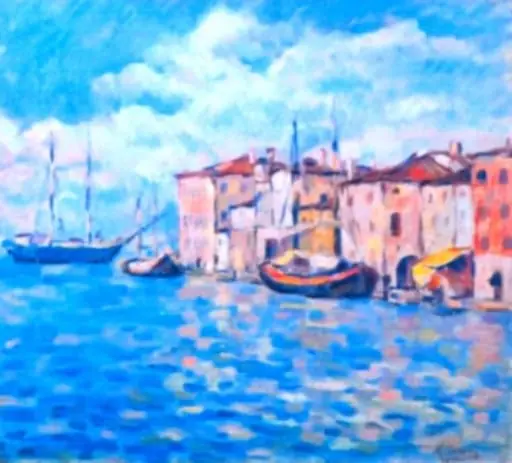
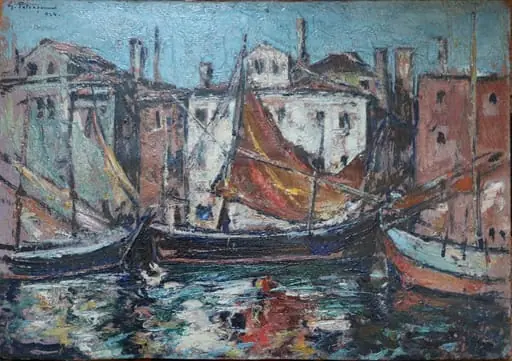
Peisaj de port. Chioggia
Peisaj de port. Chioggia is an unspecified painting by Nicolae Dărăscu. It dates from 1918 and is held in the collection of the National Museum of Art of Romania.
About this work
Overview
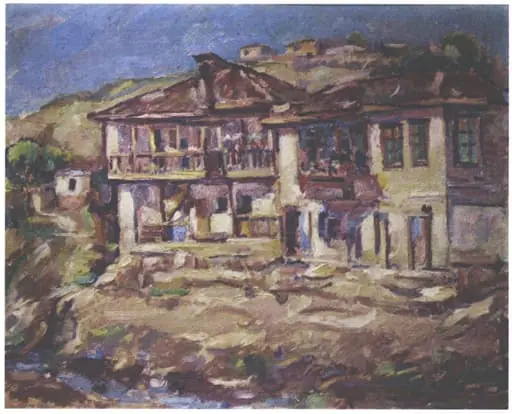
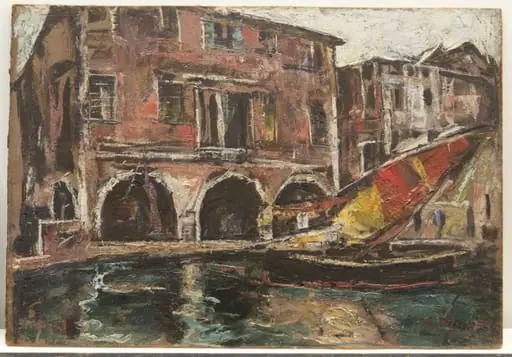
Painted in 1918 by Nicolae Dărăscu, this work depicts a quiet harbor scene in Chioggia, Italy. The composition centers on a derelict vessel tilted against a muddy bank, surrounded by dilapidated waterfront structures. The palette is subdued, dominated by earth tones and pale sky, with no human figures present. The painting conveys stillness and decay through its muted colors and textured surface.
Subject & Meaning
The scene captures a moment of abandonment, where the leaning ship and weathered buildings suggest the passage of time and the decline of maritime activity. There is no narrative action, only the quiet persistence of objects left to the elements. The absence of people emphasizes solitude and the quiet endurance of the harbor’s physical remnants.
Technique & Style
Dărăscu applied paint thickly and irregularly, particularly on the ship’s hull and water’s surface, creating a tactile, almost sculptural quality. Brushstrokes are deliberate and uneven, building texture rather than smooth form. This impasto technique enhances the sense of material wear, making the surfaces feel tangible and weathered under the viewer’s gaze.
History & Provenance
Created during World War I, the painting reflects Dărăscu’s time in northern Italy, where he observed the quiet decay of coastal communities. It remained in private hands for much of the 20th century before entering a public collection. No significant exhibitions or documented sales are recorded prior to its institutional acquisition.
Context
Dărăscu was part of a generation of Romanian artists influenced by French Post-Impressionism and Italian realism. While many contemporaries focused on urban life or national themes, he turned to peripheral coastal scenes, capturing the unromanticized edges of everyday existence. This work aligns with a broader interest in the dignity of the overlooked.
Legacy
The painting is recognized for its restrained emotional tone and material honesty. Though not widely reproduced, it is cited in studies of Romanian modernism for its departure from idealized landscapes. Its emphasis on texture and decay influenced later Romanian painters seeking authenticity over ornamentation.
Artist & collection
Artist
Romanian painter Nicolae Dărăscu built still lifes and cityscapes like Natură moartă and Palatul Ca'd'Oro, both calm arrangements of light and shadow.