Artwork
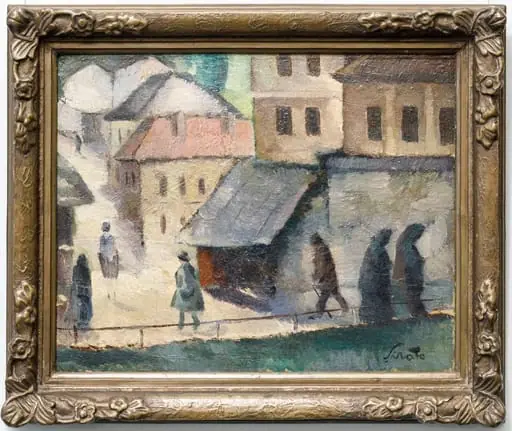
Cafeneaua mică - Balcic
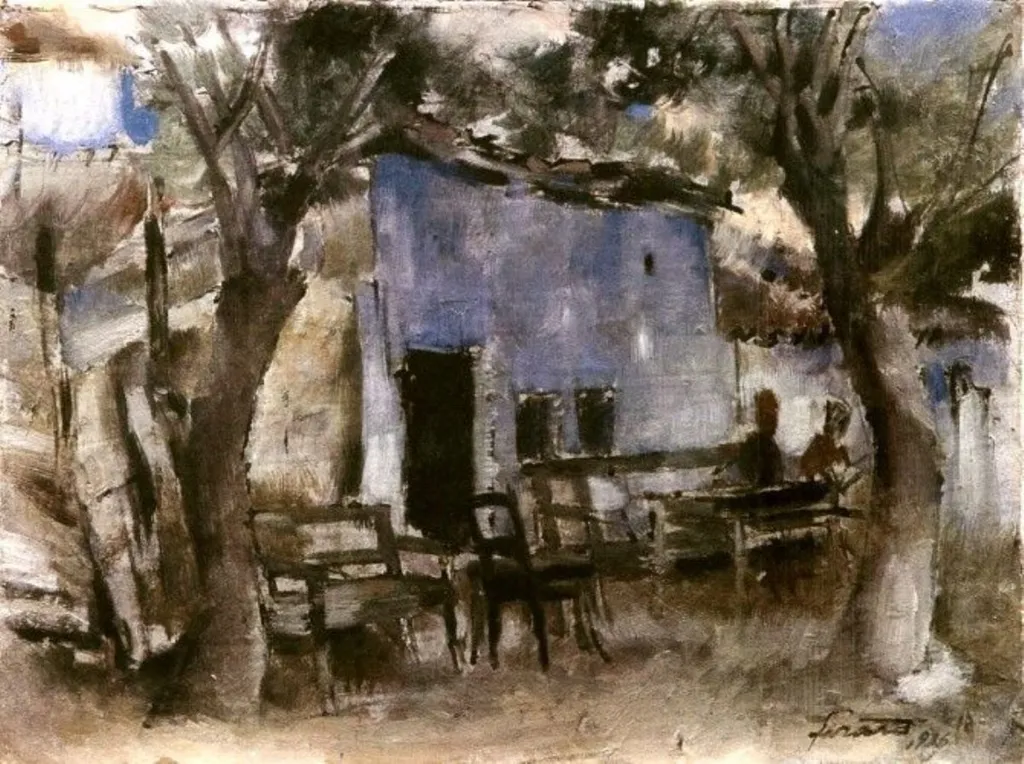
Cafeneaua mică - Balcic is an unspecified painting by Francisc Șirato. It dates from 1936 and is held in the collection of the National Museum of Art of Romania.
About this work
Overview
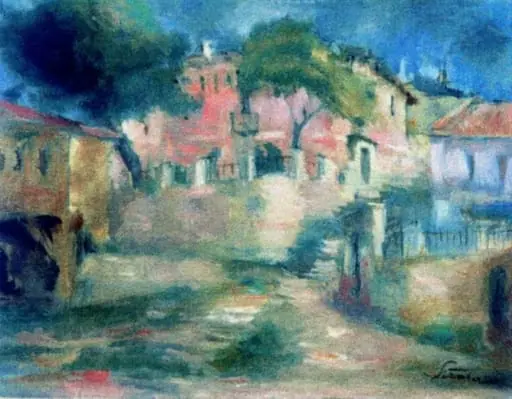
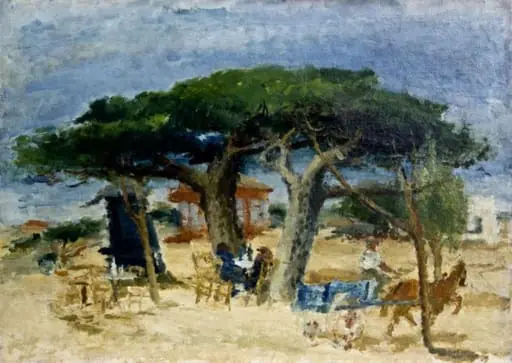
Cafeneaua mică - Balcic, painted in 1936 by Francisc Șirato, depicts a quiet outdoor café in the Black Sea resort town of Balchik.
Cafeneaua mică - Balcic, painted in 1936 by Francisc Șirato, depicts a quiet outdoor café in the Black Sea resort town of Balchik. The composition centers on a modest structure with seating arranged under open sky, surrounded by sparse vegetation. The scene lacks dramatic action, instead emphasizing stillness and everyday solitude. The palette is restrained, dominated by soft blues, earthy browns, and muted grays, reinforcing a sense of calm observation.
Subject & Meaning
The painting captures a moment of ordinary life in a provincial seaside town, focusing on the quiet presence of a single figure seated at a table. No narrative is implied; the subject is the atmosphere itself—the pause between movement and rest. The absence of bustling activity suggests introspection, perhaps reflecting the artist’s interest in the quiet rhythms of provincial Romania during the interwar period.
Technique & Style
Șirato employs a soft-focus background to isolate the foreground elements, using loose brushwork to suggest rather than define forms. The muted tones are applied with minimal contrast, avoiding sharp edges or vivid highlights. This approach creates a hazy, atmospheric effect, aligning with a lyrical realism that prioritizes mood over detail. The brushstrokes remain visible but controlled, conveying a sense of deliberate, unhurried observation.
History & Provenance
Created during a period when Șirato frequently traveled to the Romanian Black Sea coast, the painting reflects his engagement with regional landscapes beyond urban centers. It was likely produced during one of his stays in Balchik, a favored retreat for artists and intellectuals. The work remained in private Romanian collections until entering institutional holdings in the late 20th century, where it is now preserved as part of the national modernist canon.
Context
In 1930s Romania, many artists turned to provincial life as a counterpoint to rapid modernization. Șirato’s focus on modest, unadorned scenes aligned with a broader cultural interest in authenticity and quietude. His work, though not overtly political, offered an alternative to grand historical or urban themes, valuing the subtle beauty of everyday spaces and the dignity of stillness.
Legacy
Cafeneaua mică - Balcic exemplifies Șirato’s contribution to Romanian modernism through his restrained, contemplative style. While not widely exhibited internationally, the painting is recognized domestically as a key example of interwar landscape painting that prioritized emotional tone over spectacle. It continues to inform discussions on regional identity and the aesthetics of everyday life in Romanian art history.
Artist & collection
Artist
Francisc Șirato painted quiet scenes of people and places, often with soft light and gentle colors.