Artwork
Case
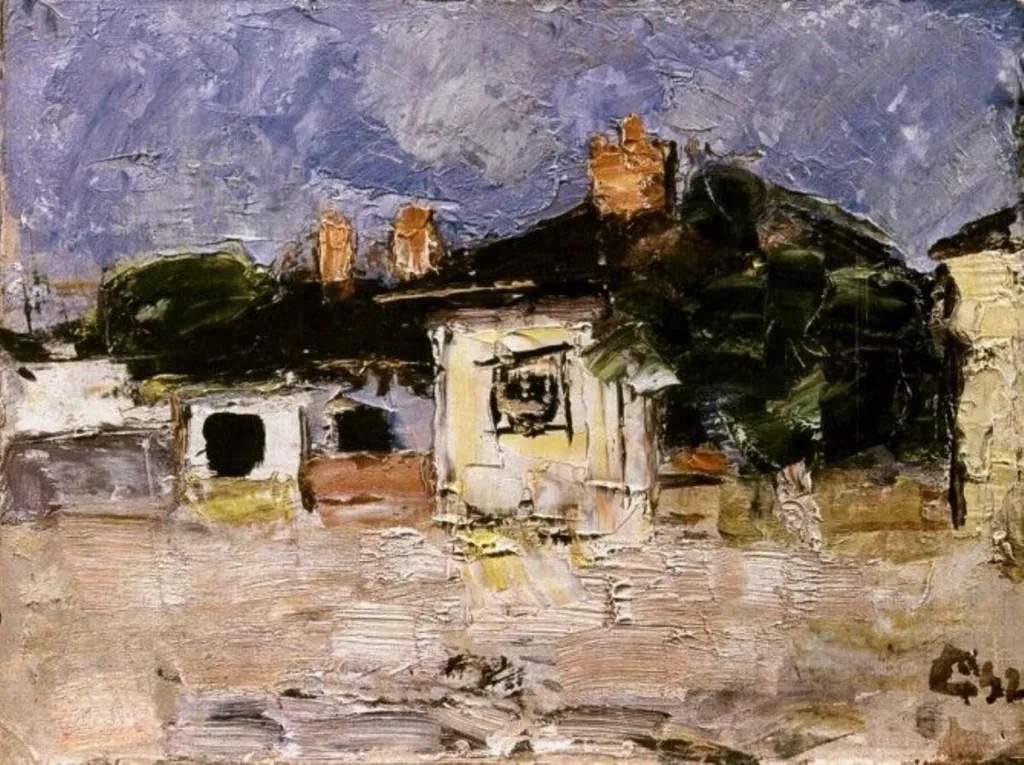
Case is an unspecified painting by Alexandru Ciucurencu. It dates from 1942 and is held in the collection of the National Museum of Art of Romania.
About this work
Overview
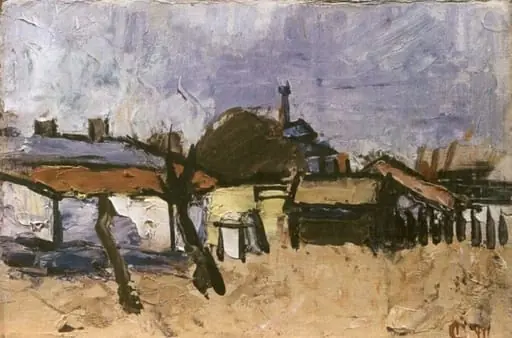
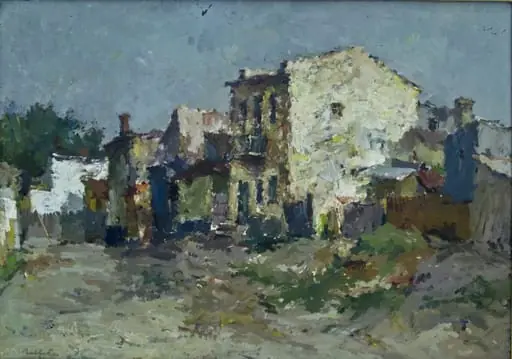
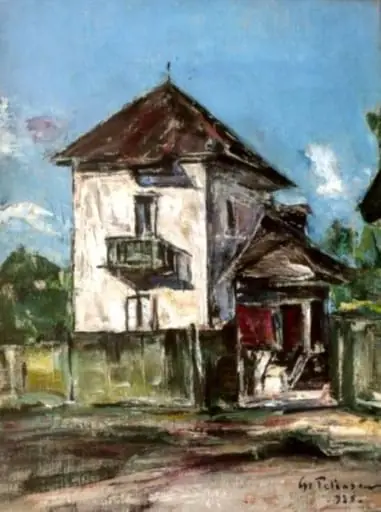
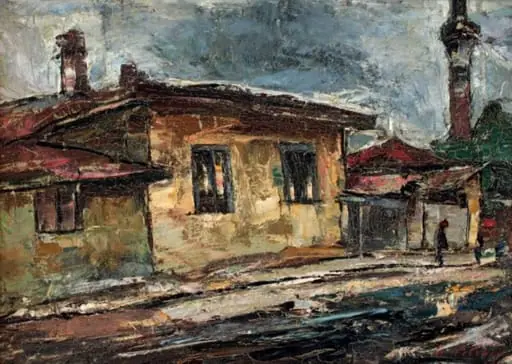
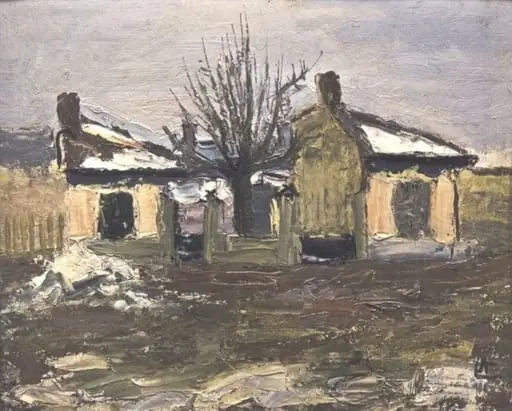
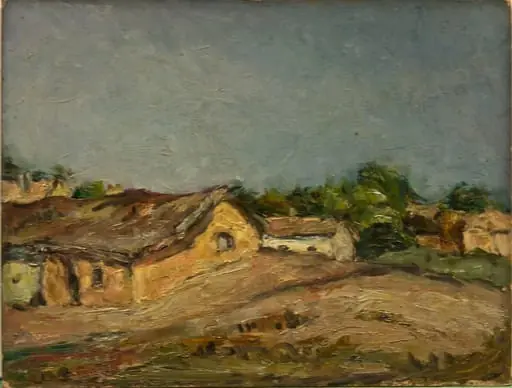
Created in 1942 by Romanian artist Alexandru Ciucurencu, this painting captures a solitary, aged dwelling nestled against a quiet hillside. The structure appears weathered and neglected, its surfaces marked by time and exposure. The surrounding landscape is sparse, with minimal vegetation and a muted sky, reinforcing a sense of isolation and quiet endurance.
Subject & Meaning
The subject is a humble rural home, stripped of ornament and detail, suggesting a life lived in modesty and resilience. Its worn walls and dark windows convey absence and stillness, evoking themes of solitude and the passage of time. The lack of human figures or activity invites contemplation of the building as a silent witness to forgotten routines and fading memory.
Technique & Style
Ciucurencu employed thick, textured brushwork, applying paint with a tactile urgency that emphasizes the building’s roughness. The impasto technique gives the surface a physical presence, mirroring the cracked plaster and peeling paint of the house. Colors are restrained—gray, pale blue, and earth tones—enhancing the somber mood and grounding the scene in tangible reality.
History & Provenance
Painted during World War II, the work reflects the cultural and economic strain of the period in Romania. Though specific ownership history is not widely documented, its creation aligns with a broader trend among Romanian artists who turned to rural subjects as a means of preserving national identity amid political upheaval.
Context
In early 1940s Romania, many artists focused on vernacular architecture and peasant life, seeking authenticity amid modernization and war. Ciucurencu’s depiction of a decaying house fits within this movement, offering a quiet counterpoint to official narratives. The painting’s unidealized form resonates with regional traditions of realism and social observation.
Legacy
Though not widely exhibited internationally, the work remains a significant example of Ciucurencu’s engagement with Romanian rural life. Its unembellished aesthetic influenced later generations of artists interested in materiality and emotional restraint. The painting endures as a quiet testament to the dignity of ordinary, overlooked spaces.
Artist & collection
Artist
Alexandru Ciucurencu painted scenes from everyday life and the human body in the mid-20th century.