Artwork
Flori în glastră
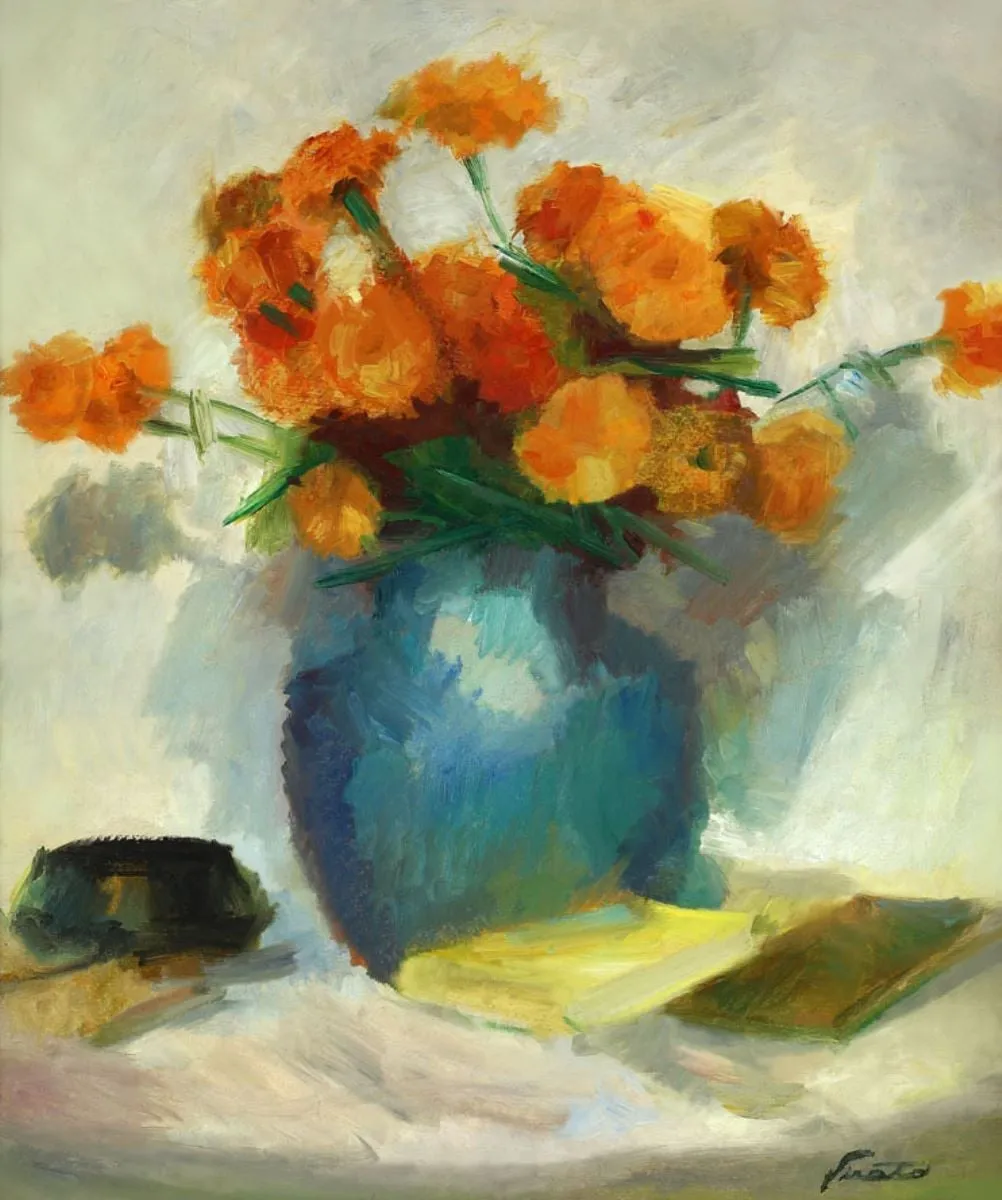
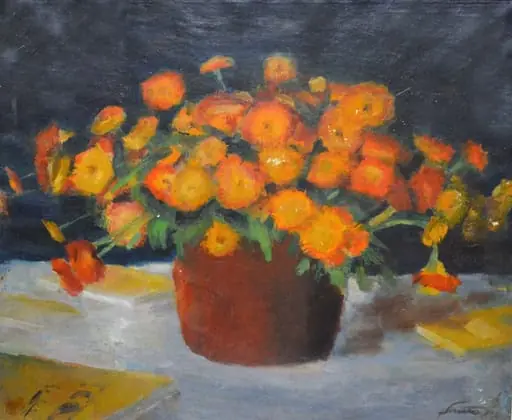
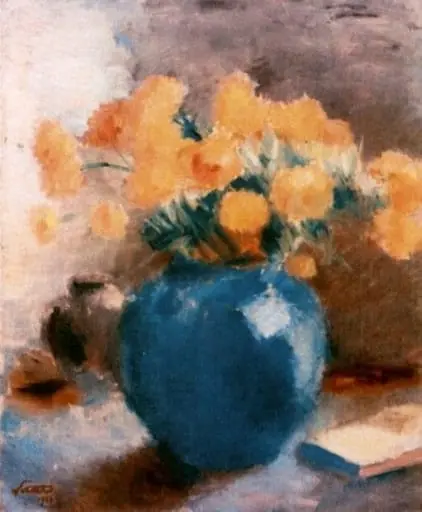
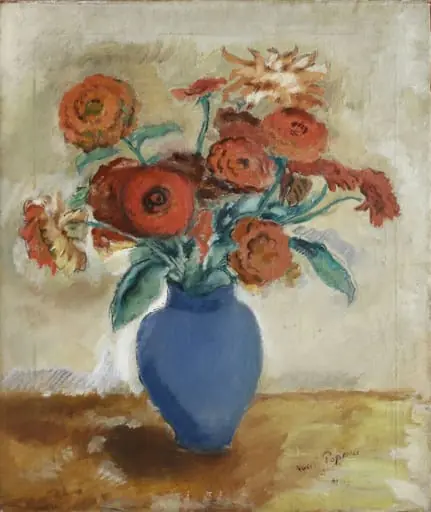
Flori în glastră is an unspecified painting by Francisc Șirato. It is held in the collection of the Art Museum of Constanta. This painting presents a still life of orange blossoms in a blue ceramic vase, arranged with natural spontaneity.
About this work
Overview
A dark form appears to the left, and a pale yellow textile rests to the right, adding subtle contrast without distraction.
This painting presents a still life of orange blossoms in a blue ceramic vase, arranged with natural spontaneity. The composition is minimal, anchored by the vase and flowers against a muted beige backdrop. A dark form appears to the left, and a pale yellow textile rests to the right, adding subtle contrast without distraction. The focus remains firmly on the floral arrangement, rendered with quiet intensity and balanced asymmetry.
Subject & Meaning
The subject is a simple bouquet of orange flowers, chosen for their vivid hue and organic form. No symbolic narrative is overt; instead, the work emphasizes presence and vitality. The flowers, slightly spilling beyond the vase, suggest fleeting life and natural growth. The absence of elaborate context invites contemplation of beauty in ordinary moments.
Technique & Style
Brushwork is loose yet deliberate, capturing the texture of petals and the sheen of the vase with restrained precision. Color is the primary driver: warm oranges contrast with the cool blue vessel and soft background, creating visual resonance. The yellow cloth introduces a muted complement, enhancing depth without disrupting harmony. Composition avoids symmetry, favoring dynamic imbalance.
History & Provenance
The painting is attributed to Francisc Șirato, a Romanian artist active in the early to mid-20th century. While specific acquisition history is not documented, the work aligns with his known interest in domestic still lifes and chromatic experimentation. It likely originated from his personal studio practice during a period when he focused on color relationships in simplified compositions.
Context
Created within the broader tradition of Romanian modernism, the piece reflects a shift from academic realism toward expressive simplicity. Contemporary artists of the time, including Șirato, explored how color and form could convey emotion without narrative. This work fits within a quiet movement that valued restraint, observing everyday objects with renewed attention.
Legacy
Though not widely exhibited, the painting exemplifies Șirato’s contribution to Romanian modernist still life. His approach influenced later generations interested in color autonomy and compositional economy. The work remains a quiet reference point in studies of interwar Romanian art, valued for its clarity and emotional subtlety.
Artist & collection
Artist
Francisc Șirato painted quiet scenes of people and places, often with soft light and gentle colors.