Artwork
Femei la scăldat
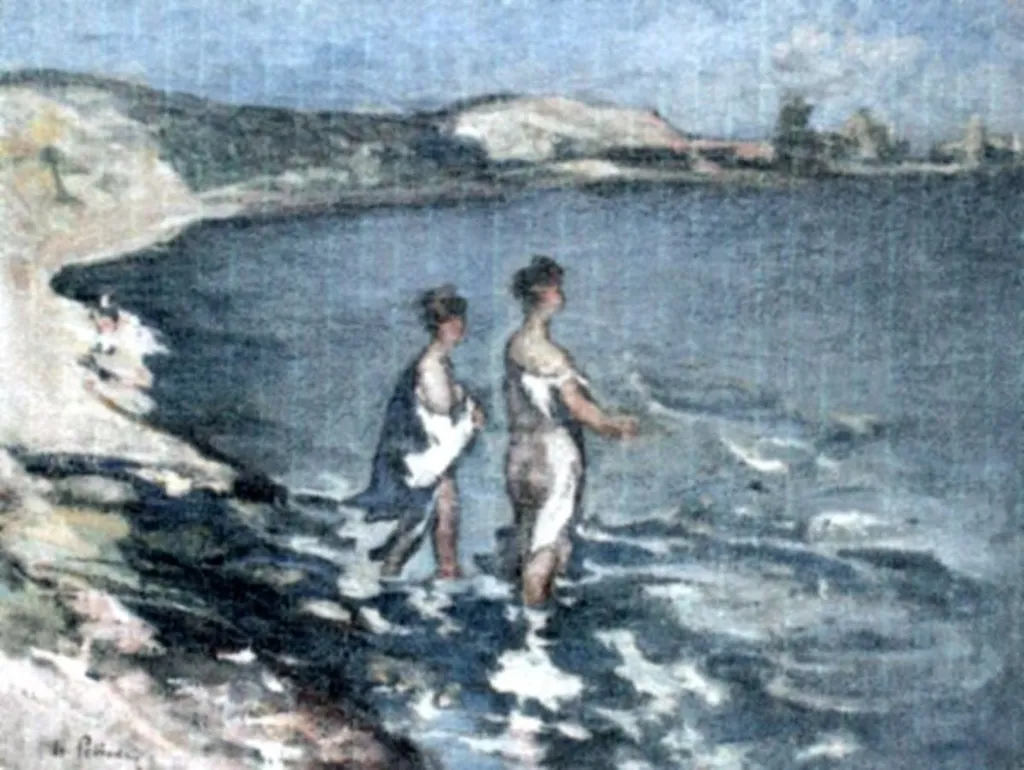
Femei la scăldat is an unspecified painting by Gheorghe Petrașcu. It dates from 1949 and is held in the collection of the Gavrilă Simion Eco-Museum Research Institute Tulcea - Art Museum.
About this work
Overview
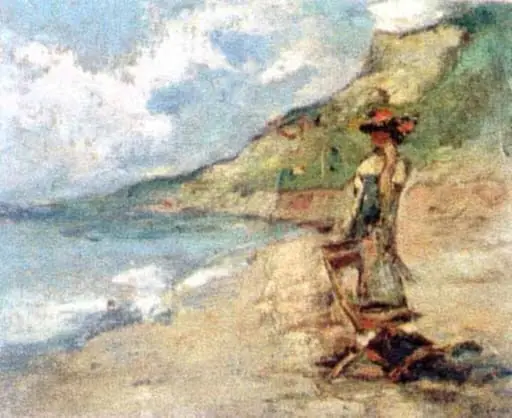
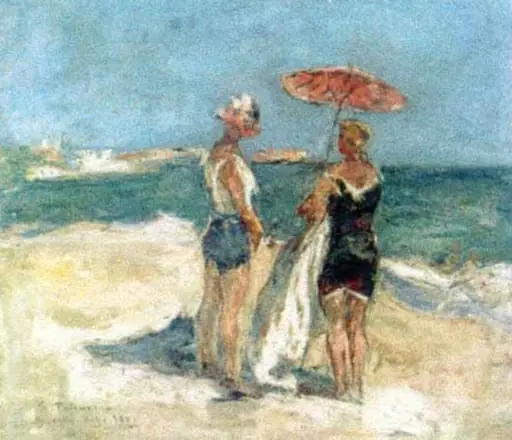
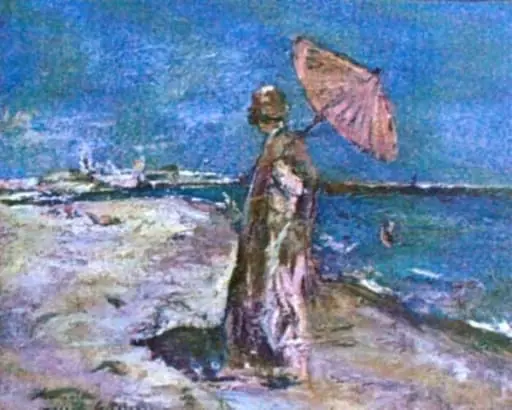
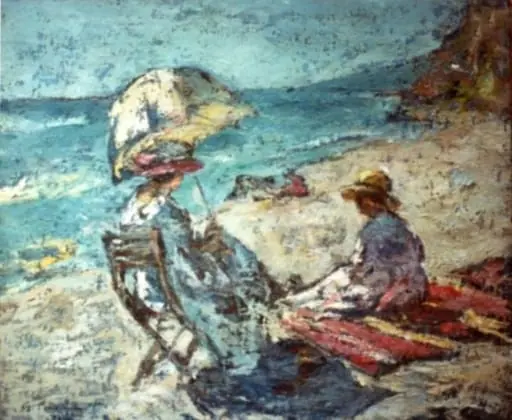
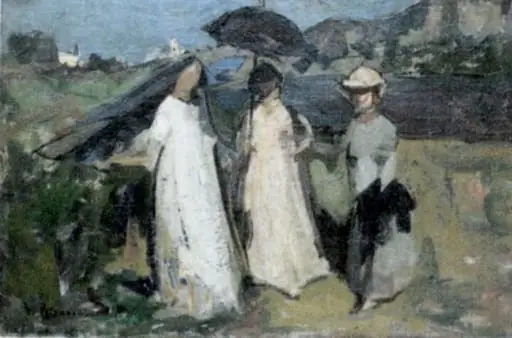
Created around 1949 by Romanian painter Gheorghe Petrașcu, the work titled "Femei la scăldat" is part of the collection of the Museum of Ethnography. The image presents a quiet outdoor scene in which two women stand in shallow water, their backs turned toward the viewer, set against a gently rolling landscape under a pale sky.
Subject & Meaning
The composition captures a moment of daily routine, likely washing or bathing, as suggested by the women's posture and the presence of water. Their attire—one in white, the other in darker clothing—contrasts with the deep‑blue water, emphasizing the act of cleansing within a natural setting and hinting at the social customs of rural life.
Technique & Style
Petrașcu employs a restrained palette dominated by blues and whites, allowing the scene’s atmosphere to emerge through subtle tonal shifts. Visible brushwork adds texture to the water’s surface and the surrounding hills, while the loose handling of forms conveys movement without detailed rendering, aligning the piece with early‑mid‑20th‑century approaches to genre painting.
History & Provenance
The painting entered the Museum of Ethnography’s holdings after its creation, though precise acquisition details remain undocumented. Its placement within an ethnographic institution underscores the work’s value as a visual record of traditional practices rather than solely as a decorative artwork.
Context
Petrașcu’s focus on ordinary activities and landscape reflects broader trends in Romanian art of the period, where artists sought to document rural life amid rapid modernization. The scene’s quiet realism parallels the work of contemporaries who emphasized everyday subjects, contributing to a visual archive of cultural heritage.
Artist & collection
Artist
Gheorghe Petrașcu painted quiet scenes of buildings, streets, and still lifes in the 1920s and ’30s Romania.
Museum
Gavrilă Simion Eco-Museum Research Institute Tulcea - Art Museum
Continue through works from the same source collection.