Artwork
Peisaj cu case
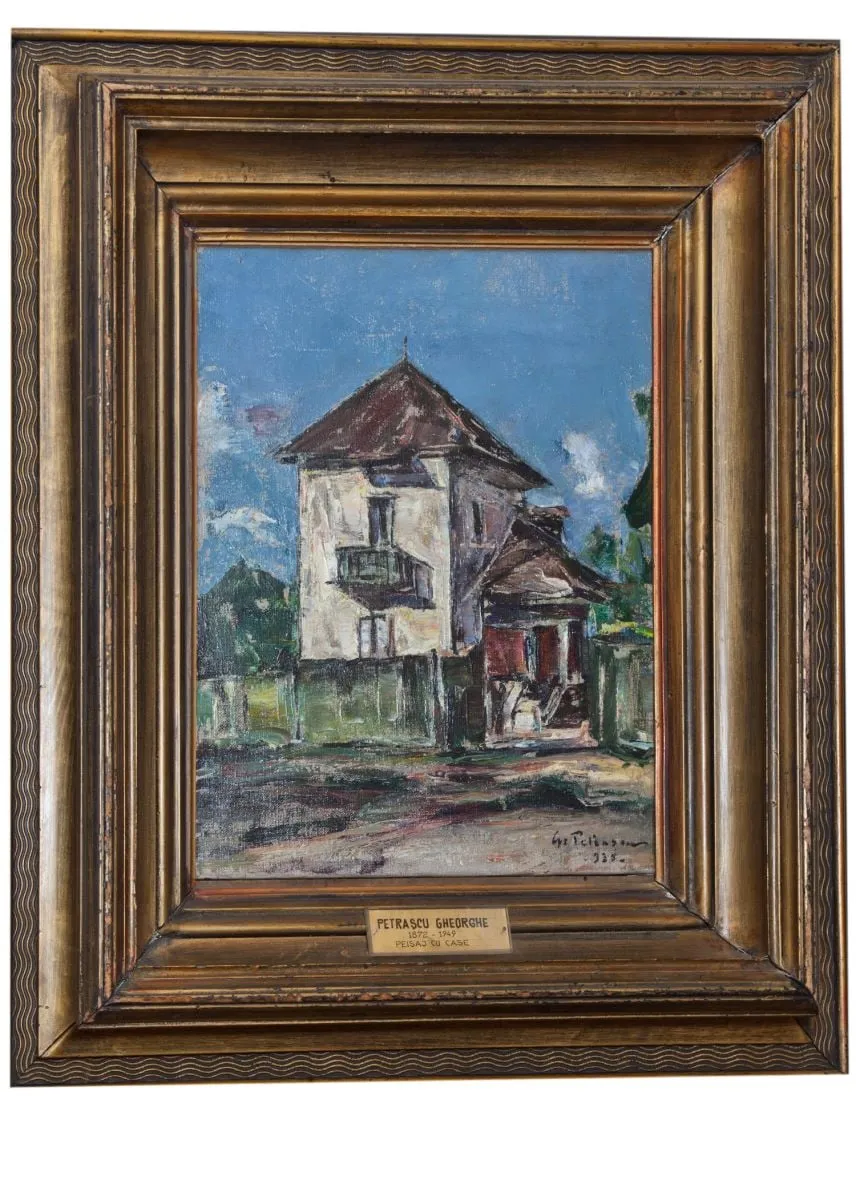
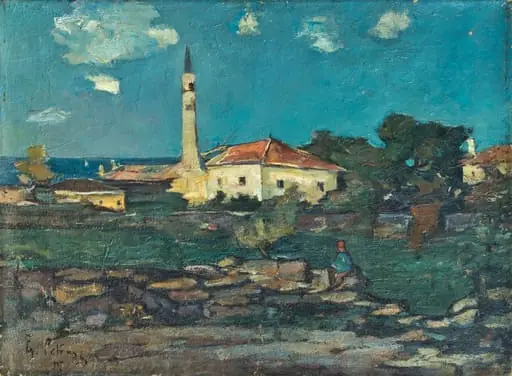
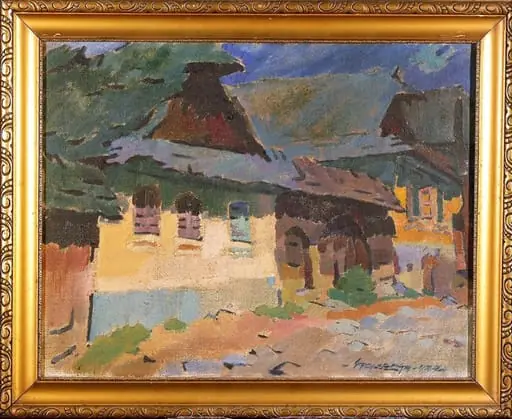
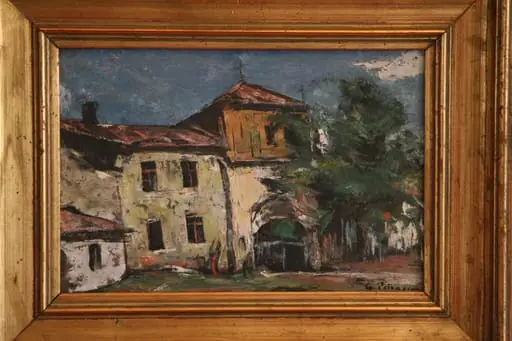
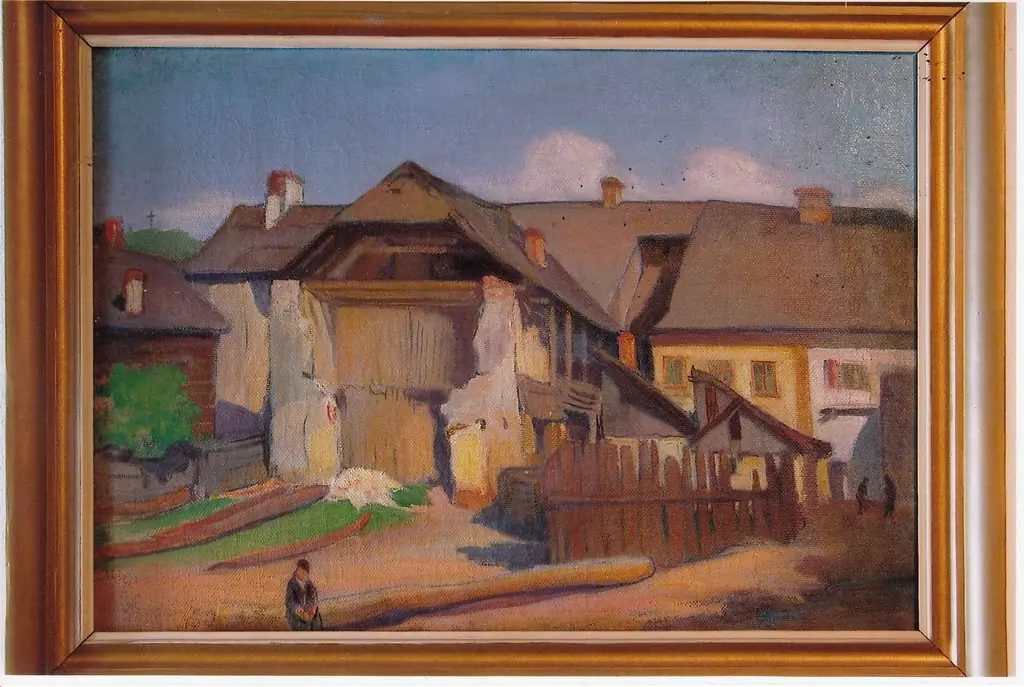
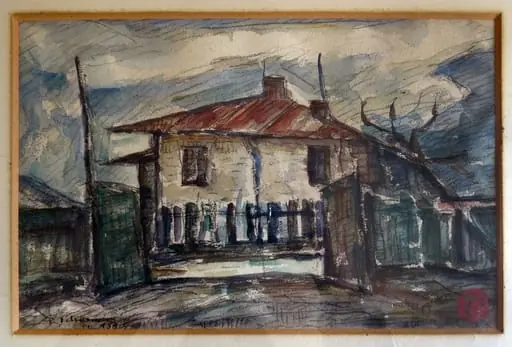
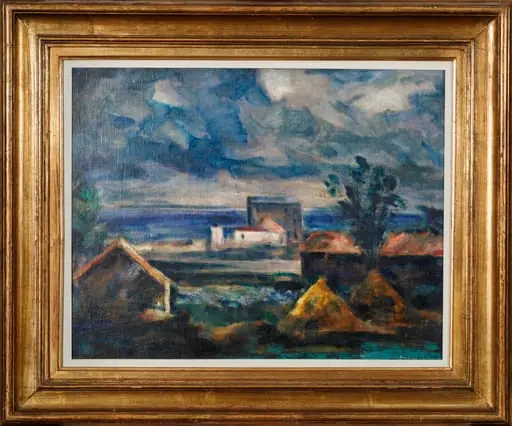
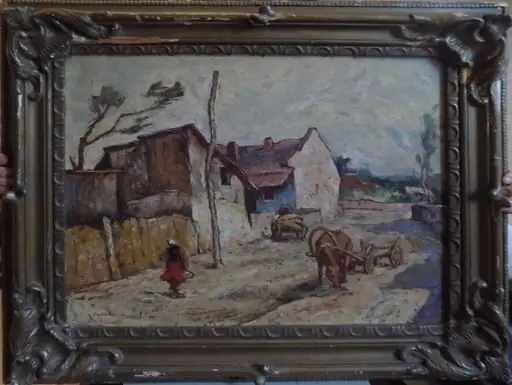
Peisaj cu case is an unspecified painting by Gheorghe Petrașcu. It is held in the collection of the Bucharest Municipality Museum. This painting depicts a modest rural dwelling set against a quiet landscape.
About this work
Overview
The surface is built up with thick, tactile applications of paint, creating a physical texture that emphasizes the artist’s hand.
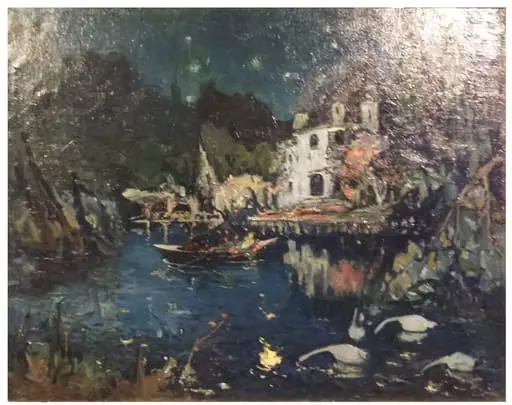
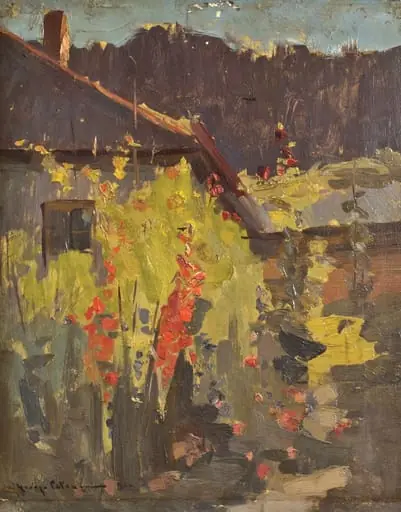
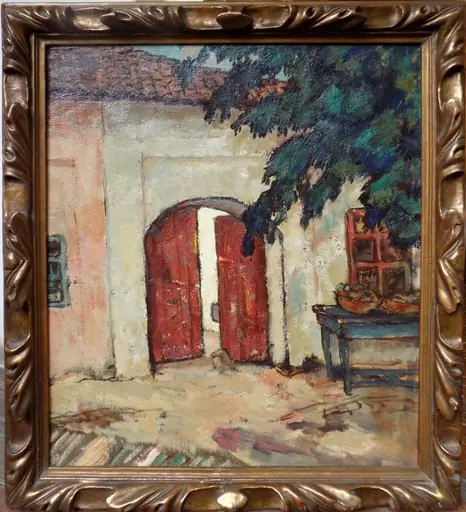
This painting depicts a modest rural dwelling set against a quiet landscape. The structure features a sloped roof, white walls, and a small balcony, with a red door opening into a shaded area in front. The sky is lightly rendered in soft blue, while trees in the distance are suggested with loose green strokes. The surface is built up with thick, tactile applications of paint, creating a physical texture that emphasizes the artist’s hand.
Subject & Meaning
The subject is an unadorned domestic structure, likely from a rural setting, presented without narrative or dramatic emphasis. Its simplicity suggests an interest in everyday life rather than idealized scenery. The absence of figures or activity invites contemplation of solitude and quiet routine, grounding the scene in ordinary experience rather than symbolic meaning.
Technique & Style
The painting employs impasto, a method where paint is applied thickly with visible brushwork, creating a sculptural surface. This technique gives depth and rhythm to the forms, especially in the roof and foliage. The loose handling of the trees and sky contrasts with the more defined architecture, balancing structure with spontaneity. The texture invites closer viewing, emphasizing materiality over illusion.
History & Provenance
No documented history or ownership record is available for this work. It appears to be a standalone piece, possibly from a private collection or regional artist’s output. Its lack of signature or inscription limits tracing its origin, though its style aligns with early 20th-century rural realism in Eastern European painting traditions.
Context
The work reflects a broader trend in early 20th-century art that turned away from academic precision toward expressive, tactile representation. Artists in rural regions often painted local architecture as a form of cultural documentation. The impasto technique here connects to broader modernist experiments, where materiality became as important as subject matter.
Legacy
Though not widely exhibited or studied, the painting contributes to a quiet tradition of regional landscape painting that valued direct observation and material presence. Its emphasis on texture and simplicity resonates with later movements that rejected ornamental detail in favor of honest, tactile expression. It remains a quiet example of how ordinary scenes could be transformed through painterly gesture.
Artist & collection
Artist
Gheorghe Petrașcu painted quiet scenes of buildings, streets, and still lifes in the 1920s and ’30s Romania.