Artwork
Veneția
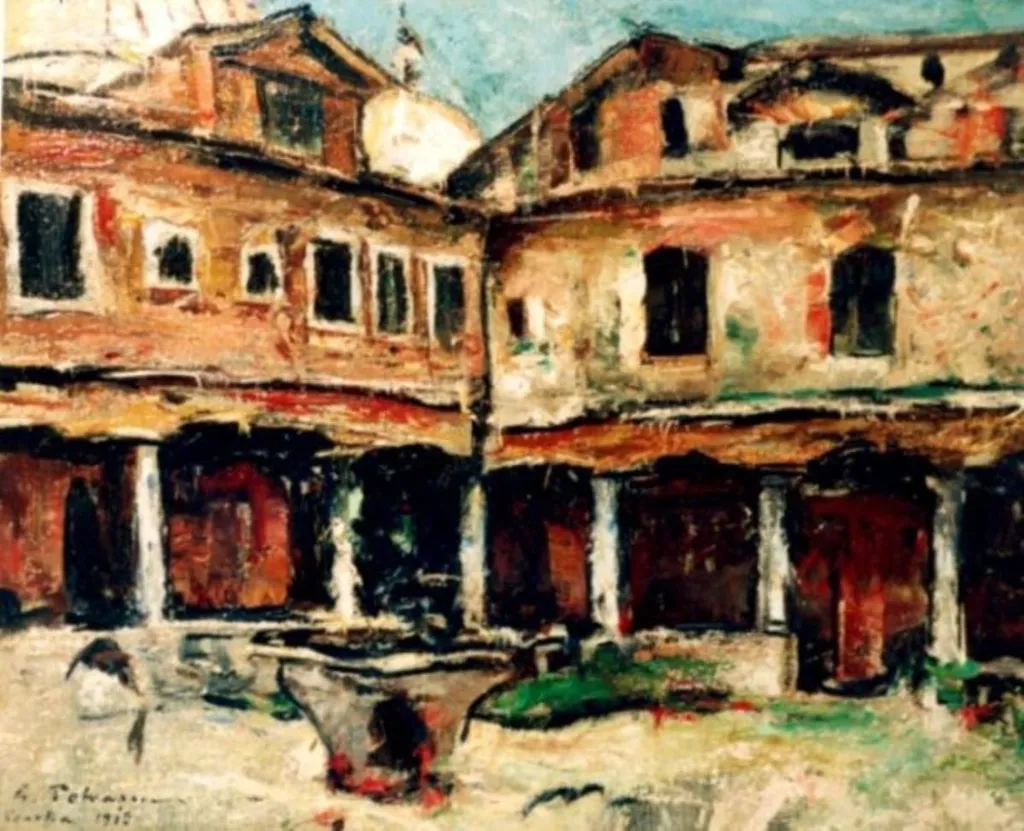
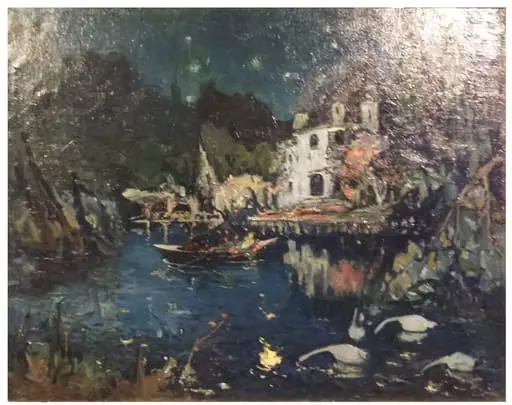
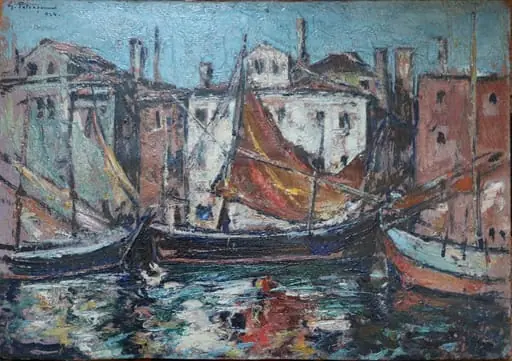
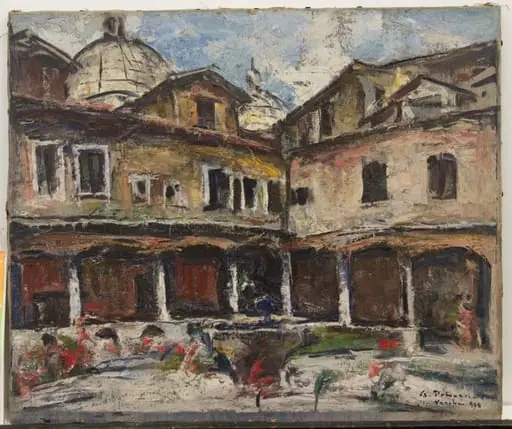
Veneția is an unspecified painting by Gheorghe Petrașcu. It dates from 1928 and is held in the collection of the Bucharest Municipality Museum.
About this work
Overview
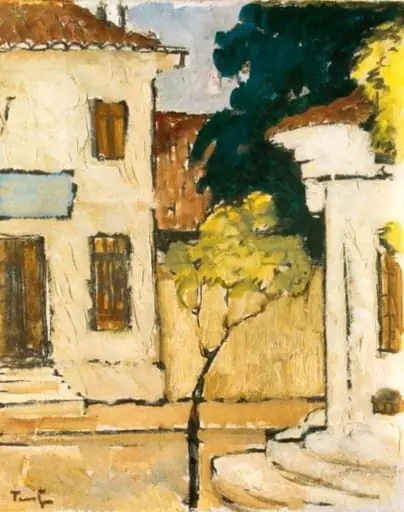
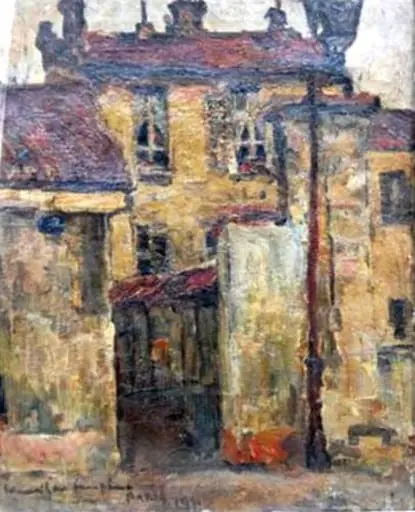
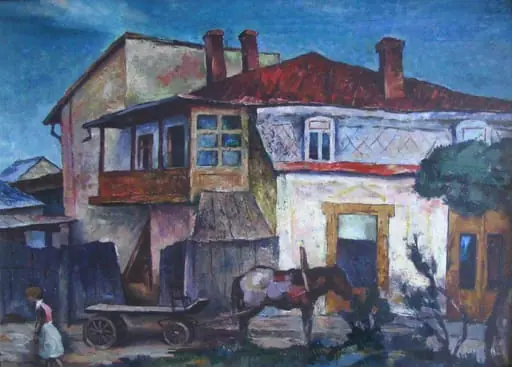
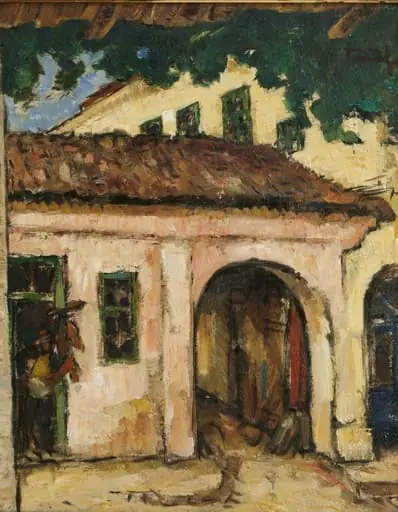
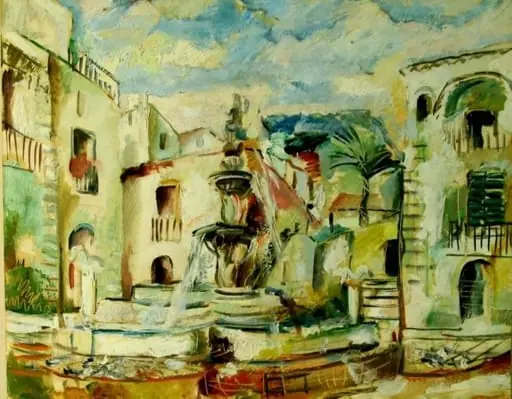
Painted in 1928 by Gheorghe Petrașcu, Veneția is an oil-on-canvas depiction of Venetian architecture. The work is part of the Museum of Ethnography’s collection. Its subdued palette and textured surface reflect a focus on the physical presence of aging structures rather than idealized views of the city. The painting avoids romanticism, instead emphasizing decay and quiet endurance.
Subject & Meaning
The painting portrays a row of weathered buildings along a canal, their facades marked by peeling plaster and faded pigments. Closed doors and darkened windows suggest absence or withdrawal, while faint glimmers of interior light hint at private life behind the façade. The scene conveys a sense of time’s passage, not through grandeur, but through the quiet accumulation of wear and neglect.
Technique & Style
Petrașcu employed thick, tactile applications of paint—impasto—to model the crumbling surfaces of the buildings.
Petrașcu employed thick, tactile applications of paint—impasto—to model the crumbling surfaces of the buildings. The texture is uneven, with ridges and ridges of pigment catching light differently across the surface. This method rejects smooth finish in favor of physicality, making the walls feel tangible. The brushwork is deliberate, not expressive, reinforcing the weight and solidity of the architecture.
History & Provenance
Created during Petrașcu’s period of travel and study in Italy, Veneția was acquired by the Museum of Ethnography shortly after its completion. It has remained in the museum’s holdings since, without notable public exhibitions or transfers. Its presence in an ethnographic context suggests an interest in cultural artifacts of daily life, rather than fine art traditions.
Context
In the late 1920s, Romanian artists increasingly turned to realist depictions of urban and rural environments, moving away from academic idealism. Petrașcu’s focus on architectural decay aligned with broader European trends that valued authenticity over ornament. Veneția reflects this shift, treating the city not as a postcard but as a lived, worn-in space.
Legacy
Veneția remains a quiet example of interwar Romanian realism, notable for its restrained emotional tone and material focus. While not widely reproduced or studied, it contributes to understanding how Romanian artists engaged with European urban landscapes through a lens of observation rather than nostalgia. Its preservation in an ethnographic museum underscores its role as a document of place.
Artist & collection
Artist
Gheorghe Petrașcu painted quiet scenes of buildings, streets, and still lifes in the 1920s and ’30s Romania.