Artwork
Peisaj din Spania
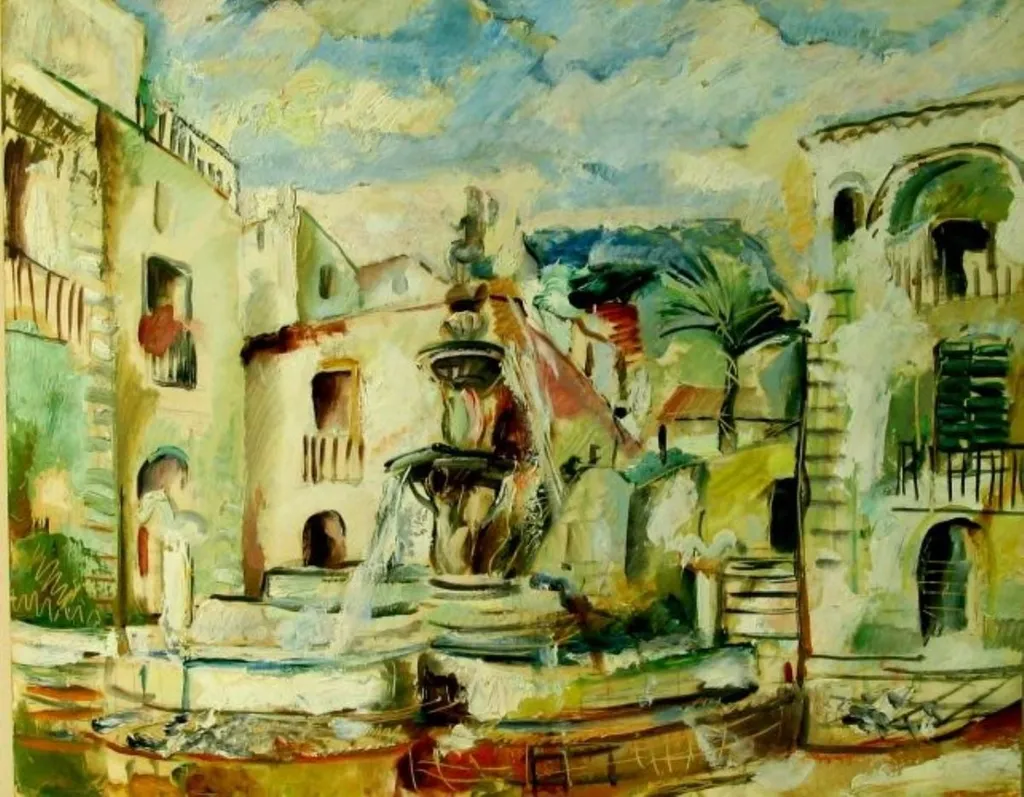
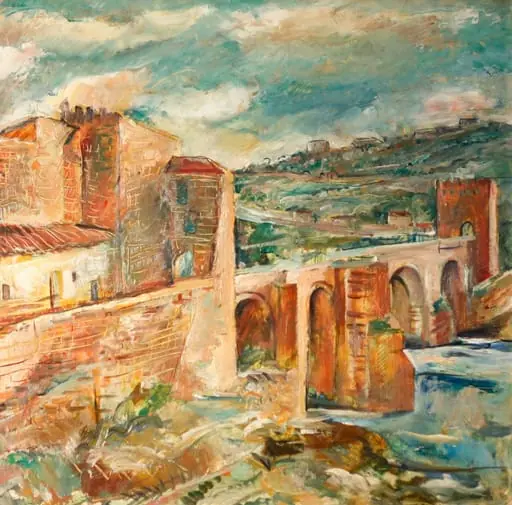
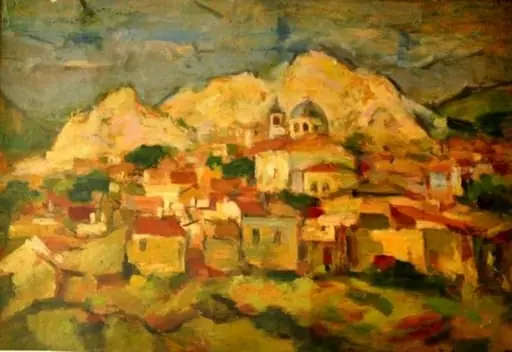
Peisaj din Spania is an unspecified painting by Elena Popea. It dates from 1920 and is held in the collection of the Moldova National Museum Complex.
About this work
Overview
Elena Popea, born in Austro-Hungary and active in Romania, painted *Peisaj din Spania* circa 1920 during a period of intense engagement with European modernism.
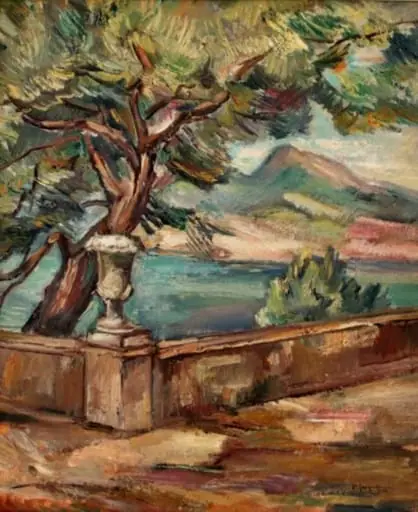
Elena Popea, born in Austro-Hungary and active in Romania, painted *Peisaj din Spania* circa 1920 during a period of intense engagement with European modernism. The work captures a Spanish landscape, distinguishing itself through its quiet composition and layered color harmonies. Popea’s approach blends elements of Impressionism, Expressionism, and Cubism, reflecting her exposure to broader artistic currents while maintaining a personal visual language rooted in observation.
Subject & Meaning
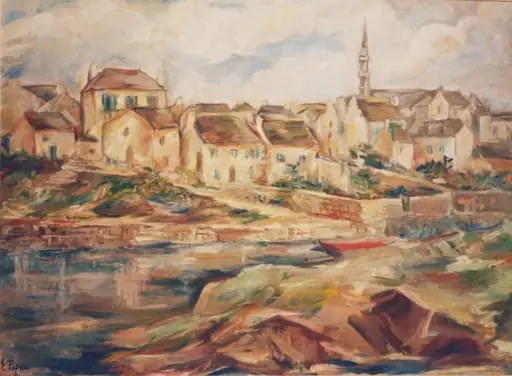
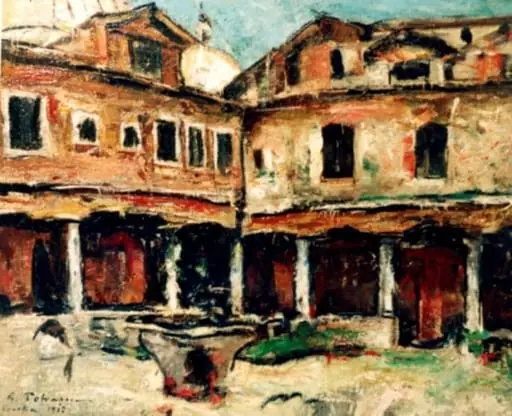
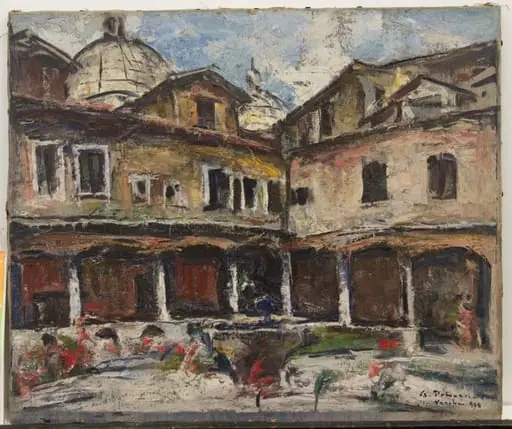
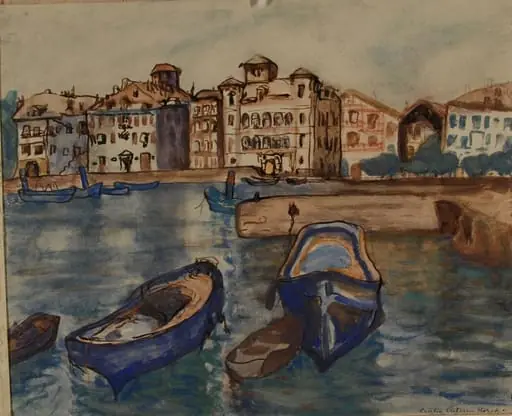
The painting centers on a stone fountain nestled among Spanish architecture, framed by a calm sky and textured foreground. The fountain, a symbol of stillness and sustenance, anchors the scene, while the surrounding buildings suggest a lived-in, modest environment. No human figures appear, emphasizing solitude and the quiet rhythm of place. The absence of narrative invites contemplation rather than storytelling, aligning with modernist tendencies to prioritize mood over explicit meaning.
Technique & Style
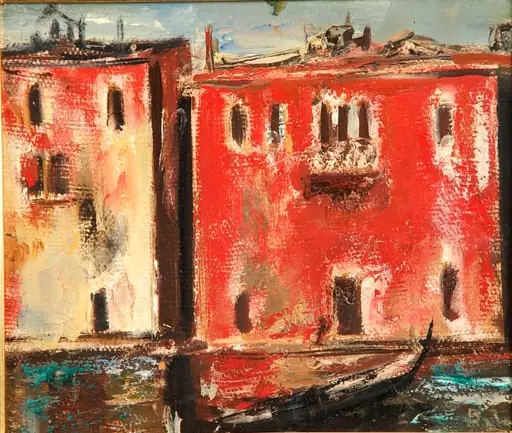
Popea employs a nuanced palette: warm ochres and terracottas for the buildings contrast with the cool blues and grays of sky and water. Brushwork varies—soft blends in the sky give way to more defined, angular strokes in the stonework, hinting at Cubist structure. Depth is suggested through layered color planes rather than linear perspective, a hallmark of her modernist adaptation. The surface retains a tactile quality, with visible brushstrokes enhancing the sense of atmosphere.
History & Provenance
Created during Popea’s mature period, the painting likely stems from her travels in Spain, a common subject for Eastern European artists seeking new visual stimuli beyond their homelands. While specific ownership history is undocumented, the work is held within Romanian collections, consistent with her legacy as a key figure in early 20th-century Romanian modernism. She remained active until her death in 1941, though her work received limited public attention during her lifetime.
Context
In the 1920s, Romanian artists increasingly looked westward, absorbing trends from Paris and beyond. Popea’s Spanish landscape fits within this broader movement, where artists reinterpreted foreign locales through hybrid styles. Unlike academic traditions, her work rejected idealized grandeur in favor of intimate, everyday scenes. Her choice of Spain—a country associated with light and architectural texture—reflected a wider fascination with Mediterranean aesthetics among Central European modernists.
Legacy
Popea’s oeuvre, including *Peisaj din Spania*, contributes to the understudied history of women modernists in Eastern Europe. Her synthesis of international styles with local sensibilities offers a quiet counterpoint to more dominant narratives of the period. While not widely exhibited in her time, her work has gained renewed scholarly interest in recent decades as part of efforts to reassess the breadth of early modernist practice beyond major Western centers.
Artist & collection
Artist
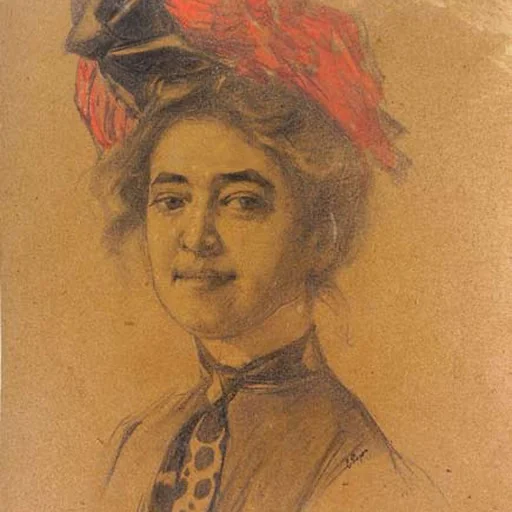
Elena Popea (15 April 1879, Brașov – 19 June 1941, Bucharest) was an Austro-Hungarian-born Romanian Modernist painter whose influences included Impressionism, Expressionism and Cubism.