Artwork
Dansul fluturilor
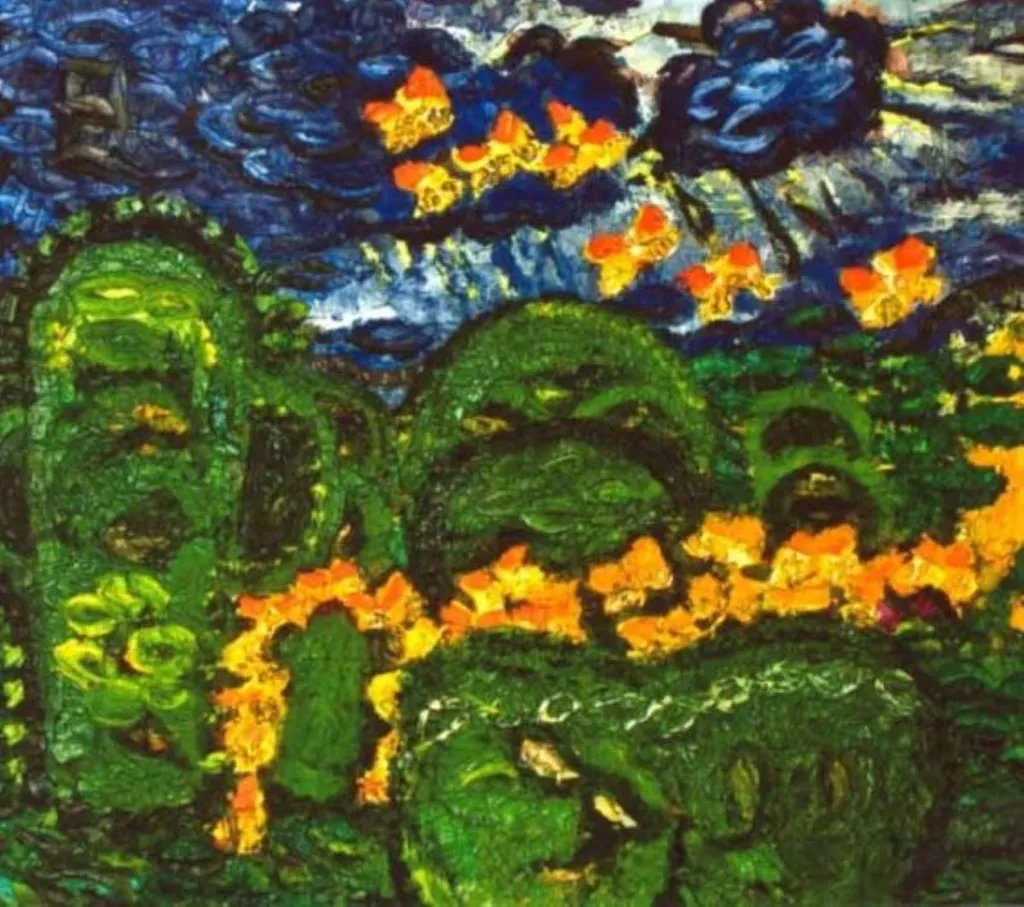
Dansul fluturilor is an unspecified painting by Ion Țuculescu. It dates from 1957 and is held in the collection of the Argeș County Museum.
About this work
Overview
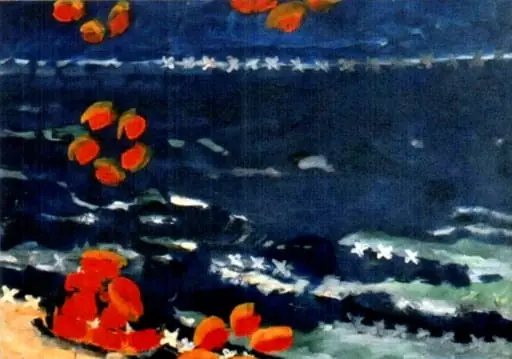
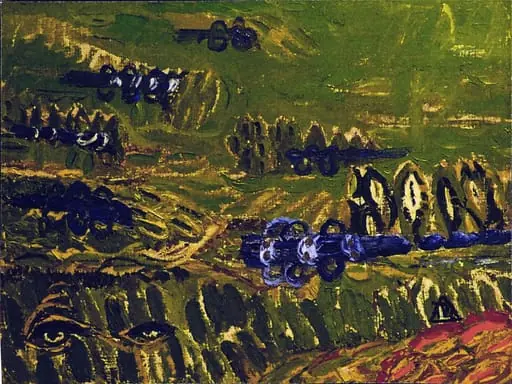
Its palette leans heavily on greens, accented by warm yellows and oranges, creating a rhythm that suggests life in motion rather than stillness.
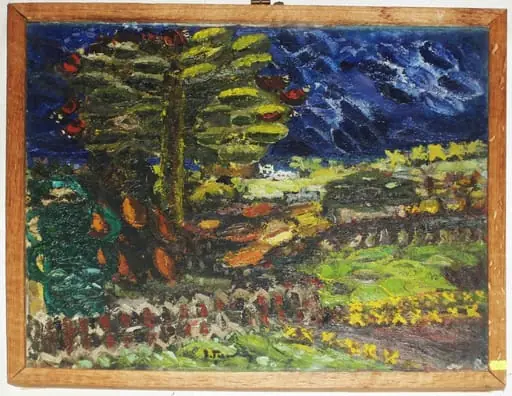
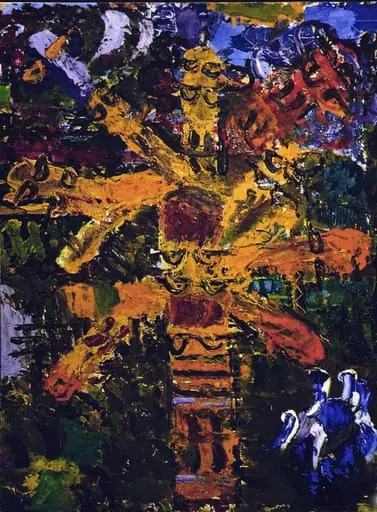
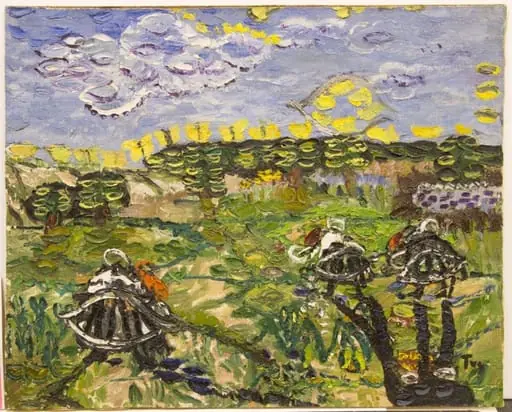
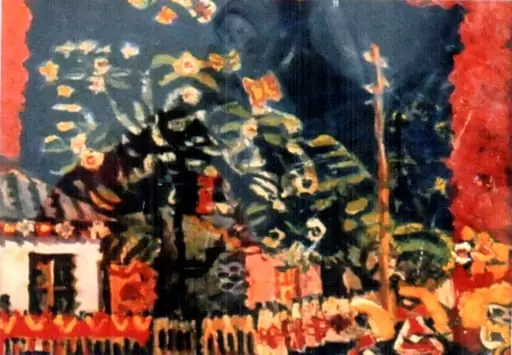
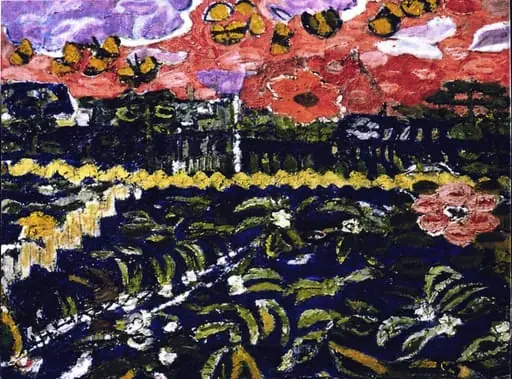
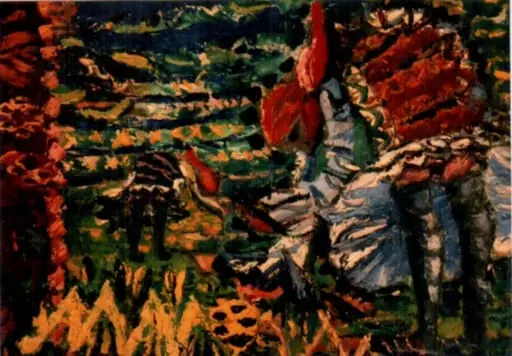
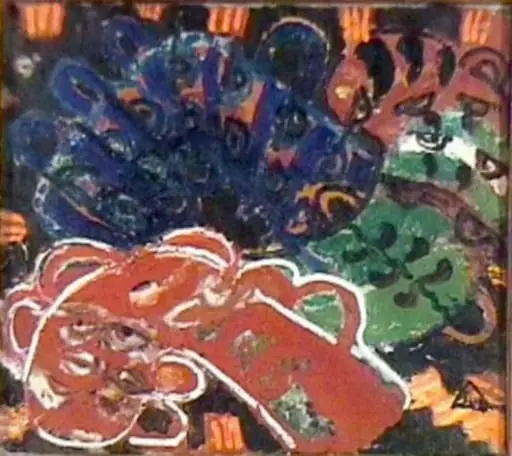
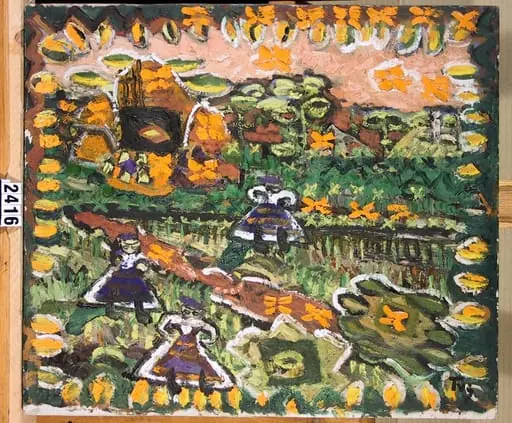
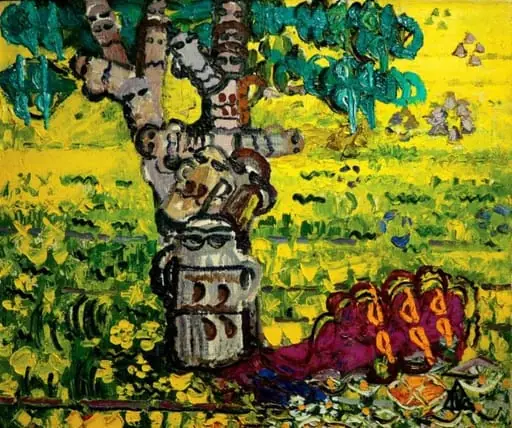
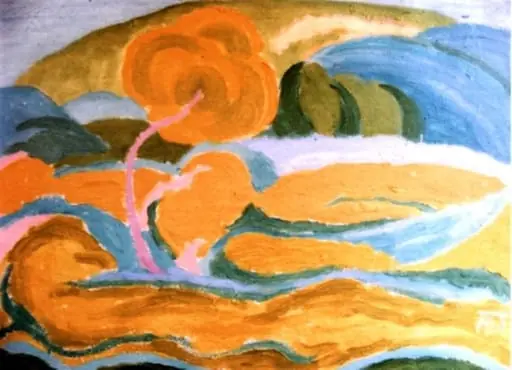
Painted in 1957 by Romanian artist Ion Țuculescu, Dansul fluturilor is an abstracted natural scene rendered in loose, energetic brushwork. The composition centers on a dynamic interplay of color and motion, evoking a fleeting moment in nature without literal representation. Its palette leans heavily on greens, accented by warm yellows and oranges, creating a rhythm that suggests life in motion rather than stillness.
Subject & Meaning
The title, meaning 'Dance of the Butterflies,' implies a fleeting, joyful natural phenomenon, though no identifiable butterflies appear. Instead, the painting conveys movement through abstracted forms—possibly flowers, leaves, or airborne particles—suggesting the ephemeral energy of insects in flight. The work avoids narrative, focusing instead on emotional resonance: a quiet celebration of nature’s transient vitality.
Technique & Style
Țuculescu employs expressive, non-linear brushstrokes that build texture rather than define form. Color is applied in layered, gestural strokes, with warm tones in the foreground receding into cooler blues and greens in the background. This chromatic shift creates spatial depth without perspective lines, aligning the work with post-impressionist and early modernist tendencies that prioritize emotional expression over realism.
History & Provenance
Created during a period of state-sanctioned socialist realism in Romania, Dansul fluturilor stands apart for its lyrical abstraction. It remained in private hands for decades, largely outside public institutional collections until the 2000s. Its survival reflects the quiet resistance of artists who pursued personal expression despite political pressures favoring figurative propaganda.
Context
In late 1950s Romania, official art demanded clear, heroic narratives. Țuculescu’s work, with its emphasis on color and movement over representation, quietly challenged these norms. His approach aligned more closely with Western modernist currents than with state ideology, positioning him as part of a subtle, non-confrontational avant-garde that valued sensory experience over political messaging.
Legacy
Though not widely exhibited during his lifetime, Dansul fluturilor has come to symbolize a quieter strain of Romanian modernism—one that prioritized emotional authenticity over ideological conformity. Contemporary Romanian art historians cite it as an early example of abstraction that preserved individual voice amid collectivist pressures, influencing later generations seeking formal freedom.
Artist & collection
Artist