Artwork
Vânătorul
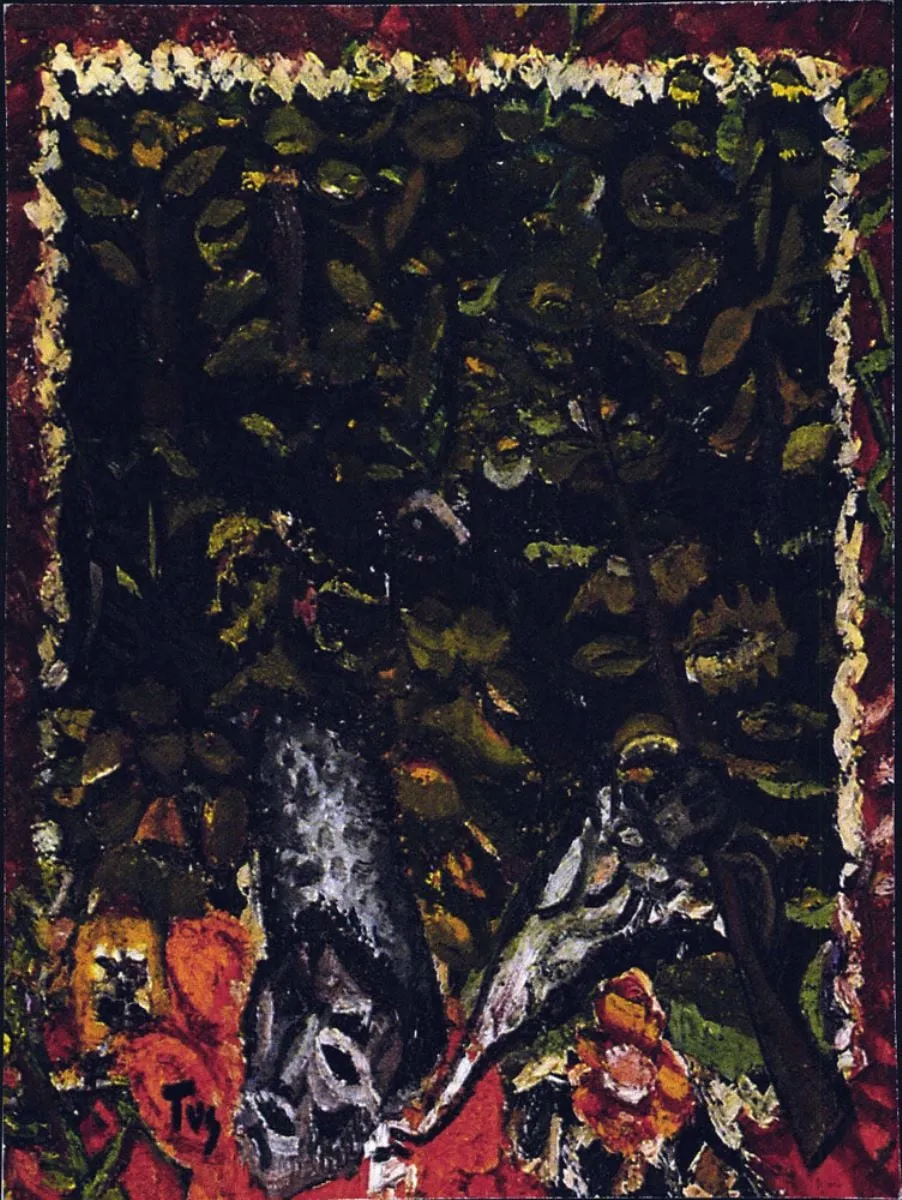
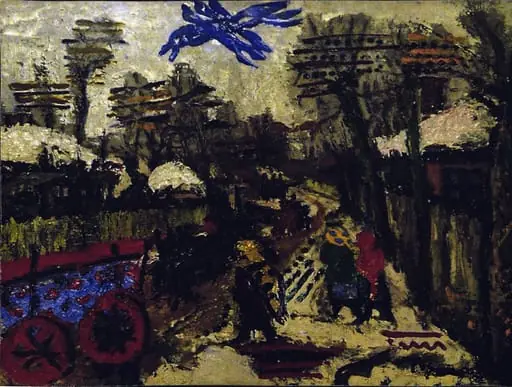
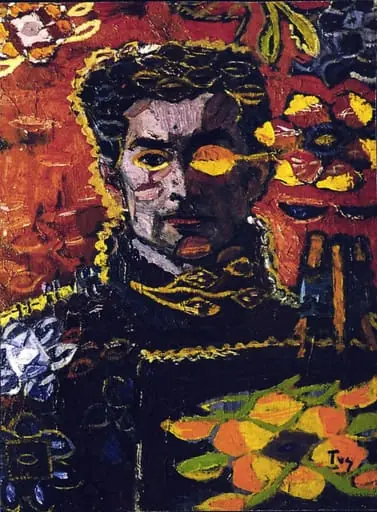
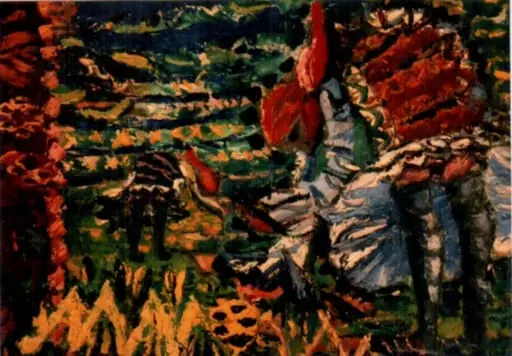
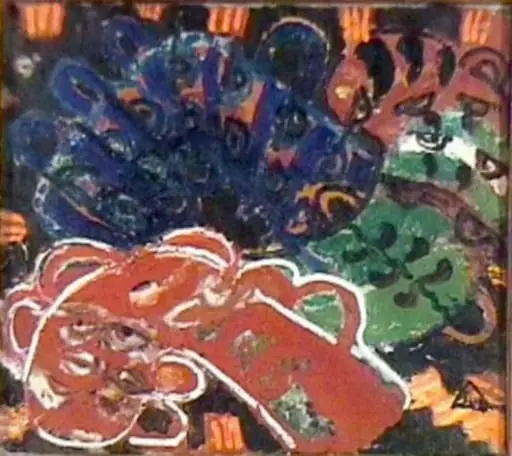
Vânătorul is an unspecified painting by Ion Țuculescu. It is held in the collection of the Art museum of Craiova. This work presents a solitary, ambiguous figure positioned before a wall dominated by vibrant, chaotic brushwork.
About this work
Overview
This work presents a solitary, ambiguous figure positioned before a wall dominated by vibrant, chaotic brushwork.
This work presents a solitary, ambiguous figure positioned before a wall dominated by vibrant, chaotic brushwork. The figure emerges from shadow, its features obscured, while the background resists clear representation. Thickly applied paint creates a tactile surface, emphasizing materiality over narrative clarity. The composition avoids traditional perspective, favoring emotional resonance through color and texture.
Subject & Meaning
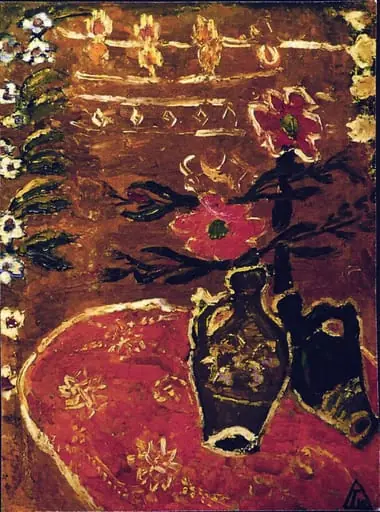
The central figure remains deliberately indistinct, suggesting anonymity or psychological distance. Its placement against an unstable, non-representational wall implies tension between identity and environment. The two red flowers, rendered with heavy, uneven strokes, may symbolize fragile life or fleeting presence, contrasting the wall’s chaotic energy. No clear story is offered; meaning arises from mood and material contrast.
Technique & Style
The painting employs impasto extensively, with dense layers of pigment building a rugged surface. Colors—greens, yellows, reds—are applied without blending, creating visual dissonance. Brushstrokes are deliberate yet unrefined, rejecting smooth transitions. Light falls sharply across the figure, isolating form from its surroundings. The technique prioritizes physicality and emotional intensity over realism.
History & Provenance
The work’s origin and early ownership are undocumented. It was likely produced in the early 20th century, during a period when artists increasingly explored abstraction and expressive brushwork. Its current location and acquisition history remain unverified in public records, suggesting it may have been privately held or exhibited in limited contexts.
Context
This piece aligns with early modernist experiments that rejected naturalism in favor of subjective expression. Similar approaches appear in the work of post-impressionists and expressionists who used color and texture to convey inner states. The rejection of coherent form reflects broader artistic shifts away from narrative toward emotional and sensory experience.
Legacy
Though not widely recognized in major collections, the work exemplifies a quiet but persistent strand of modernist painting focused on material presence and psychological ambiguity. Its use of impasto and non-representational space anticipates later developments in abstract expressionism, influencing artists who valued gesture and texture as carriers of meaning.
Artist & collection
Artist