Artwork
La moară
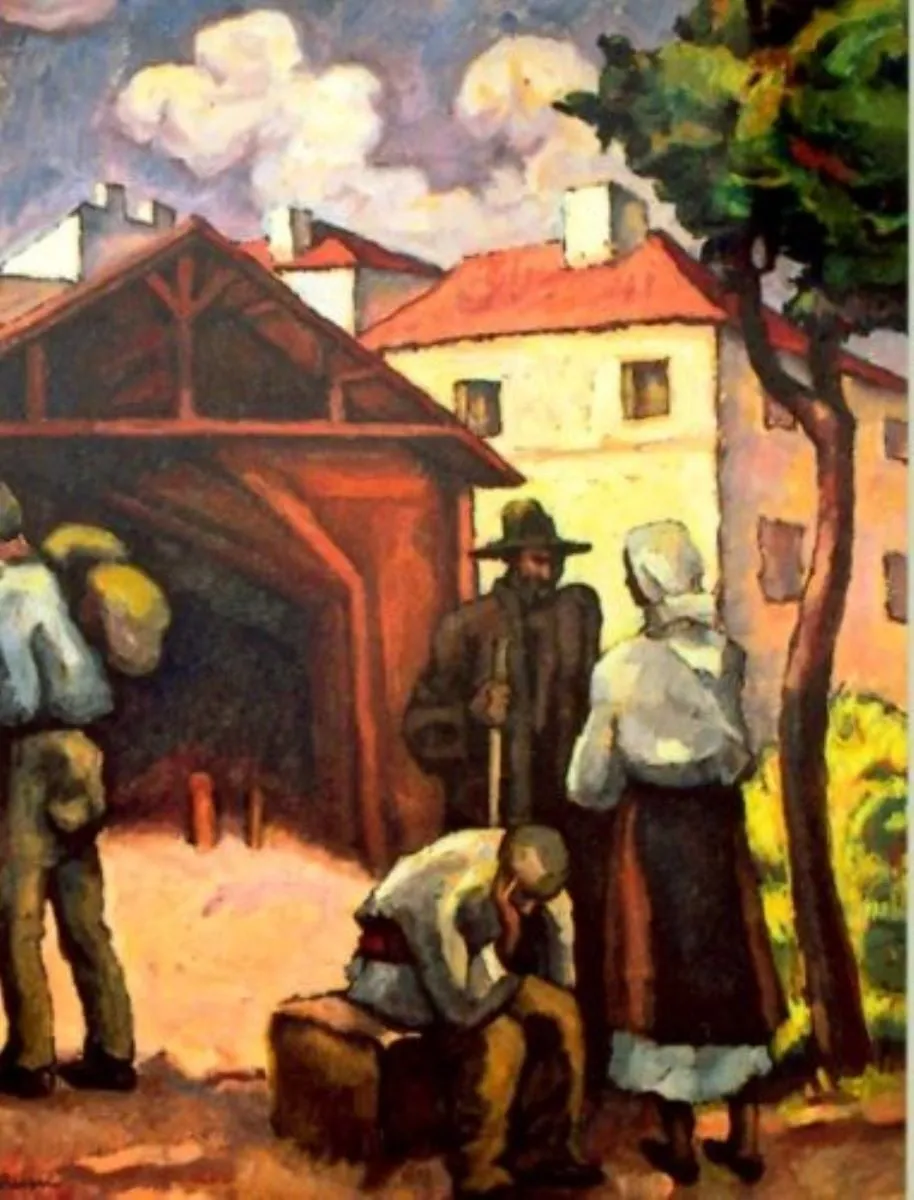
La moară is an unspecified painting by Camil Ressu. It dates from 1930 and is held in the collection of the Argeș County Museum.
About this work
Overview
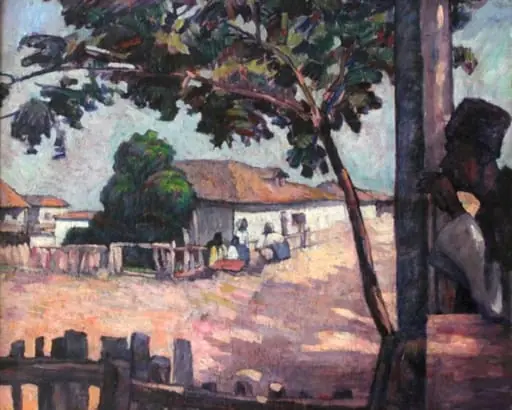
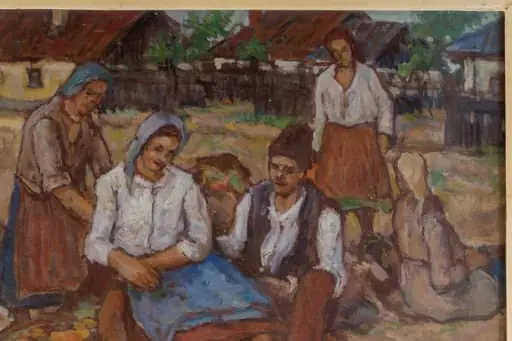
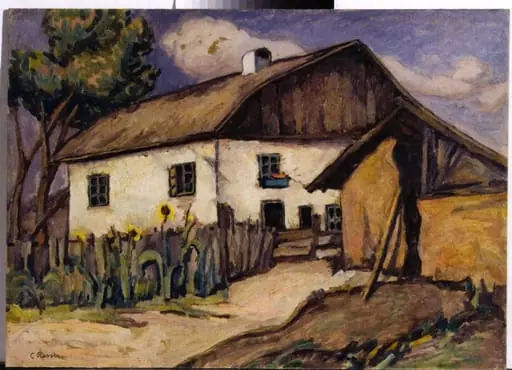
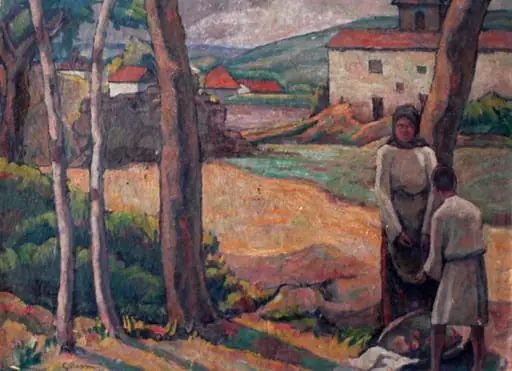
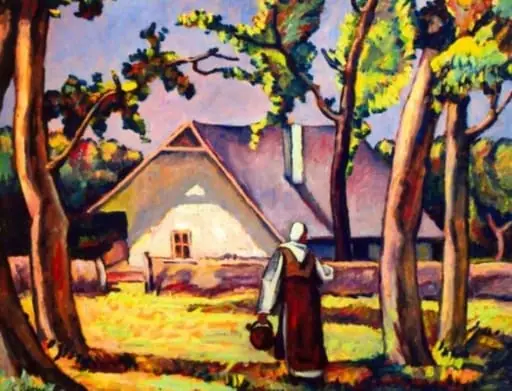
La moară, painted by Romanian artist Camil Ressu around 1930, depicts a lively village scene centered on a modest stone mill. The composition gathers several figures—two men, a woman and a child—against a backdrop of simple timber structures with red tiled roofs. Warm daylight filters through an open doorway, illuminating the rustic setting and emphasizing everyday rural life.
Subject & Meaning
The work presents a snapshot of communal activity: a man in a wide-brimmed hat rests on a staff, another crouches near a barrel, while a headscarf‑clad woman stands nearby, and a child in a yellow cap watches. The arrangement suggests a moment of shared labor or pause, highlighting the interdependence of villagers and the central role of the mill in their daily routine.
Technique & Style
Ressu employs a thick impasto application, building up paint in pronounced, textured strokes that give the surface a near‑sculptural quality. This tactile approach captures the roughness of wooden beams and the softness of light, while the bold brushwork conveys movement and vitality within the static composition.
Context
Created in the interwar period, La moară reflects Ressu’s interest in Romanian folk life and his broader engagement with social realism. The painting’s precise provenance is not widely documented, but it remains a representative example of his early 20th‑century output, illustrating his commitment to portraying ordinary people within their natural environment.
Artist & collection

Artist
Camil Ressu was a Romanian painter and academic, one of the most significant art figures of Romania.