Artwork
Cap de turcoaică
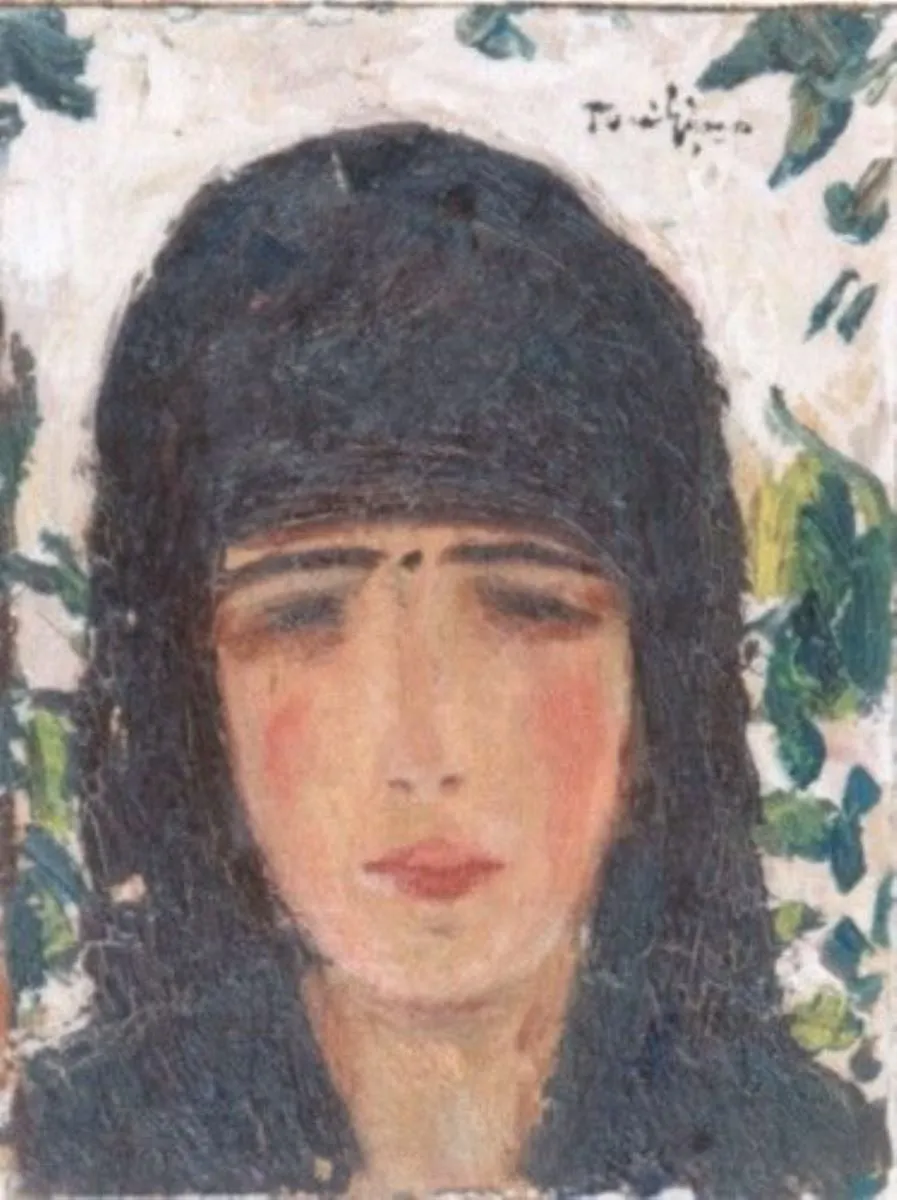
Cap de turcoaică is an unspecified painting by Nicolae Tonitza. It dates from 1932 and is held in the collection of the National Museum of Art of Romania.
About this work
Overview
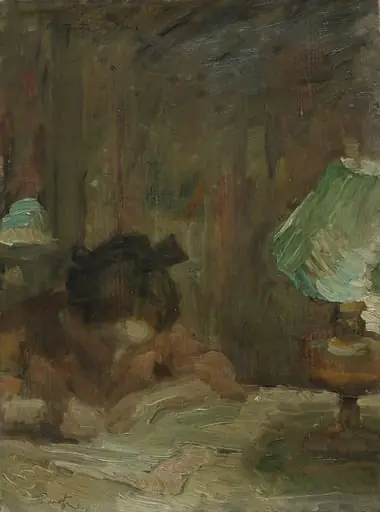
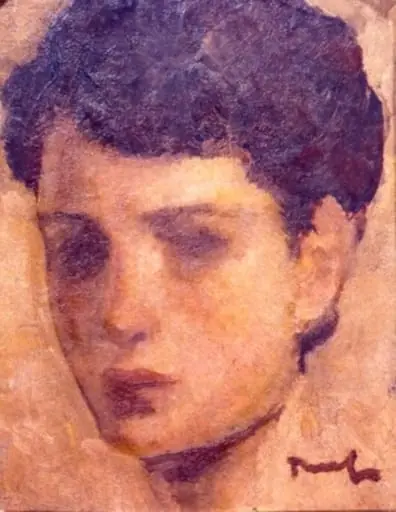
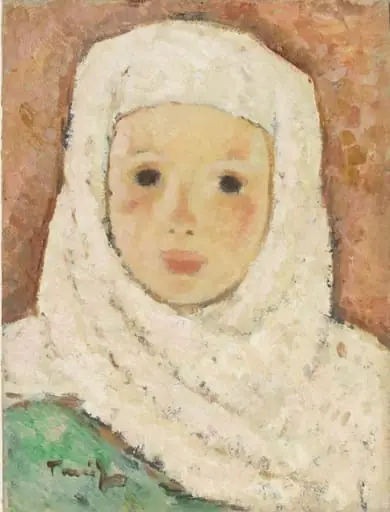
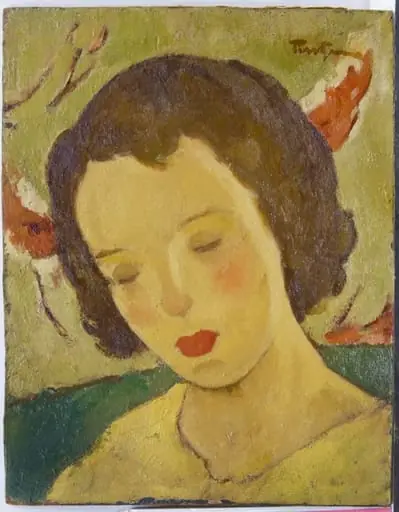
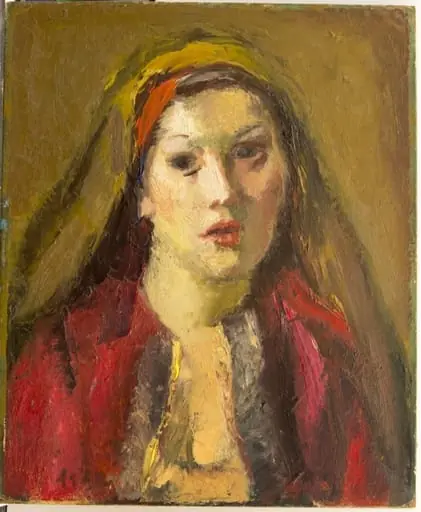
Cap de turcoaică, painted around 1932 by Romanian artist Nicolae Tonitza, is a portrait of a woman wearing a dark headscarf. The composition centers on her restrained presence, with minimal background detail and a muted color palette. Tonitza avoids dramatic gestures, instead emphasizing stillness and introspection through subtle shifts in tone and texture.
Subject & Meaning
The subject is a woman of likely rural or modest background, identified by her head covering. Her downward gaze and neutral expression suggest inward reflection rather than engagement with the viewer. The title, referencing a traditional headscarf, anchors the figure in local cultural context, inviting contemplation of identity, anonymity, and quiet dignity within everyday life.
Technique & Style
Tonitza employs soft, blended brushwork to render the woman’s face and scarf, with delicate touches of pink on the cheeks adding warmth without sentimentality. The background alternates between pale washes and faint green-blue strokes, creating depth without distraction. Light is diffused, avoiding sharp contrasts, reinforcing the painting’s calm, meditative quality.
History & Provenance
Created during Tonitza’s mature period, the work emerged from his sustained interest in portraiture and folk subjects. It was likely painted in Bucharest, where he lived and taught. The piece remained within Romanian collections after his death in 1940, reflecting its recognition within national art circles but without widespread international exposure.
Context
In early 20th-century Romania, artists like Tonitza turned to local figures as subjects, countering academic traditions with intimate, empathetic portrayals. Cap de turcoaică aligns with a broader movement to elevate ordinary lives through art, influenced by Post-Impressionism and Eastern European realism, yet distinct in its quiet restraint and emotional subtlety.
Legacy
The painting endures as an example of Tonitza’s ability to convey psychological depth with minimal means. It is frequently cited in studies of Romanian modernism for its understated humanity and technical sensitivity. While not widely reproduced abroad, it remains a touchstone in Romanian art education for its economy of form and emotional resonance.
Artist & collection
Artist
Nicolae Tonitza painted quiet still lifes and village scenes, often showing colorful vegetables on a table or blooming flowers in simple pots.