Artwork
Peisaj
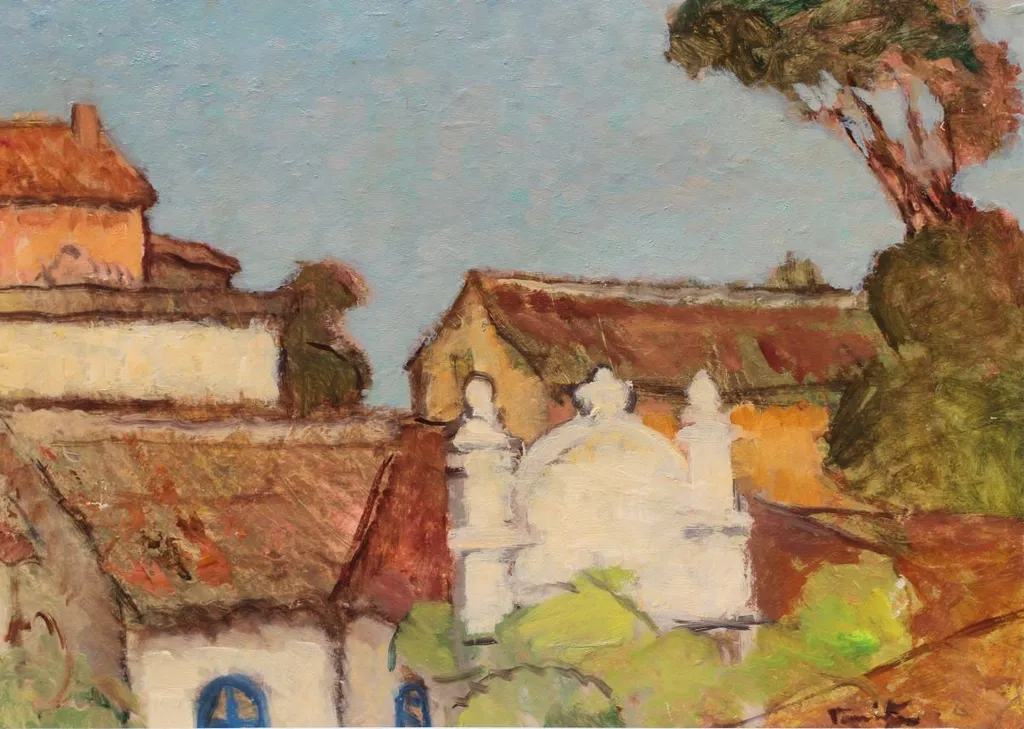
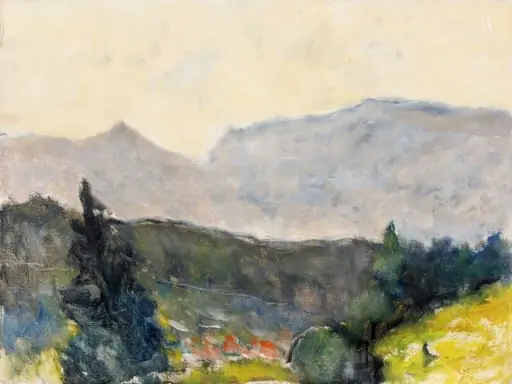
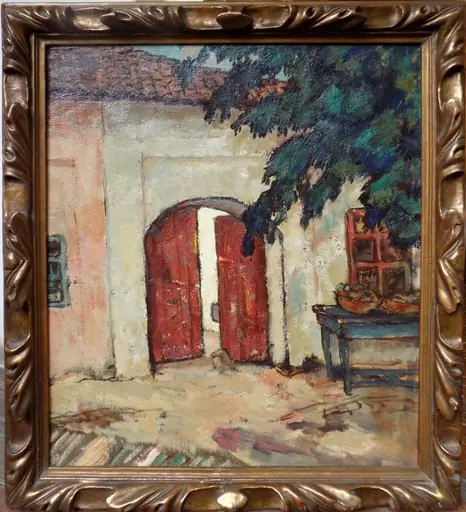
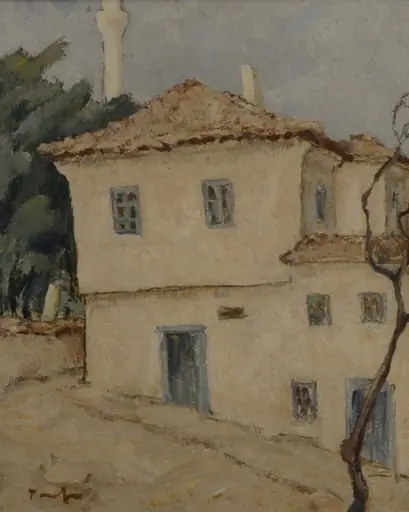
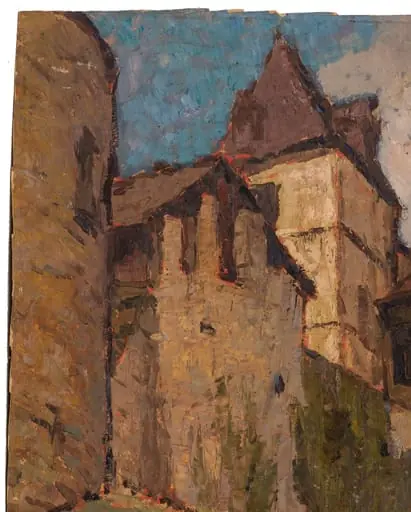
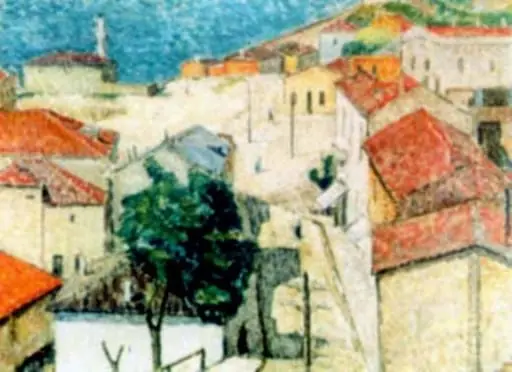
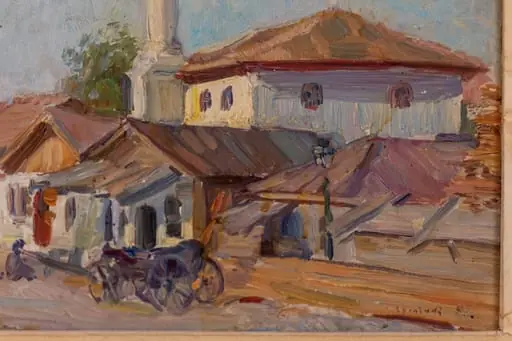
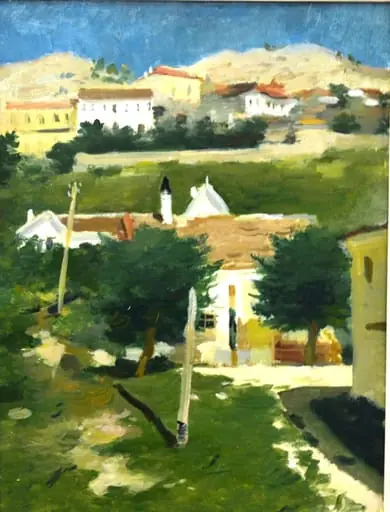
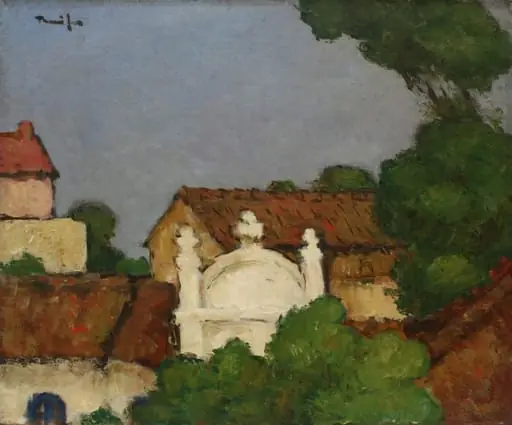
Peisaj is an unspecified painting by Nicolae Tonitza. It is held in the collection of the Museum of Art Cluj-Napoca. This painting depicts a quiet rural scene with modest buildings, a prominent tree, and three white statues on a low wall.
About this work
Overview
This painting depicts a quiet rural scene with modest buildings, a prominent tree, and three white statues on a low wall. The composition is uncluttered, emphasizing horizontal lines and open space. Thick, visible brushstrokes create a tactile surface, and the palette favors earthy tones with crisp highlights. The technique suggests a deliberate embrace of texture over smooth finish.
Subject & Meaning
The scene presents an ordinary village setting, devoid of human figures but animated by the presence of statues. Their placement on a wall, facing outward, introduces a quiet sense of watchfulness or memorial. The absence of activity invites contemplation rather than narrative, suggesting themes of stillness, memory, or the quiet endurance of place.
Technique & Style
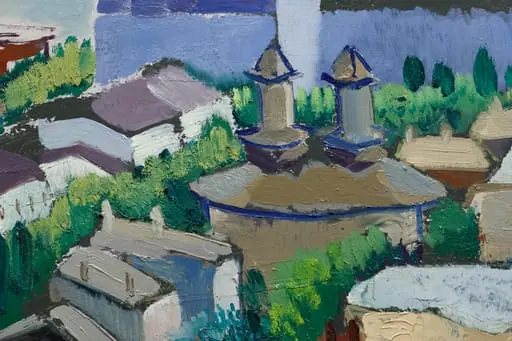
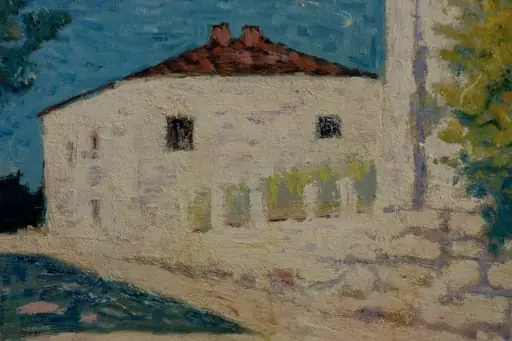
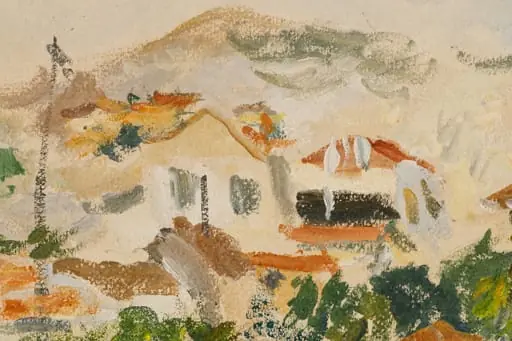
The artist employs impasto, applying paint thickly to build texture across surfaces like roofs, walls, and foliage. Colors are applied with minimal blending, preserving the rawness of each stroke. This method enhances the sense of immediacy and physical presence, aligning the work with post-impressionist approaches that prioritize expressive form over realism.
History & Provenance
No documented history or ownership trail is available for this work. It appears to be an unattributed image, possibly from a private collection or regional artist. Its lack of signature or exhibition record suggests it was not intended for public display at the time of creation.
Context
The painting reflects a late 19th- or early 20th-century trend in rural depictions, where everyday landscapes were rendered with emotional weight rather than idealization. Similar works by regional painters often emphasized texture and light over detail, responding to broader shifts away from academic precision toward personal expression.
Legacy
Though not widely recognized in major collections, the painting exemplifies a quiet strand of modernist landscape painting that valued materiality and mood over spectacle. Its use of impasto and unrefined color anticipates later developments in expressionist and abstract approaches to natural subjects.
Artist & collection
Artist
Nicolae Tonitza painted quiet still lifes and village scenes, often showing colorful vegetables on a table or blooming flowers in simple pots.