Artwork
Portret de mulatră
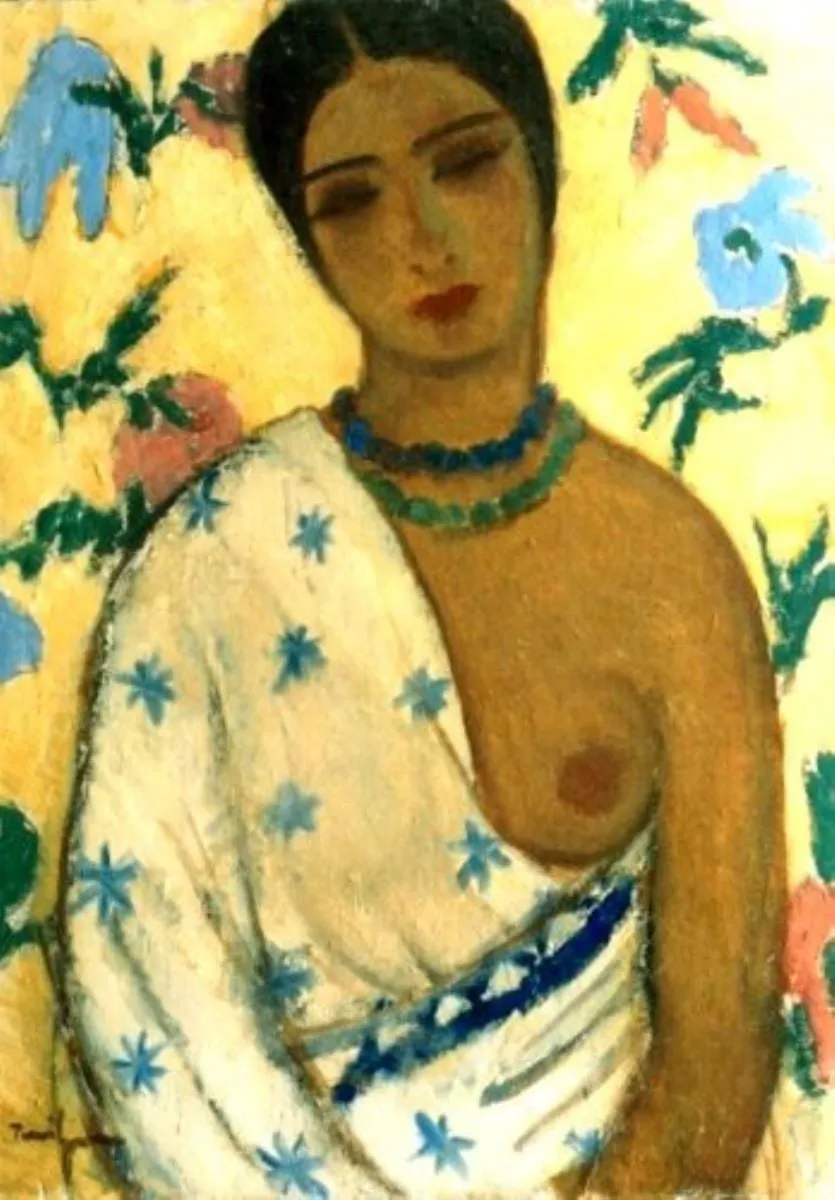
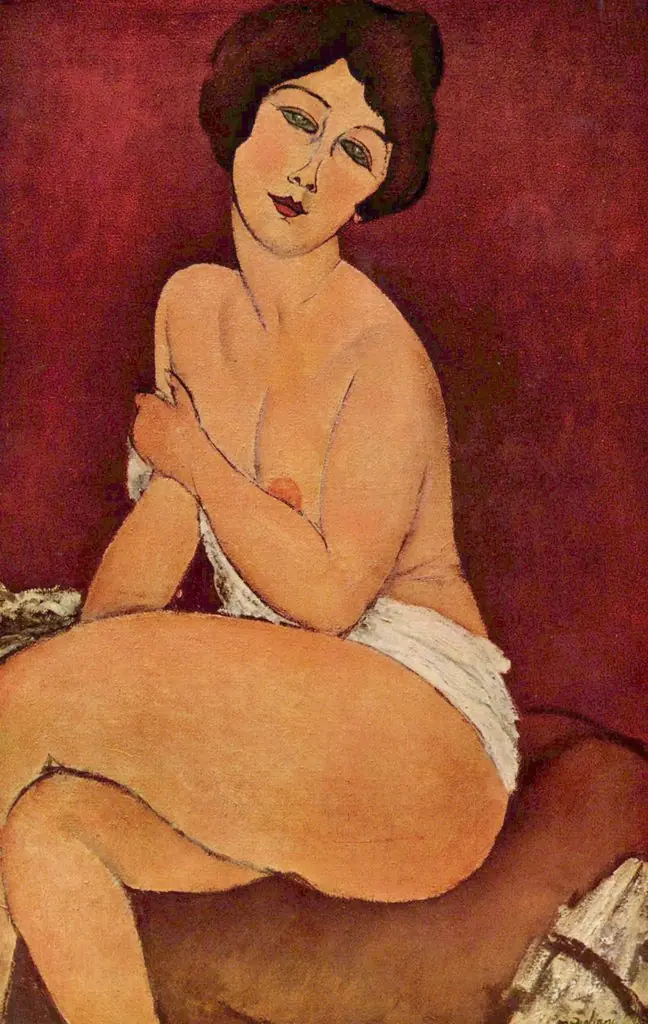
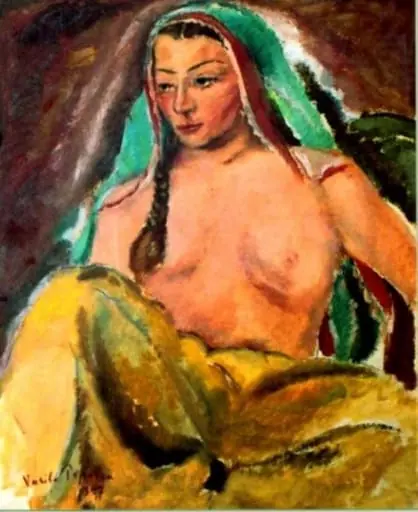
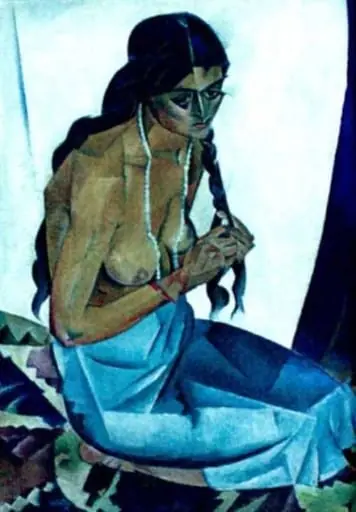
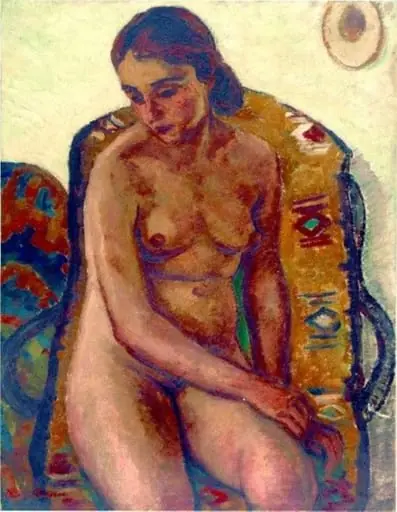
Portret de mulatră is an unspecified painting by Nicolae Tonitza. It is held in the collection of the National Museum of Art of Romania. This portrait depicts a woman of African descent, rendered with quiet dignity against a dark background.
About this work
Overview
This portrait depicts a woman of African descent, rendered with quiet dignity against a dark background.
This portrait depicts a woman of African descent, rendered with quiet dignity against a dark background. The artist uses strong contrasts of light and shadow to isolate her form, emphasizing her presence. Her attire includes a draped fabric patterned with blue and white stripes, evoking symbolic references, while a colorful necklace draws attention to her neckline. The background is filled with vivid floral elements, adding a sense of life around her stillness.
Subject & Meaning
The subject is portrayed with composure, her gaze direct and unadorned by theatricality. The striped cloth may allude to national or cultural identifiers, though its exact significance remains open. The lush flora behind her suggests an intimate, natural setting, possibly hinting at identity rooted in place or heritage. The absence of overt narrative invites contemplation of individuality within broader social contexts of the time.
Technique & Style
Brushwork is deliberately textured, with thick applications of paint on the fabric and skin, creating tactile depth. The background is muted and dark, allowing the subject’s illuminated form to emerge with sculptural clarity. Colors in the flowers and necklace are saturated yet controlled, contrasting with the restrained palette of the clothing. The style blends realism with expressive handling, characteristic of early 20th-century Romanian modernism.
History & Provenance
Painted by Nicolae Tonitza, a key figure in Romanian modern art, this work dates from the interwar period. It reflects his interest in portraying marginalized individuals with psychological depth. The painting remained in private collections after its creation and was later acquired by a public institution. Its survival and recognition reflect shifting attitudes toward representation in Romanian visual culture.
Context
Created during a time of national identity formation in Romania, the portrait stands apart from prevailing idealized depictions. Tonitza’s focus on a Black woman challenges conventional subject matter in Romanian art, aligning with broader European trends of exploring non-traditional figures. The work emerges from a period when artists increasingly turned to everyday and overlooked lives as subjects worthy of serious attention.
Legacy
The portrait contributes to a quieter but significant strand in Romanian modernism that prioritized human presence over spectacle. It has been referenced in later scholarship on race, representation, and the role of the individual in national art narratives. Though not widely reproduced, its quiet intensity continues to inform discussions on inclusivity in early 20th-century Eastern European painting.
Artist & collection
Artist
Nicolae Tonitza painted quiet still lifes and village scenes, often showing colorful vegetables on a table or blooming flowers in simple pots.