Artwork
Maria Grădișteanu
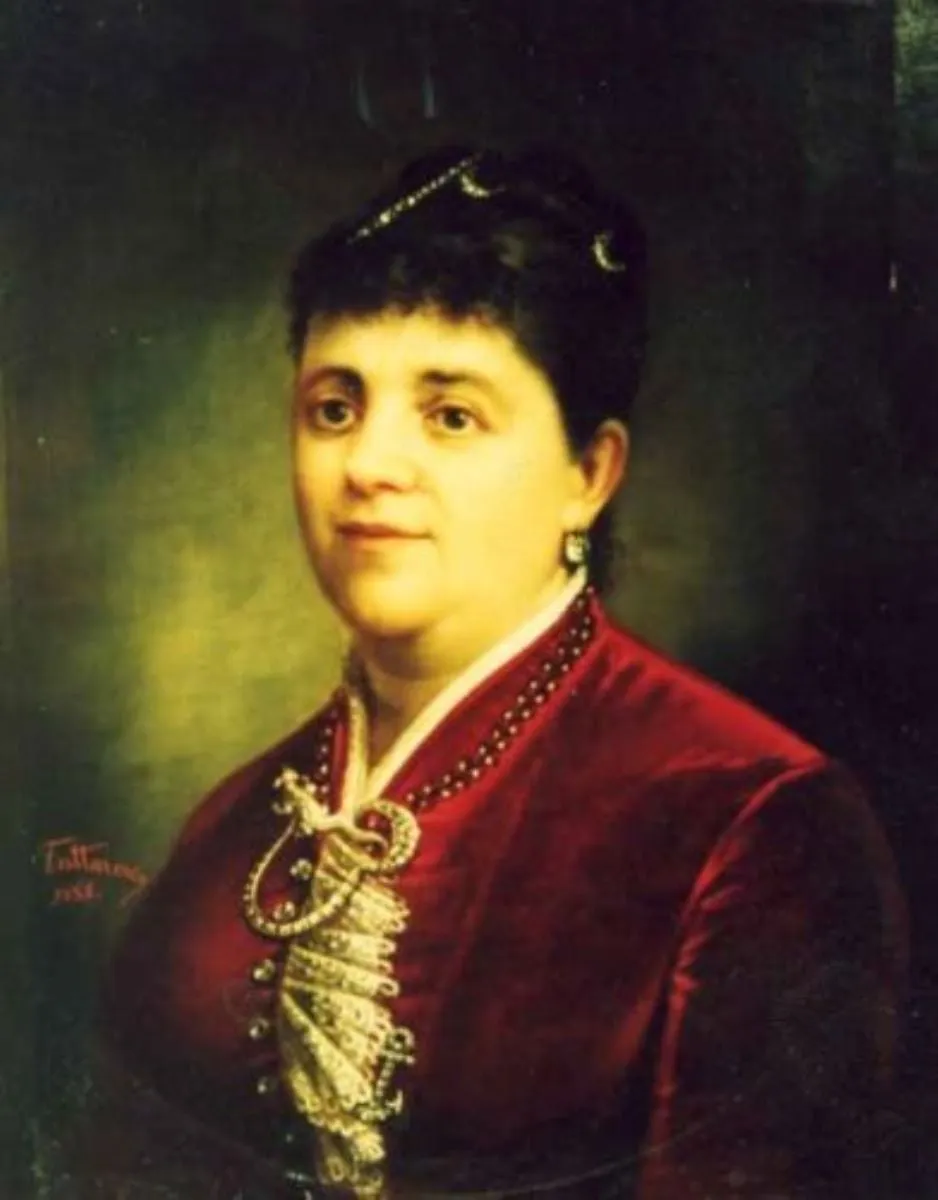
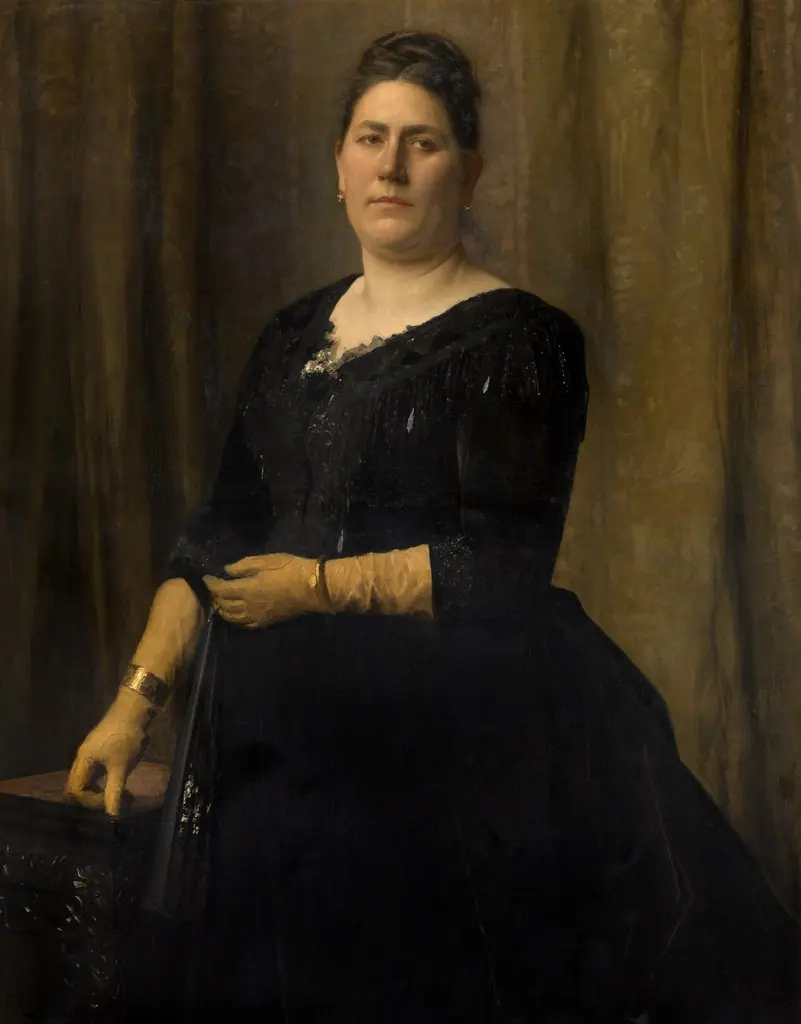
Maria Grădișteanu is an unspecified painting by Gheorghe Tattarescu. It dates from 1850 and is held in the collection of the Bucharest Municipality Museum.
About this work
Overview
Painted around 1850 by Gheorghe Tattarescu, this portrait depicts Maria Grădișteanu, a woman of likely upper-middle-class standing in mid-19th-century Romania.
Painted around 1850 by Gheorghe Tattarescu, this portrait depicts Maria Grădișteanu, a woman of likely upper-middle-class standing in mid-19th-century Romania. The work is part of the collection at the Museum of Ethnography. Its restrained composition and focused lighting reflect a deliberate emphasis on the sitter’s presence rather than narrative context, aligning with portraiture practices of the period that valued individual dignity over embellishment.
Subject & Meaning
Maria Grădișteanu is portrayed with quiet composure, her attire suggesting regional dress with elements of formal refinement. The stiff white collar and gold-trimmed dark red garment indicate cultural identity and social status, while the dark hat adds a sense of solemnity. The absence of props or background details directs attention to her expression and attire, implying a portrait intended to convey personal and cultural identity rather than familial or historical narrative.
Technique & Style
Tattarescu employs chiaroscuro to model the sitter’s face and hands, using sharp contrasts between light and shadow to create volume and depth. The background remains uniformly dark, isolating the figure and enhancing the three-dimensionality of her form. Brushwork is controlled and precise, particularly in the rendering of fabric textures and the sheen of the hat, demonstrating an academic approach influenced by European portraiture traditions of the time.
History & Provenance
The painting has been held by the Museum of Ethnography since at least the early 20th century, though its earlier ownership is undocumented. Tattarescu’s faint signature in the lower corner confirms authorship but offers no date beyond the estimated 1850 creation. No records of commission or exhibition history are known, suggesting the portrait may have been a private commission later acquired by the museum for its ethnographic collection.
Context
In mid-19th-century Romania, portraiture was emerging as a means of asserting national identity amid political transformation. Artists like Tattarescu blended Western techniques with local dress and customs to document emerging social types. This portrait reflects that trend, presenting an individual not as a noble or religious figure, but as a representative of a distinct cultural group within a newly forming Romanian identity.
Legacy
The portrait remains a quiet but significant example of Romanian academic portraiture from the period. It contributes to the understanding of how regional dress and personal dignity were visually codified during a time of cultural redefinition. Though not widely exhibited, it continues to serve as a reference for scholars studying the intersection of identity, costume, and artistic practice in 19th-century Eastern Europe.
Artist & collection
Artist
 Portretul doamnei Fălcoianu
 Portrait of Sofia Nikolaevna Kramskoy, the Artist's Wife
 Portret de femeie (cu pălărie)
 Purificación Fontán marquesa viuda del Pazo de la Merced
 Portret de fată (D-ra J.)
 Portret de femeie tânără
 Portrait of Apolonia Anaszkowska
 Soția pictorului, Maria Tăttărescu
 Nemes Jánosné
 Alexandrina George Manu (născută Cantacuzino)
 Portret de femeie
 Madame Spée