Artwork
În uzină - studiu
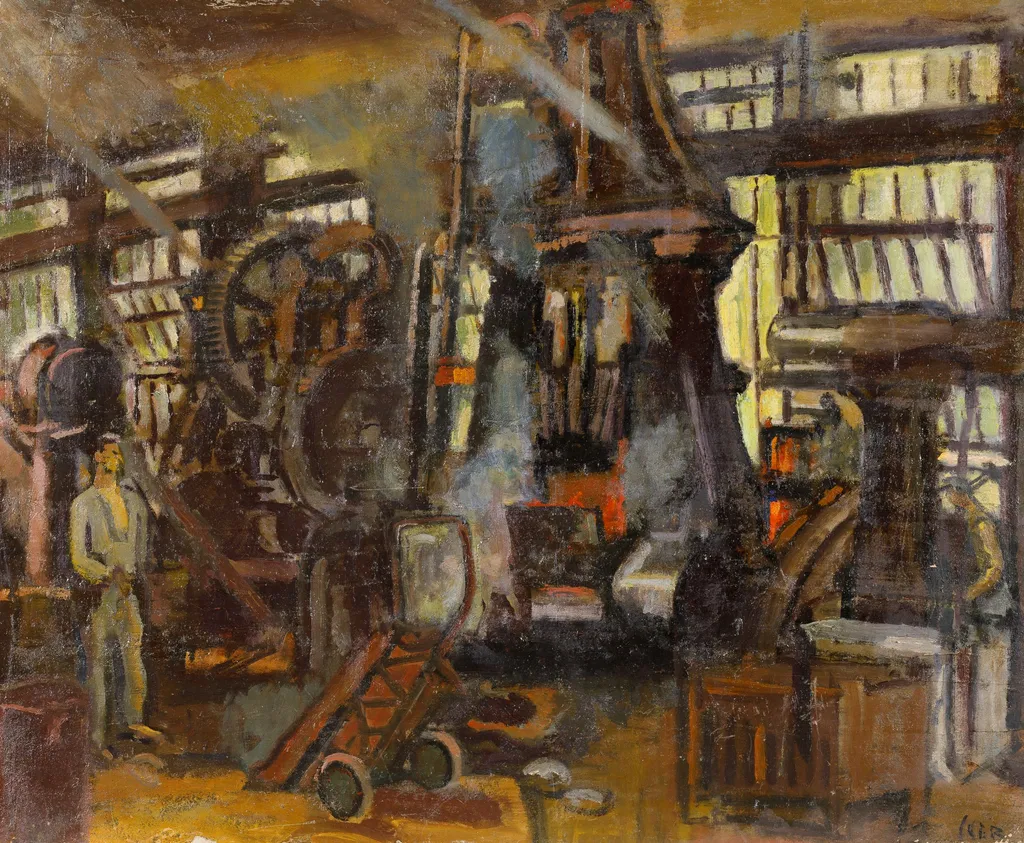
În uzină - studiu is an unspecified painting by Iosif Iser. It dates from 1850 and is held in the collection of the National Museum of Art of Romania.
About this work
Overview
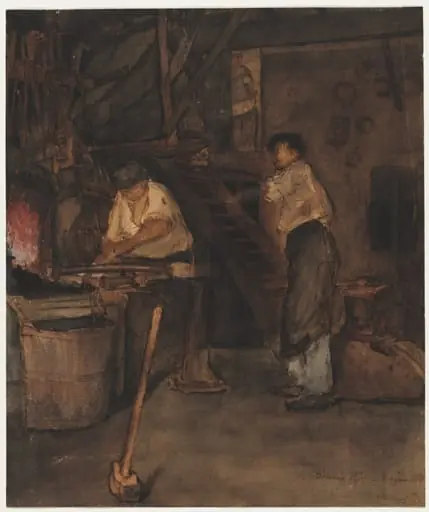
„În uzină – studiu” is an oil painting attributed to Iosif Iser, dated approximately 1850. The canvas depicts an interior industrial space crowded with machinery and laborers. Dominated by earthy tones of brown, yellow and black, the composition is punctuated by a few luminous highlights that suggest artificial light within the dim environment.
Subject & Meaning
The work presents a snapshot of 19th‑century factory life, focusing on the relationship between man and machine. Two figures are positioned near the equipment, their features indistinct, emphasizing the anonymity of laborers amid the mechanical surroundings. The scene conveys the physical intensity of industrial work and the emerging modernity of the era.
Technique & Style
Iser employs a heavy impasto application, laying thick layers of paint that give the surface a tactile, almost sculptural quality. Broad, vigorous brushstrokes generate a sense of movement, while stark contrasts of light and shadow carve deep recesses, reinforcing the cramped, urgent atmosphere of the workshop.
History & Provenance
Created around the mid‑19th century, the painting is part of Iosif Iser’s early oeuvre, a period when he explored genre scenes and social subjects. Its provenance traces through private collections before entering a public institution, where it has been displayed as an example of early industrial genre painting in Romanian art.
Context
The image reflects the broader European fascination with industrialization during the 1800s, when artists began documenting factories, workshops, and the labor force. Iser’s focus on a Romanian setting adds a regional dimension to this trend, illustrating how industrial development was perceived beyond the major Western centers.
Own this work as a print
Artist & collection
Artist
Iosif Iser painted everyday life with a focus on people and places. His 1933 work *Paris. Strada Mouffetard* shows a lively street scene in Paris, while *Nud pe fotoliu* depicts a seated nude figure. His brushwork…

 Maquette pour un portrait de Denis
 The Kitchen of the Rôtisserie des Deux Paons
 Țesând la război
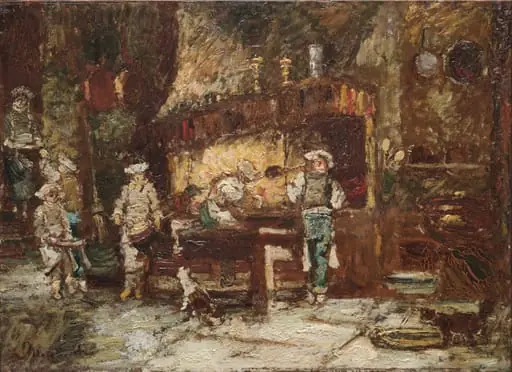 The Kitchen of the Rôtisserie des Deux Paons
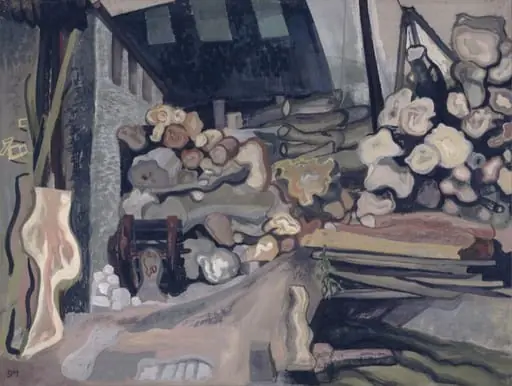 Timber Yard
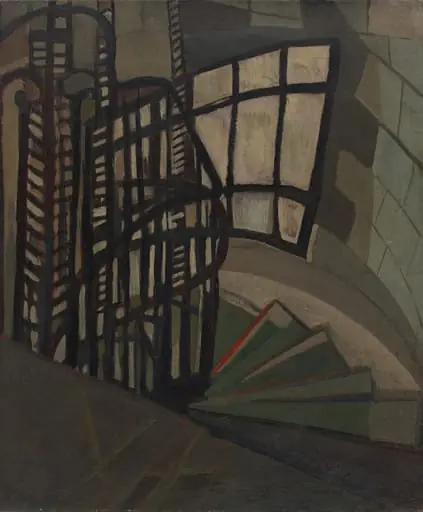 Untitled
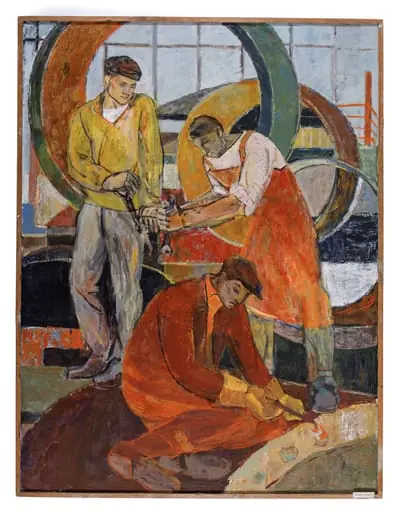 Cazangerie
 Opstilling med bøger, pibe og figur
 Interior țărănesc - Balcic
 An Old Corner
 The Forge
 Study for The Blacksmith's Shop: Remembrance of Le Tréfort