Artwork
Nud pe fotoliu
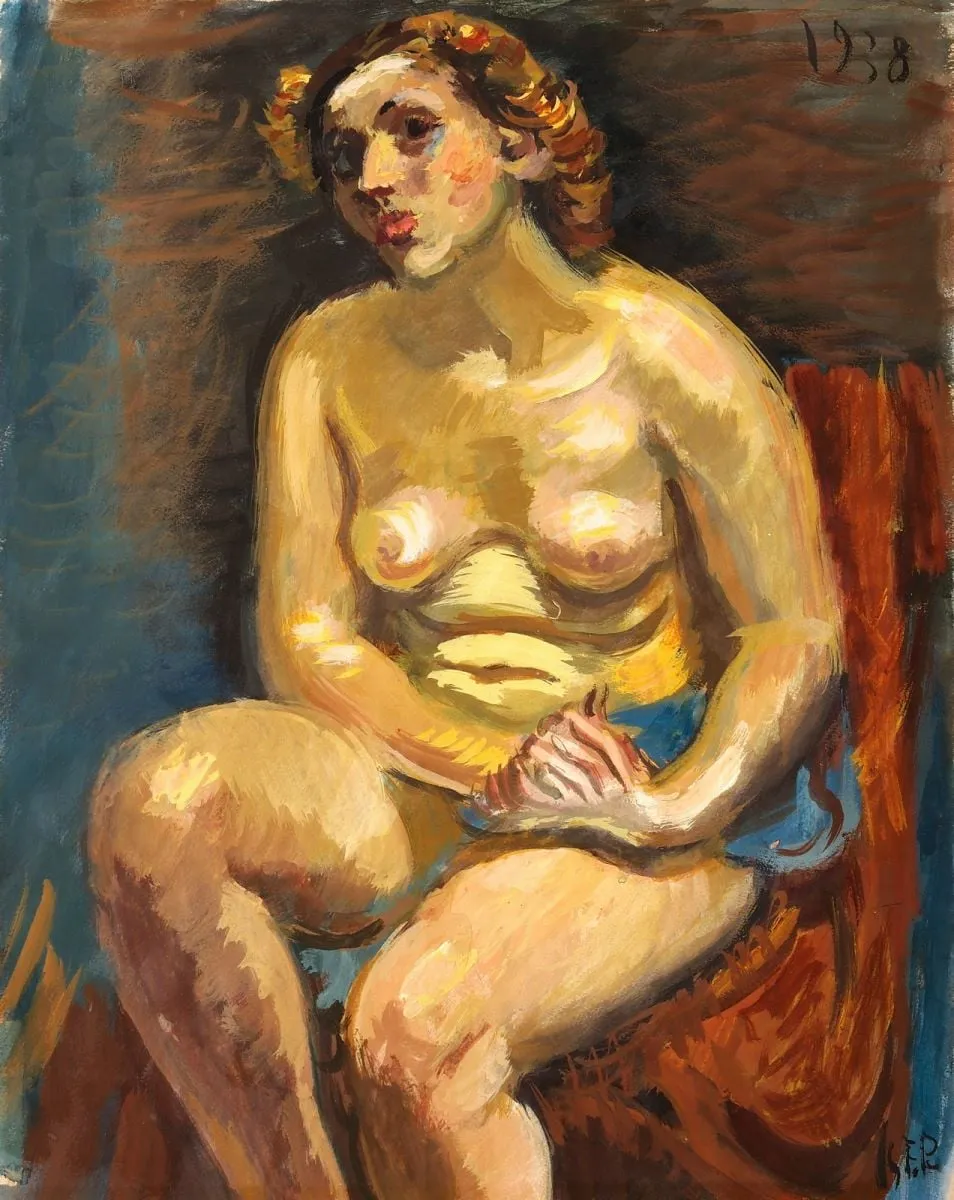
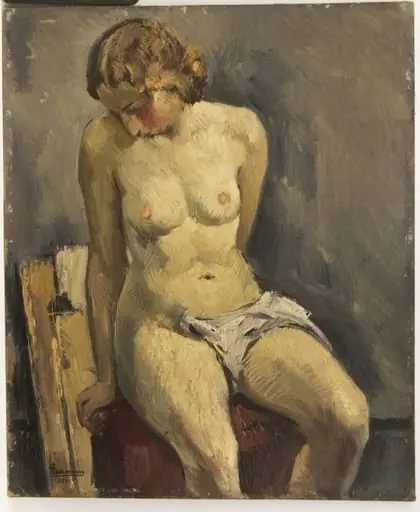
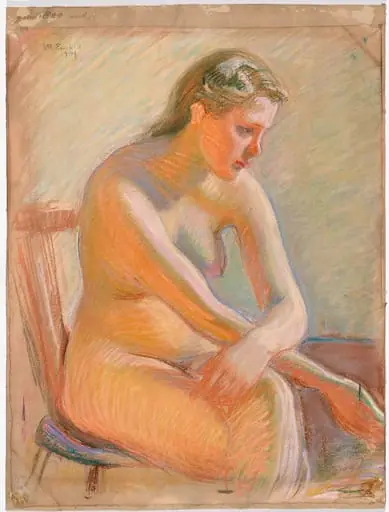
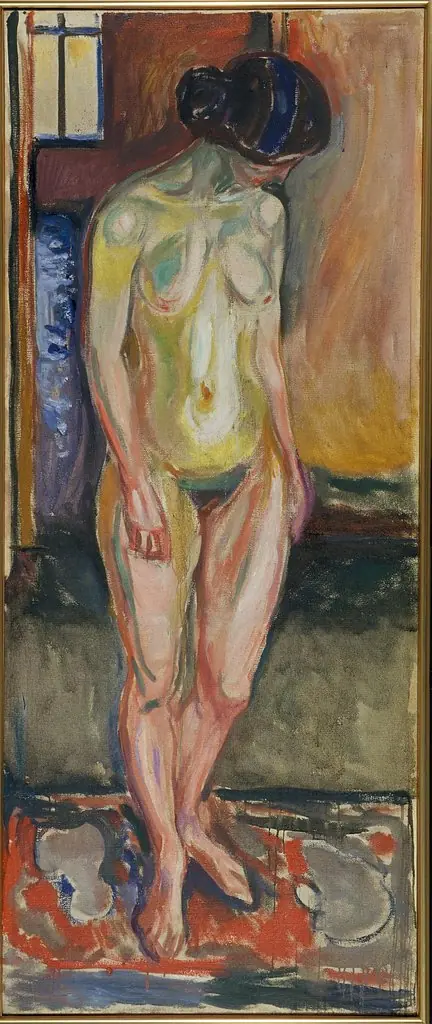
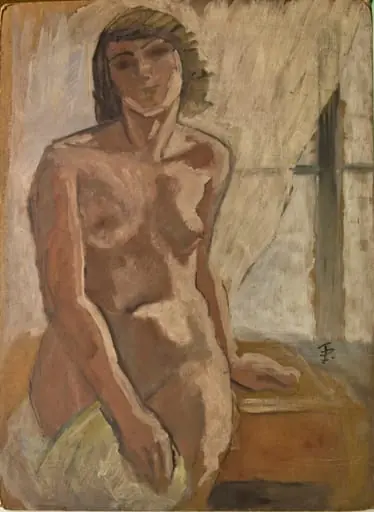
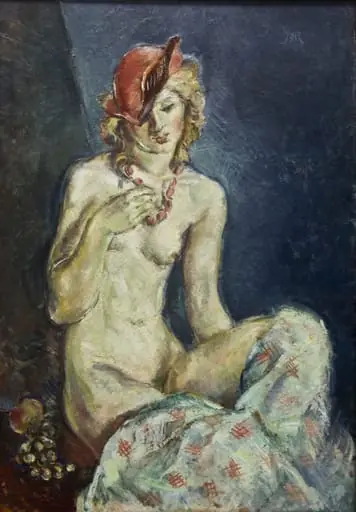
Nud pe fotoliu is an unspecified painting by Iosif Iser. It is held in the collection of the Lucian Pop Art Collection. This painting depicts a woman seated on a chair, partially nude, with her upper body exposed.
About this work
Overview
The composition centers on her form against a dark, indistinct background, drawing attention to her skin and the vivid red-orange chair behind her.
This painting depicts a woman seated on a chair, partially nude, with her upper body exposed. The composition centers on her form against a dark, indistinct background, drawing attention to her skin and the vivid red-orange chair behind her. The brushwork is loose and visibly textured, suggesting a rapid, intuitive approach rather than a refined finish. The overall effect is intimate and unidealized, emphasizing presence over polish.
Subject & Meaning
The subject is a solitary woman in a private moment, her posture calm and self-contained. Her hands rest gently in her lap, and her loosely tied hair suggests informality. There is no narrative or symbolic context provided; the focus remains on the physicality of the figure. The nudity is neither eroticized nor dramatized, instead presenting the body as a quiet, unadorned reality.
Technique & Style
The artist employs thick, uneven brushstrokes to model the skin, creating a tactile surface that catches light in irregular ways. Warm tones of yellow and orange dominate the figure, contrasted by the deep, muted background. The chair’s bold red-orange hue acts as a structural anchor. The lack of smooth blending and the visible texture reflect an impasto technique, prioritizing materiality and immediacy over traditional refinement.
History & Provenance
The painting’s origin and ownership history are not documented in available records. It lacks a known exhibition history or collector lineage. Its unpolished style and lack of formal title suggest it may have been a study or personal work, created without intent for public display. Its survival implies it was retained by the artist or someone close to them.
Context
This work aligns with early 20th-century tendencies toward expressive figuration, where artists moved away from academic ideals toward more direct, sensory representations. The emphasis on brushwork and color over detail echoes contemporaneous movements like Expressionism and Post-Impressionism. It reflects a broader shift toward valuing the artist’s hand and emotional truth over polished realism.
Legacy
Though not widely exhibited or reproduced, the painting exemplifies a quiet but significant strand of modern art that privileges authenticity over perfection. Its raw technique and unembellished subject matter resonate with later artists who sought to capture lived experience through tactile, unrefined surfaces. It stands as a modest but persistent example of personal expression within modernist practice.
Artist & collection
Artist
Iosif Iser painted everyday life with a focus on people and places. His 1933 work *Paris. Strada Mouffetard* shows a lively street scene in Paris, while *Nud pe fotoliu* depicts a seated nude figure. His brushwork…