Artwork
Peisaj dobrogean (Peisaj oriental)
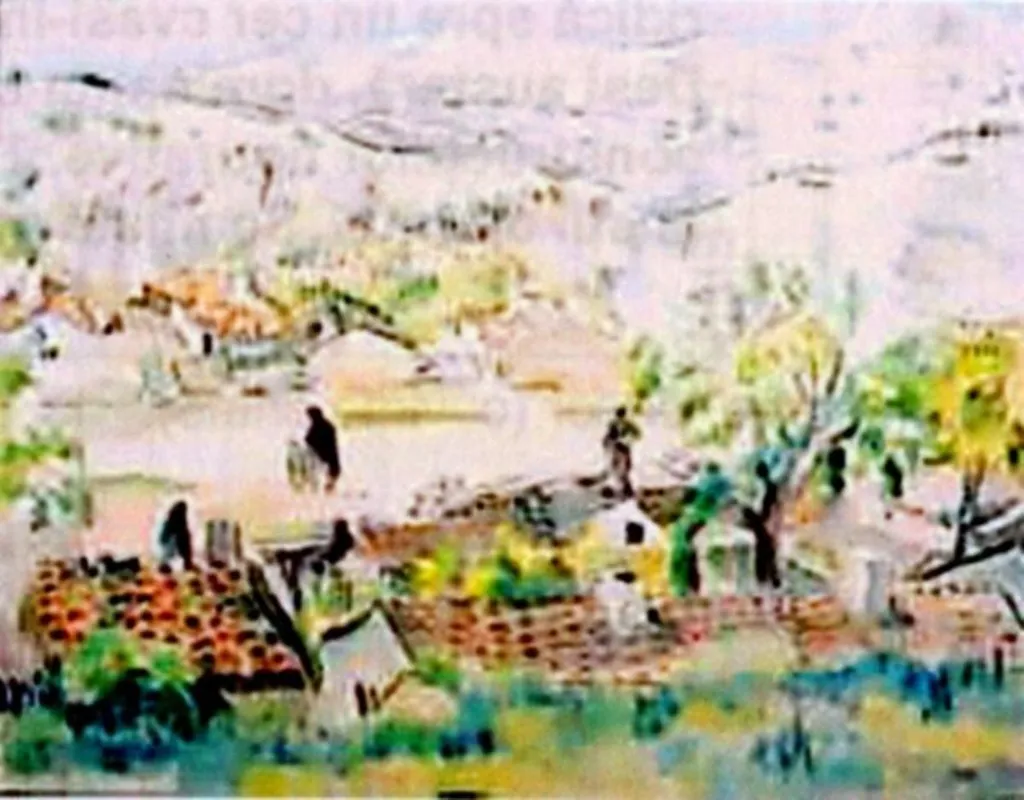
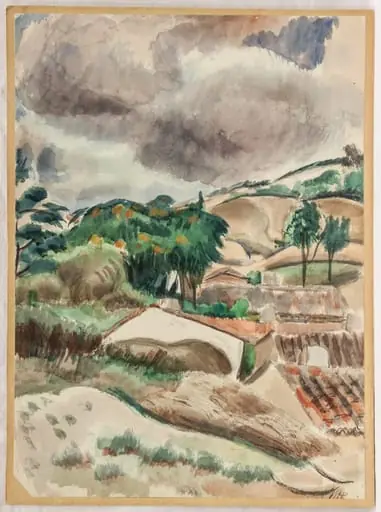
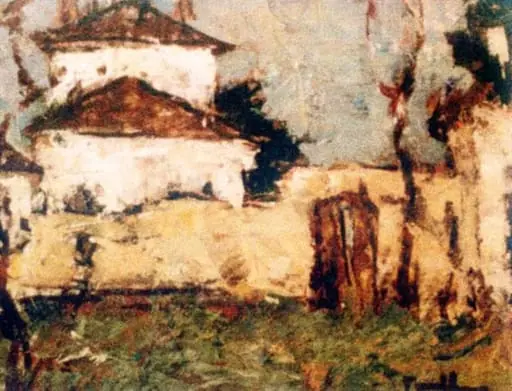
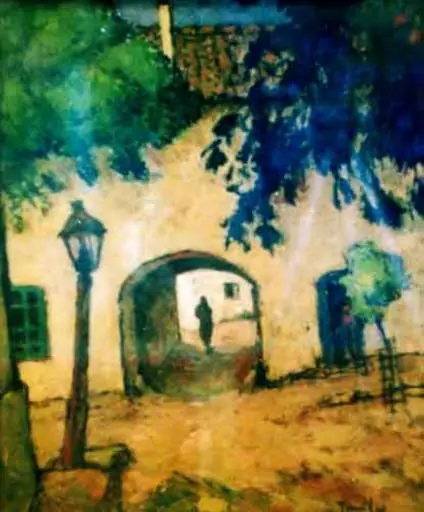
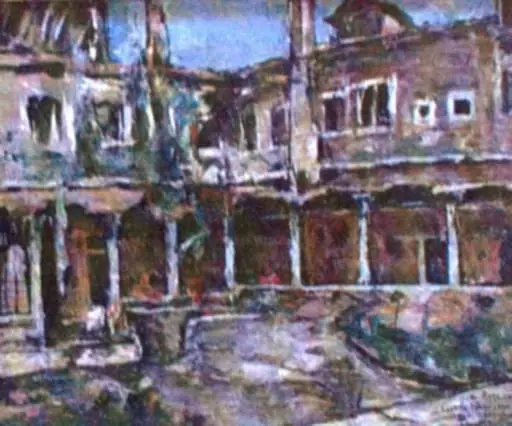
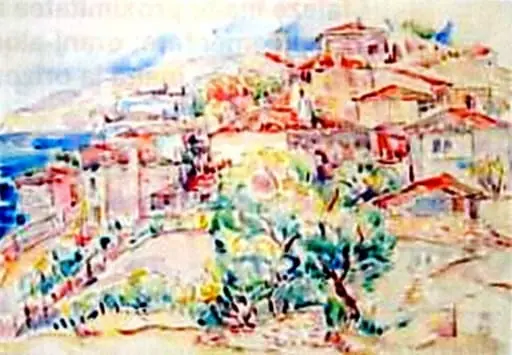
Peisaj dobrogean (Peisaj oriental) is an unspecified painting by Iosif Iser. It dates from 1949 and is held in the collection of the Gavrilă Simion Eco-Museum Research Institute Tulcea - Art Museum.
About this work
Overview
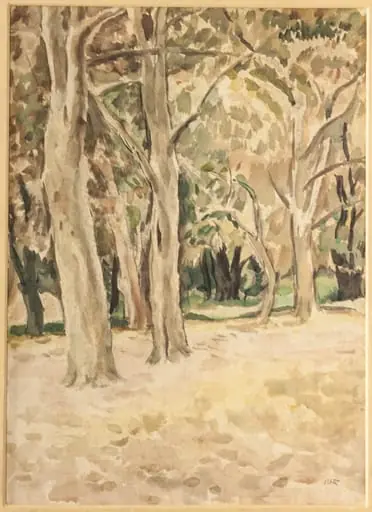
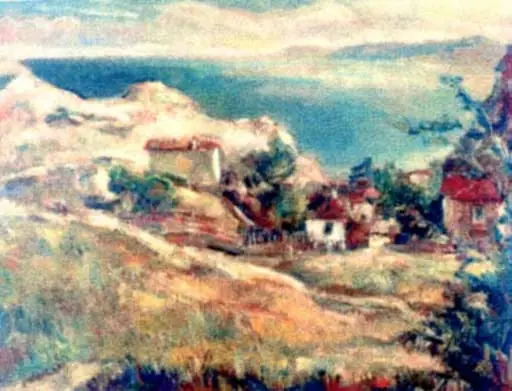
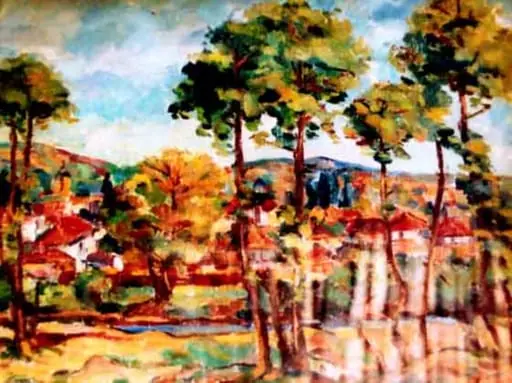
Painted around 1949 by Iosif Iser, this landscape depicts the Dobruja region of southeastern Romania. The work is part of the Museum of Ethnography’s collection and reflects Iser’s interest in quiet, rural scenes. Its subdued palette and loose handling distinguish it from more formalized depictions of the Romanian countryside, emphasizing atmosphere over detail.
Subject & Meaning
The painting presents a solitary, arid landscape with two distant figures, each isolated within the expanse. Their placement suggests contemplation or quiet labor, but their small scale diminishes individual identity, reinforcing the dominance of nature. The absence of narrative or activity invites a meditative response, aligning the scene with themes of stillness and endurance.
Technique & Style
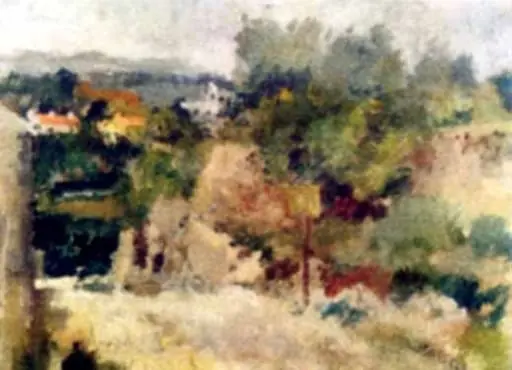
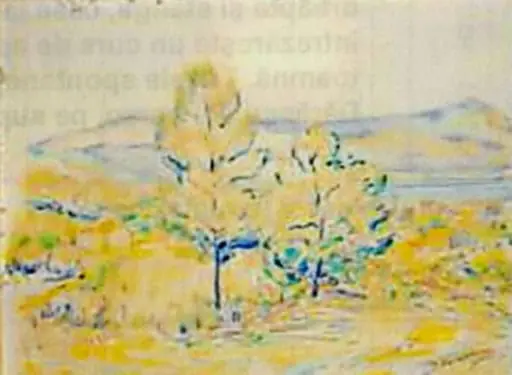
Iser employed loose, fluid brushwork to suggest form rather than define it. Colors are muted—pale blues, washed yellows, and soft greens—blending into earthy browns and whites. The background hills dissolve into thin washes, while the foreground retains slightly sharper contours. This technique creates a sense of atmospheric depth and evokes a transient, almost memory-like quality.
History & Provenance
Created in the late 1940s, the painting entered the Museum of Ethnography’s holdings shortly after its completion. Its acquisition reflects institutional interest in documenting regional visual culture during Romania’s early communist period. Unlike overtly political works of the time, this piece was preserved for its ethnographic value, capturing a landscape tied to local life.
Context
In postwar Romania, landscape painting often served as a subtle alternative to state-mandated socialist realism. Iser’s work, though not explicitly political, aligned with a quieter tradition of observing rural life. The Dobruja region, with its sparse terrain and mixed cultural influences, offered a subject that resonated with artists seeking authenticity beyond ideological mandates.
Legacy
Iser’s approach to landscape, characterized by restraint and atmospheric suggestion, influenced later Romanian painters who favored introspective naturalism. While not widely exhibited outside institutional collections, this work remains a quiet example of how artists navigated the tension between personal vision and state expectations in mid-century Romania.
Artist & collection
Artist
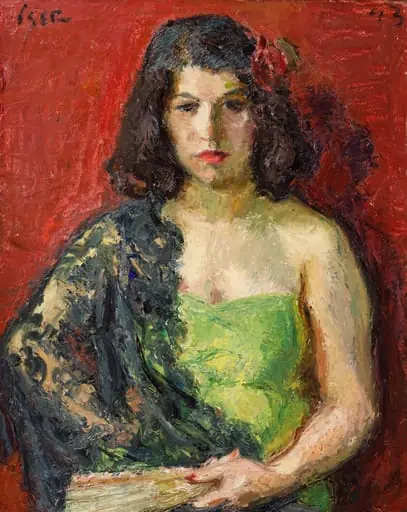
Iosif Iser painted everyday life with a focus on people and places. His 1933 work *Paris. Strada Mouffetard* shows a lively street scene in Paris, while *Nud pe fotoliu* depicts a seated nude figure. His brushwork…
Museum
Gavrilă Simion Eco-Museum Research Institute Tulcea - Art Museum
Continue through works from the same source collection.