Artwork
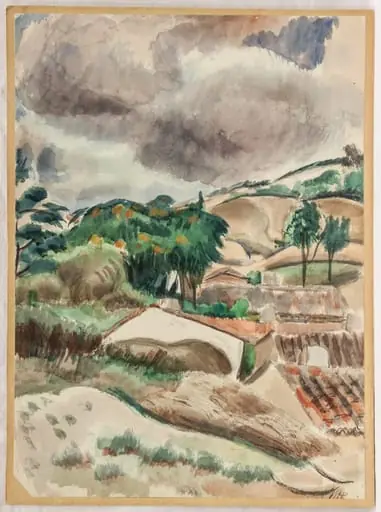
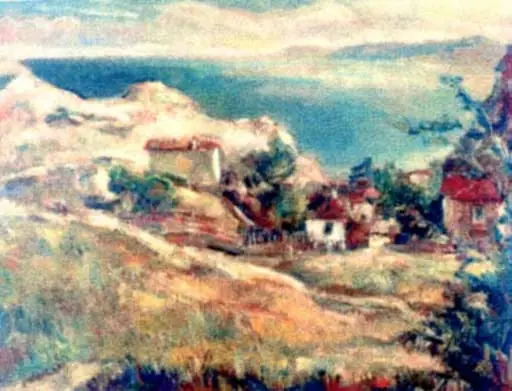
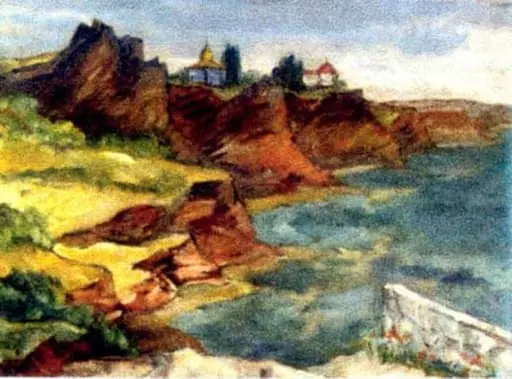
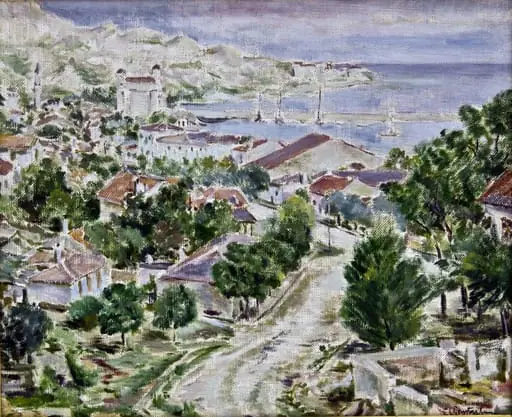
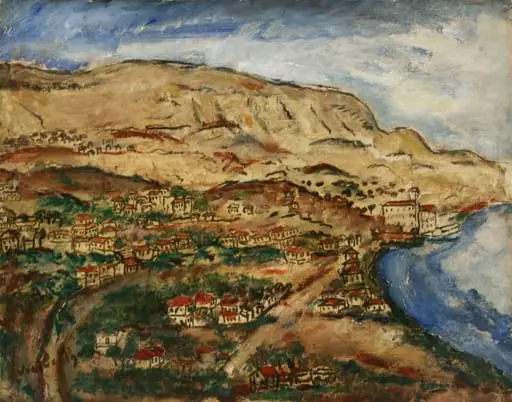
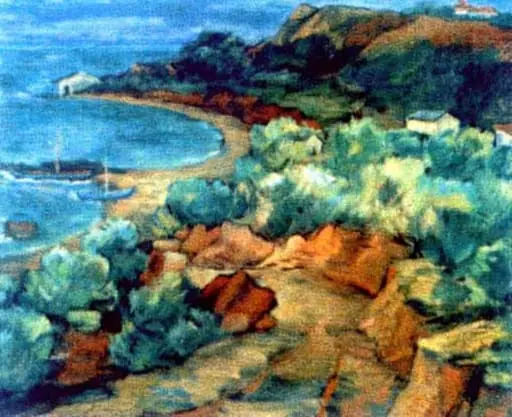
Peisaj la malul mării/ Peisaj de coastă cu dealuri
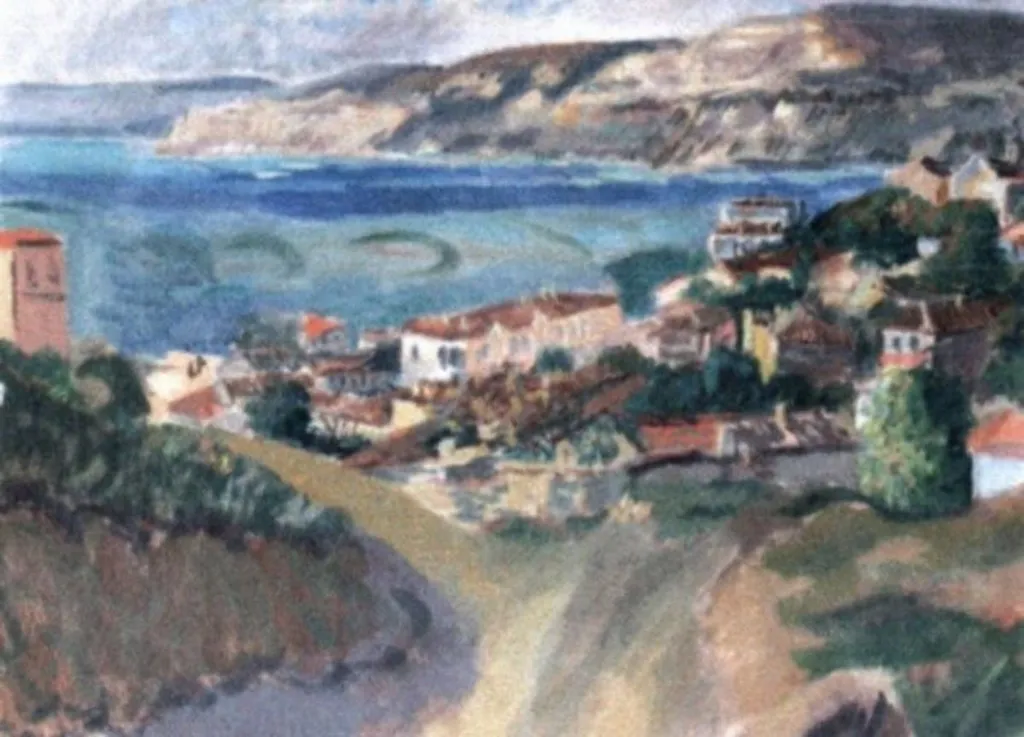
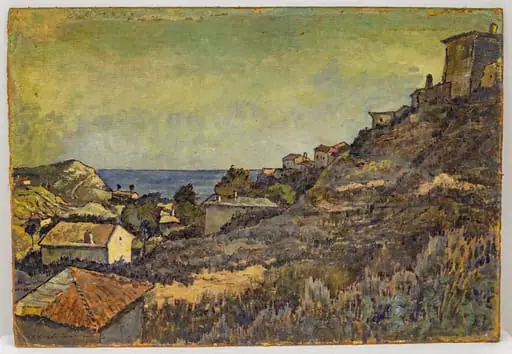
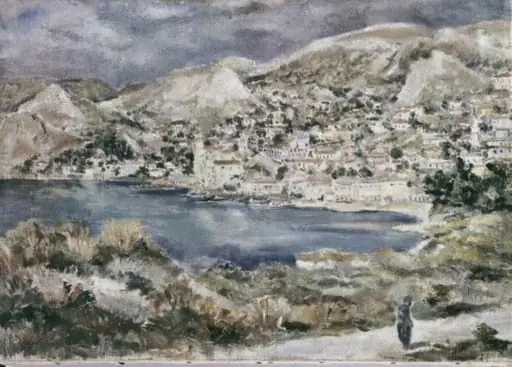
Peisaj la malul mării/ Peisaj de coastă cu dealuri is an unspecified painting by Iosif Iser. It dates from 1949 and is held in the collection of the Gavrilă Simion Eco-Museum Research Institute Tulcea - Art Museum.
About this work
Overview
Created around 1949, this canvas by Romanian painter Iosif Iser depicts a tranquil seaside settlement framed by gentle hills. The composition is housed in the Museum of Ethnography, where it forms part of the institution’s collection of mid‑twentieth‑century visual records of regional life.
Subject & Meaning
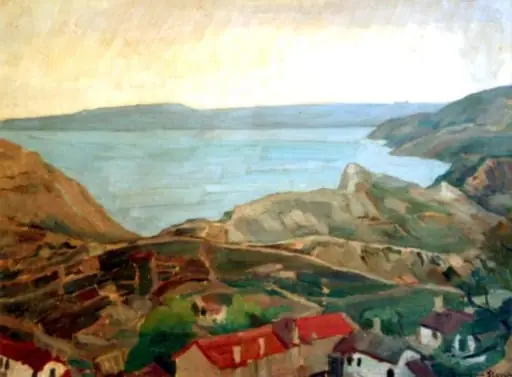
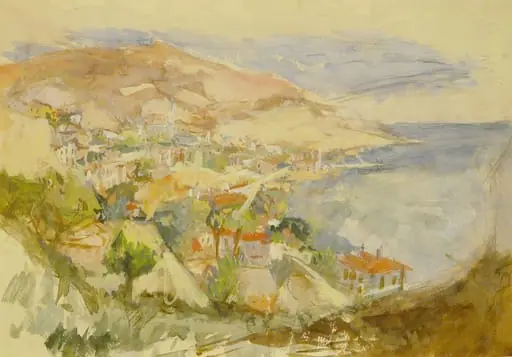
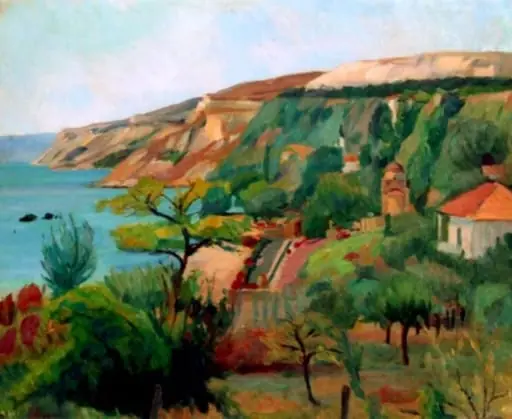
The scene presents a modest coastal village whose whitewashed houses with red‑tiled roofs cluster along a curving road that leads to the shoreline. Sparse trees punctuate the terrain, while the sea stretches in a calm blue, its surface marked by faint ripples. The work conveys a quiet, everyday atmosphere, emphasizing the harmony between built forms and the natural landscape.
Technique & Style
Iser employs a robust, impasto application of paint, laying on thick brushstrokes that give the hills and water a palpable texture. Warm, earthy tones dominate the palette, interspersed with verdant greens that highlight the foliage. This tactile approach enhances the sense of depth and materiality, characteristic of the artist’s post‑war period style.
History & Provenance
Since its creation, the painting has remained within public holdings, eventually entering the collection of the Museum of Ethnography. The museum acquired the work as part of its effort to preserve visual documentation of Romanian cultural and geographical settings from the mid‑twentieth century.
Artist & collection
Artist
Iosif Iser painted everyday life with a focus on people and places. His 1933 work *Paris. Strada Mouffetard* shows a lively street scene in Paris, while *Nud pe fotoliu* depicts a seated nude figure. His brushwork…
Museum
Gavrilă Simion Eco-Museum Research Institute Tulcea - Art Museum
Continue through works from the same source collection.