Artwork
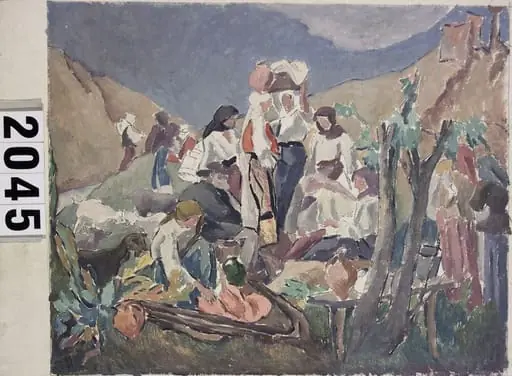
Glume de peste Olt – variantă
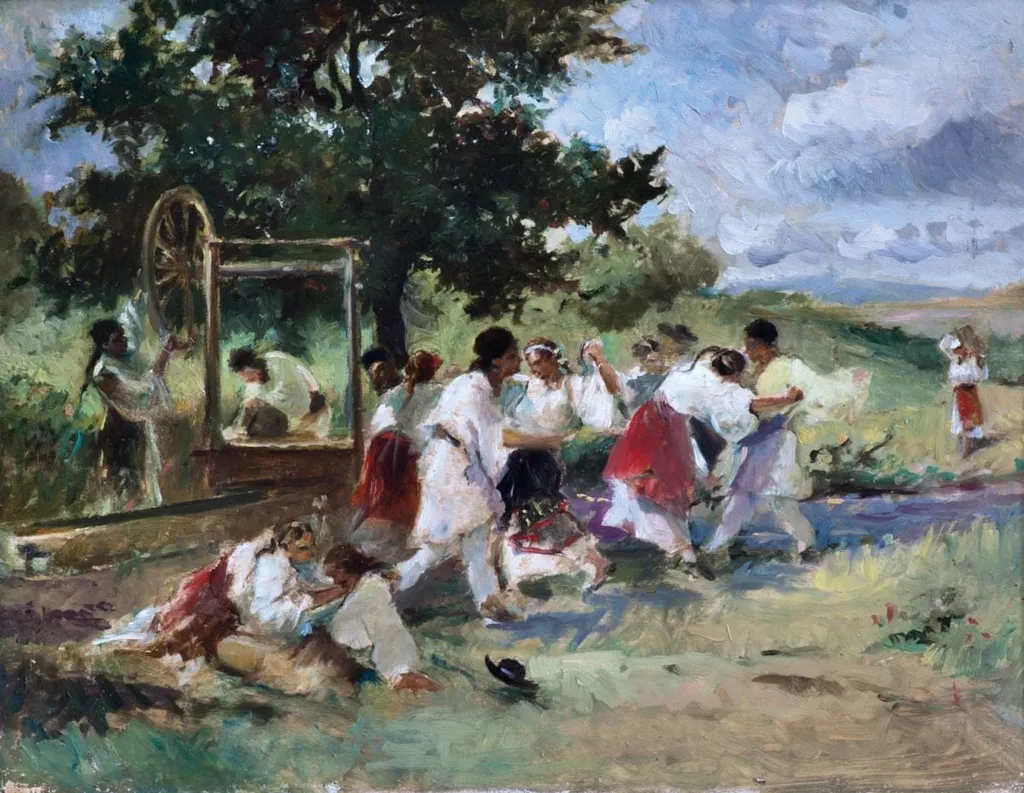
Glume de peste Olt – variantă is an unspecified painting by Theodor Aman. It dates from 1850 and is held in the collection of the Bucharest Municipality Museum.
About this work
Overview
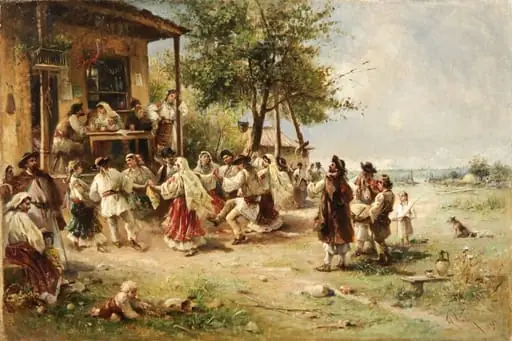
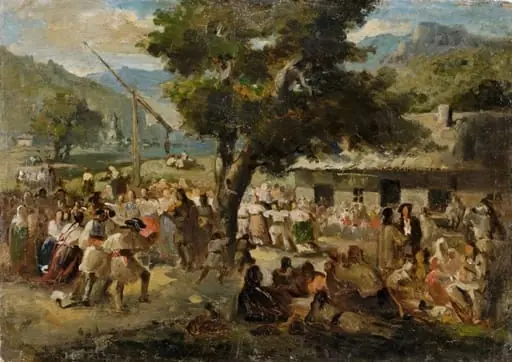
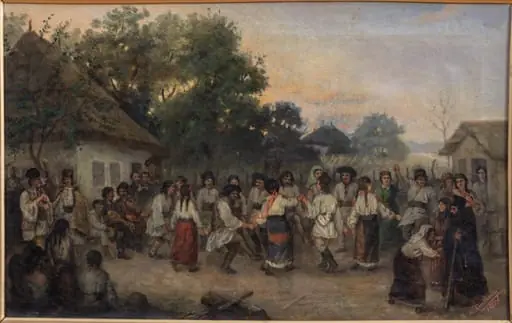
The work titled Glume de peste Olt – variantă, attributed to Theodor Aman and dated to around 1850, is part of the collection of the Museum of Ethnography. It presents a bustling outdoor gathering, rendered in oil on canvas, that captures a moment of communal celebration near the Olt River region.
Subject & Meaning
The scene depicts a festive assembly of villagers engaged in dancing, conversation, and leisure. A woman in a vivid red skirt occupies a central position, while a man rests against a wagon, and another figure reclines on the grass. The inclusion of a dog and a distant landscape suggests a relaxed, everyday atmosphere, reflecting rural social customs of mid‑19th‑century Romania.
Technique & Style
Aman employs a varied brushwork, applying thick, impasto strokes in selective areas to intensify color and texture, especially in the figures’ garments. The overall palette is lively yet naturalistic, and the composition balances detailed rendering of individual poses with a softer, atmospheric background, creating a sense of depth and immediacy.
History & Provenance
Created circa 1850, the painting entered the Museum of Ethnography’s holdings at an unspecified date, where it remains on display as part of the institution’s representation of Romanian folk life. Its provenance traces back to Aman’s early career, a period when he documented regional customs through genre scenes.
Context
The work belongs to a broader 19th‑century Romanian artistic movement that sought to record and valorise local traditions amid rising national consciousness. Aman’s focus on everyday rural festivities aligns with contemporary efforts to preserve cultural identity through visual narrative.
Artist & collection
Artist