Artwork
Horă
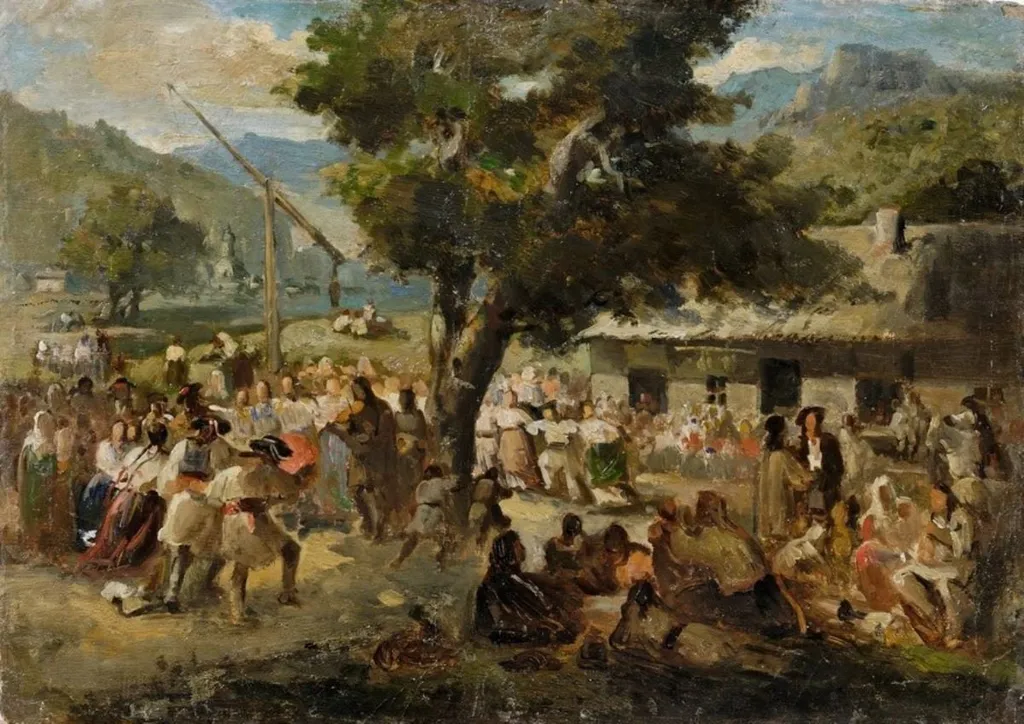
Horă is a print by Nicolae Grigorescu. It dates from 1850 and is held in the collection of the National Museum of Art of Romania.
About this work
Overview
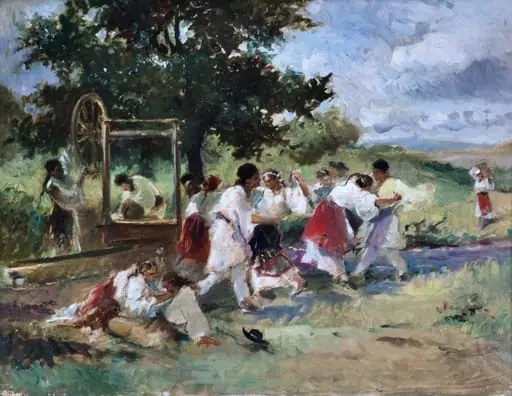
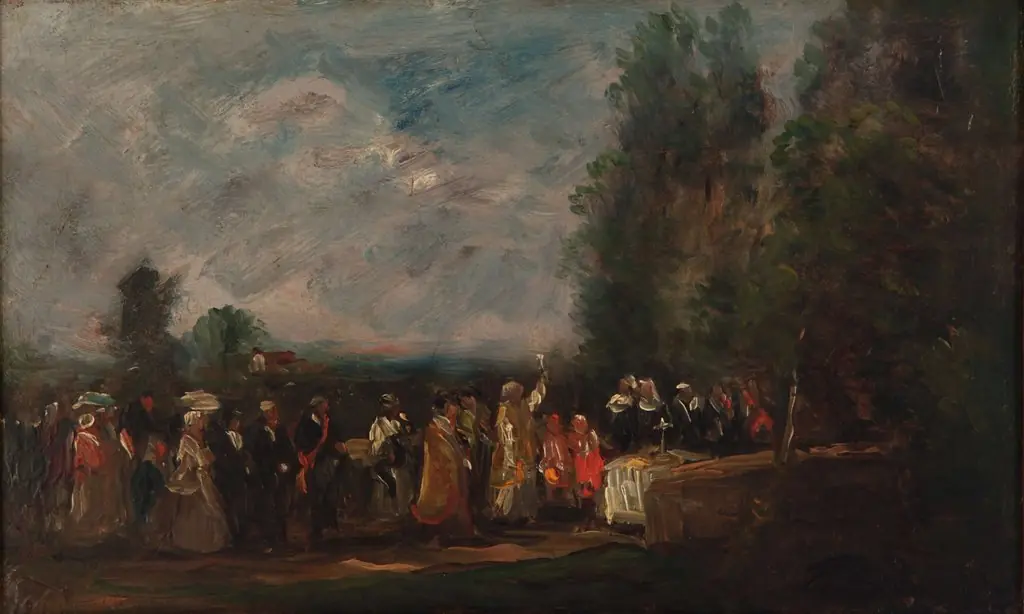
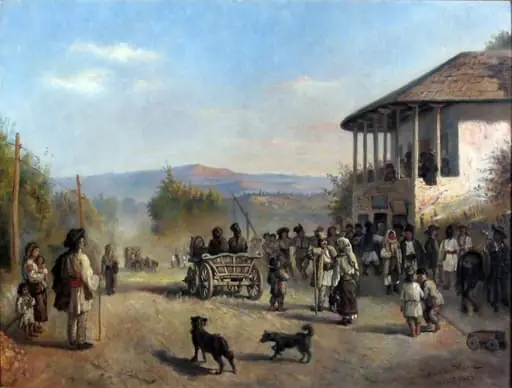
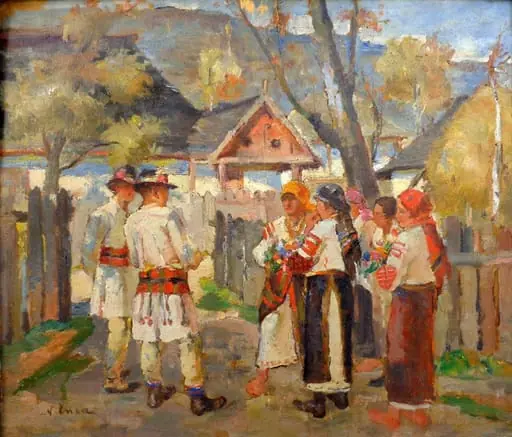
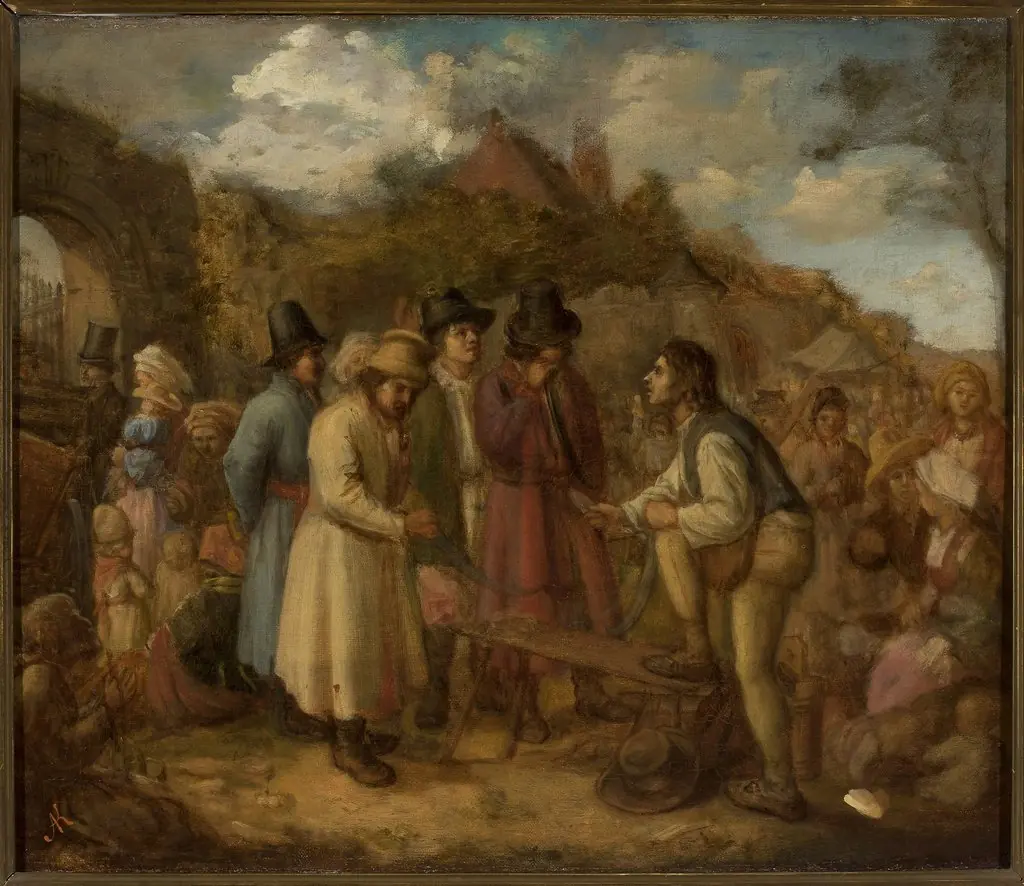
Painted around 1850 by Nicolae Grigorescu, Horă depicts a rural Romanian gathering in motion. The composition centers on a circle of figures engaged in a traditional dance, their postures suggesting rhythm and collective participation. The setting is an open landscape with soft hills and scattered trees, grounding the scene in everyday rural life rather than idealized spectacle.
Subject & Meaning
The painting captures a horă, a communal folk dance common in Romanian villages, symbolizing unity and continuity of tradition. Figures hold hands, move in unison, and some play instruments, emphasizing shared cultural practice. The absence of individualized portraiture reinforces the collective nature of the event, reflecting social cohesion over personal identity.
Technique & Style
Grigorescu employs loose, energetic brushwork to convey movement and light. Colors are saturated but not artificial—bright textiles contrast with earthy tones of the landscape. The brushstrokes are deliberate yet fluid, capturing the sway of garments and the flicker of sunlight. There is no rigid detail; form emerges through gesture and color relationships.
History & Provenance
Created early in Grigorescu’s career, Horă reflects his formative engagement with Romanian peasant life, prior to his studies in Paris. The work likely originated from sketches made during travels in the countryside, later refined in his studio. Its early date places it among the first Romanian paintings to treat folk customs with observational sincerity rather than romanticized spectacle.
Context
In mid-19th century Romania, artists began turning from imported academic styles toward local subjects as national identity took shape. Grigorescu’s focus on rural rituals aligned with broader cultural movements seeking authenticity. Horă stands as part of this shift—depicting ordinary life without mythologizing it, contributing to a new visual language for Romanian art.
Legacy
Horă helped establish Grigorescu as a foundational figure in Romanian realism. Its emphasis on everyday ritual influenced later generations who sought to document folk traditions with dignity. The painting’s unembellished approach to rural life became a touchstone for artists aiming to ground national art in lived experience rather than foreign models.
Artist & collection

Artist
Nicolae Grigorescu was one of the founders of modern Romanian painting. He is considered by Romanians the greatest Romanian painter, and one of the founders of modern Romanian art. He is most known for paintings…